
First Aid Basics
336 resources created by 275 users
This First Aid Basics page on GoConqr gathers community-made quizzes, mind maps, flashcards and notes, from DRSABCD and CPR to burns, bleeding, choking and poisoning. It's built for school students revising a topic, university students and professional candidates filling gaps, and teachers after ready-made material. There are over 300 resources here, including more than 40 quizzes, more than 100 mind maps and over 70 flashcard decks. Pick a resource, try a quiz to find your gaps, then make your own set.
Select topic
Top First Aid Basics resources
-
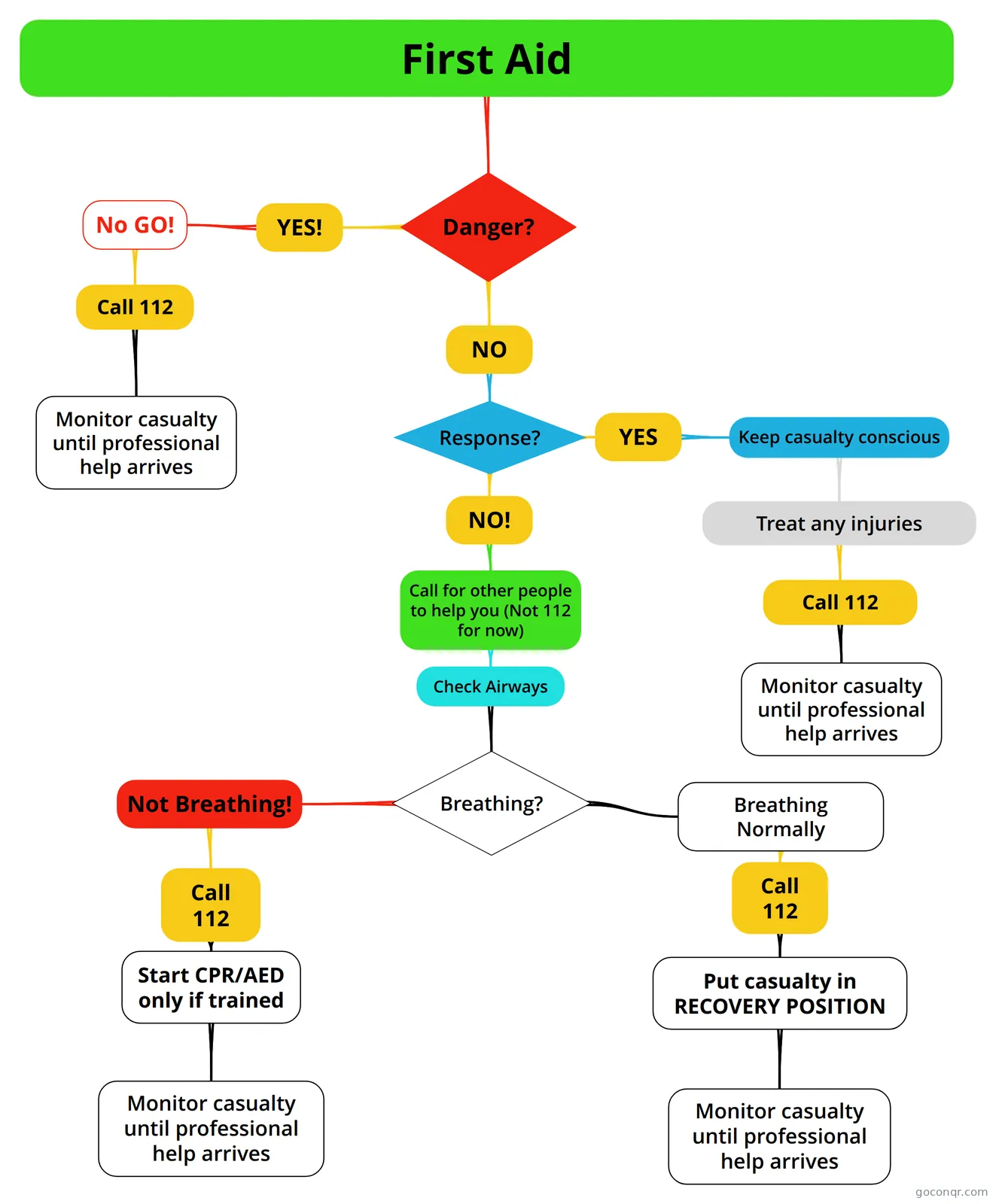 Mind map First Aid This is a step by step procedure for a first aid help. If you don't know how to do something don't try it b...
-
4 questionsLifesaving Society- Emergency First Aid Test You may start treatment on a victim when:
-
60 cardsFirst Aid difficulty speaking difficulty breathing sometimes difficulty coughing turn pale and blue universal sign
-
34 cardsFirst Aid 3 Objectives of First Aid
-
23 questionsFirst Aid practice test (Health 9) An open wound in which the skin is scraped and tiny blood vessels in the outer layers of the skin are broke...
-
Mind map Pesticide poisoning caused toddler's death
-
2 questionsFirst Aid, Adult CPR AED, Child CPR AED, Infant CPR Optional Exam A What are the correct rate and depth for providing compressions during high-quality adult CPR to improve sur...
-
3 questionsFirst Aid What type of burn affects all layers of the skin and causes blistering, swelling, and scarring?
Quizzes
See all 58 quizzes-
4 questionsLifesaving Society- Emergency First Aid Test You may start treatment on a victim when:
-
23 questionsFirst Aid practice test (Health 9) An open wound in which the skin is scraped and tiny blood vessels in the outer layers of the skin are broke...
-
2 questionsFirst Aid, Adult CPR AED, Child CPR AED, Infant CPR Optional Exam A What are the correct rate and depth for providing compressions during high-quality adult CPR to improve sur...
-
3 questionsFirst Aid What type of burn affects all layers of the skin and causes blistering, swelling, and scarring?
-
30 questionsBCERT AED/CPR Quiz How often do International Resuscitation Councils recommend you renew your CPR training?
-
123 questionsVN03 REVISION 4 Of the fat-soluble vitamins which one impacts on bone and tooth development?
-
48 questionsSara's Quiz- 27 Plant/Animal, 28 Altitude, 29 Water You are teaching a basic OEC class and need to explain toxins. Which of the following statements is the bes...
-
35 questionsFirst Aid at Work General Knowledge Which of these is not a type of fracture?
Mind maps
See all 177 mind mapsFlashcards
See all 81 flashcards-
60 cardsFirst Aid difficulty speaking difficulty breathing sometimes difficulty coughing turn pale and blue universal sign
-
34 cardsFirst Aid 3 Objectives of First Aid
-
18 cardsCPR flash cards What does CPR stand for?
-
200 cardsNHS - EXAM 1 What is the priority when conducting a telephone assessment?
-
104 cardsFirst aid - National CPR foundation Open Chest Wounds should only be dressed in what scenario?
-
101 cardsLifesavers/first-aid topic revision Definition of First Aid
-
44 cardsThe Circulatory System An average adult has around .... pints of blood in their body?
-
51 cardsFirst aid at work What are the three aims of first aid?
Flowcharts
See all 10 flowchartsNotes
-
Untitled Discuss the legal and moral dilemmas associated with providing first aid. (5 marks) If something is legally implied, it means that it was what is meant to be done. For example, if a first aider arrives on site of an e...
-
Bleeding point Give a reasoned account of the measures you employ where there has been a small bleeding point during a clinical treatment.The clinician will immediately wash their hands and put on a pair of gloves. This proces...
-
CPR
-
Choking Choking Universal sign of choking two hands across the neck #1 food that causes choking Hot Dogs Risk Factors Poor Chewing Wrong DIet Intoxicated people Dentures that don't fit right Playing, crying, talkin...
-
RepublicMedics Vitals and triage: -testing what a pacient feels triage:- order what pacients should be treated, and what treatment, priorities in treating. Vitals: -Body Temperature -Blood pressure -Heart beats -Resperatory breath &...
-
FIRST AID - created from Mind Map Equpiment Treatment Illness and Injuries
-
Emergency First Aid Check for Danger firstResponse:COWS'Can you hear me?''Open your eyes if you can hear me''What's your name?''Squeeze my hands if you can hear me'To determine consciousnessC - fully alert & orientedSemiC - not fully ale...
-
What is first aid? - creado desde un Mapa Mental What is a first aid kit? Emergency assistance provided to a person in case of accident or sudden illness a small box containing items such as bandages, plasters, and antiseptic wipes for use in giving help to a sick o...
Slides
Topics in First Aid Basics
More Emergency medicine and first aid topics
About First Aid Basics
GoConqr OriginalWhat this unit covers
First Aid Basics sits in the strand Foundations of Emergency Care, within Emergency medicine and first aid. The resources were made by GoConqr users and cover the core of emergency response: checking for danger, responding, opening the airway, giving CPR and using an AED. They also cover injuries and conditions such as burns, bleeding, fractures, seizures, fainting, diabetes and poisoning.
Where to start
Begin with the mind maps. One of the top-listed maps follows the order of an emergency: danger, response, airway, breathing, then calling for help and starting CPR. Maps such as DRSABCD and Steps for the Recovery Position give you the same sequence in a compact form.
Next, move to flashcards. One deck lists the three objectives of first aid, the principal pressure points and the classifications of burns. Another, ELS1, asks what DRS ABC stands for and what to tell a bystander when requesting an ambulance.
Testing yourself
Quizzes are where you find out what has stuck. The Adult CPR AED, Child CPR AED and Infant CPR quiz asks about the rate and depth of compressions. The First Aid practice test (Health 9) covers open wounds and universal precautions. The Lifesaving Society- Emergency First Aid Test asks when to start and stop treatment, and what to do first with an unconscious child.
Using maps and quizzes together
- Read a map, such as the one on treating a concussion or head injury.
- Cover it and try to recall the steps.
- Take a quiz on the same topic.
- Note what you missed and revisit that branch of the map.
Shorter topic sets help with single areas, including Helmet removal, Seizures / Epilepsy, Blood loss and Carbon monoxide poisoning.
Make it your own
Once you know what you find hard, pick one topic and try a quiz on it today. Then write your own flashcards or draw a map of the steps in your own words.
Frequently asked questions
Which resource should I open first?
Start with a mind map that walks through the emergency sequence, such as DRSABCD. It shows the order of checks from danger to CPR. Then try the Adult CPR AED, Child CPR AED and Infant CPR quiz to see how much you recall.
What do the mind maps cover?
There are over 100 mind maps. They include the sequence of an emergency, the recovery position, when to stop CPR, burns, concussion, fainting, diabetes, heart attacks, carbon monoxide and pesticide poisoning. Many are titled simply First Aid, so open a few to compare.
Are the resources free to use?
Yes. Every resource listed here is free to open, study and take, with no account needed. They were made by GoConqr users, not by GoConqr itself, so it is worth checking a few on the same topic. A free account can also save your quiz scores.
Who are these resources for?
They suit school students, university students and professional candidates, plus teachers looking for ready-made material. Most are at secondary level, with a good share at professional level. Use quizzes for practice, flashcards for key terms and maps for sequences.
Is there anything on CPR specifically?
Yes. You will find several CPR flashcard decks, a CPR note, a quiz titled CPR, a Basic Life Support quiz, and a mind map on when to stop CPR. The Adult CPR AED, Child CPR AED and Infant CPR quiz covers compression rate and depth.
What if my topic is missing?
Try a related title first, since many resources are named simply First Aid and cover several topics. If nothing fits, make your own quiz, mind map or flashcards on it with a free account.