
Money, Banking and Monetary Policy
422 resources created by 341 users
This Money, Banking and Monetary Policy page on GoConqr gathers community-made mind maps, quizzes, flashcards, notes and slide sets, from the functions of money and central banks to quantitative easing and inflation targeting. It's built for university students and professional candidates, school students, and teachers after ready-made material. There are over 400 resources here, including more than 50 quizzes and over 200 mind maps, covering A-level, AP and IGCSE Economics through to degree-level study. Pick a topic, try a quiz to find your gaps, then make your own revision sets.
Select topic
- History and Evolution of Money16
- Functions and Forms of Money44
- Banking, Credit and Money Supply10
- Demand for Money and Liquidity Preference37
- Financial Markets, Saving and Investment19
- Interest Rates and Their Effects11
- Central Banks and Their Functions22
- Federal Reserve System27
- European Central Bank and the Eurosystem21
- Monetary Policy Instruments19
- Monetary Policy Transmission7
- Monetary Policy Objectives and Effectiveness14
- Money and Inflation14
- Exchange Rates and Monetary Systems11
Top Money, Banking and Monetary Policy resources
-
65 cardsMacroeconomics - Chapter 24 Money, the Price Level, and Inflation
-
31 questionsECO 315 Midterm # 1 - MC + answer - Chapter 1 Financial markets promote economic efficiency by
-
16 cardsMoney and credit Double coincidence of wants
-
22 questionsMoney: Features, Functions and Money Supply Divisibility is an important function of money because it
-
Mind map The Functions of a Central Bank Notes from Cambridge IGCSE Economics by Susan Grant Unit 15- Banks Page 147
-
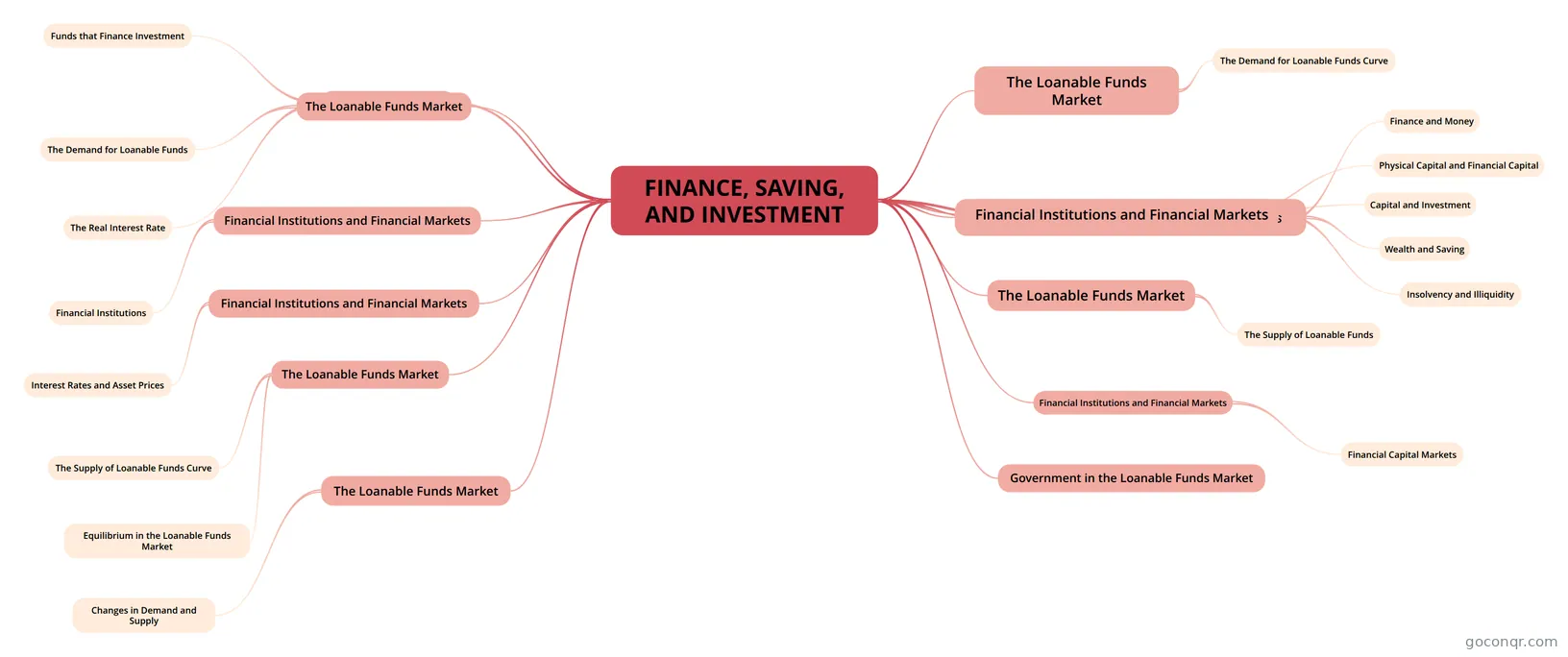 Mind map FINANCE, SAVING, AND INVESTMENT
-
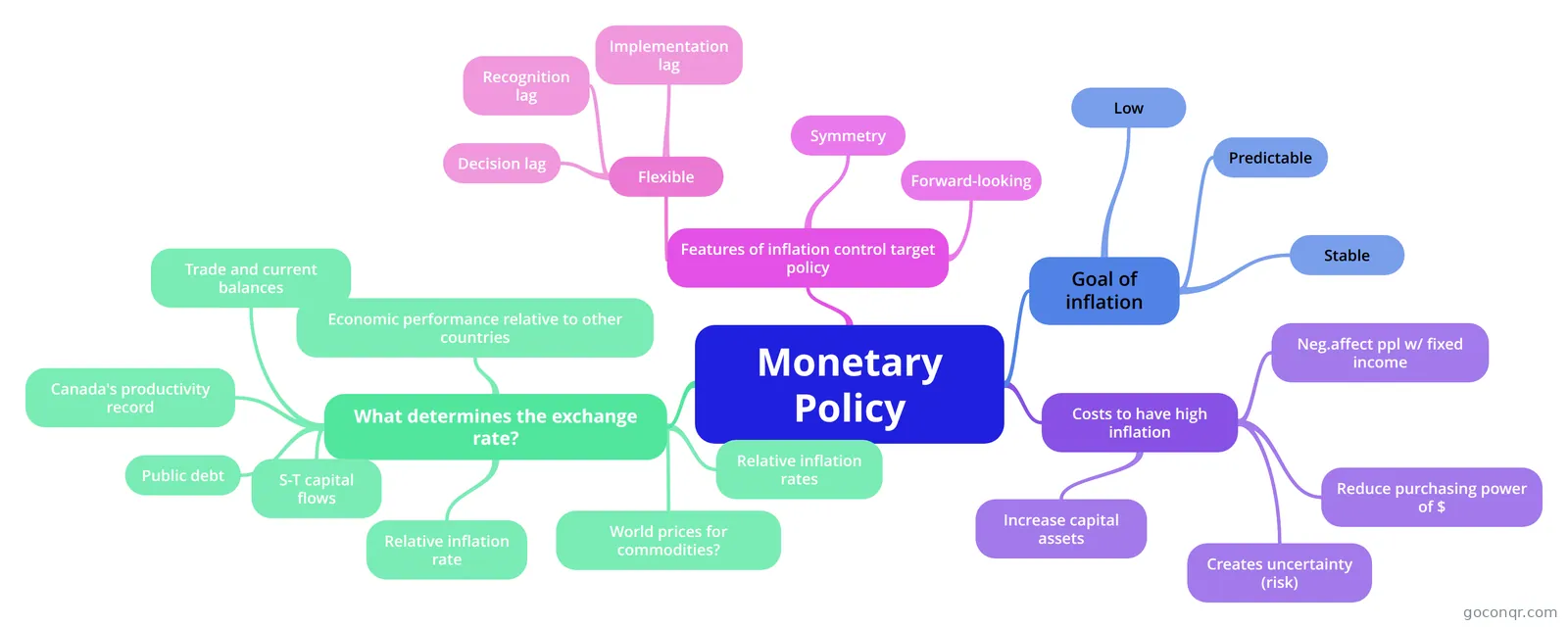 Mind map Monetary Policy
-
6 cardsMarkets * The term 'Market' conjures up different situations; it could be an experience like a shopping trip or it ...
Quizzes
See all 59 quizzes-
31 questionsECO 315 Midterm # 1 - MC + answer - Chapter 1 Financial markets promote economic efficiency by
-
22 questionsMoney: Features, Functions and Money Supply Divisibility is an important function of money because it
-
50 questionsmacroeconomics The money supply is the:
-
60 questionsEcon 103 Final Exam Practice To use monetary policy to lessen the effects of a recession, the Federal Reserve would:
-
43 questionsMultiple Choice Practice-1 The direct exchange of goods and services for other goods and services is
-
32 questionsChapter 17 - The Federal Reserve and the Money Supply Only the Federal Reserve can create money.
-
20 questionsEcon Study Guide Chapter 19 European banks began with which of the following?
-
24 questionsPractice Econ 4 Which of the following rates does the Fed actually set?
Mind maps
See all 247 mind maps-
The Functions of a Central Bank Notes from Cambridge IGCSE Economics by Susan Grant Unit 15- Banks Page 147
-
FINANCE, SAVING, AND INVESTMENT
-
Monetary Policy
-
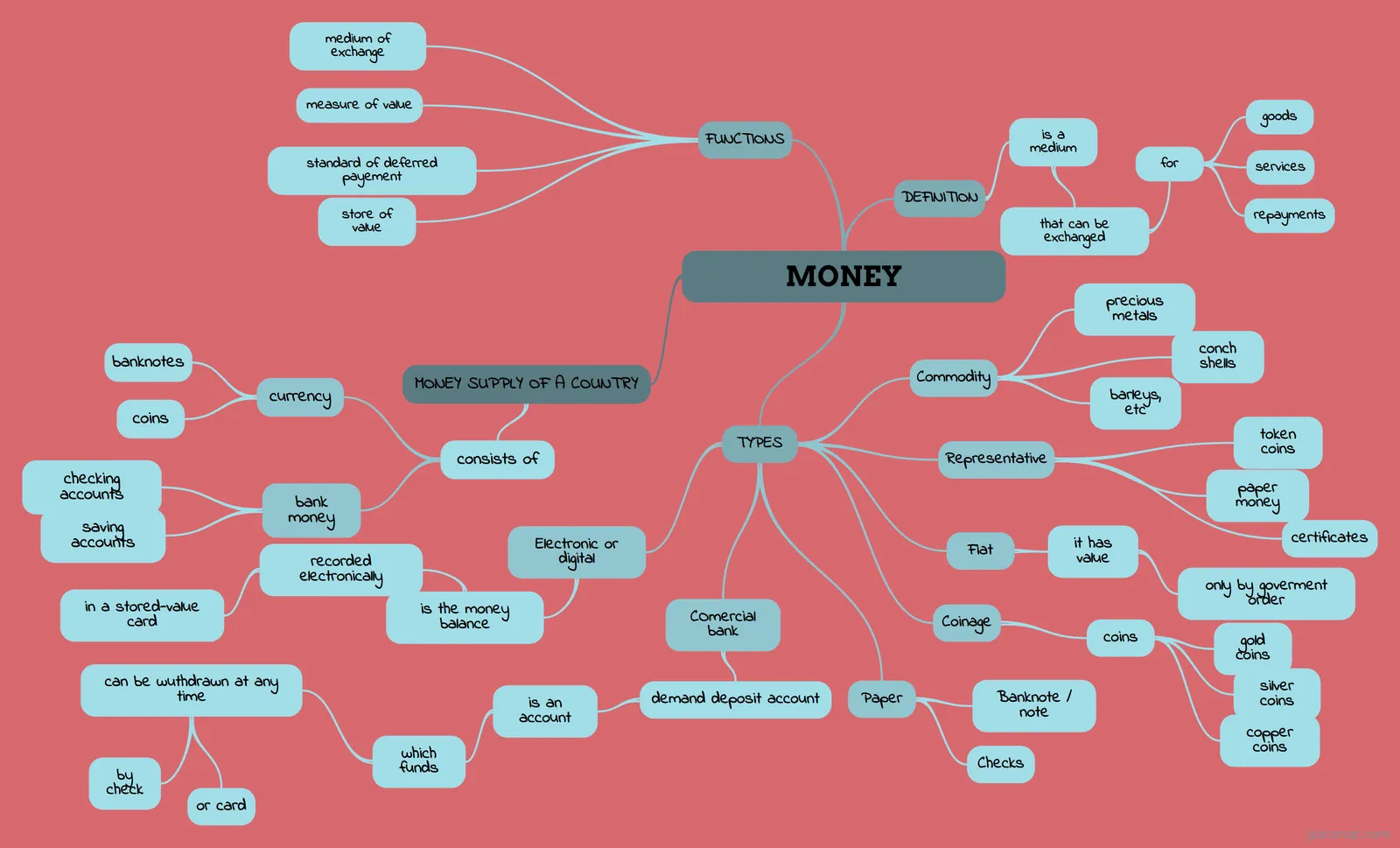 MONEY
-
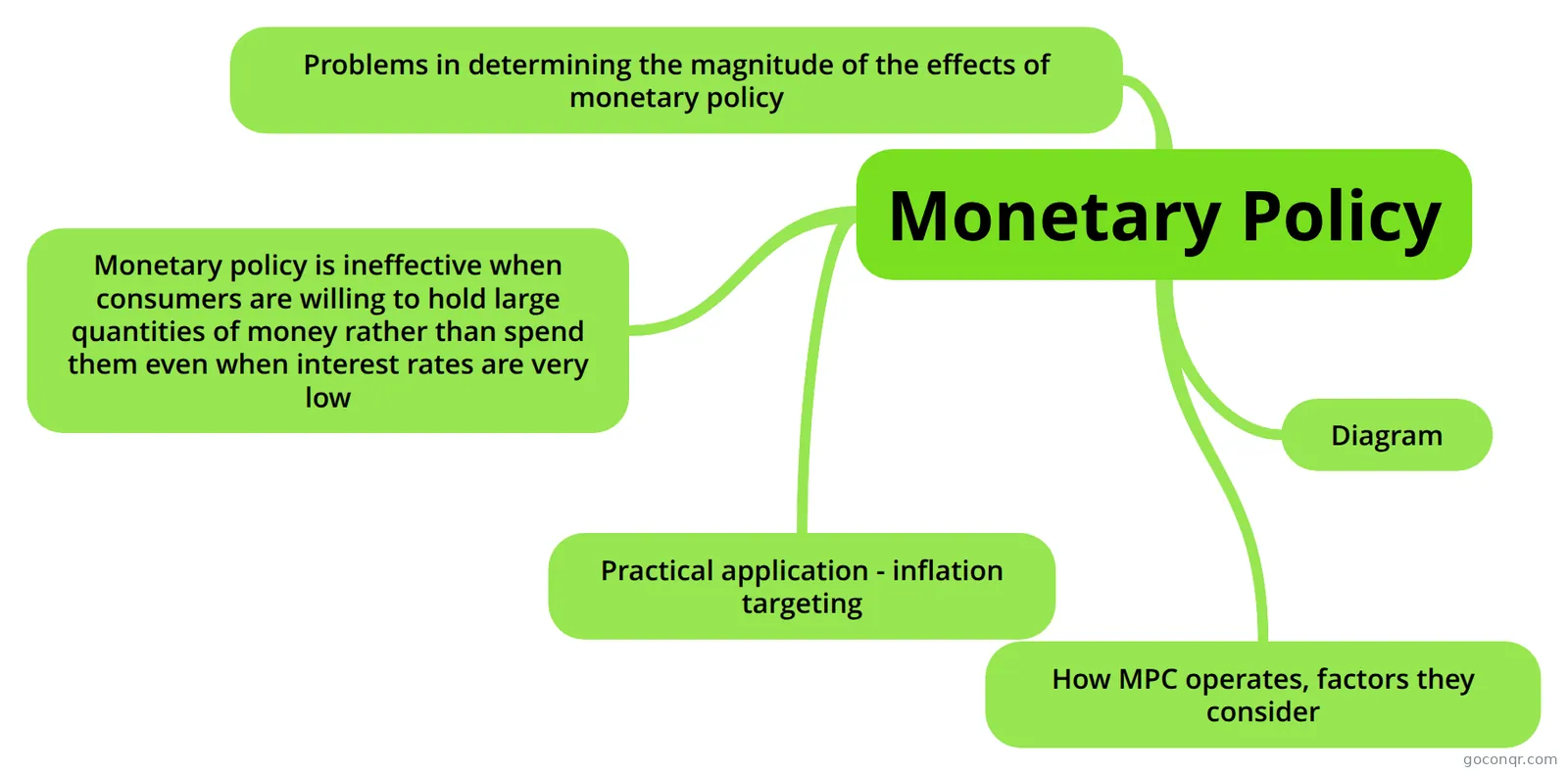 Monetary Policy
-
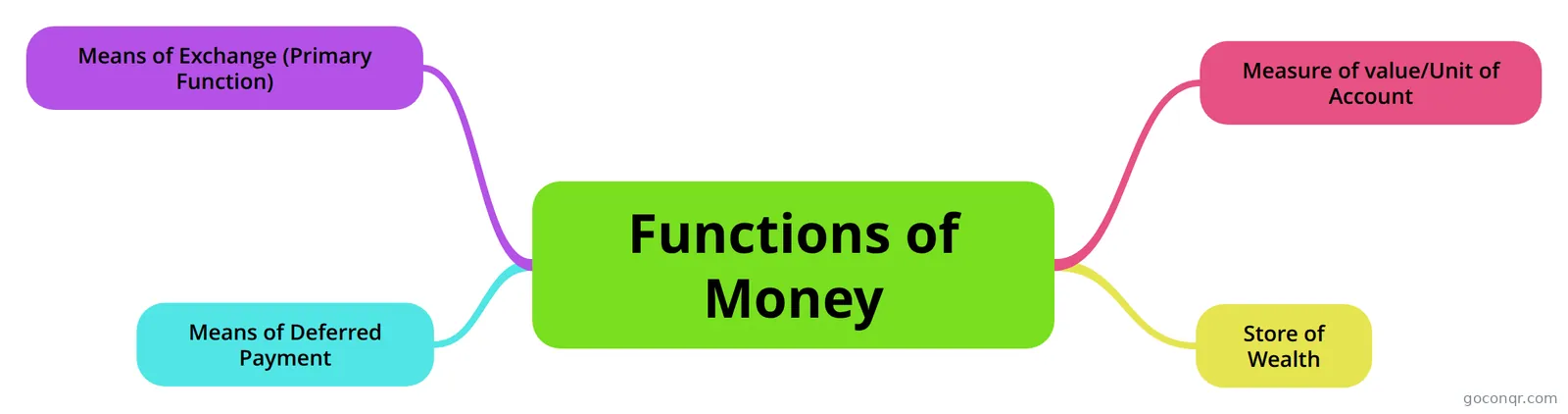 Functions of Money Economics
-
Centralised Vs Decentralised monetary systems (Final) economics
-
 Discuss how, according to the liquidity preference theory, a person's demand for money might be affected In 2011, a government announced that it would reduce the number of people employed in the public sectors an...
Flashcards
See all 81 flashcards-
65 cardsMacroeconomics - Chapter 24 Money, the Price Level, and Inflation
-
16 cardsMoney and credit Double coincidence of wants
-
6 cardsMarkets * The term 'Market' conjures up different situations; it could be an experience like a shopping trip or it ...
-
61 cardsMonetary Policy Flash Cards What is Monetary Policy?
-
73 cardsEconomics Flash Cards If the Fed pursues expansionary monetary policy then 37) A) the money supply will decrease, interest rates ...
-
70 cardsMacro Econ Final Mankwi chap 10-15
-
57 cardsMacroeconomics - Chapter 25 Foreign Exchange Market
-
30 cardsOCR & The Quantity Theory of Money What is 'Money Supply' and who sets it?
Notes
See all 22 notes-
Econ 331 - Chapter 1 Textbook Notes Chapter 1 - Why Study Money, Banking and Financial Markets Financial Markets: markets where funds are transferred from people who have an excess of available funds, to people who have a shortage. -Financial marke...
-
Money, Banking, and Monetary Policy Module 23 Notes with 5 Steps Book Notes Money supply - total value of the financial assets in the economy that are considered money currency in circulation traveler's checks bank deposits etc. stocks & bonds stocks - ...
Slides
Topics in Money, Banking and Monetary Policy
More Economics topics
About Money, Banking and Monetary Policy
GoConqr OriginalWhat this unit covers
The resources split into three broad strands: money itself, banks and financial markets, and monetary policy. Contributors have shared mind maps, quizzes, flashcard decks, notes, slide sets and a couple of flowcharts.
- Money: the Functions of Money mind map, the MONEY mind map and the slide sets on the history of money cover barter, medium of exchange, unit of account and store of value.
- Banks and markets: The Functions of a Central Bank mind map explains how a central bank acts as banker to the government, while FINANCE, SAVING, AND INVESTMENT looks at financial institutions and markets.
- Policy: many Monetary Policy mind maps cover inflation goals, interest rates, quantitative easing and exchange rate policy.
Where to start
Begin with the Functions of Money mind map, then try the quiz Money: Features, Functions and Money Supply. It tests ideas such as divisibility and the functions of money in short worked scenarios. If you prefer cards, the Money and credit deck covers the double coincidence of wants, old and modern forms of money, and terms of credit.
Moving on to policy
Next, open The Functions of a Central Bank and the Monetary Policy mind map. The second one explains why a low, stable and predictable rate of inflation is the goal, and why high inflation cuts purchasing power and creates uncertainty. Then look at Quantitative Easing, Interest Rates and Bank of England. For a harder question, one mind map notes that monetary policy can be ineffective when people hold on to money even at very low interest rates.
Using maps and quizzes together
Read a map first, then close it and take a quiz on the same topic. Note the questions you miss and go back to the matching branch of the map. Flashcard decks such as Macroeconomics - Chapter 24 are handy for terms like M1, M2, liquidity and fiat money. Several notes also show written exam-style answers, such as the one on liquidity preference theory.
Where it fits
This unit sits in the Macroeconomic Policy strand of Economics. Some resources mention A-level Economics, AP Macroeconomics and IGCSE Economics, and many are written at university level.
Choose one map today, test yourself with a quiz, and then make a few flashcards of your own.
Frequently asked questions
Which resource should I open first?
Start with the Functions of Money mind map, then take the quiz Money: Features, Functions and Money Supply. That pairing gives you the basic ideas of what money does before you move to central banks and monetary policy, where the topics get more detailed.
What do the mind maps on this page cover?
There are over 200 mind maps. They cover the functions and types of money, central bank roles, the Bank of England, interest rates, quantitative easing, exchange rate policy and many versions of Monetary Policy, including policy to combat unemployment and inflation.
Are the resources free to use?
Yes. Every resource listed here is free to open, study and take, with no account needed. They were made by GoConqr users, not by GoConqr itself. A free account also saves your quiz scores and lets you make your own quizzes, maps, flashcards and notes.
Which levels and exams do these resources suit?
Most are aimed at university students and professional candidates, with a good share for school students. Some resources mention A-level Economics, AP Macroeconomics and IGCSE Economics. Teachers can also use the ready-made maps, decks and slide sets.
Is there anything on exam-style written answers?
Yes. Some notes were created from mind maps to answer longer questions, such as the factors of liquidity preference theory, the effect of the South African Reserve Bank raising the repo rate, and how a change in retirement age might affect demand.
What if the topic I need is missing?
Try the related Monetary Policy, Money or Financial Sector resources, as the same idea often appears under a different title. You can also make your own mind map, flashcards or quiz on the missing topic.