
Human Rights mind maps
64 mind maps by 58 users · Page 1 of 2
This GoConqr page gathers Human Rights mind maps on topics from protected characteristics and fair trials to refugee protection. Its over 60 mind maps support university students and professional candidates reviewing rights, school students practising legal topics, and teachers looking for study material. Pick a map to begin.
Select topic
- International Human Rights Instruments and Enforcement6
- European Convention and UK Human Rights Act7
- Human Rights Protection in National Law6
- Right to Life, Liberty and Fair Trial13
- Freedom of Religion and Conscience6
- Freedom of Expression, Assembly and Privacy14
- Equality and Discrimination5
- Refugee and Immigration Rights8
- Environmental Rights and Mining in Santurbán20
Mind maps
-
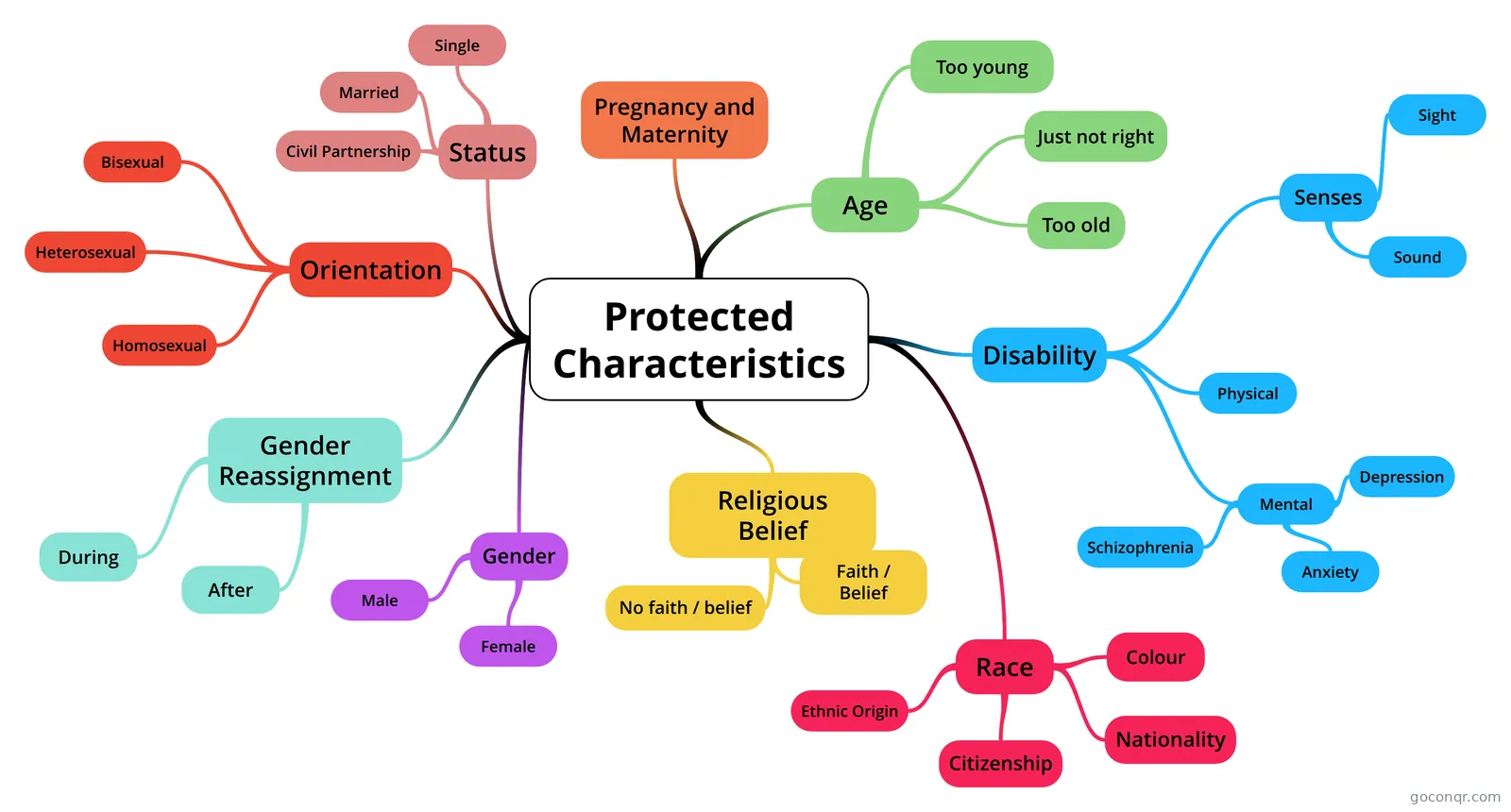 Protected Characteristics
-
Article 2: Right to Life
-
Article 6: Right to a fair trial
-
Human rights Human right dot points
-
ARTICLE 3
-
Guiding Principles on Business & Human Rights.
-
An Outline of Human Rights
-
A and Others v Secretary of State for the Home Department [2005] UKHL 71 Analysis
-
Exclusion from Refugee Protection
-
III. ACCESS TO REMEDY
-
Race In Law & Society
-
IRUJO & URRUTIA; BASQUE IN CFN
-
Freedom of Religion 2 (a)
-
s. 32 This Charter applies
-
Socio-environmental Conflict in Santurbán and Mining.
-
Fundamental Human Rights in the Face of Mining Extractivism in SATURBAN
-
1. The nature and development of human rights
-
2. Promoting and enforcing human rights
-
Open Justice and Human Rights
-
Human rights
-
Jonathan Vente Carrera
-
Cessation & Vacation
-
History of Rights
-
HR vs Parl. Sov.
-
q 2 begum case
-
Credibility
-
set question 1
-
The American Legal System
-
 Discrimination against women Legal Studies Human Rights
-
Conflicting Human Rights
-
Key aspects to obtain a license to operate in Santurbán
-
Mining Exploitation in Santurbán and Human Rights
-
Santurban case
-
Santurbán case and human rights involved
-
Strategic Analysis for Mining Operations in Santurbán
-
GR11º-ANIMALS LAWS AND RIGHTS-POSSO FRANCIS-2021
-
Santurbán Case
-
OBTAINING A MINING LICENSE IN SANTURBÁN
-
Mining Extractivism in Santurban: Human Rights Considerations
-
Mining Extractivism in Santurbán and Human Rights Protection
More Human Rights resources
About human rights mind maps
GoConqr OriginalWhat the Human Rights mind maps cover
The maps take several approaches to the unit. Protected Characteristics brings together characteristics including age, disability and race. Discrimination against women includes legal and non-legal methods, while Exclusion from Refugee Protection looks at circumstances in which protection may not apply.
For a starting point, try An Outline of Human Rights if you want an overview. For a specific right, Article 6: Right to a fair trial includes the presumption of innocence and access to justice.
Revise with a map
Follow the branches of a map, then cover it and recall the main points in your own words. Return to the branches you missed and check how they connect to the central topic.
When you want to test recall in a different way, switch to a quiz or flashcards on the Human Rights unit page. Choose a map and explore its branches.
Frequently asked questions
Which Human Rights mind map should I start with?
An Outline of Human Rights is a place to begin if you want an overview. If you are revising a particular topic, Protected Characteristics covers characteristics including age, disability and race. You can follow its branches, then check which points you remember without looking.
Are these mind maps free to use?
Yes. Every resource listed here is free to open and study without an account. The maps were made by GoConqr users. A free account also lets you save quiz scores and create your own quizzes, mind maps, flashcards and notes.
Who can use these Human Rights mind maps?
University students and professional candidates can use the maps to review legal topics, while school students can practise individual rights and related concepts. Teachers can browse them for study material. Topics range from fair trials and protected characteristics to discrimination against women and refugee protection.