
The Accounting Equation and Double-Entry Bookkeeping
65 resources created by 54 users
This page on GoConqr gathers community-made quizzes, mind maps, flashcards, slides and notes on the accounting equation and double-entry bookkeeping, from books of original entry and ledgers to trial balances and correcting errors. It's built for school students, university students and professional candidates practising the basics, plus teachers after ready-made material. There are over 300 resources here, including more than 20 quizzes and over 100 mind maps, with AAT, ACCA and GCSE Business mentioned along the way. Pick a starting point, try a quiz to spot your gaps, then make your own.
Top The Accounting Equation and Double-Entry Bookkeeping resources
-
20 questionsAccounting I - Objective 3.02 Test Test covering sales and cash receipts journals.
-
87 cardsComputerised accounting key terms
-
46 cardsBookkeeping Level 1 What is the definition of ACCOUNTS?
-
13 questionsFIA FA1 Recording Financial Transactions (Mock 1) Which of the following is the accounting equation?
-
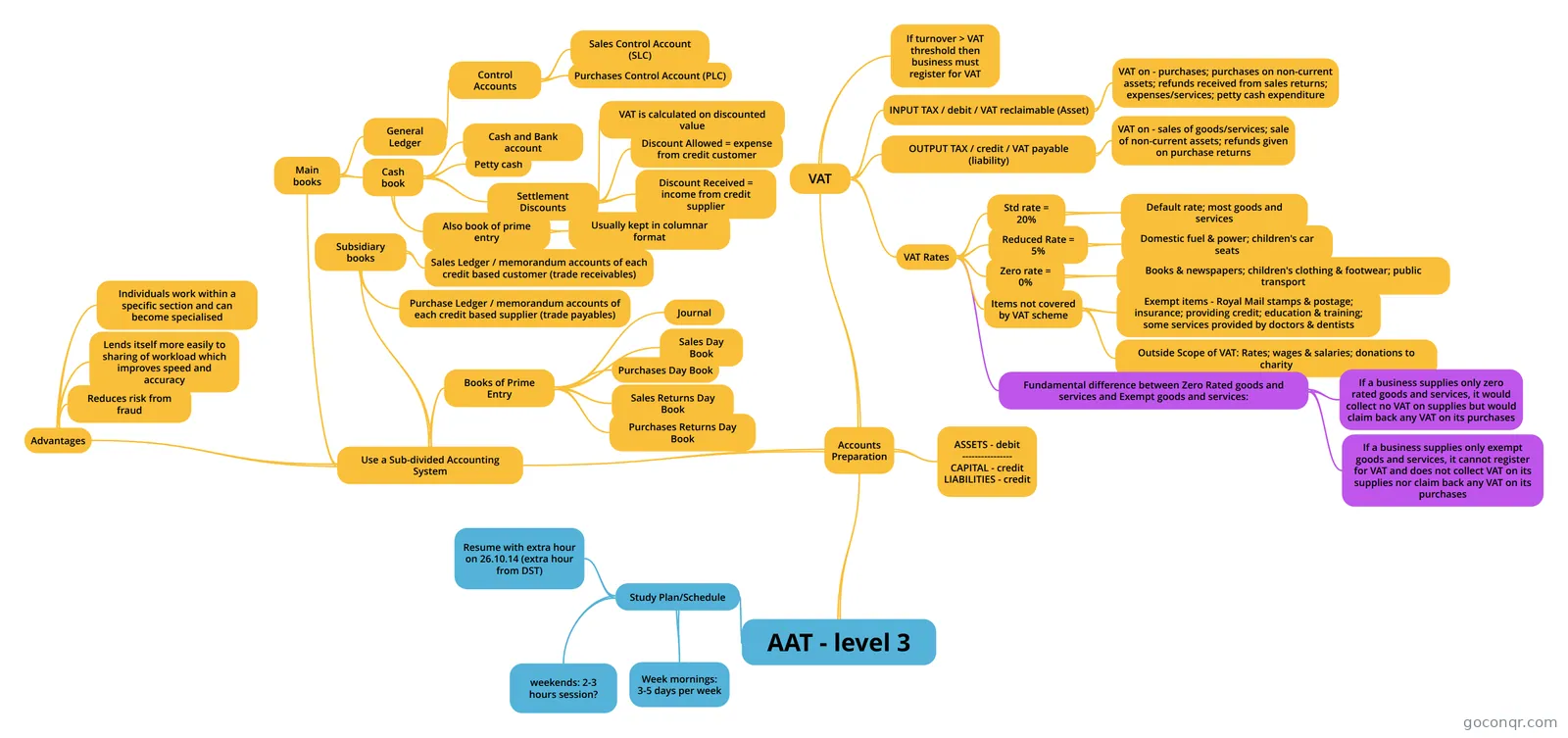 Mind map AAT - level 3
-
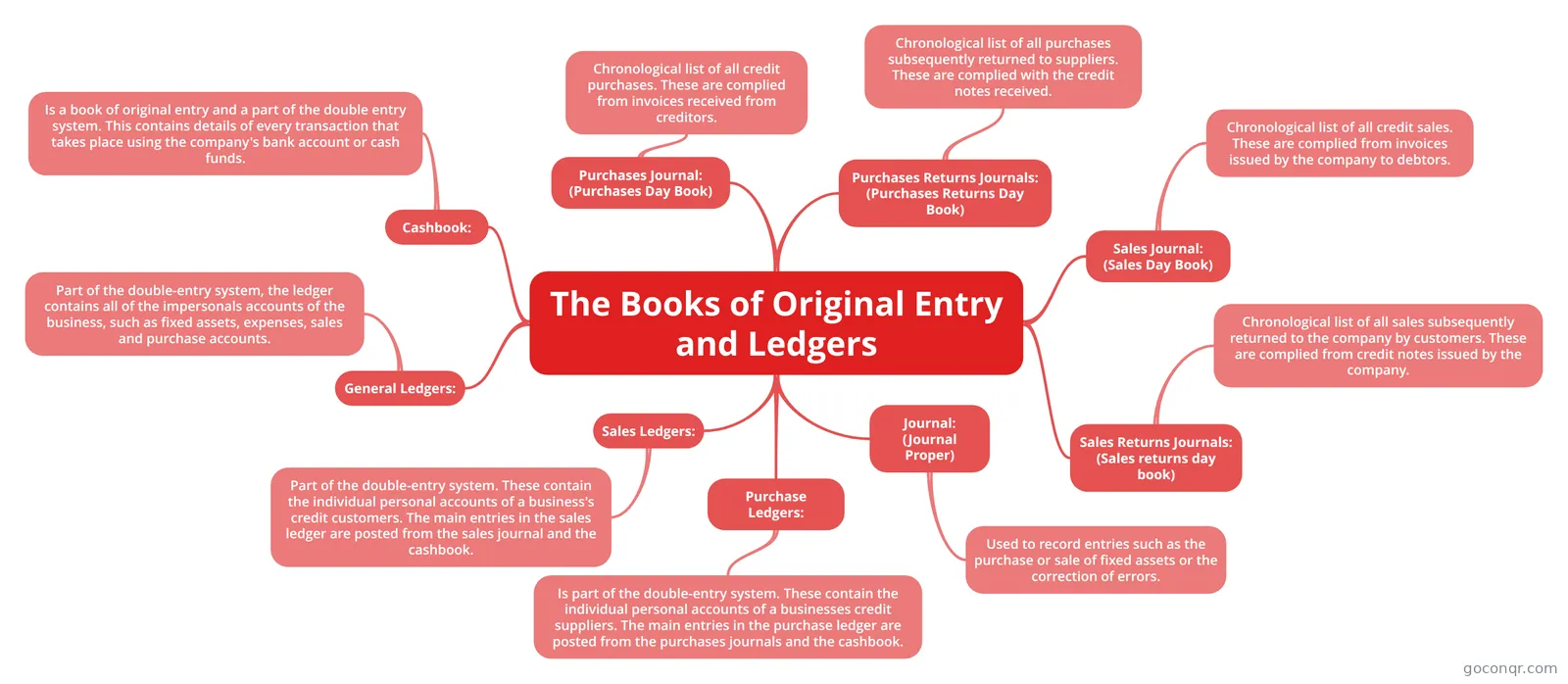 Mind map The Books of Original Entry and Ledgers
-
7 cardsBasics of Double Entry What are the two classifications of INCOME in double entry bookkeeping?
-
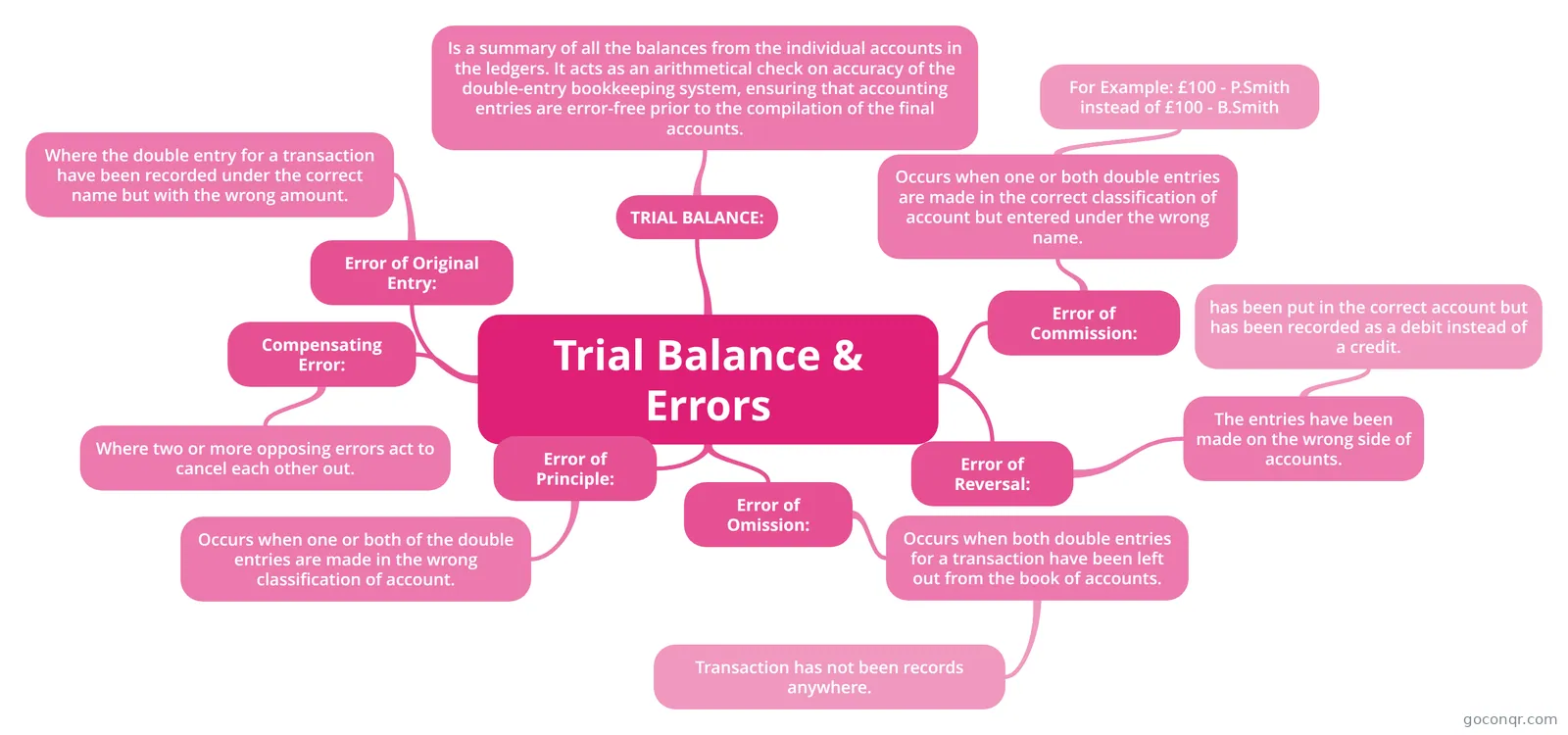 Mind map Trial Balance & Errors
Quizzes
-
20 questionsAccounting I - Objective 3.02 Test Test covering sales and cash receipts journals.
-
13 questionsFIA FA1 Recording Financial Transactions (Mock 1) Which of the following is the accounting equation?
-
32 questionsAccounting I - Objective 3.01 accounting I high school test
-
8 questionsUntitled Because an account form has columns for the debit and credit balance of an account, it is often referred to...
-
2 questionsmid term Which of the following is the normal way to present the accounting equation?
-
28 questionsChapter 5: Bookkeeping, Credits, and Collections Which of the following statements about double-entry bookkeeping is NOT true?
-
5 questionsquiz fdsaf
-
3 questionsZilaurs quiz What is the Accounting equation?
Mind maps
See all 21 mind maps-
AAT - level 3
-
The Books of Original Entry and Ledgers
-
Trial Balance & Errors
-
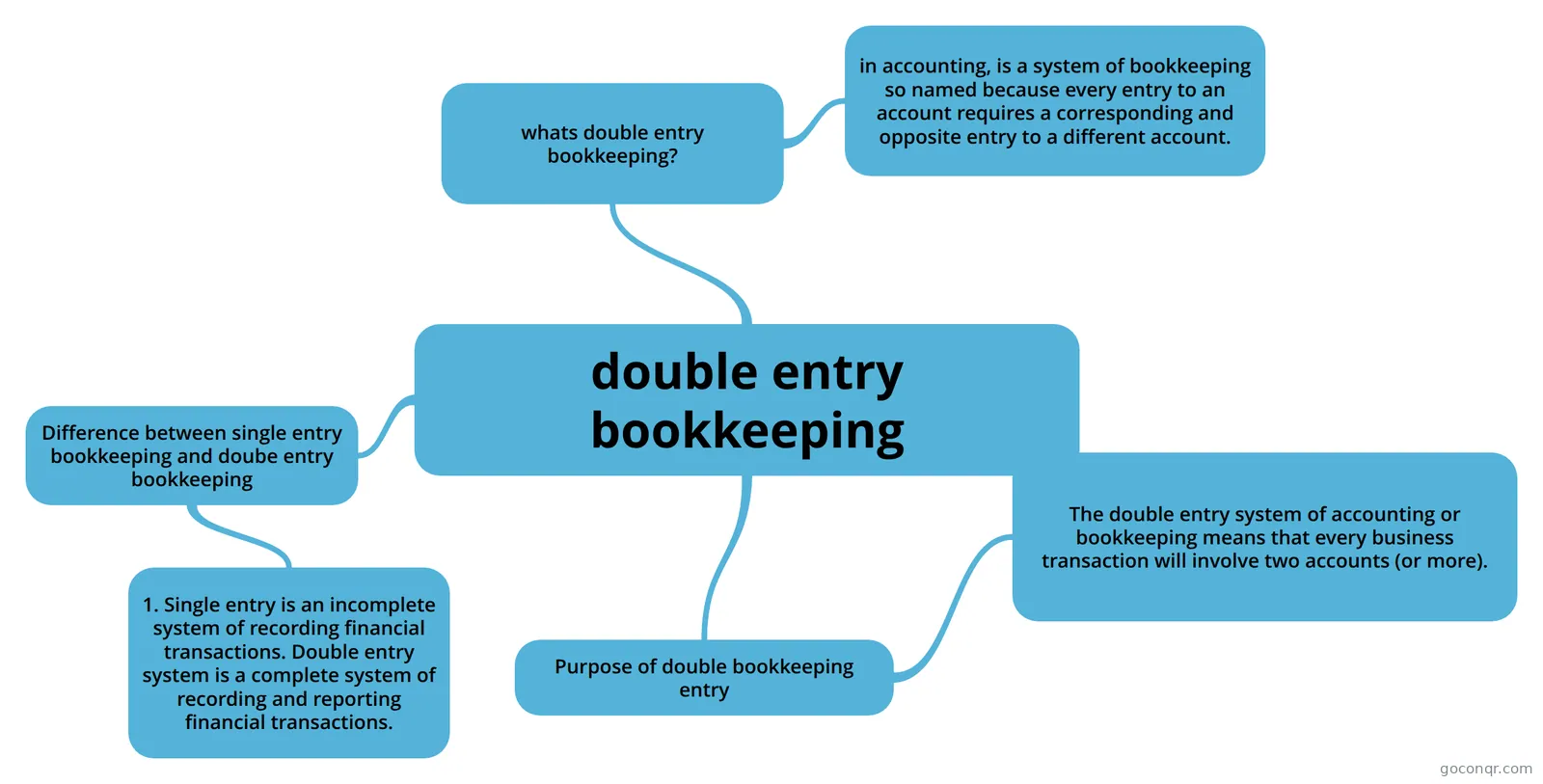 double entry bookkeeping my mind map
-
The Accounting Equation
-
Correction of errors
-
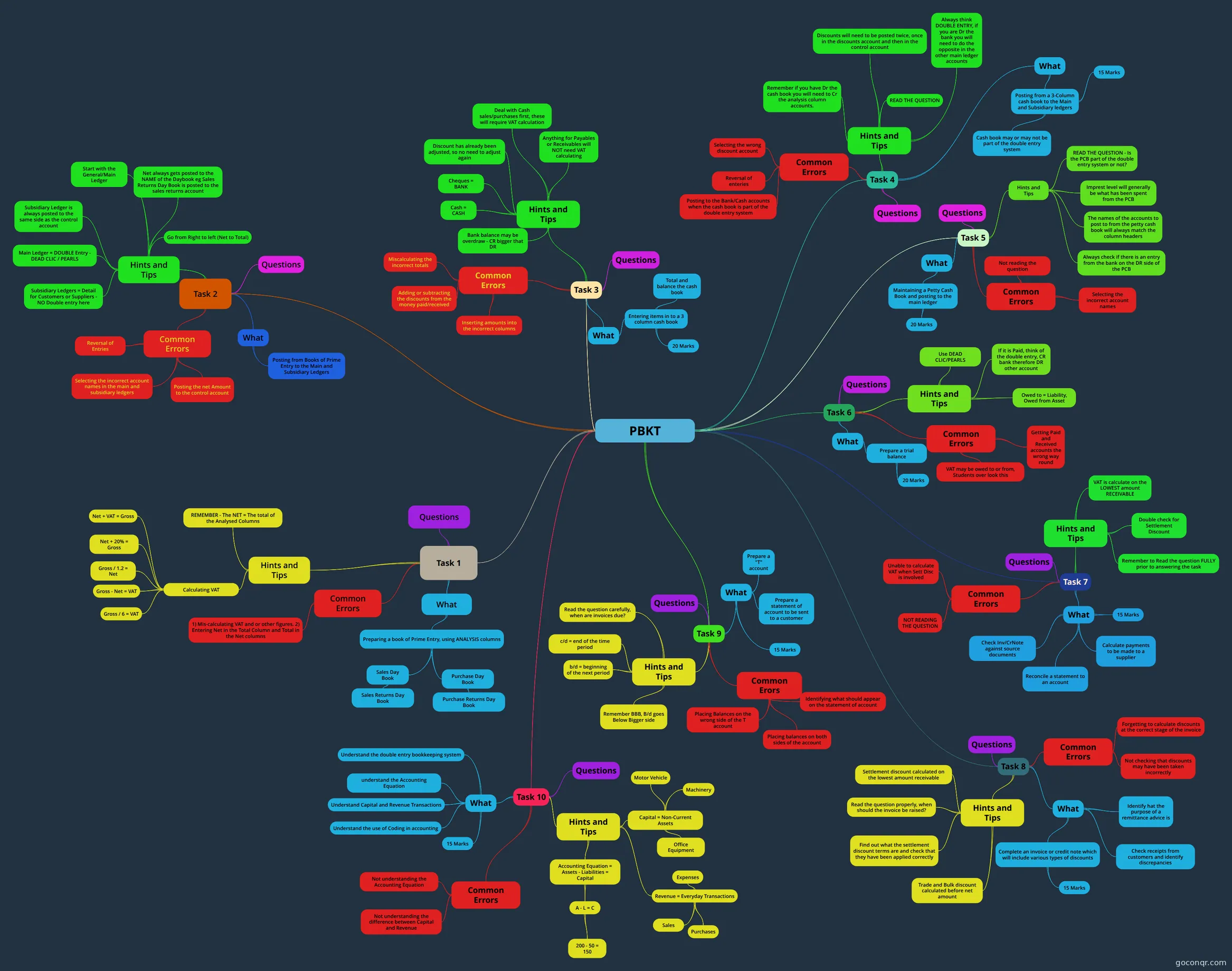 PBKT Mind map with questions for the AAT level 2 Processing Bookkeeping Transactions (PBKT) examination.
-
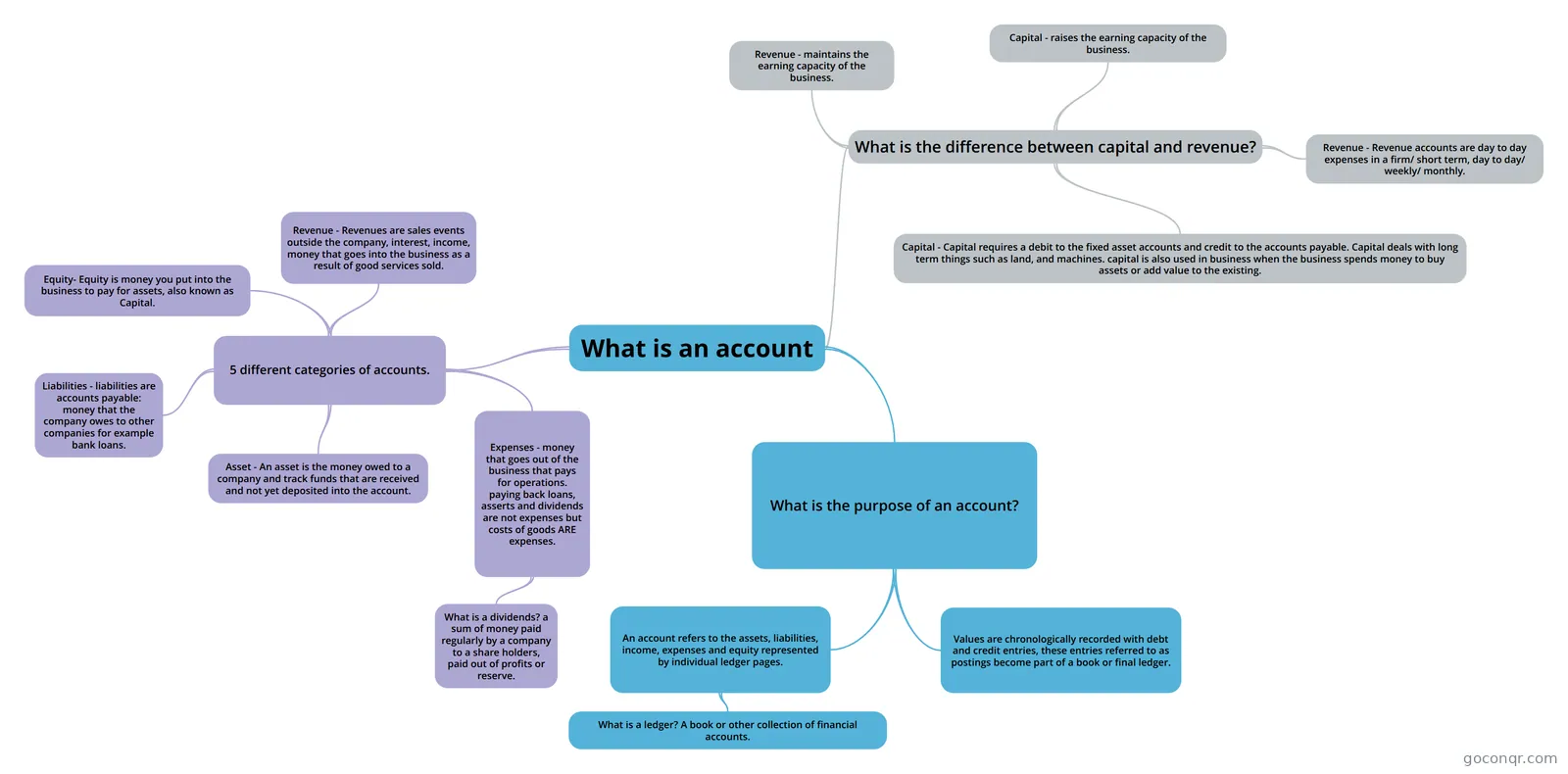 What is an account mind map describing what an account is.
Flashcards
See all 25 flashcards-
87 cardsComputerised accounting key terms
-
46 cardsBookkeeping Level 1 What is the definition of ACCOUNTS?
-
7 cardsBasics of Double Entry What are the two classifications of INCOME in double entry bookkeeping?
-
8 cardsJournal entries Credit to Mark Holmes of Coventry Univercity.
-
9 cardsFinancial Statements What do FINANCIAL STATEMENTS usually consist of when dealing with a sole trader?
-
106 cardsBookkeeping 1 Key Terms
-
26 cardsAAT BA2 Wages Statutory deductions are
-
17 cardsChapter 3 Vocab
Notes
-
Chapter 9 sec 4 Only those columns needed to record cash payment transactions are included in the cash payments journal. A cash payments journal may be set up to accommodate a business's frequent cash payment transactions. Since all ...
-
Acct. 9-5 Each entry in the Accounts Payable Debit column of a cash payments journal affects a vendor account. Individual amounts in the Accounts Payable Debit column are posted frequently to the proper vendor accounts in the a...
-
notes on accounting how is accounting information recorded? An invoice A receipt List of process used to record financial transaction? Book of prime entery sales day book/ sales return day book purchase day book/ purchase return day book...
Slides
More Accounting and auditing topics
About The Accounting Equation and Double-Entry Bookkeeping
GoConqr OriginalWhat the page covers
The resources follow the path a transaction takes. They begin with the accounting equation, then move to double entry, books of prime entry, ledgers, the trial balance and the correction of errors. Flashcards, mind maps, quizzes, slides and notes all sit side by side.
Where to start
If the ideas are new, begin with the flashcard decks Bookkeeping Level 1 and Basics of Double Entry. They define accounts, ledgers, assets, liabilities, capital, debtors and creditors, and explain how income and expenditure are classified. Then open the mind map The Accounting Equation to see how the pieces fit together.
- Read the equation resources first.
- Move to double entry and the journal, using the Journal entries deck for worked examples such as opening a business bank account or buying a shop.
- Look at the books of original entry, such as the purchases day book, which lists credit purchases compiled from invoices.
- Finish with the trial balance and error correction.
Using quizzes and maps together
Read a mind map first, then test yourself. The quiz FIA FA1 Recording Financial Transactions (Mock 1) asks what the accounting equation is and what the correct double entry is for goods bought on credit. If a question catches you out, go back to the matching map. The mind map Trial Balance & Errors explains that a trial balance is an arithmetical check on the double-entry system, and it pairs well with the notes on errors a trial balance can detect.
Where it sits
This unit belongs to the Accounting Foundations strand of Accounting and auditing. Some resources are aimed at AAT study, including a Level 3 mind map and notes, so professional candidates will find material to work with. Others suit GCSE Business or university courses.
When you are ready, choose one resource, work through it, and then build your own flashcards or maps from what you found hardest.
Frequently asked questions
Which resource should I open first?
If double entry is new to you, start with the flashcard decks Bookkeeping Level 1 and Basics of Double Entry. They cover the key terms and the classes of income and expenditure. Then read the mind map The Accounting Equation before trying a quiz.
What do the mind maps cover?
They cover books of original entry and ledgers, the trial balance and its errors, double entry bookkeeping, classification of accounts, control accounts and subsidiary books. Each one breaks a topic into short branches, so they work well for quick revision before a quiz.
Which quiz tests the basics?
FIA FA1 Recording Financial Transactions (Mock 1) asks about the accounting equation, spotting incorrect statements and the correct double entry for a credit purchase. Accounting I - Objective 3.02 Test asks you to write journal entries for cash sales with sales tax.
Are the resources free, and who made them?
Yes. Every resource listed here is free to open, study and take, with no account needed. They were made by GoConqr users, not by GoConqr itself. A free account also saves your quiz scores and lets you make your own material.
Which exams and levels do they suit?
Resources mention AAT, AAT Level 3, ACCA and GCSE Business. School students, university students and professional candidates can all find material, and teachers can use the ready-made quizzes, slides and notes in lessons.
What if I can't find the topic I need?
Try nearby titles first, such as Books of Prime Entry, Control accounts or Cashbook, since topics overlap. If nothing fits, make your own mind map or flashcards from your course notes and use the page's resources to check them.