
Introduction to Criminal Law and Principles of Criminalisation
206 resources created by 144 users
This Introduction to Criminal Law and Principles of Criminalisation page on GoConqr gathers community-made mind maps, flashcards, quizzes and notes, from actus reus, mens rea and causation to theft, homicide and inchoate offences. It's built for university students and professional candidates, school students, and teachers after ready-made material, all practising the elements of a crime and case recall. There are over 1,600 resources here, including more than 80 quizzes and over 900 mind maps. Pick a topic, try a quiz to find your gaps, then make your own revision sets.
Top Introduction to Criminal Law and Principles of Criminalisation resources
-
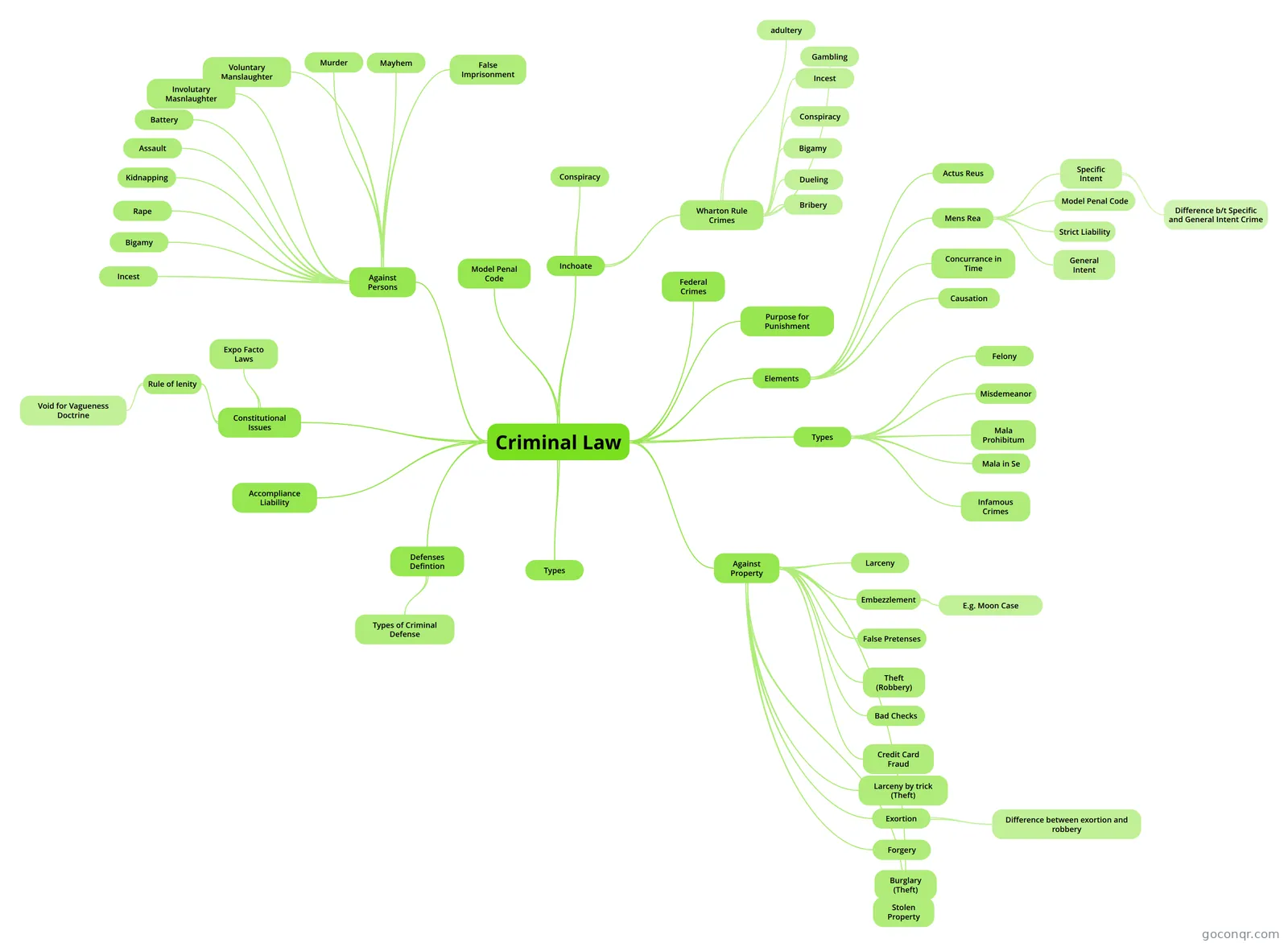 Mind map Criminal Law
-
70 cardsElements of a Crime Actus Reus, Omissions, Causation and Mens Rea
-
78 cardsAQA Law Unit 2 - Introduction to Criminal Liability
-
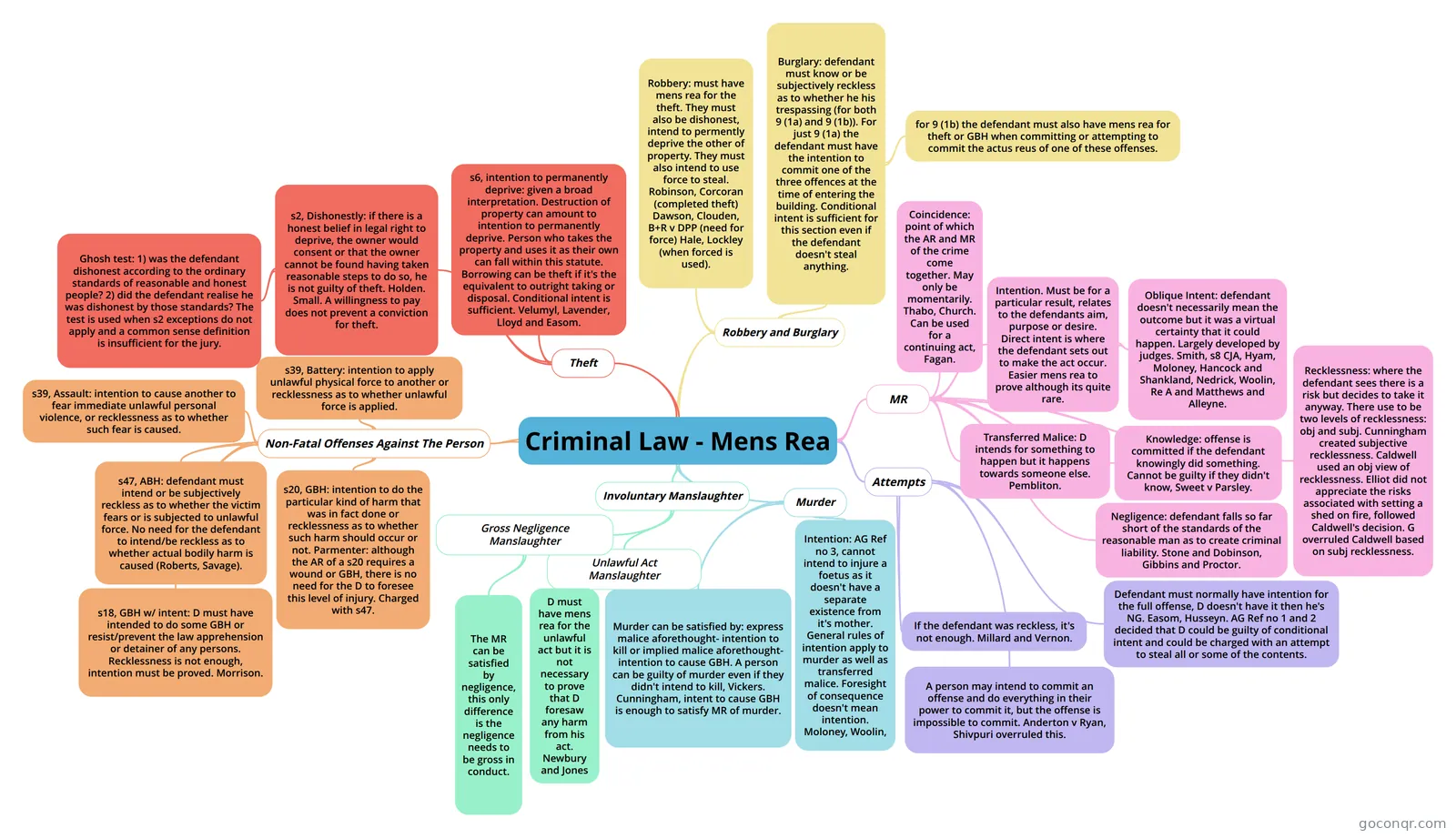 Mind map Criminal Law - Mens Rea
-
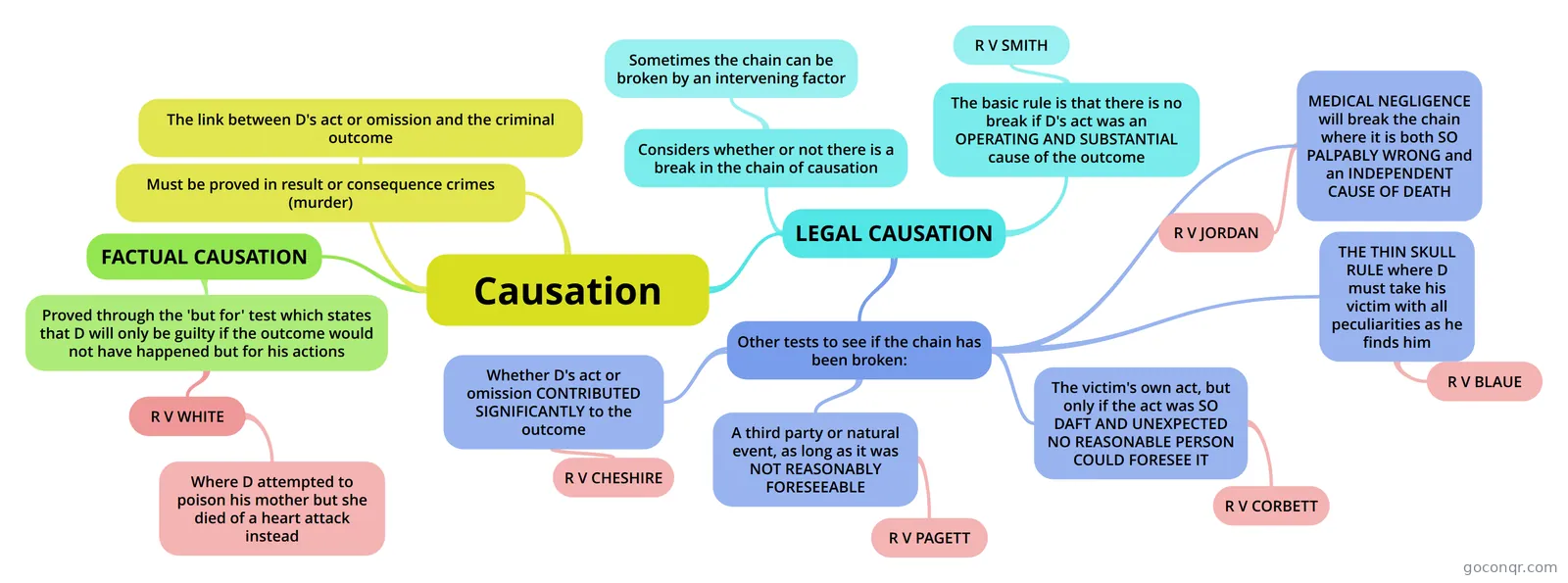 Mind map Causation
-
50 cardsOffences Against Property
-
30 questionsLS100: Chapter 14 Practice Quiz A crime is a social wrong or social evil that punishable under the law.
-
38 cardsOFFENSIVE WEAPONS LEGISLATION That makes it a criminal offence to carry a weapon in a public place without lawful authority.
Quizzes
See all 19 quizzes-
30 questionsLS100: Chapter 14 Practice Quiz A crime is a social wrong or social evil that punishable under the law.
-
10 questionsLaw AS (AQA) - Causation Which type of causation uses the 'but for' test?
-
7 questionsCriminal Law What is the main purpose of the Criminal Law?
-
5 questionsCanadian Criminal Law What are the two major elements of a crime?
-
11 questionsNature of Crime Quiz What is a crime?
-
8 questionsRobbery Robbery is an theft
-
53 questionsCriminal law Introduction R v G & another (2003) : two boys (11 & 12) went out camping without parents permission, they found newspap...
-
131 questionsCriminal Law The case of Stone v Dobinson [1977] demonstrates a duty can arise in which situations?
Mind maps
See all 77 mind maps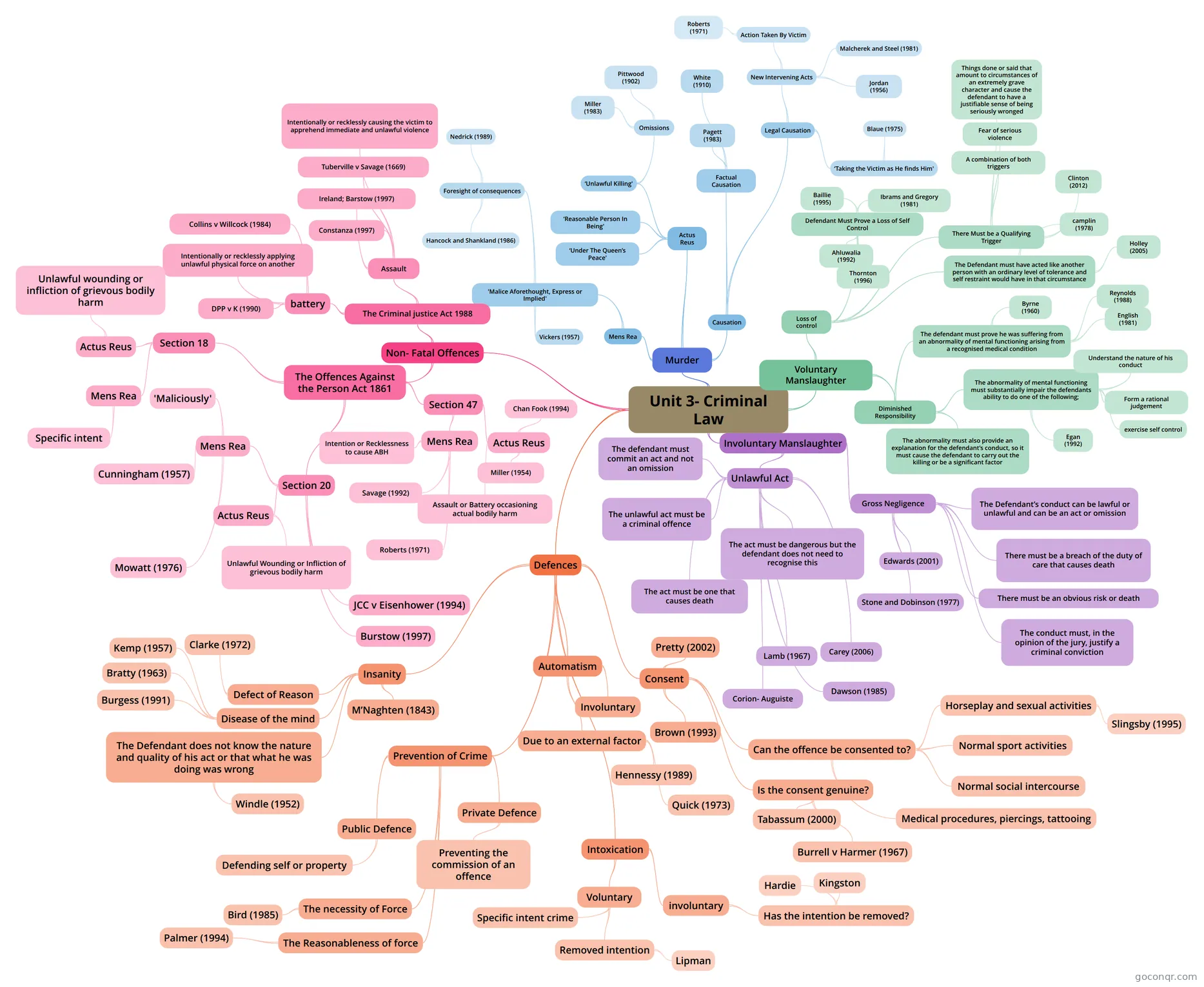
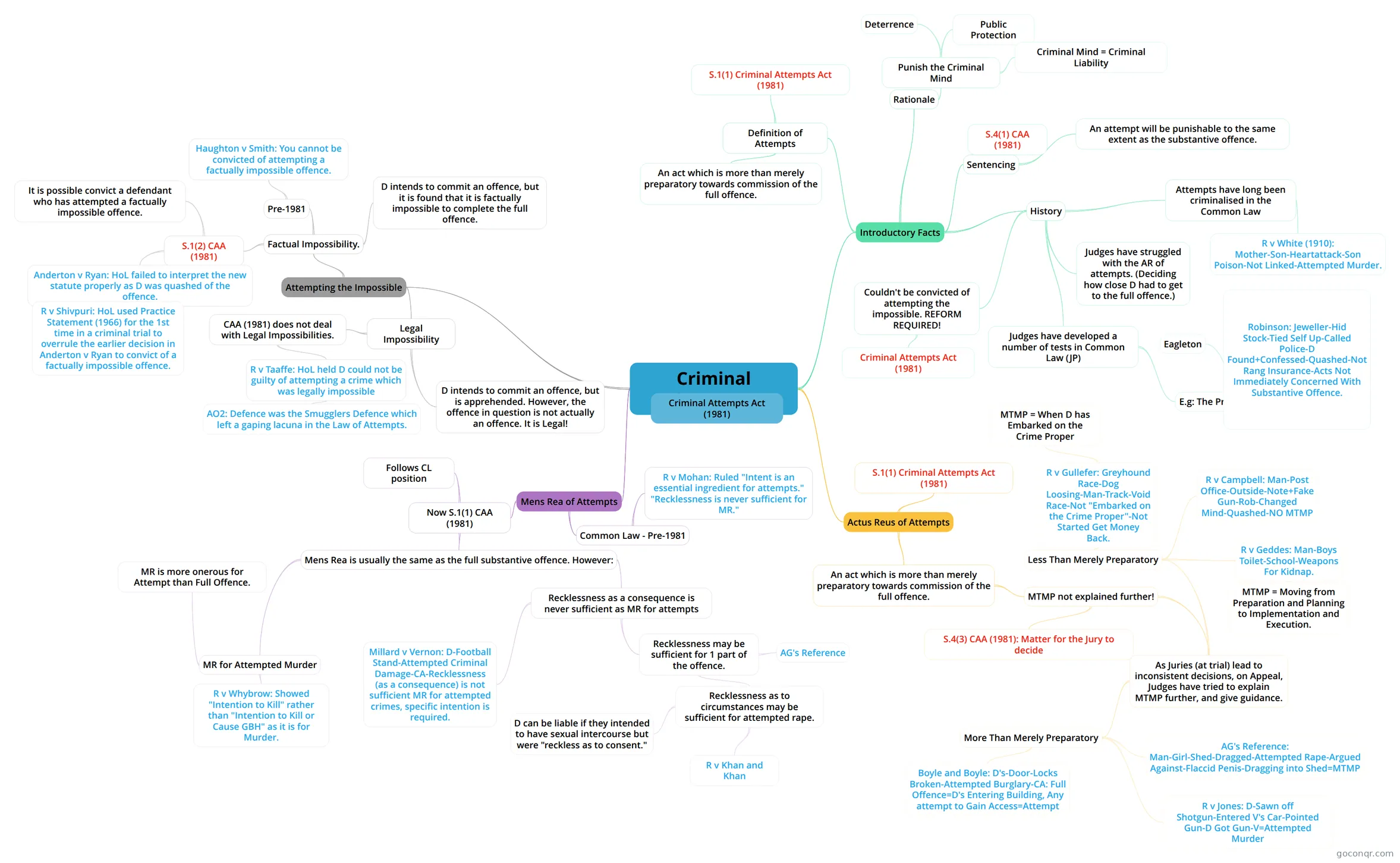
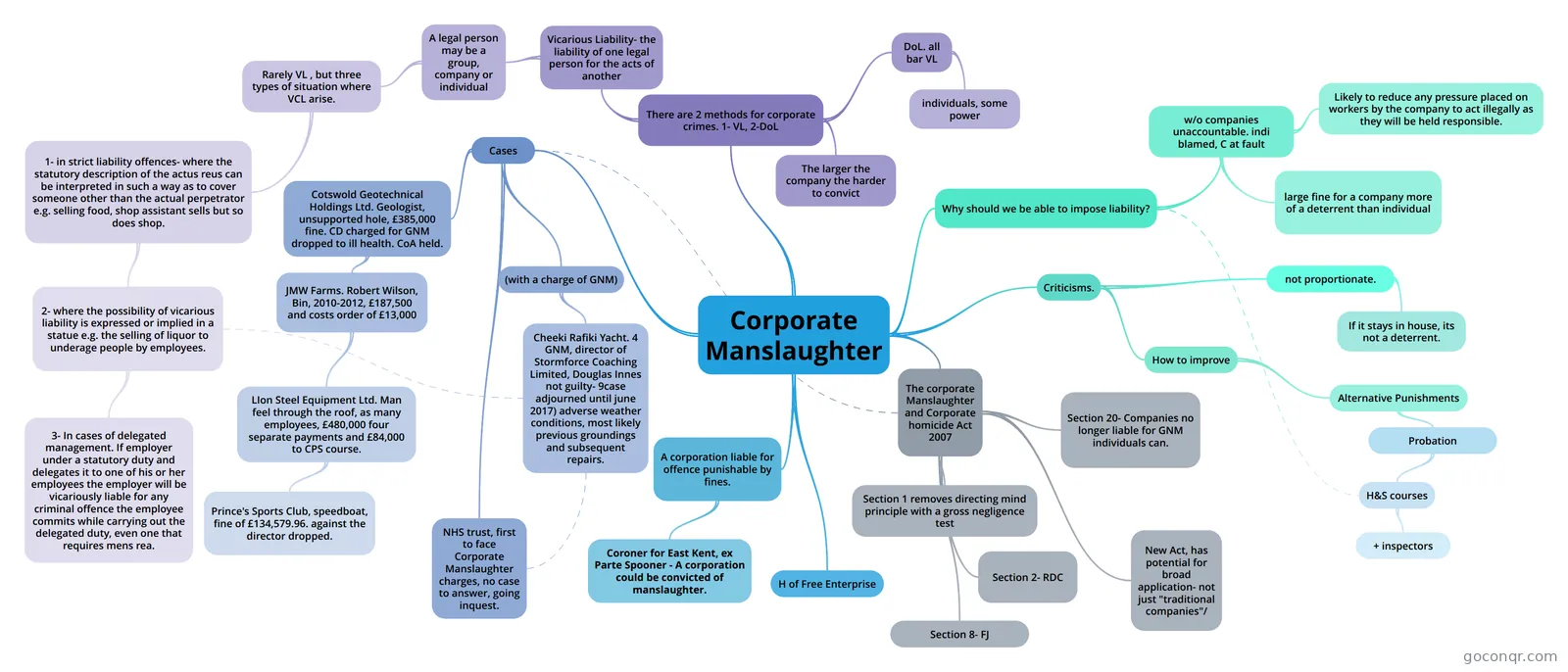
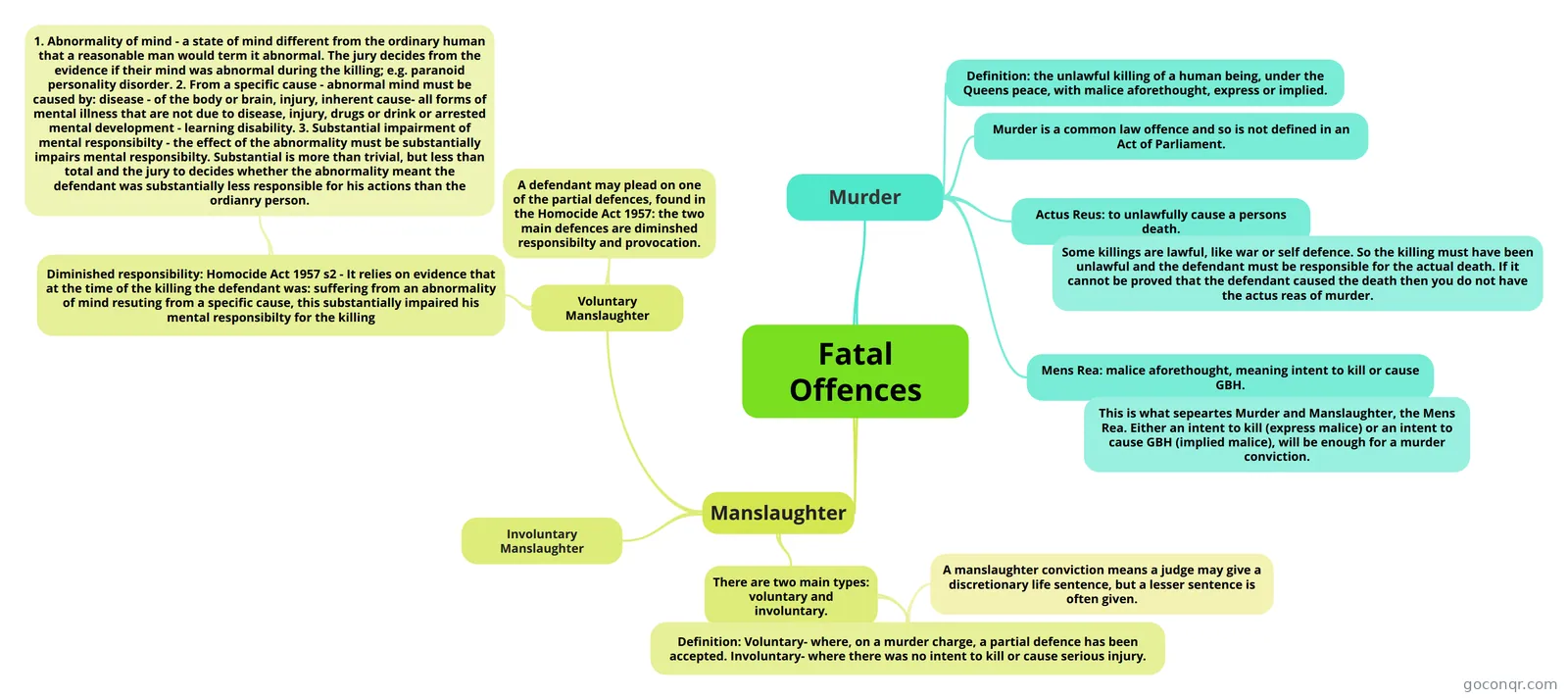
Flashcards
See all 92 flashcards-
70 cardsElements of a Crime Actus Reus, Omissions, Causation and Mens Rea
-
78 cardsAQA Law Unit 2 - Introduction to Criminal Liability
-
50 cardsOffences Against Property
-
38 cardsOFFENSIVE WEAPONS LEGISLATION That makes it a criminal offence to carry a weapon in a public place without lawful authority.
-
26 cardsA2 Law: Cases - Attempts Case Facts: More Than Merely Preparatory - Gullefer (1990)
-
43 cardsCriminal Law define police power
-
13 cardsCriminal Law Cases R v Miller [1983] 2 AC 161 (HL)
-
21 cardsBURGLARY S.9 THEFT ACT 1968 Section 9 Theft Act 1968
Flowcharts
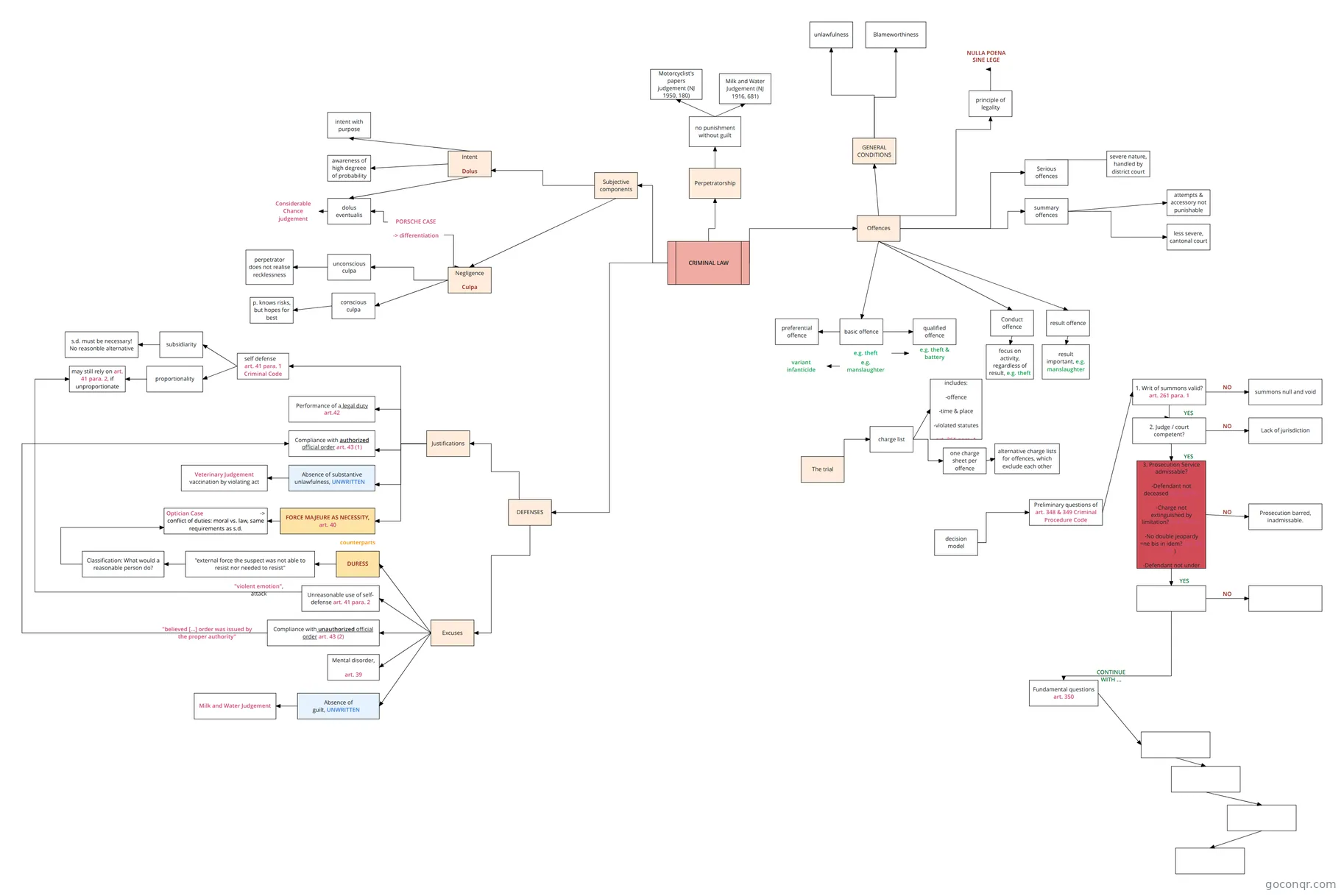
Notes
See all 15 notes-
Offences Against Property Offences and Defences Theft:Theft is the dishonest appropriation of property belonging to another with the intention to permanently deprive the other of it. s.1 of the THEFT ACT 1968.S.2 There is no definition of what is meant by acting di...
-
OCR A2 Law revision Murder: Common law offence, “The unlawful killing of a reasonable person in being and under the Kings/Queens peace with malice aforethought, express or implied” Punishable for murder in any country, provided the murde...
-
Gross negligence manslaughter The actus reus was defined in R v Adomako: a duty of care a breach of that duty a risk of death AdomakoV was a patient having an operation and it was D's job to ensure that the tubes which supplied oxygen to V were se...
-
CRIM 2260 Mens rea is all the mental elements involved in a criminal act not including voluntariness There are four basic forms of mens rea: Knowledge Recklessness Intention Wilful Blindness ...
-
CRIME HSC NOTES 1. The nature of crime: · The meaning of crime: A crime is an act or omission of duty injurious to the public welfare, for which punishment is pr...
-
Criminal Law - created from Mind Map Types Felony Misdemeanor Mala Prohibitum Mala in Se Infamous Crimes Against Property Larceny Embezzlement False Pretenses Theft (Robbery) Bad Checks Credit Card Fraud Larceny by trick (Theft) Exortion Stolen Property ...
-
Q + A Notes The 3 3's are 5 rule does not apply to Imitation firearms In Perjury you must beleive it not to be true , not know Voluntary Intoxication can be a defence to murder but not if the mens rea was formed after the intoxic...
-
Mandy Dooley - created from Mind Map Charge POCA applies? presumably - s15(1) Forgery and Counterfeiting Act 1981 AB 25-302 sentence - fine and / or imprisonment up to 10 case law R V Miller [2010] 2 Cr App R (S) CA - 3 x £20 - 2yrs down to 15 months for...
Slides
More Criminal law topics
About Introduction to Criminal Law and Principles of Criminalisation
GoConqr OriginalWhat this unit page covers
This page gathers material on the foundations of criminal liability. The mind map Criminal Law gives a wide overview, running from types of crime and defences to accomplice liability, inchoate offences, the Model Penal Code and federal crimes. Other resources look at the building blocks one by one: the guilty act, the guilty mind, and the link between the two.
Where to start
Begin with the elements of a crime. The flashcard deck Elements of a Crime sets out the three ways to prove actus reus, including acts, omissions and the duties that can arise from contract or a special relationship. The AQA Law Unit 2 - Introduction to Criminal Liability deck covers voluntary acts, omissions and cases such as Hill v Baxter.
- Read the Actus Reus - Guilty Act mind map on failure to act and omissions liability.
- Move to the Criminal Law - Mens Rea mind map, which explains intention as aim, purpose or desire, and direct intent.
- Continue with the Causation mind map, which covers factual causation and the 'but for' test.
Moving on to offences
Once the basics feel familiar, look at specific offences. The notes on offences against property and the Theft mind map deal with dishonest appropriation under the Theft Act 1968. The deck on gross negligence manslaughter covers R v Adamako and the duty of care. There are also resources on murder, voluntary manslaughter, non-fatal offences, consent and criminal attempts.
Using quizzes and maps together
Read a mind map first, then take a quiz on the same topic, such as the Law AS (AQA) causation quiz. Note what you missed and go back to the map branch that covers it. Flashcards then help you fix case names and rules in memory.
Where it sits
This unit belongs to the Foundations of Criminal Law strand in the Criminal law subject. Resources suit A-level Law, GCSE Law, LLB and bar exam study, among others.
Open a mind map that matches your next lesson, and see how far the quizzes take you.
Frequently asked questions
Which resource should I open first?
Start with the Elements of a Crime flashcards or the Actus Reus - Guilty Act mind map. They set out acts, omissions and duties, which the later topics build on. After that, move to the mens rea and causation maps before looking at specific offences.
What do the mind maps cover?
The mind maps range from a broad Criminal Law overview to single topics such as causation, mens rea, theft, murder, voluntary manslaughter, consent, strict liability and criminal attempts. Over 900 are listed, so you can pick one that matches your current topic.
Are the resources free to use?
Yes. Every resource listed here is free to open, study and take, with no account needed. They were made by GoConqr users rather than by GoConqr itself, so it helps to check them against your own course materials.
Which exams and levels do these resources suit?
The listed resources mention A-level Law, OCR A-level Law, GCSE Law, LLB, the MBE and the bar exam. Roughly half the material is aimed at university level, with a large share for school students and a smaller share for professional candidates.
Are there quizzes as well as maps?
Yes, there are more than 80 quizzes. Examples include a causation quiz for Law AS (AQA), a Robbery quiz, a Nature of Crime quiz and a quiz on arson and burglary. Use them after reading a map to test what you remember.
What if I cannot find my topic?
Try a nearby topic first, since many resources overlap, for example the notes on transferred malice or the contemporaneity rule. If it is still missing, a free account lets you make your own quizzes, mind maps, flashcards and notes.