
Memory flowcharts
63 flowcharts by 41 users · Page 1 of 2
This GoConqr page gathers memory flowcharts on topics from working memory models to forgetting and eyewitness testimony. School students, university students and professional candidates can use them to practise these topics, while teachers can find ready-made material. There are over 40 flowcharts for study at school, university and professional level; pick one to begin.
Select topic
- Memory Processes112
- Coding, Capacity and Duration of Memory113
- Types of Memory233
- Long-Term Memory230
- Models of Memory415
- Multi-Store Model of Memory443
- Working Memory Model308
- Levels of Processing30
- Reconstructive Memory31
- Forgetting175
- Amnesia24
- Eyewitness Testimony370
- Cognitive Interview98
- Memory Improvement Strategies39
- Learning and Memory69
Flowcharts
-
Memory
-
Memory Model describes the path that information takes when it is being encoding to the brain
-
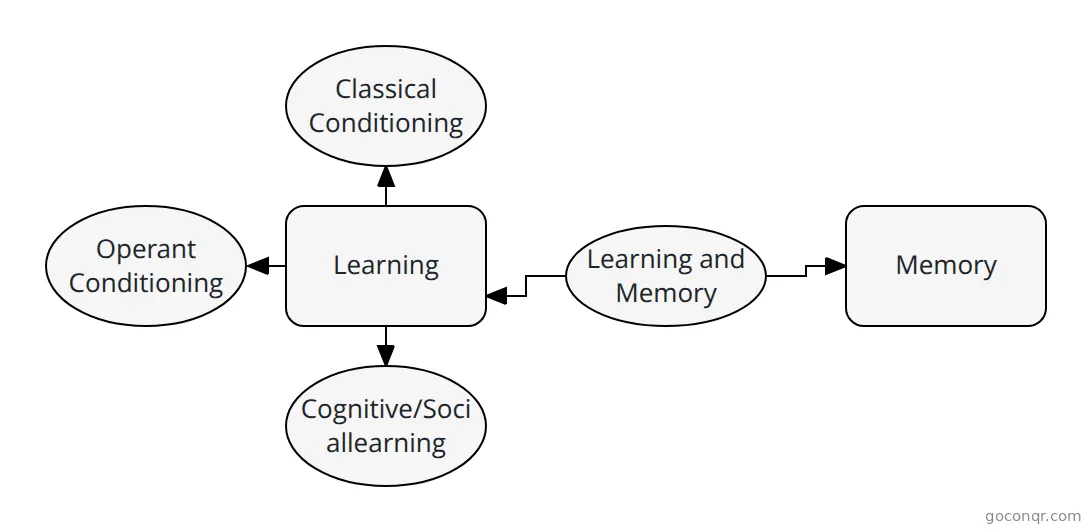 Unit 6: Learning and Memory Flow Chart A flow chart of the learning and memory unit of AP Psychology in high school!
-
The Working Memory Model
-
Accuracy of Eyewitness Testimony: Anxiety
-
Untitled
-
Multi-store model
-
Working model
-
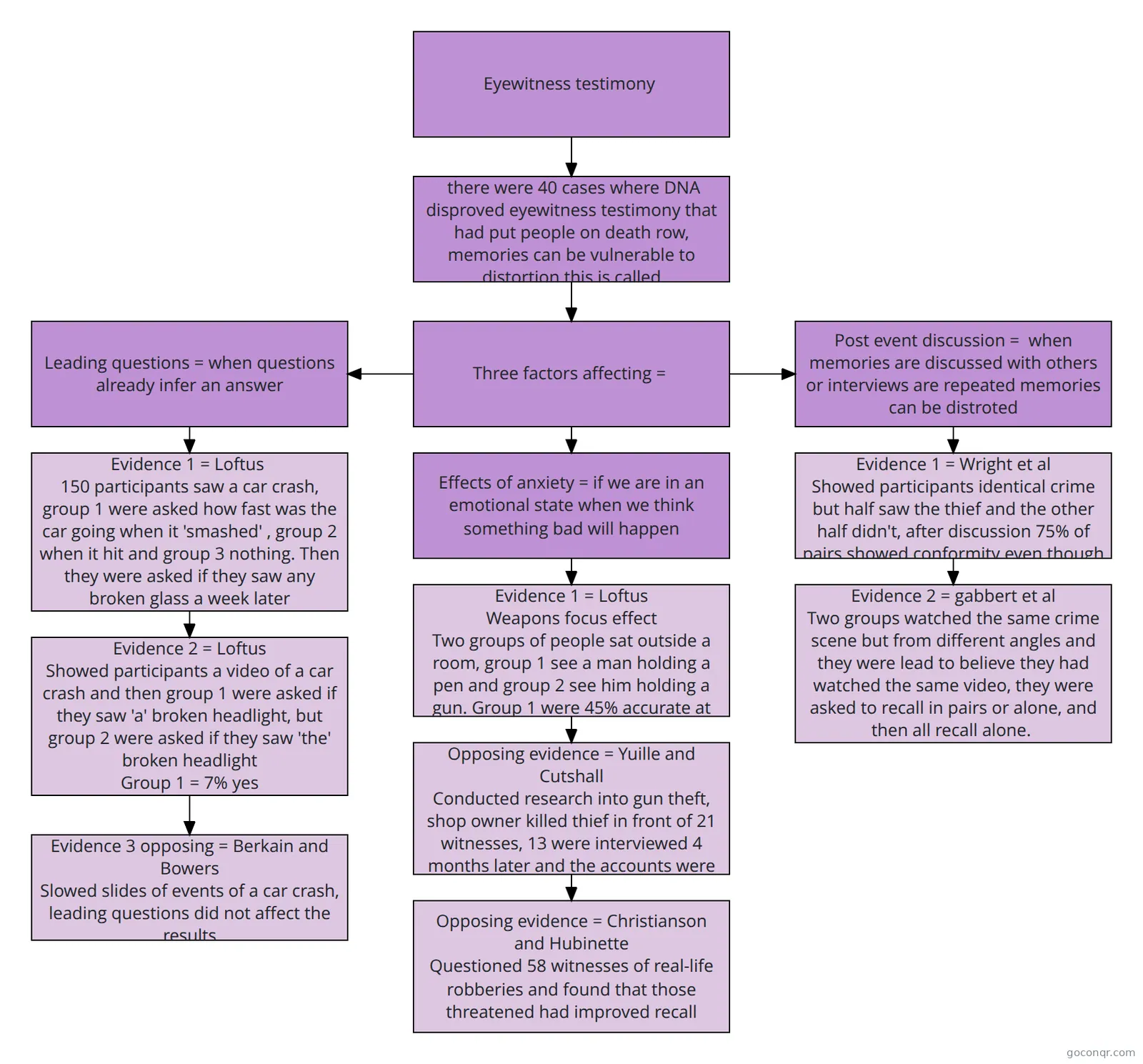 Eyewitness testimony
-
Encoding
-
The Multistore Model
-
Memory
-
Consolidation of memories through sleep.
-
Cognitive interview
-
Working Memory Model
-
Short-Term & Long-Term Memory
-
Accuracy of Eyewitness Testimony: Misleading Information
-
Memory
-
Explanations for Forgetting: Interference
-
The Working Memory Model
-
The Working Memory Model - Baddeley & Hitch (1974)
-
Explanations for Forgetting: Retrieval Failure
-
Accuracy of Eyewitness Testimony: The Cognitive Interview
-
Cognitive Interview
-
Types of LTM
-
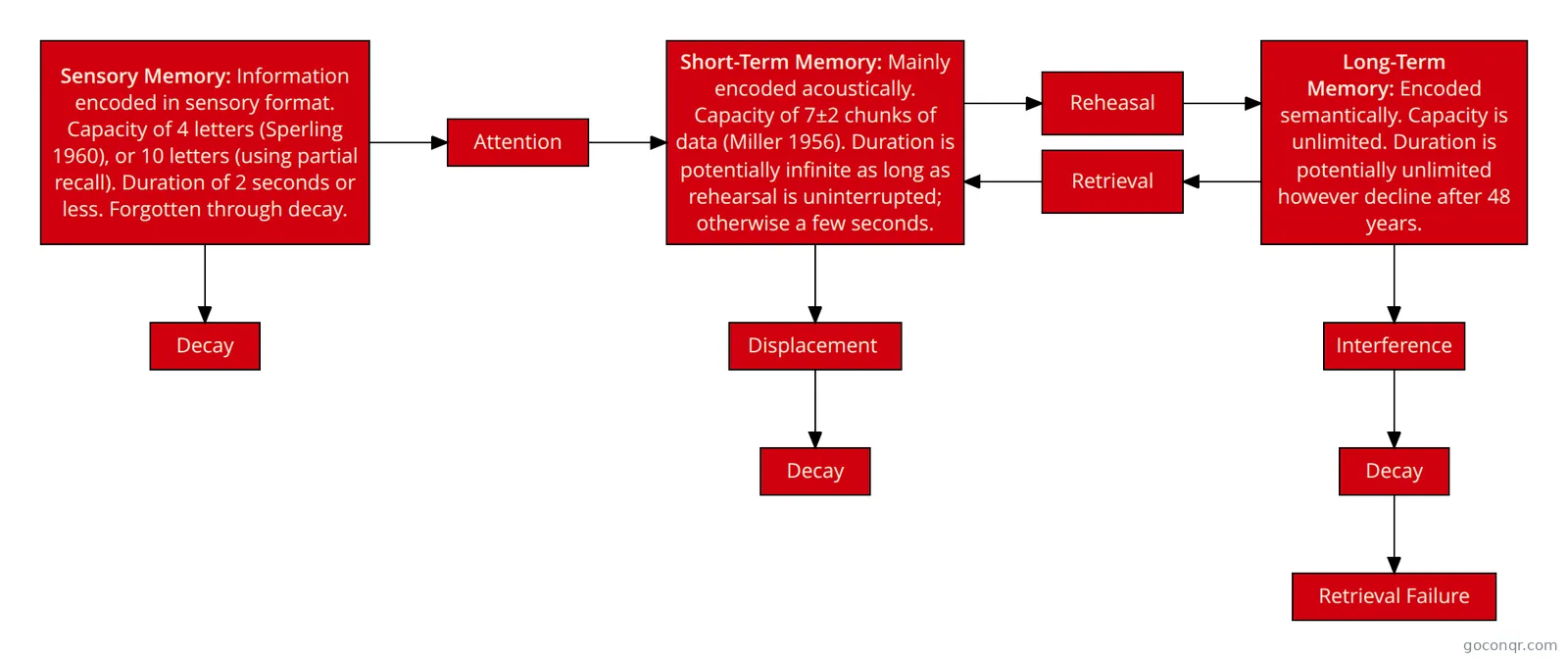 Multi-store Model - Atkinson & Shiffrin (1968/1972) Multi-store Model - Atkinson & Shiffrin (1968/1972)
-
The Multi-Store Model of Memory
-
Retrieval cues
-
Untitled
-
Atkinson-Shiffrin Multi-Store Model of Memory
-
Atkinson - Shiffrin Multi-store model
-
Tulving's model of Long-term Memory (1972)
-
Interference theory
-
Mulit-store memory model
-
Working Memory model
-
Types of LTM
-
Untitled
-
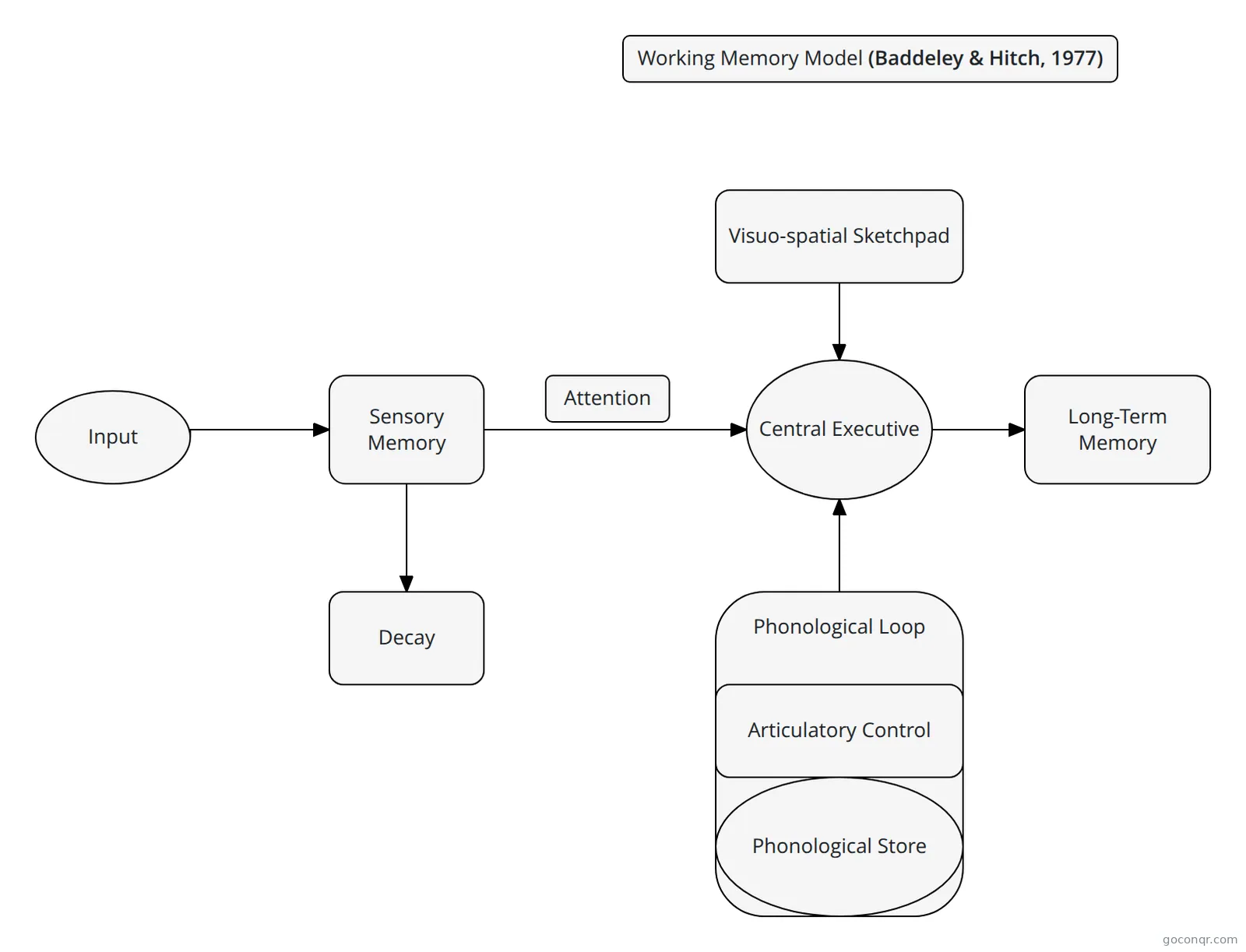 Foundations in Psychology - Semester 1, Lecture 1 Working Memory
-
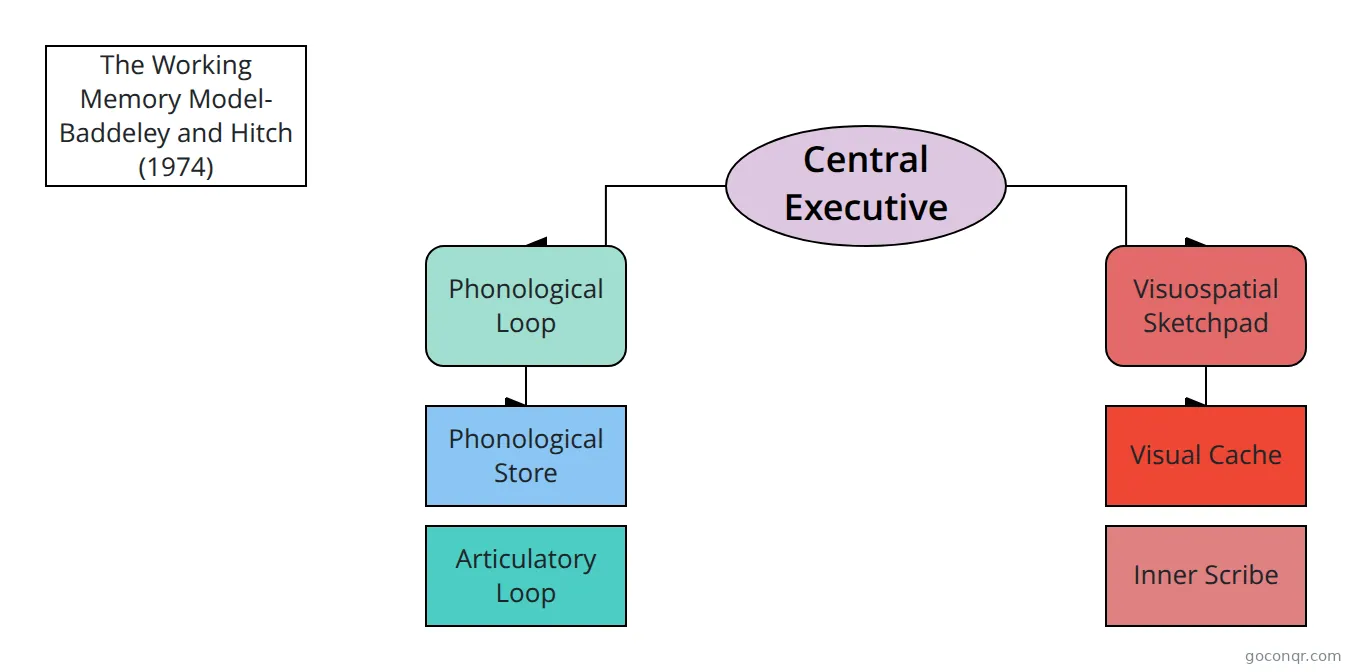 Working Memory Model Working Memory Model- Baddeley and Hitch (1974)
-
Untitled
More Memory resources
About memory flowcharts
GoConqr OriginalUsing memory flowcharts
Start with Memory Model for a view of sensory, working and long-term memory. Its layout gives you a starting point before you look more closely at an individual model. The Working Memory Model describes the central executive and the phonological loop.
For a different part of the unit, Types of LTM brings together semantic, procedural and episodic memory. The list also includes flowcharts on interference, retrieval cues and eyewitness testimony.
Revise with the format
Follow the connections in a flowchart, then cover it and try to recall the linked ideas. Reopen it to check what you missed. Comparing flowcharts on the same model can help you see how users have organised the material.
If you want to check recall with questions, switch to a quiz on the Memory unit page. A mind map offers another way to review a topic visually. Choose a flowchart and trace its connections.
Frequently asked questions
Which flowchart is a good place to start?
Memory Model is a useful starting point because it brings sensory, working and long-term memory together. For a closer look at working memory, The Working Memory Model describes components including the central executive and phonological loop. Both are listed on this page.
What topics do the flowcharts cover?
The list covers memory models, types of long-term memory, encoding, forgetting and eyewitness testimony. For example, Types of LTM brings together semantic, procedural and episodic memory, while Accuracy of Eyewitness Testimony: Anxiety looks at anxiety in relation to testimony.
Are these flowcharts free to use?
Yes. Every flowchart listed here is free to open and study without an account. The resources were made by GoConqr users, not by GoConqr. A free account also lets you save quiz scores and make your own quizzes, mind maps, flashcards and notes.