
Photography Basics, Cameras and Exposure
16 resources created by 13 users
This Photography Basics, Cameras and Exposure page on GoConqr gathers community-made quizzes, mind maps, flashcards and notes, from camera parts and lenses to aperture, shutter speed, ISO and depth of field. It's built for school students revising a topic, university students filling gaps, and teachers after ready-made material. There are over 100 resources here, including more than 20 quizzes, over 20 mind maps and more than 40 flashcard decks, mostly at school and general level. Pick a topic, then test yourself.
Top Photography Basics, Cameras and Exposure resources
-
18 questionsQuiz 1 Preparation for Quiz 1
-
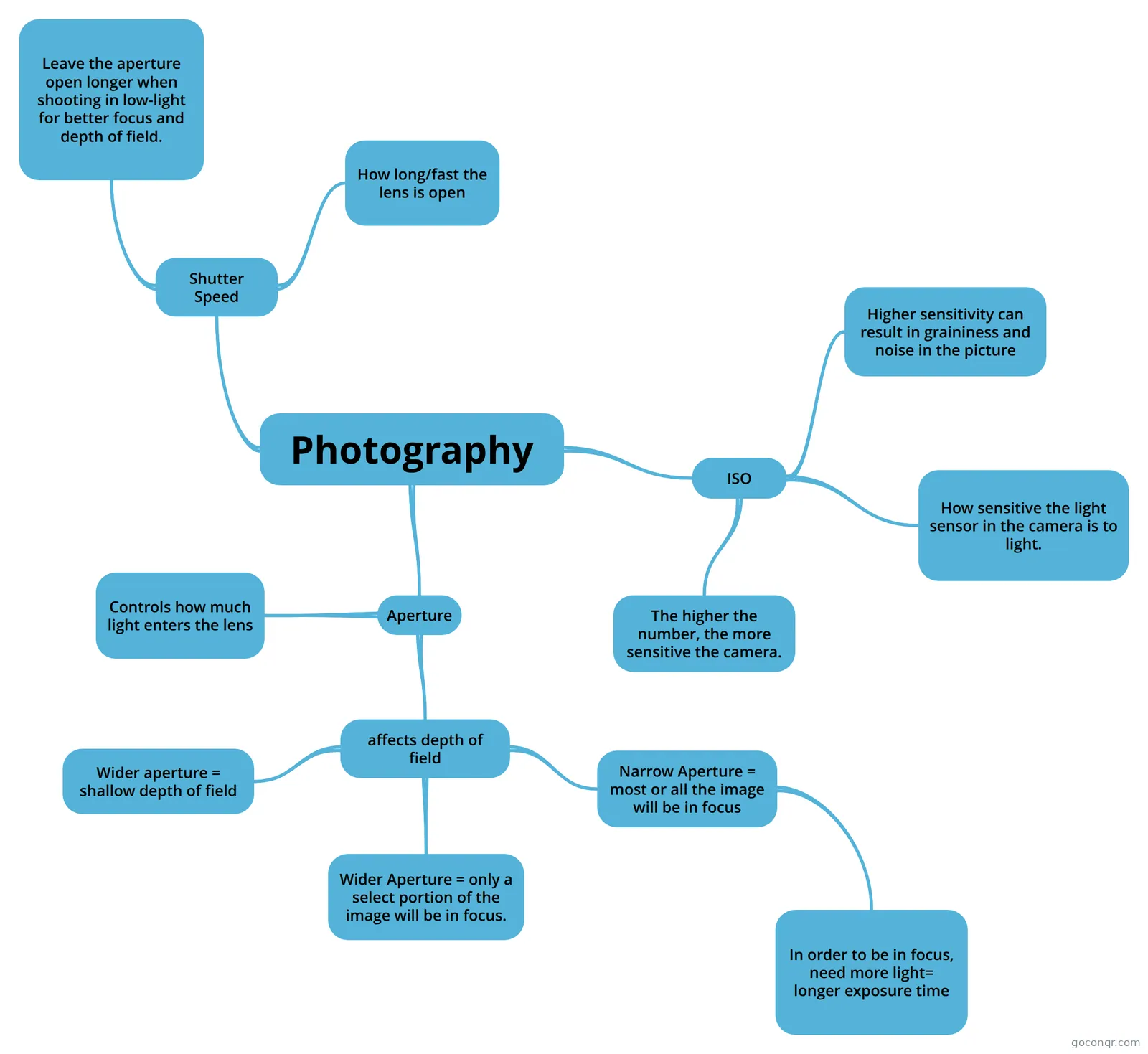 Mind map Photography A mind-map study guide for basic photography terms
-
3 questionsUnderstanding Depth of Field (DOF) Depth of Field is NOT controlled by which of the following variables? Check all that may apply.
-
130 questionsPhoto exam Which tool permits you to make corrections without sampling first? The tool samples the surrounding area to...
-
79 cardsVICO 1421 Photographers VICO 1421 - Intro to Photography Midterm Review - Photographers
-
37 cardsPhotography Semester 1 Final DSLR stands for..
-
8 questionsLighting Where does the sun need to be in order to have good lighting?
-
17 cardsQuiz 3 What is Focal Length?
Quizzes
-
18 questionsQuiz 1 Preparation for Quiz 1
-
3 questionsUnderstanding Depth of Field (DOF) Depth of Field is NOT controlled by which of the following variables? Check all that may apply.
-
130 questionsPhoto exam Which tool permits you to make corrections without sampling first? The tool samples the surrounding area to...
-
8 questionsLighting Where does the sun need to be in order to have good lighting?
-
10 questionsUsing a feature camera The f stop adjustment controls the shutter speed
-
5 questionsCamera Modes Auto modes chooses the following camera settings for you:
-
5 questionsCamera Parts Quiz All types of memory cards are compatible with all kinds of camera bodies. True/False?
Mind maps

Flashcards
-
79 cardsVICO 1421 Photographers VICO 1421 - Intro to Photography Midterm Review - Photographers
-
37 cardsPhotography Semester 1 Final DSLR stands for..
-
17 cardsQuiz 3 What is Focal Length?
-
8 cardsWEEK 1 - EXPOSURE What does the term 'Exposure' mean?
-
7 cardsMISCELLANEOUS What does 'Bit Depth' refer to?
-
3 cardsFOCAL LENGTH Short focal length =
More Photography and film topics
About Photography Basics, Cameras and Exposure
GoConqr OriginalWhat the resources cover
This unit is about how a camera works and how exposure is set. The mind map 3 fundementals. lays out ISO, shutter speed and aperture side by side: shutter speed as the time the sensor is exposed to light, and ISO as sensitivity to light. The mind map Manual Exposure Control and the flashcard decks Aperture and Shutter speed go deeper on each setting.
Beyond exposure, you will find resources on focus, focal length, white balance, resolution, lighting, angles and backgrounds, and types of lenses. A few look at digital photography more broadly, such as the mind map on photography in the era of web 2.0.
Where to start
- Open the mind map What is photography? or the notes Camera Basics for an overview.
- Move to Camera Parts Quiz and the flashcard deck PARTS OF A CAMERA to learn the vocabulary.
- Work through the three exposure settings with the maps and decks named above.
- Try Understanding Depth of Field (DOF), which asks which variables do not control depth of field and how camera-to-subject distance matters.
Using quizzes and maps together
Read a mind map first to see how the ideas connect, then take a quiz on the same topic. Where an answer surprises you, go back to the matching map branch or flashcard. Camera Settings and Camera Modes suit this approach well.
The flashcard sets labelled by week, such as WEEK 2 - CORRECT EXPOSURE and WEEK 4 - Wide Depth of Field, follow a course-like order, so they work for step-by-step revision. Teachers can pick a quiz or deck and set it as ready-made material.
Where this unit fits
This unit sits in the Photography Foundations strand of the Photography and film subject. It covers the starting skills that the rest of the strand builds on.
Choose one resource that matches what you are studying today, and see how much of it you can recall without looking.
Frequently asked questions
Which resource should I open first?
Start with the mind map What is photography? or the notes Camera Basics to get the overall picture. Then try Camera Parts Quiz to check you know the main parts. After that, move on to the maps and flashcards about aperture, shutter speed and ISO.
What do the mind maps on this page cover?
They cover the three exposure fundamentals of ISO, shutter speed and aperture, plus manual exposure control, focus, the DSLR camera, compact system cameras, visible light and setting up the shot. Some also look at how digital images have changed photography.
Are the resources free to use?
Yes. Every resource listed here is free to open, study and take, with no account needed. They were made by GoConqr users, not by GoConqr itself, so styles and depth vary from one resource to the next.
Who are these resources suited to?
They suit school students revising a topic, university students filling gaps, and teachers looking for ready-made material. The mix leans towards school and general level, with smaller shares at university level, so beginners will find plenty to work with.
Which quiz tests depth of field?
Understanding Depth of Field (DOF) is the one to try. It asks which variables do not control depth of field and about the relationship with camera-to-subject distance. The flashcard deck WEEK 4 - Wide Depth of Field is a useful companion.
What if I can't find what I need?
Make your own. A free account lets you save quiz scores and create your own quizzes, mind maps, flashcards and notes, so you can fill any gap with material that matches your course. Meanwhile, browse the flashcard decks on focus and focal length.