
Film Language and Mise-en-scène
163 resources created by 141 users
This Film Language and Mise-en-scène page on GoConqr gathers community-made flashcards, mind maps, quizzes and notes, from camera shots and angles to editing, sound and narrative structure. It's built for school students, university students and professional candidates revising film terms, plus teachers after ready-made material. There are over 160 resources here, including more than 100 mind maps, more than 30 flashcard decks and more than 5 quizzes, made by over 130 contributors. Pick a deck, test yourself with a quiz, then build your own set.
Top Film Language and Mise-en-scène resources
-
14 cardsNarrative Structure
-
23 cardsFilm Terminology Mise en scene
-
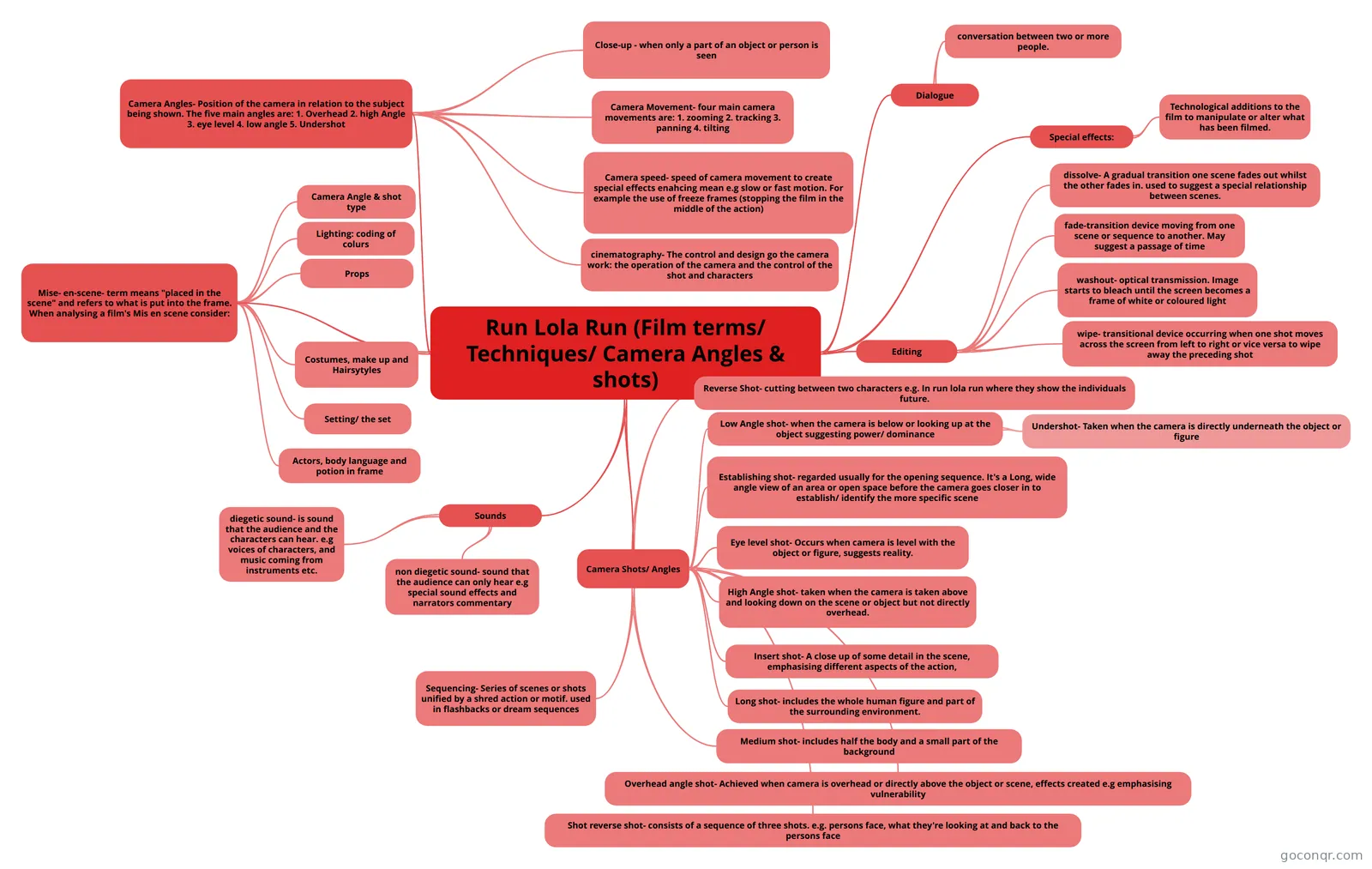 Mind map Run Lola Run (Film terms/ Techniques/ Camera Angles & shots)
-
81 cardsFILM101 Glossary Bordwell, D., Thompson, K. (2010). Film Art: An Introduction (9th ed.). New York: McGraw Hill.
-
200 cardsFilm 270 Final Exam A type of filmic organization in which the parts relate to one another through repetition and variation of ...
-
51 questionsUnit 2 Test What are the two main visual components of Mise en Scene?
-
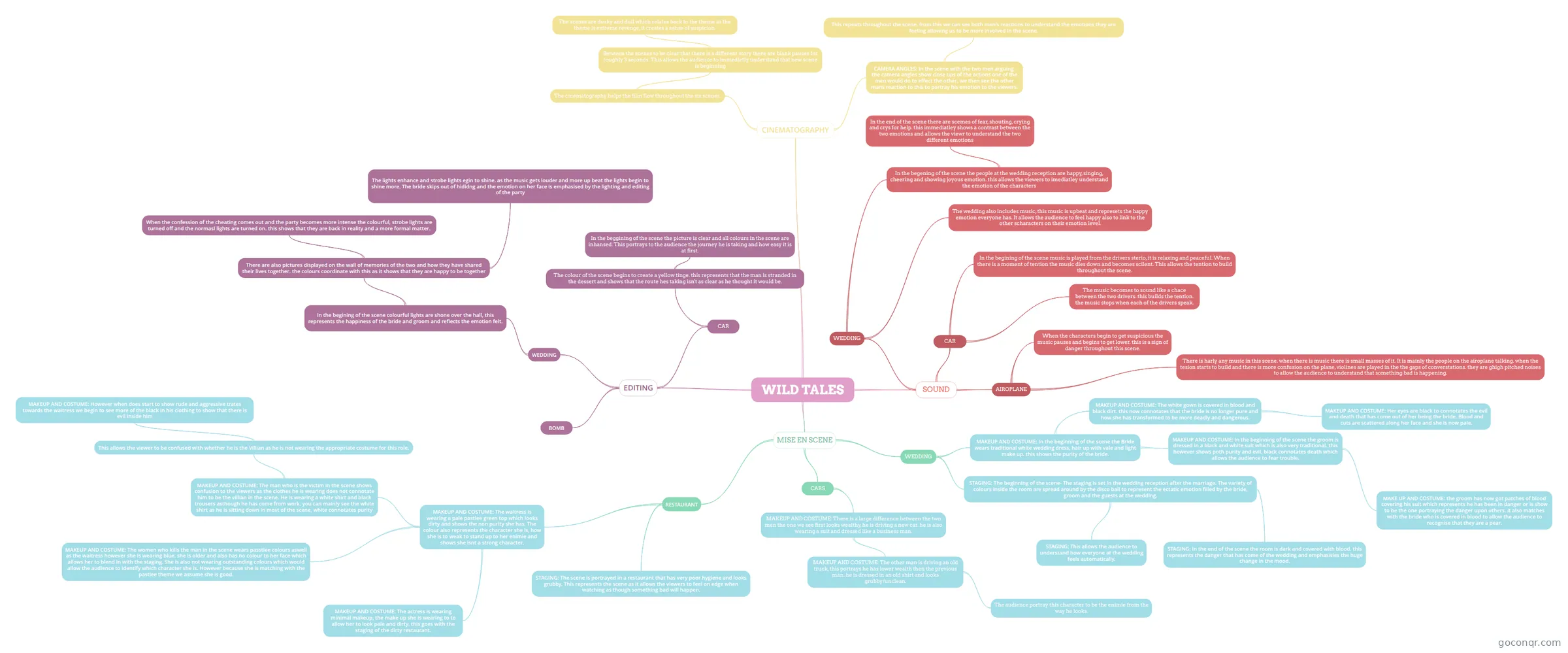 Mind map WILD TALES
-
24 cardsMovement movement within the frame
Quizzes
-
51 questionsUnit 2 Test What are the two main visual components of Mise en Scene?
-
46 questionsFilm Test One Which of the following is a diegetic element of a film?
-
52 questionsfilm1 What is an aerial shot?
-
14 questionsEnglish Film techniques What is the effect of a close up
-
15 questionscamera What type of camera shot only features a portion of the subject's face?
-
11 questionsMad Max Which field size is used here?
-
1 questionsUntitled
Mind maps
See all 121 mind mapsFlashcards
See all 34 flashcards-
14 cardsNarrative Structure
-
23 cardsFilm Terminology Mise en scene
-
81 cardsFILM101 Glossary Bordwell, D., Thompson, K. (2010). Film Art: An Introduction (9th ed.). New York: McGraw Hill.
-
200 cardsFilm 270 Final Exam A type of filmic organization in which the parts relate to one another through repetition and variation of ...
-
24 cardsMovement movement within the frame
-
39 cardsMoving Image: Technical Terminology
-
47 cardsMicro-elements
-
19 cardsMise en scène 2 five basic staging positions
Notes
Topics in Film Language and Mise-en-scène
More Photography and film topics
About Film Language and Mise-en-scène
GoConqr OriginalWhat this unit covers
This unit sits in the Film Language and Analysis strand of Photography and film. It is mostly vocabulary and ways of reading an image. The flashcard decks list shot sizes such as long shot, medium shot and close up. They also cover angles (high, eye level, low) and movements such as pan, tilt, tracking and zoom.
Where to start
Begin with the Film Terminology flashcard deck. It runs from mise en scene and open space through to fades and cuts. Then open the Mise en Scene deck, which breaks the image into setting, lighting, costume, makeup, hairstyle and composition, with Citizen Kane and Chinatown as examples.
Next, try these:
- Camera Angles and Camera Movements for the language of the camera.
- Narrative Structure for plot and story, diegesis, plot order and screen duration.
- FILM101 Glossary for a longer list, from aspect ratio to the axis of action.
Using maps with quizzes
Mind maps give you the overview. Film Language appears in several versions, and Camera Shots, Angles and Movement pulls the camera terms together. There are also maps on editing, sound, stylistic codes and genre, including horror and thriller. A few look at particular films or directors, such as the map on Run Lola Run and the Hitchcock maps.
Read a map first, then take a quiz such as Film Test One or English Film techniques. Anything you get wrong tells you which deck to go back to. Because many of the resources are pitched at secondary level, with the rest aimed at university level, some use the language of GCSE Media Studies. Others are written for degree-level film courses, so check the wording against your own course.
How to work through it
- Learn the terms from one flashcard deck.
- Look at a mind map on the same topic.
- Take a quiz.
- Return to the cards you missed.
Teachers can use the decks and maps as starter material for lessons, and everything was made by GoConqr users. Choose a deck that matches what you are studying today and see how far it gets you.
Frequently asked questions
Which resource should I open first?
Start with the Film Terminology flashcard deck. It covers shot sizes, camera angles, movements and transitions in one place. After that, the Mise en Scene deck shows how setting, lighting, costume and composition build the image. Then move on to a mind map or quiz to check what has stuck.
What do the mind maps cover?
They cover camera shots, angles and movement, editing, sound, stylistic codes and mise-en-scène. Some look at genres such as horror and thriller. Others focus on particular films or directors, including Run Lola Run and Hitchcock's cinematic style. There are more than 100 maps, so you can compare different students' takes on the same topic.
Are the resources free to use?
Yes. Every resource on this page is free to open, study and take, with no account needed. They were made by GoConqr users, not by GoConqr itself. If you want to save quiz scores or create your own flashcards, mind maps, quizzes and notes, a free account lets you do that.
Which levels and exams do these suit?
Most resources are pitched at secondary level, and a smaller share at university level. At least one resource mentions GCSE Media Studies. The page is useful for school students, university students and professional candidates, and teachers can use the material too. Check the terms against your own course.
Are there quizzes to test my film terms?
Yes, there are more than 5 quizzes. Examples include Film Test One, Unit 2 Test, English Film techniques and a quiz on camera. Use them after a flashcard deck or mind map to find terms you still mix up, then go back to the deck.
What if I cannot find the topic I need?
Try a nearby deck or map first, since camera, editing, sound and narrative terms overlap. Search the page for the shot, film or director you are studying. If nothing matches, make your own flashcards or mind map and keep it for your next revision session.