
Photographic Techniques
171 resources created by 155 users
This Photographic Techniques page on GoConqr gathers community-made quizzes, mind maps, flashcards and notes, from long exposure and light painting to solarisation, pinhole photography and macro work. It's built for school students practising and revising camera and editing techniques, and for teachers after ready-made material. There are over 150 resources here, including 2 quizzes, over 100 mind maps and 50 flashcard decks, shared by more than 140 contributors. Open a mind map, test yourself with a quiz, then make something of your own.
Select topic
Top Photographic Techniques resources
-
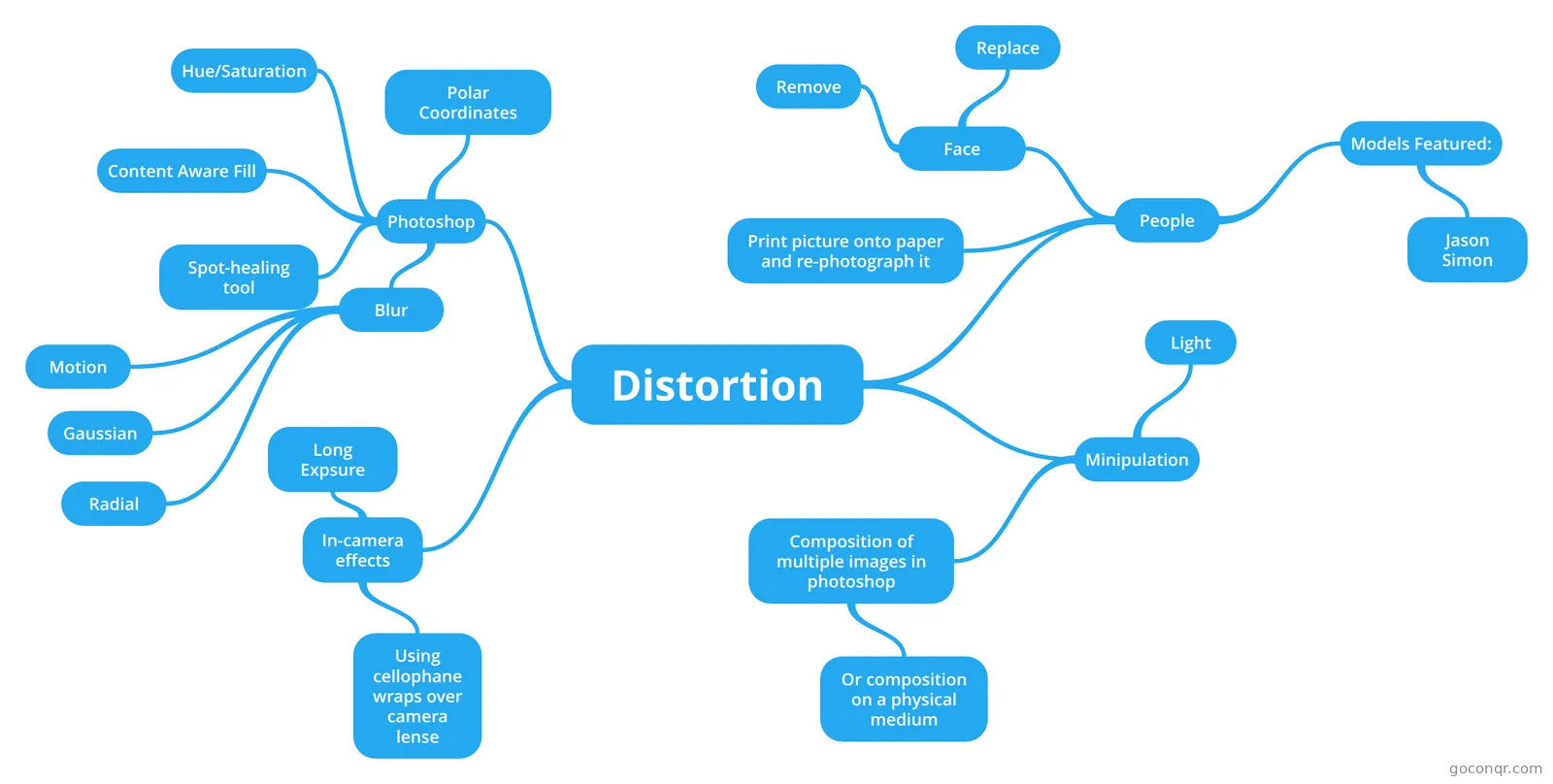 Mind map Distortion Distortion - Photography GCSE Notes
-
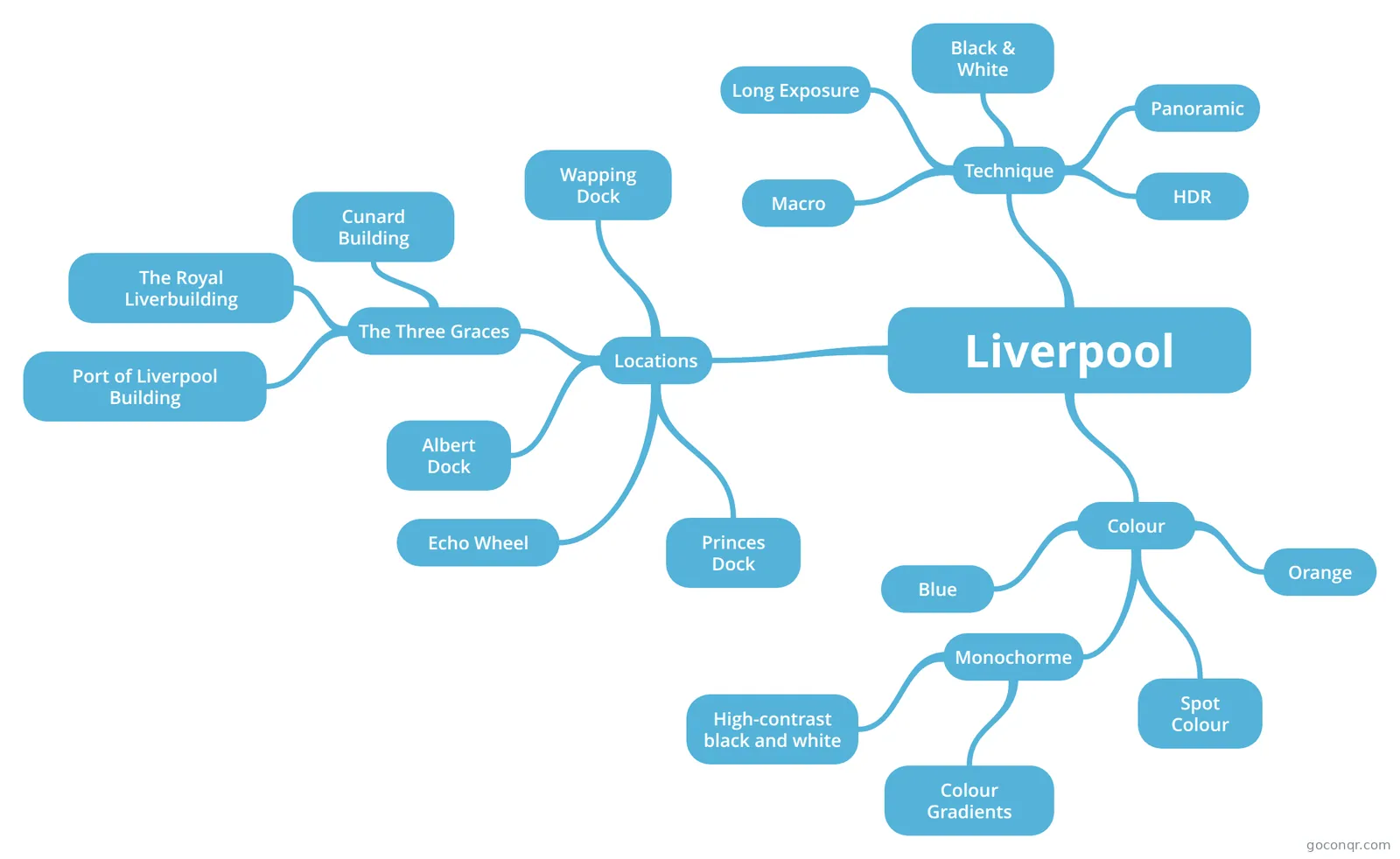 Mind map Liverpool Liverpool Mindmap
-
Mind map Photographic Styles Formative 1: Photography Techniques
-
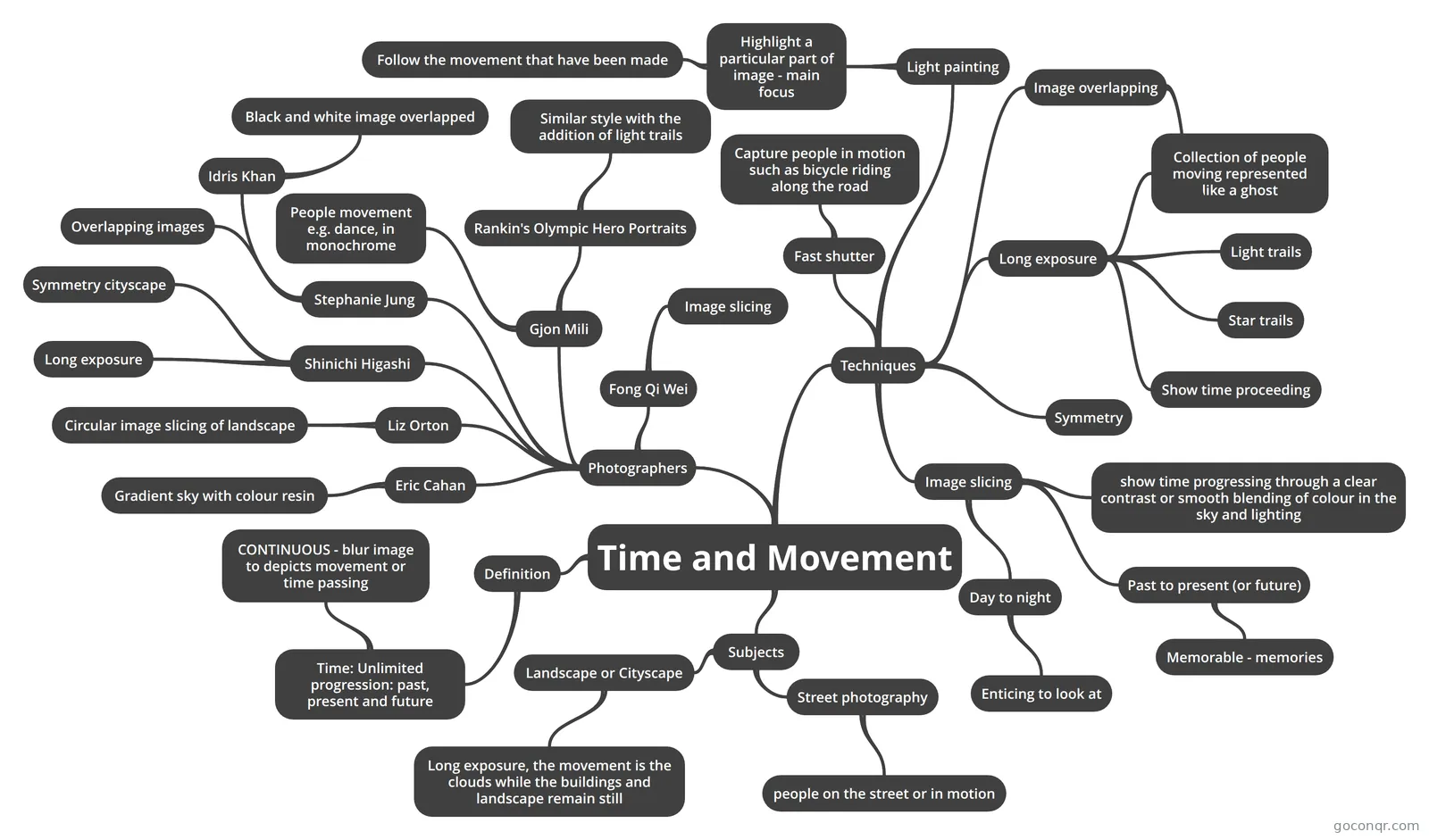 Mind map Time and Movement Mind map for the topic
-
Mind map Stain, Smudge & Erode
-
Mind map DOUBLE EXPOSURE ASSIGNMENT 3 PART A
-
Mind map Photography Photo Ideas wow look at this mindmap
-
Mind map Dramatic@1 lots of references
Mind maps
See all 108 mind maps-
Distortion Distortion - Photography GCSE Notes
-
Liverpool Liverpool Mindmap
-
Photographic Styles Formative 1: Photography Techniques
-
Time and Movement Mind map for the topic
-
Stain, Smudge & Erode
-
DOUBLE EXPOSURE ASSIGNMENT 3 PART A
-
Photography Photo Ideas wow look at this mindmap
-
Dramatic@1 lots of references
Notes
Topics in Photographic Techniques
More Photography and film topics
About Photographic Techniques
GoConqr OriginalWhat this unit covers
The unit is mostly mind maps, and they work through photographic ideas one technique at a time. The Distortion map links in-camera effects, such as cellophane wraps over the lens, with Photoshop tools like Polar Coordinates, Content Aware Fill and the Spot-healing tool. Solarisation explains how an image can be partly or fully reversed in tone, so dark areas look light and light areas look dark.
Time, light and movement
Several maps deal with how a camera records time. Time and Movement covers a fast shutter for people in motion, plus long exposure, star trails, light trails and image slicing. Related maps include Light Painting, Freezing Motion, Movement Photography and Long Exposure. Together they make a useful run of reading on shutter choices.
Ideas, styles and projects
Other maps are closer to project planning. Hidden looks at silhouette, blurs, over exposing and multiple exposures. Experimental Photography names photographers and defines the approach. Photographic Styles lists motion blur, black and white, night, macro, panoramic, architectural and portrait work. The Liverpool map pairs locations with techniques such as long exposure, which shows how research turns into a shoot.
Where to start
- Read Photographic Styles for an overview.
- Pick one technique map, such as Solarisation or Long Exposure.
- Take the Lessons 1&2 Quiz, which begins with why you should use a tripod, then try Lesson 2 and 3.
- Finish with the flashcard decks, which have titles like Photo Techniques and 18 photo techniques.
Maps give you the picture, the quizzes show what stuck, and the flashcards help you recall terms. Teachers can set a map as a starting point for a practical task.
Where it sits
This unit belongs to the Photography Foundations strand in Photography and film. Everything here was made by GoConqr users, so styles and detail vary. Choose a map that suits your current project and see where it leads.
Frequently asked questions
Which resource should I open first?
Start with the Photographic Styles mind map for a quick overview of motion blur, night, macro, panoramic, architectural and portrait work. Then choose one technique map, such as Solarisation or Long Exposure, and follow it with a quiz to see what you remember.
What do the quizzes cover?
There are 2 quizzes. The Lessons 1&2 Quiz opens with why you should use a tripod, and notes that it removes camera shake, which matters for long exposure and light painting. The second quiz is titled Lesson 2 and 3, so you can work through them in order.
What do the mind maps cover?
There are over 100 mind maps. They cover editing and in-camera effects in Distortion, tone reversal in Solarisation, shutter ideas in Time and Movement, and hidden features in Hidden. Others focus on places, such as the Liverpool map, or on projects and individual photographers.
Are the resources free to use?
Yes. Every resource listed here is free to open, study and take, with no account needed. They were made by GoConqr users rather than by GoConqr itself. A free account also saves your quiz scores and lets you make your own quizzes, mind maps, flashcards and notes.
Who is this page for?
It suits school students who want to practise and revise photographic techniques, and teachers looking for ready-made material. Most resources are at secondary level, with a small number at other levels, so check each one against what you are studying.
What if I can't find a technique I need?
Browse the flashcard decks and mind maps by title, since many techniques have their own map, such as Pinhole Photography or Silhouette. If your topic is not there, you can build your own map or deck, because this page is made up of contributions from other users.