
Film Case Studies
127 resources created by 95 users
This Film Case Studies page on GoConqr gathers community-made mind maps, quizzes, flashcards and notes on individual films, from Pan's Labyrinth, Vertigo and The Godfather to La Haine, City of God and Run Lola Run. It's built for school students revising film analysis and for teachers after ready-made material. There are over 120 resources here, including over 100 mind maps, 3 quizzes and 8 flashcard decks, mostly at secondary level. Pick a film, try a quiz to spot your gaps, then build your own maps and flashcards.
Top Film Case Studies resources


Quizzes
Mind maps
See all 110 mind mapsFlashcards
Notes
Topics in Film Case Studies
More Photography and film topics
About Film Case Studies
GoConqr OriginalWhat this unit covers
This unit sits in the Film Language and Analysis strand of Photography and film. Each resource looks at a specific film and how it creates meaning. Most are mind maps, and they break films down into mise-en-scene, cinematography, sound, editing, setting, props and symbolism.
Films with the most material
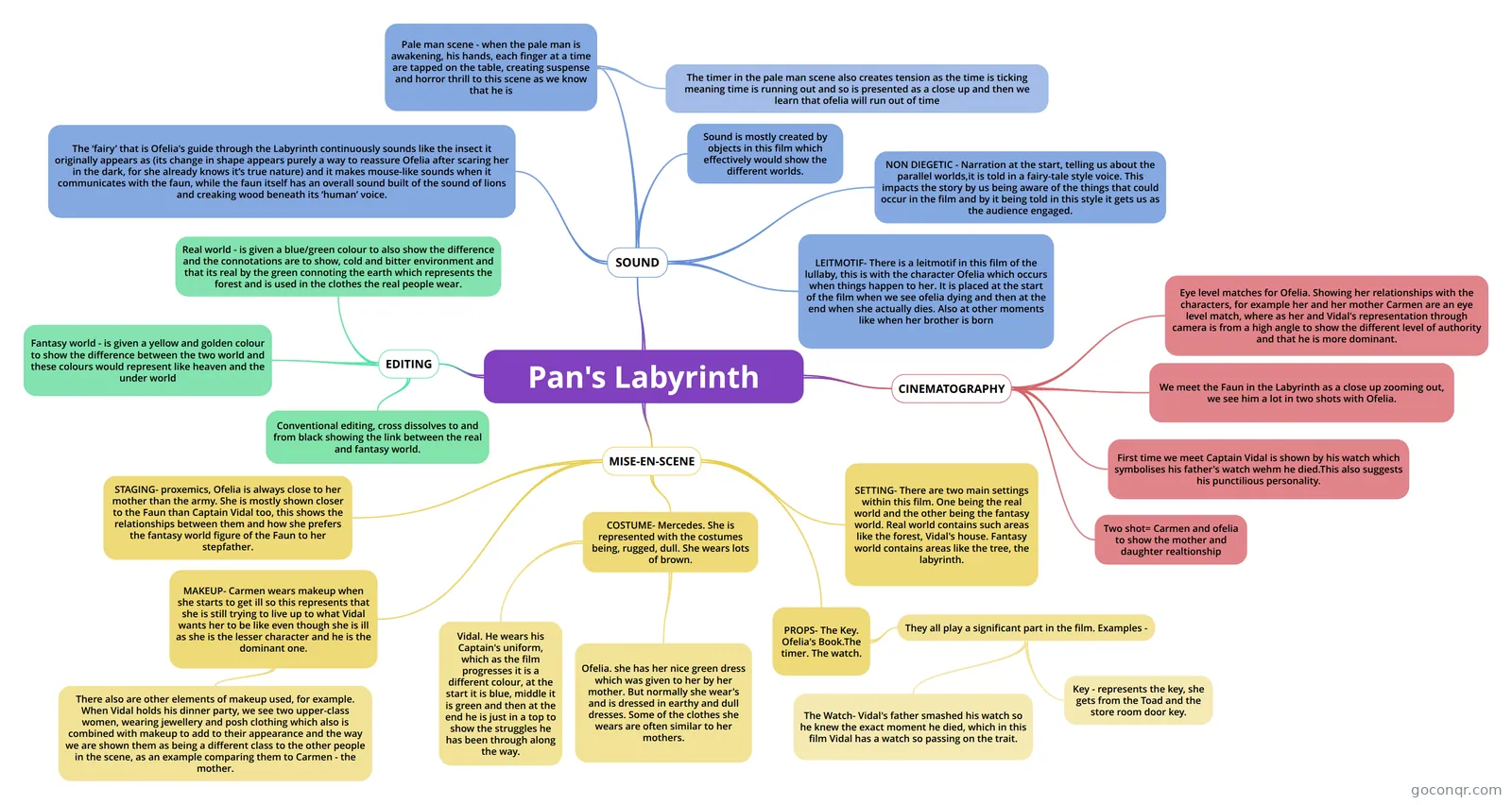
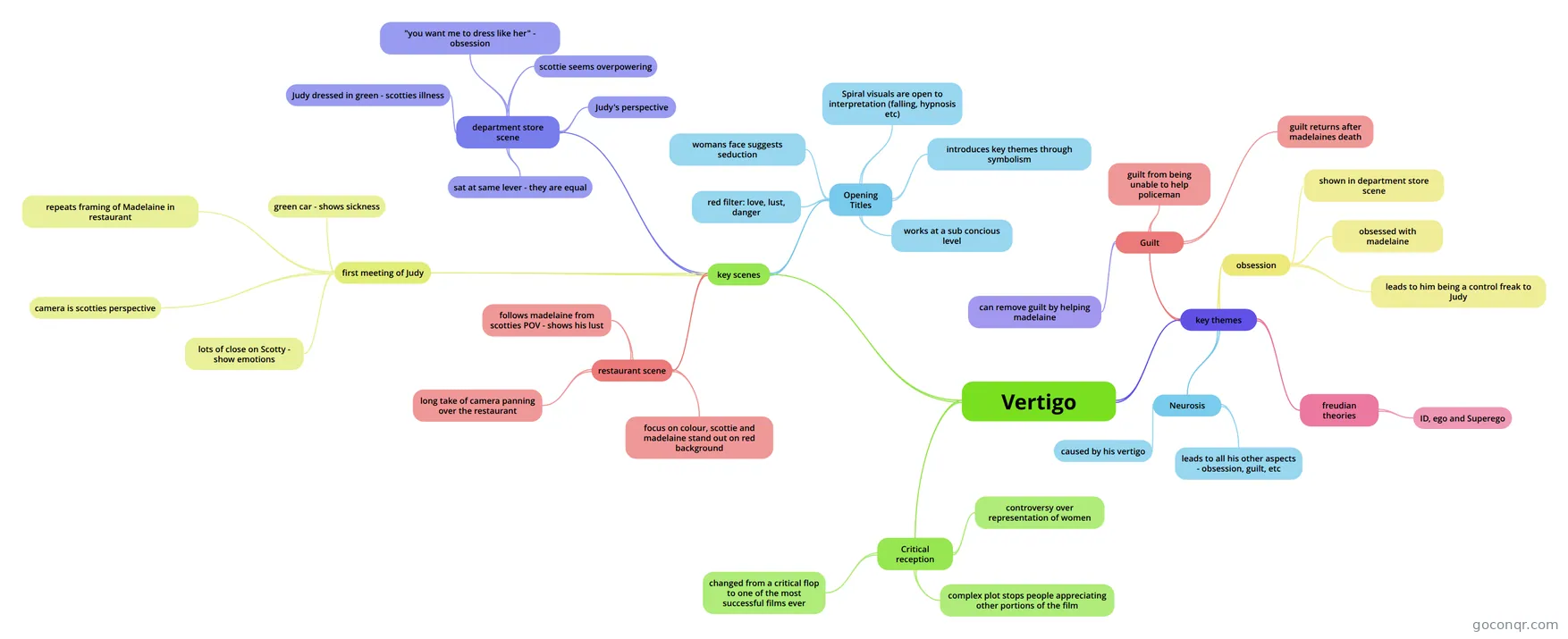
Several films get more than one resource. Pan's Labyrinth has maps on mise-en-scene, sound, editing, and cinematography and lighting, plus a slide set analysing the Pale Man scene. The first map notes props such as the key, Ofelia's book and the watch, and the two main settings. Vertigo has several revision maps, a general quiz and a deck of basic facts. The opening titles map looks at spiral visuals and symbolism. Run Lola Run, City of God and American Beauty also have multiple maps.
Where to start
- Choose one film you are studying and open its main mind map for an overview.
- Move to the focused maps, such as editing or sound, to see how one element shapes meaning.
- Use the flashcards to fix key facts and terms.
- Finish with a quiz, such as the Vertigo general quiz, and note what you missed.
Using maps and quizzes together
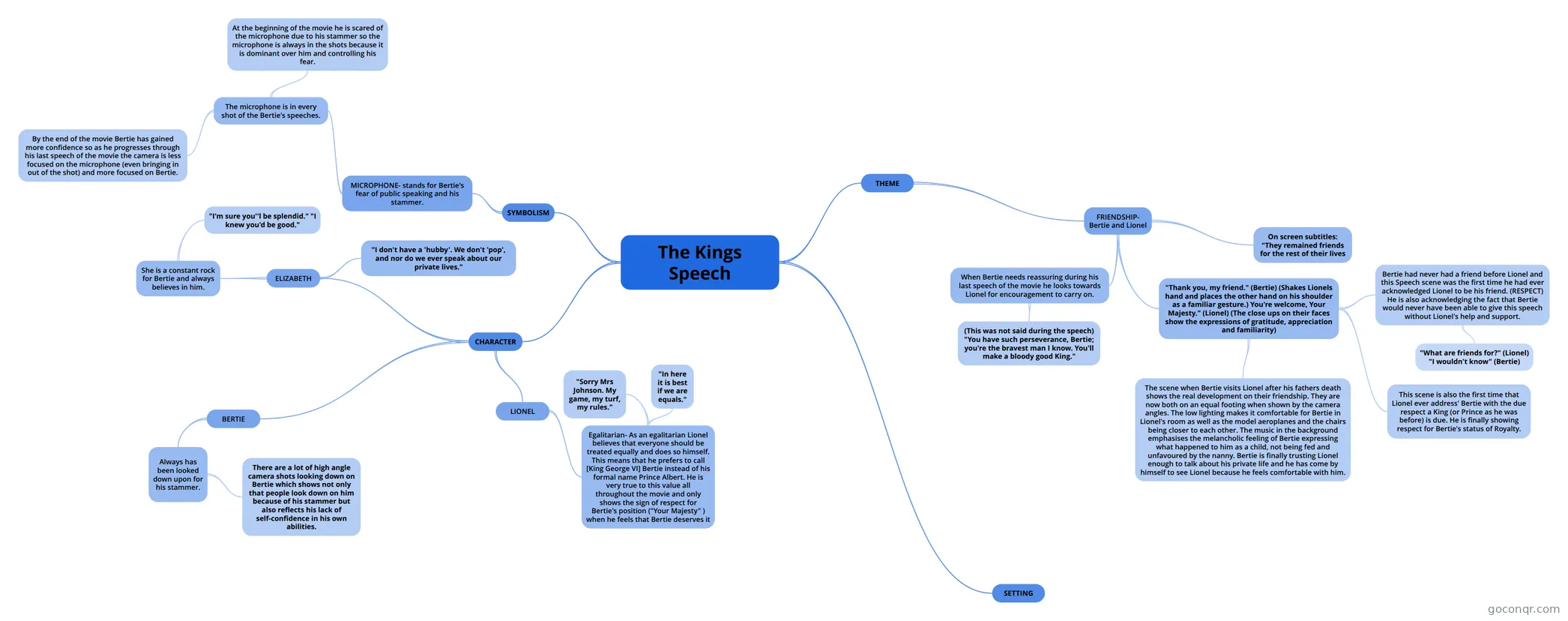
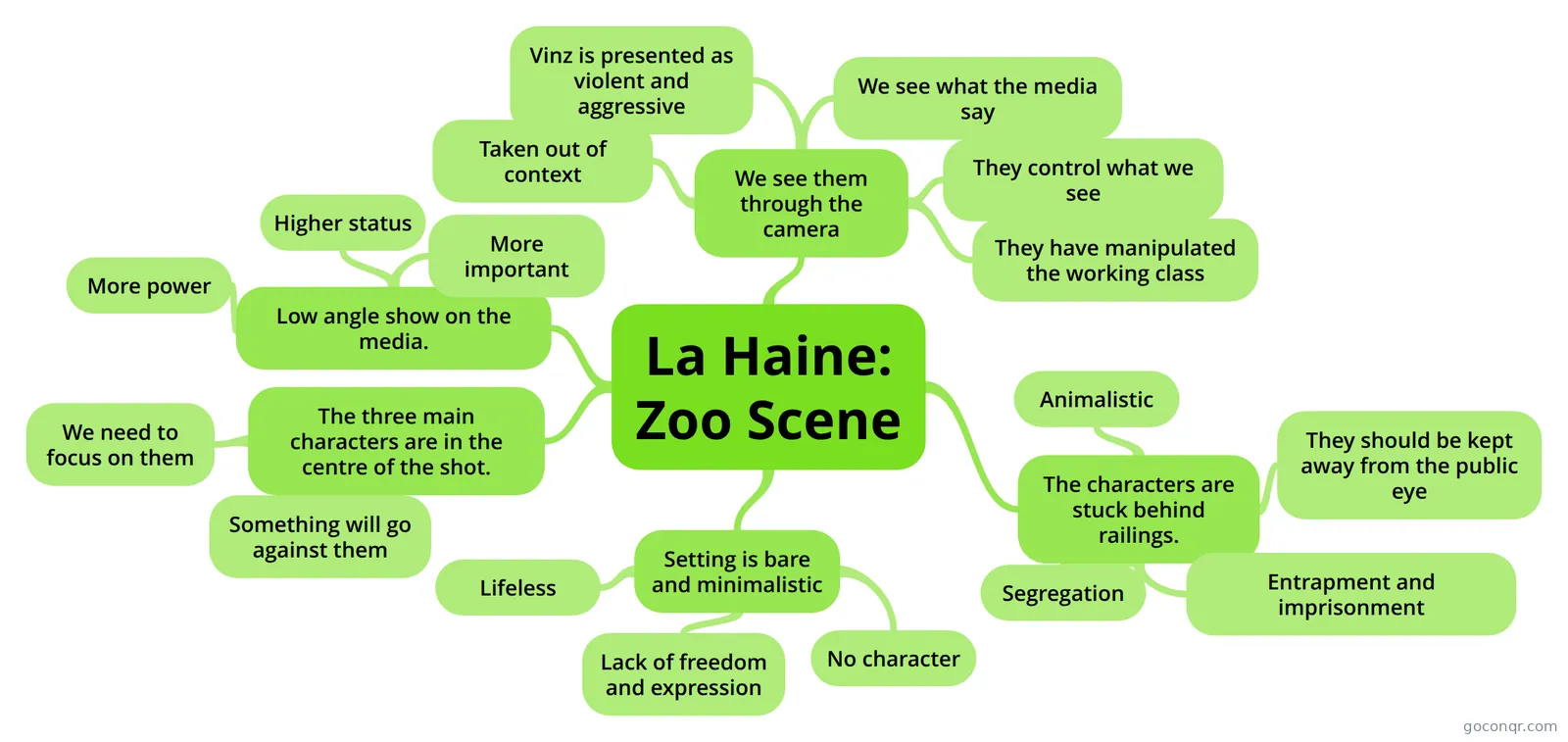
A map shows how ideas connect: for example, the microphone as a symbol in The Kings Speech, or the low angle shot in the La Haine zoo scene. A quiz then checks whether you can recall those points without looking. Go back to the map for anything you got wrong.
Some maps are essay plans, such as those for The GodFather and Schindlers list. They are useful for seeing how an argument can be organised for A-level Film Studies, which the listed resources mention. Teachers can use them as starting points for class discussion.
Make it your own
All of these resources were made by GoConqr users. Open one, compare it with your own notes, then try making a map for a film that is not covered yet.
Frequently asked questions
Where should I start with Film Case Studies?
Pick the film you are studying and open its main mind map for an overview. Pan's Labyrinth and Vertigo have the most material, including separate maps for individual elements, so they work well if you want to see how one film is analysed in depth.
What do the mind maps cover?
They break films down by element, such as mise-en-scene, cinematography, sound, editing, setting, props, themes and characters. Some focus on a single scene, like the La Haine zoo scene, while others are essay plans, such as the one for The GodFather.
Are there quizzes and flashcards?
Yes. There are a few quizzes, including a general quiz on Vertigo, one on The Wizard of Oz and one on Some Like It Hot. There are also flashcard decks, for example on Vertigo basic facts, The Road and Godfather.
Which exam do these resources suit?
Most resources are at secondary level, and the listed material mentions A-level Film Studies. Check the content against your own course requirements, because the resources were made by GoConqr users rather than by an exam board.
Are the resources free to use?
Yes. Every resource here is free to open, study and take, with no account needed. A free account also saves your quiz scores and lets you make your own quizzes, mind maps, flashcards and notes.
What if my film is not listed?
The page lists a good range of films, but not every title. You can build your own mind map or flashcards for the film you need, using the existing maps as a model for which elements to cover.