
Physical Examination mind maps
173 mind maps by 131 users · Page 1 of 5
This GoConqr page gathers Physical Examination mind maps, from vital signs and pulses to breathlessness and heart murmurs. University students and professional candidates can use them to practise reviewing examination topics, while teachers can find material for teaching. There are over 160 mind maps for university and professional study. Choose a map and start exploring.
Select topic
- History Taking18
- Physical Examination Techniques10
- General Survey and Vital Signs5
- Clinical Reasoning and Differential Diagnosis20
- Skin Examination6
- Head and Neck Examination15
- Breast and Axilla Examination7
- Cardiovascular Examination34
- Peripheral Vascular Assessment5
- Respiratory Examination27
- Abdominal Examination23
- Genitourinary and Rectal Examination7
- Musculoskeletal Examination23
- Neurological Examination7
Mind maps
-
THORAX AND LUNGS USE THIS AS REFERENCE
-
Swelling In The Leg
-
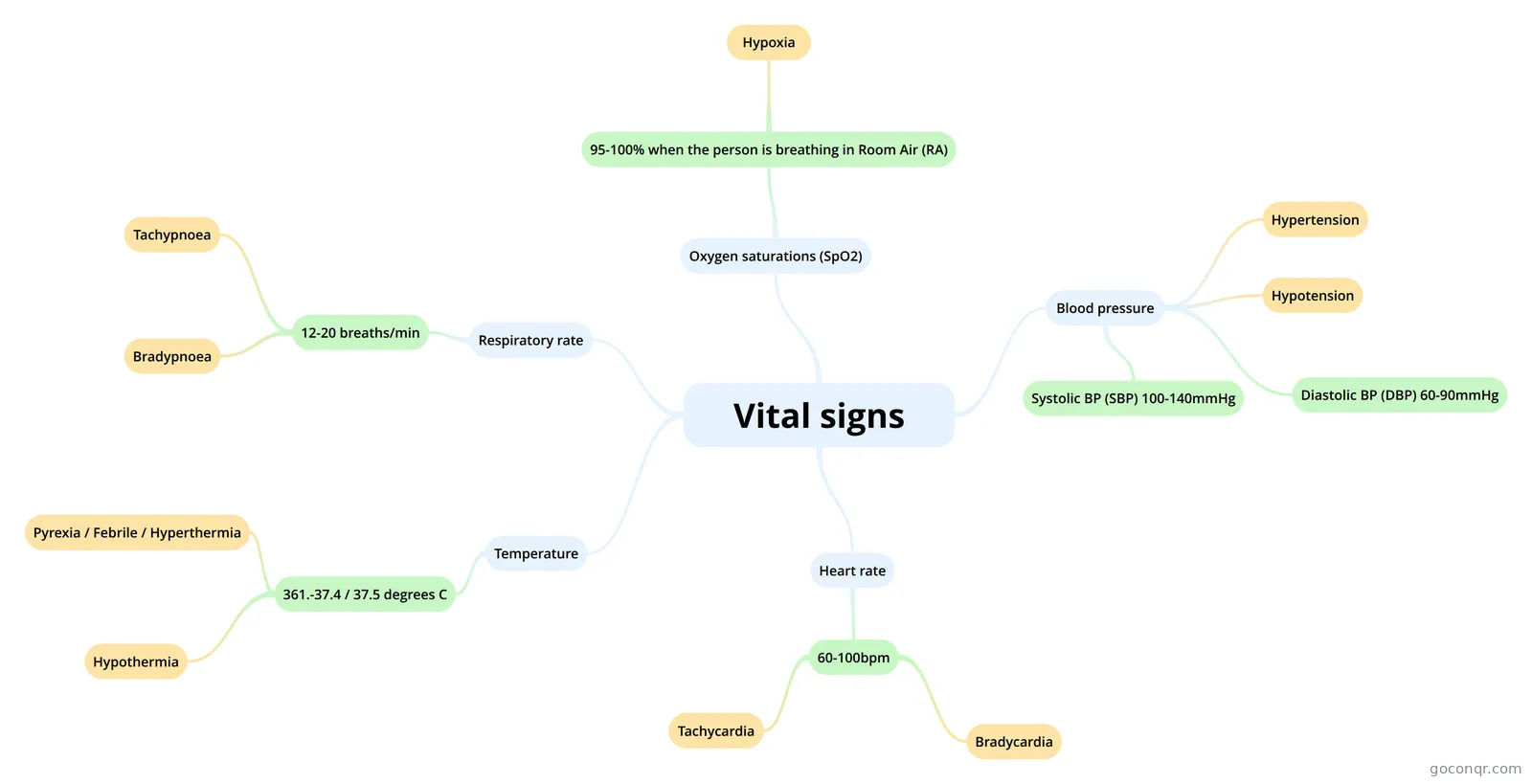 Vital signs
-
Edward Jackson
-
 Jarvis Chapter 8: Assessment Techniques and Safety in the Clinical Setting
-
Cardiovascular Examination
-
Heart Murmurs
-
Respiratory Examination Applicability :)
-
DISEASES
-
Abdomen, Genitourinary,Anus, Rectum
-
Jane Avery
-
spot diagnosis - inspection
-
Different techniques of exploration of the breast and diagnostic applications.
-
Different breast examination techniques and diagnostic applications
-
pain
-
Abdomen
-
physical examination
-
GI Exam
-
Ahmed Cannot Run
-
Jarvis Ch 10- Pain Assessment
-
Enter text here
-
TMJ versus cervical spine pathology
-
JARVIS CH 19-HEART & NECK VESSELS
-
Examination
-
Ch 31- Physical Examinations
-
Chapter 31 (9/6/17)
-
“PHYSICAL ASSESSMENT OF THEABDOMEN, GENITOURINARY, ANUSAND RECTUM” USE THIS AS REFERENCE
-
H2 Medical screening
-
Female Genitourinary System
-
"A Swelling In The Leg"
-
Untitled
-
Jarvis Ch16 Nose, Mouth, Throat
-
Chest Pain
-
Heart murmurs
-
HEART MURMURS AND BLOOD FLOW
-
Jarvis Chapter 25- Anus, Rectum, Prostate
-
The Physical Examination
-
JARVIS-CH 25: ANUS, RECTUM, & PROSTATE
-
Ahmad cannot run
-
History Taking
More Physical Examination resources
About physical examination mind maps
GoConqr OriginalUsing Physical Examination mind maps
These maps let you explore examination topics through connected branches. Vital signs brings together measures including respiratory rate, blood pressure and temperature. Pulses lists different pulse types, while Heart Murmurs looks at murmurs and their timing.
For a symptom-led route, Breathlessness links the symptom with conditions including asthma, pneumonia and cardiac failure. Swelling In The Leg includes anatomy of the thigh and surrounding structures.
Plan a revision session
Start with Vital signs if you want a map organised around common measurements. Read each branch, then cover it and try to recall its contents. Return to the map to check what you remembered.
Next, choose a system or symptom map and repeat the process. If you want to test your recall in a different way, switch to a quiz on the unit page. Flashcards there offer another format for review. Pick a topic and work through its branches at your own pace.
Frequently asked questions
Which mind map could I start with?
Vital signs is a useful starting point if you want to review common measurements. Its branches include respiratory rate, oxygen saturations, blood pressure, heart rate and temperature. After reading it, you could move to Pulses or choose a map focused on an examination or symptom.
What topics do these mind maps cover?
The maps cover examination topics and symptoms. Cardiovascular Examination and Respiratory Examination focus on examination, while Heart Murmurs and Pulses look at specific findings. Breathlessness and Swelling In The Leg offer symptom-led material. You can browse the list according to the topic you want to review.
Are the mind maps free to use?
Yes. Every resource listed on this page is free to open and study without an account. The mind maps were made by GoConqr users, not by GoConqr. A free account also lets you save quiz scores and make your own quizzes, mind maps, flashcards and notes.