
Physical Examination
338 resources created by 228 users
This Physical Examination page on GoConqr gathers community-made quizzes, mind maps, flashcards and notes, from vital signs and heart murmurs to respiratory, abdominal and musculoskeletal exams. It's built for university students and professional candidates practising examination routines and OSCE-style stations, and for teachers after ready-made material. There are over 300 resources here, including more than 40 quizzes, over 160 mind maps and more than 80 flashcards, made by over 220 contributors. Pick a topic, try a quiz to find your gaps, then build your own set.
Select topic
- History Taking18
- Physical Examination Techniques10
- General Survey and Vital Signs5
- Clinical Reasoning and Differential Diagnosis20
- Skin Examination6
- Head and Neck Examination15
- Breast and Axilla Examination7
- Cardiovascular Examination34
- Peripheral Vascular Assessment5
- Respiratory Examination27
- Abdominal Examination23
- Genitourinary and Rectal Examination7
- Musculoskeletal Examination23
- Neurological Examination7
Top Physical Examination resources
-
48 questionsGENERAL EXAMINATION OF PATIENTS-Internal Medicine 3rd Year- PMU The patient takes forced orthopnoic position in bed when having
-
146 cardsPACES Questions 1. List the main causes of chronic liver disease
-
20 questionsGeneral Examination Formative Self Assessment Quiz SB5 Questions Low pitched sounds are best heard with which side of the stethoscope?
-
8 questionsHeart Murmurs- PMU What murmur is this? Systolic murmur Location: Best heard over apex Usually radiates: left axilla or sub-sc...
-
Mind map THORAX AND LUNGS USE THIS AS REFERENCE
-
Mind map Swelling In The Leg
-
10 questionschapter 15 pre-quiz 1. The temporal artery is located between the eye and the top of the ear.
-
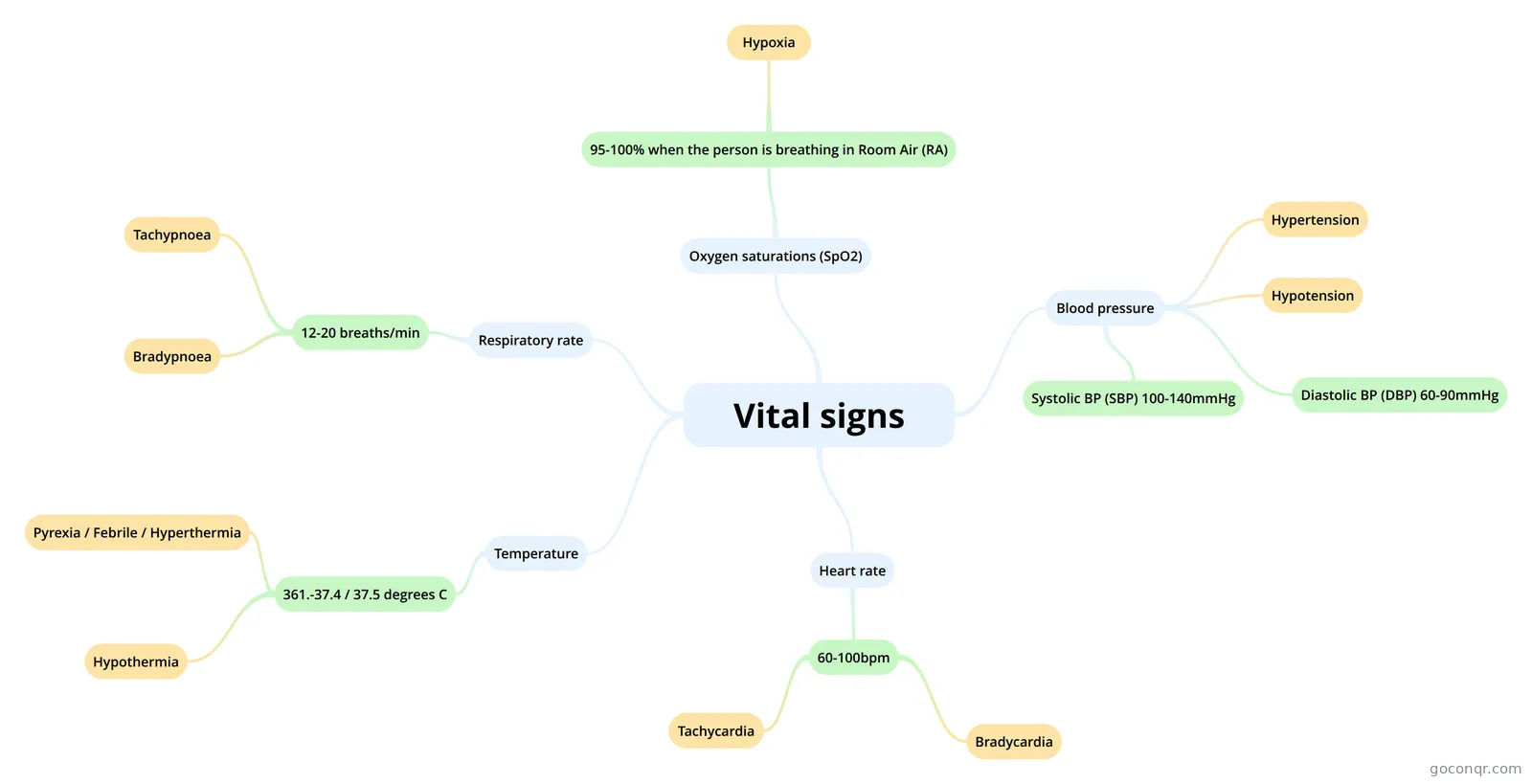 Mind map Vital signs
Quizzes
See all 43 quizzes-
48 questionsGENERAL EXAMINATION OF PATIENTS-Internal Medicine 3rd Year- PMU The patient takes forced orthopnoic position in bed when having
-
20 questionsGeneral Examination Formative Self Assessment Quiz SB5 Questions Low pitched sounds are best heard with which side of the stethoscope?
-
8 questionsHeart Murmurs- PMU What murmur is this? Systolic murmur Location: Best heard over apex Usually radiates: left axilla or sub-sc...
-
10 questionschapter 15 pre-quiz 1. The temporal artery is located between the eye and the top of the ear.
-
50 questionsClinical Assessment Quiz 2 What kind of murmur is depicted here?
-
27 questions1_Clinical Skills: Electrolytes & Trace Elements Which of the following is NOT included in a BMP ?
-
125 questionsPhysical diagnosis 4/02/2023 Characteristics of a focused assessment includes the following, except:
-
50 questionsbulk2 51. During the physical the following steps must be taken:
Mind maps
See all 173 mind mapsFlashcards
See all 89 flashcards-
146 cardsPACES Questions 1. List the main causes of chronic liver disease
-
108 cardsEXAMINATION FINDINGS Label the muscles of the eye and their innervation
-
18 cards19 Clinical Skills II Respiratory System What is the first step in a respiratory examination?
-
26 cardsCardiovascular examination examine hands for?
-
8 cardsGD Cardio Exam What are possible CV findings in the hands or nails?
-
87 cardsChapter 5 - Fundamentals of Physical Examination What is the initial physical assessment used to determine?
-
82 cardsPHYS DYS 1 Trigeminal nerve C5
-
50 cardsLectures 4 EENT Parts of the Eye Exam
Flowcharts
Notes
See all 26 notes-
surgery history and examination :breast
-
The Patient Note/Cases -Fields present for hx, physical exam, ddx, and workup-Before typing, review hx-History: CC HPI ROS: GEN, HEENT, CV, lungs, GI, GU, skin, neuro Allergies Medications PMH PSH Birth hx: Dietary hx: Immunization hx: Deve...
-
Hand and Wrist Exam
-
Chest X-ray
-
VASCULAR EXAMINATION asdasd VASCULAR EXAMINATION Set-up: on the bed, flat table, legs exposed (cover groin and thigh; drape between legs) 1. Are you in pain? 2. Take Radial pulse and BP 3. Inspection: Scars – eg saphenous graft Muscle was...
-
Cranial Nerves
-
Breast Examination Before you start Ensure patient needs a breast examination Be able to tell patient what you intend to do & why Be able to discuss the risks and benefits of the intended procedure Understand how to gain informed consen...
-
MSK Exams
Slides
Topics in Physical Examination
More Internal medicine, pathology and clinical semiology topics
About Physical Examination
GoConqr OriginalWhat this unit covers
The page follows the examination from first contact to individual body systems. The Vital signs mind map sets out respiratory rate, oxygen saturations, blood pressure, heart rate and temperature. The General survey mind map and the quiz on general examination of patients cover habitus, gait and posture. From there you can move to the heart, lungs, abdomen, limbs, skin, eyes, head and neck.
Where to start
Begin with the basics: the Vital signs mind map, then the General Examination Formative Self Assessment Quiz SB5 Questions, which asks which side of the stethoscope suits low pitched sounds. Next, choose one system at a time.
- Cardiovascular: the Cardiovascular Examination mind map, then the Heart Murmurs quiz, which asks you to name a murmur from its location, radiation and duration.
- Respiratory: the Respiratory Examination mind map and the THORAX AND LUNGS map, which covers breathing patterns such as Cheyne-Stokes and Biot's respiration.
- Abdominal and musculoskeletal: the abdominal and GI examination decks, then the notes on the hip, hand and wrist, and GALS.
Using quizzes and maps together
Read a mind map first, then test yourself on the matching quiz. Wrong answers show you which branch to revisit. Flashcard decks such as Cardiovascular examination and Respiratory examination are good for quick repeat practice. The Cardiovascular OSCE stations mind map and the OSCE flashcard deck suit those preparing for practical assessments.
The PACES Questions deck is different: it asks about the causes of chronic liver disease, the investigations to start and the signs of decompensation. It suits candidates who already know the basic routines.
Where it fits
This unit sits in the strand Foundations of Clinical Practice and Semiology, within Internal medicine, pathology and clinical semiology. Symptom maps such as Breathlessness, Chest pain and Swelling In The Leg link what patients report to what you examine.
Open any resource, work through it at your own pace, and add your own maps or flashcards where the page leaves a gap.
Frequently asked questions
Which resource should I start with?
Start with the Vital signs mind map, then try the General Examination Formative Self Assessment Quiz SB5 Questions. They cover the measurements and general observations that come before any system-based exam. After that, pick the system you find hardest, such as cardiovascular or respiratory.
What do the mind maps cover?
There are over 160 mind maps. They cover vital signs, the general survey, heart auscultation, breath sounds, pulses and abdominal examination. Others start from symptoms such as breathlessness, chest pain, leg swelling and change in bowel habit, so you can link complaints to examination findings.
Are these resources suitable for OSCE practice?
Yes. The listed resources mention OSCE, and you will find the Cardiovascular OSCE stations mind map and an OSCE flashcard deck. The page is aimed at university students and professional candidates, so the examination routines suit practical assessment revision. Use the quizzes to check recall afterwards.
Do I need to pay or sign up to use them?
No. Every resource on this page is free to open, study and take, with no account needed. If you want to save quiz scores or make your own quizzes, mind maps, flashcards and notes, you can create a free account.
Who made these resources?
They were made by GoConqr users, not by GoConqr itself. Over 220 contributors have added quizzes, mind maps, flashcards and notes, so styles and depth vary. Teachers can browse them for ready-made material and check the content against their own course.
What if I cannot find a topic I need?
Try the neighbouring resources first. Many systems appear as a mind map, a deck and a quiz, such as the abdominal examination ones. If a topic is still missing, you can make your own mind map, flashcards or notes and use them alongside the listed material.