
Relative Clauses mind maps
464 mind maps by 408 users · Page 1 of 12
This GoConqr page gathers relative clauses mind maps, covering relative pronouns, defining and non-defining clauses, and adjective clauses. They offer school students ways to practise these topics and teachers ready-made material to use. Most of the over 440 maps are at school level. Pick a map to begin.
Mind maps
-
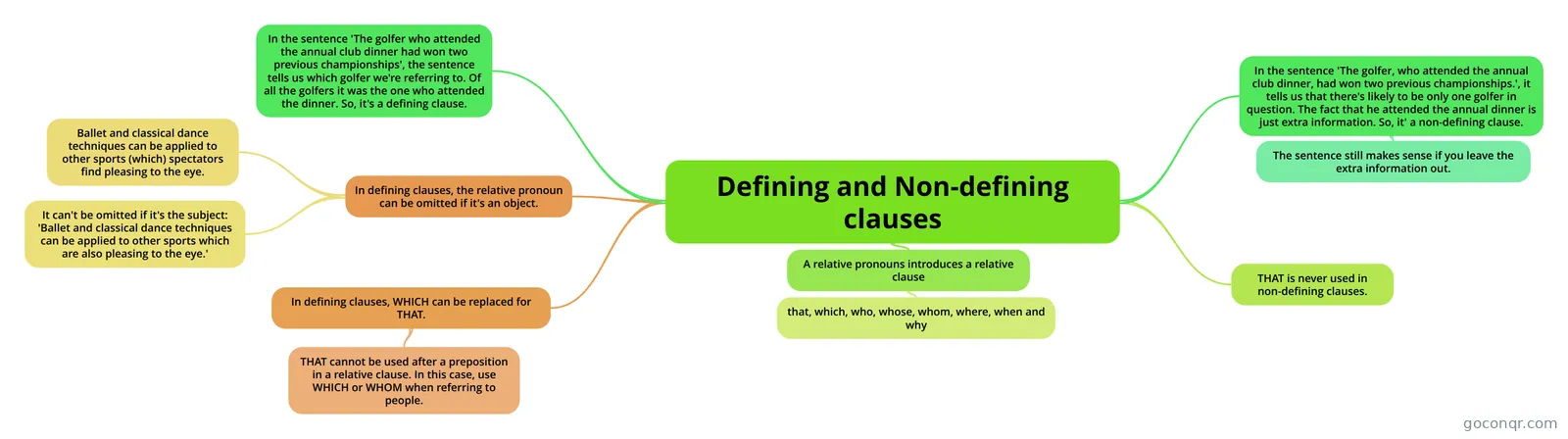 Defining and Non-defining clauses
-
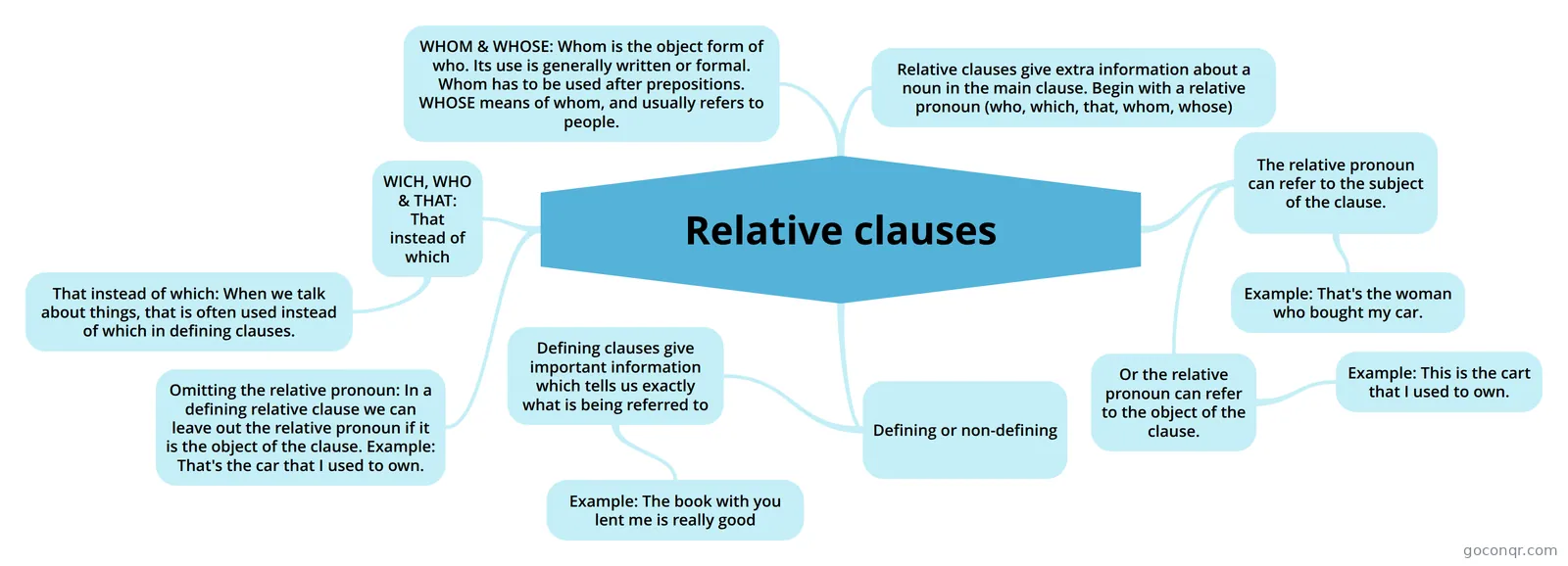 Relative clauses SUBJECT OR NON-DEFINNING , OMITTING THE RELATIVE PRONOUN, WHICH, WHO & THAT
-
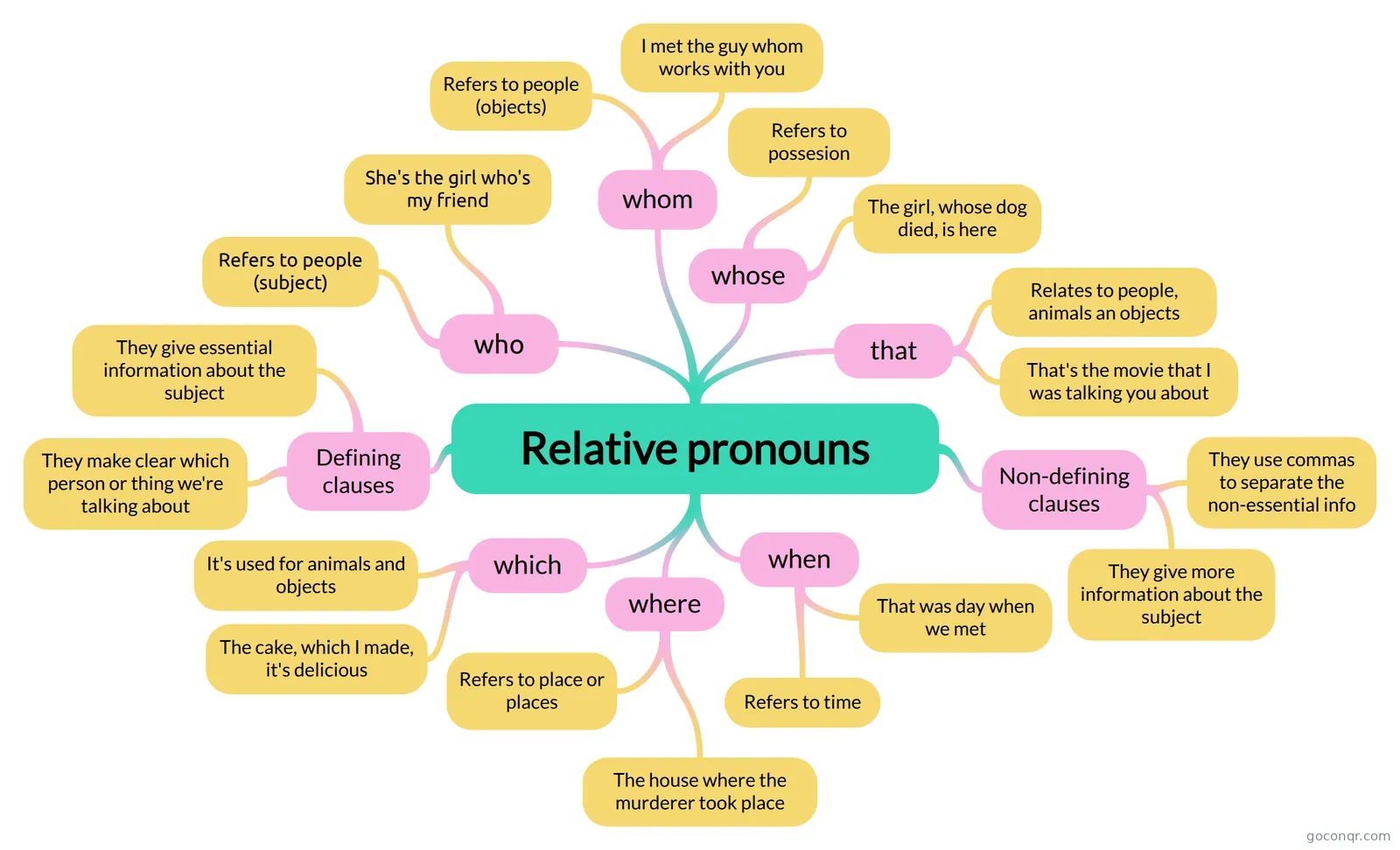 Relative pronouns Relative pronouns; uses and examples Defining and non-defining clauses; uses.
-
Defining & non-defining
-
Adjective Clauses
-
RELATIVE-CONCESSIVE CLAUSES AND LINKING WORDS
-
Relative, Concessive Clauses and Linking words.
-
UNIT 2: GOING PLACES
-
UNIT 2: Going places
-
Introduce el texto aquí
-
Relative clauses
-
Relatice Clauses
-
Related pronuns
-
 Grammar Who/Whom/Whoever/Whomever/That /Which/Adverbs/Adjectives/Good/Well Mindmap zur englischen Grammatik
-
Relative pronouns
-
Restrictive Relative Clauses.
-
RELATIVE CLAUSES
-
RELATIVE CLAUSES
-
Relative Clauses
-
Enter text here
-
Relative Clauses
-
Relative clauses
-
Defining and non- defining
-
RESTRICTIVE AND NON-RESTRICTIVE CLAUSES
-
RESTRICTIVE AND NON-RESTRICTIVE CLAUSES
-
Defining and Non-Defining Relative Clauses Explanation Este mapa mental explica el uso de las defining y non defining relative clauses en inglés.
-
Unit 7- Changing Times
-
TOPICS OF FOURTH TERM
-
Relative clauses
-
Defining and Non defining
-
UNIT 13 BREAKDOWNS
-
DEFINING AND NON-DEFINING
-
Relative Clauses
-
Untitled
-
Unit 5
-
Relative Clauses
-
RELATIVE CLAUSES
-
DEFINING VS NON-DEFINING
-
RELATIVES
-
RESTRICTIVE CLAUSES
More Relative Clauses resources
About relative clauses mind maps
GoConqr OriginalUsing relative clauses mind maps
Start with Relative pronouns if you want to see how words such as who, which, where and when connect to people, things, places and time. Its examples give you points to compare as you read the map.
For a closer look at clause types, use Defining and Non-defining clauses. You can also explore Adjective Clauses and the maps on object adjective clauses. These give you different ways into the material, depending on what you want to practise.
Move from maps to practice
Read a branch of a map, then cover it and try to recall the point and an example. Return to the map to check what you remembered. If you want to practise choosing words in sentences, switch to a quiz on the Relative Clauses unit page. You can return to a map when a point needs another look.
Choose a topic and explore a map that matches it.
Frequently asked questions
Which mind map should I start with?
Relative pronouns is a useful starting point if you want to review words such as who, which and where. It groups pronouns with uses and examples. If you want to focus on clause types instead, Defining and Non-defining clauses is another place to start.
What do the mind maps cover?
The maps cover relative pronouns, defining and non-defining clauses, and adjective clauses. Relative pronouns includes examples connected with people, objects, places and time. There are also maps on object adjective clauses, so you can choose a narrower topic when you want to revisit a particular point.
Are these mind maps free to use?
Yes. Every resource listed here is free to open and study without an account. The maps were made by GoConqr users. A free account also lets you make your own mind maps, quizzes, flashcards and notes, and save your quiz scores.