
Fichas
CLA
Fichas del conjunto (18)
- 1CHILD LANGUAGE ACQUISITION - Phonology -Morphology -Lexis -Syntax/grammar -DiscourseBEHAVIOURISM (Skinner)
- Children learn to speak through imitation
-Skinner tested on animals and concluded conditioning plays a role (positive/negative reinforcement. - 2CAREGIVER LANGUAGE/CDS -Speech patterns used by any influential person when speaking to a young child in order to support language development - Slower speech, shorter MLU ,emphatic stress, concrete nouns, dynamic verbs, diminutives, reduplications ,recasting, embedded in the here/now.COGNITIVE ( Piaget/Vygotsky)
-Piaget believes they can only use linguistic structures once they understand the concept (cannot use past tense /passive)
-Vygotsky's MKO (more knowledgeable other ) - 3DIGRAPH/TRIGRAPH -Digraph = a pair of written letters representing a single sound ( or ) -Trigraph = a group of three letters that form a single sound ()DIMINUTIVES
- a name or word formed from another by the addition of the suffix expressing smallness in size ("blanky" or "doggy") - 4DIRECTIONALITY/LINEARITY - Directionality = writing or reading from left to right -relevant in emergent writing -Linearity = writing flowing in a continuous direction -motor skillsEXPANSION
-Where another significant person expands on a child's utterance- relevant to child directed speech or caregiver language
- "ball" "it's a blue ball yes" - 5FACE NEEDS (Brown and Levinson) Positive face = need to be liked/accepted/ approved of (use politeness strategies, compliments, appropriate terms of address) Negative face = right not to be imposed on (hedging, apologising)HALLIDAY'S FUNCTIONAL APPROACH
1.) Instrumental (expressing needs)
2.) Regulatory (controlling actions )
3.) Interactional (sociable contact)
4.) Personal (expressing feelings)
5.) Heuristic ( asking for information)
6.) Representational ( conveying information)
7.) Imaginative ( stories, jokes , lying) - 6OVERGENERALISATION -Grammatical = When a child overuses a grammatical rule (adding the plural inflectional morpheme "s" to sheeps ) - Semantic overextension = over applying the meaning of a word to something broad where the meaning should be confined to something more specific ( all men are "daddy" ) -Semantic under extension = applying the meaning to something specific where the meaning should be broader ( only the childs red car is called "car", only a yellow banana is "banana".GRAPHEMES AND MORPHEMES
-Grapheme = basic unit of written language ()
-Morpheme = smallest unit of grammar
-Free morpheme = can function independently as words(dog, town)
-Bound morpheme = appear only as part of words (un, dis)
-Inflectional morphemes (s, 's , er , est , ed , en , ing) - 7NATIVISM (Chomsky) -We have innate ability for LA - Language acquisition device -Linguistic creativity -Virtuous errors -Poverty of stimulus -Berko's Wug test/inflectional morphemes/finding patterns rather than just imitatingREDUPLICATION
-When part of the word or the whole word is repeated exactly or with slight alteration (easy peasy, da da) - 8SCAFFOLDING (Bruner) -Examples such as reading bedtime stories - The helpful interaction allows the child to build on what they already knowSOCIAL INTERACTION (Bruner)
-Suggested the importance of interaction
- LASS
- Agreed with innate ability but disputed poverty of stimulus
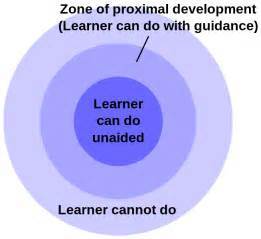
-Childs innate talent is assisted by CDS - 9VIRTUOUS ERROR (Chomsky) - Non standard forms children use that are logical (feets /falled instead of feet and fell)ZONE OF PROXIMAL DEVELOPMENT (Vygotsky)
-The point at which the MKO is required to support the child to complete a task - 10STAGES OF DEVELOPMENT 1.) Babbling stage-reduplicated babbling 2.) One word/ Holophrastic- bilabial consonants 3.) Two word - pivot-open grammar (more/my) 4.) Telegraphic -sentences without function words ( auxiliary verbs, pronouns, prepositions, determiners) -shows innate ability as they know the essential wordsINTERROGATIVE FORMS
Questions :
-Year one-rising intonation
- 15-18 months- first question words appear
-Year two- question words + other words
-Year three- pick up auxillary verbs ( "where daddy is going") and the inversion rule ( "he is sad" becomes "is he sad?" - 11NEGATIVE FORMS Year one: gestures (shaking head) 18 months: negative holophrases used (no) Year 2/2.5: negatives used at beginning and end of 2 word utterances (not there) Year 3: negatives used in the middle of sentences (You no do that) Year 4: negatives used more accurately-using "n't" Year 5/6/7 :subtle negatives like "hardly" are picked up - greater understanding of indirect refusal (you've just had one)CONSONANTS
-Bilabial = p,w,b,m
-Front/stop = airflow is momentarily blocked-developed first (t,d,p,n,b)
-Back = g,c
-Plosives = explosion of air is created (p,b,g,c,t,d)
-Fricatives = airflow is partially blocked/disctinctive hissing sound ( v,th,s ,f,sh,z)
- - 12CONVERSATIONAL SKILLS - DISCOURSE -Initiating and sustaining conversation - Turn taking, adjacency pairs -Discourse markers -Topic selection, shift or change -Non fluency features ,repairs, fillers - Role of the adult in facilitating conversational skillsPOLITENESS STRATEGIES
-Hedging
-Mitigated imperatives
- initial agreement followed by contradiction (yeah but)
- use of modal auxillary verbs (can i?)
-Phrasing a demand as a friendly suggestion
-"please"/ "thankyou" - 13PHONOLOGY -Front consonants come first -Plosives before fricatives -Fricatives often substituted for plosives(that-dat) -Consonant clusters often reduced (grandma-jamma) -Addition of an extra vowel between consonants(belu/blue) -Assimilation -reduplication-mixed up (goggi for doggy) -Unstressed syllables may be deletedKROLL (1981)
1.) Preparatory stage (0-6) -less complex/basic motor skills/spelling
2.) Consolidation stage (6-8) -use writing to reflect what they can say in speech -colloquialisms -short declaratives linked by additive conjunction (and)- incomplete sentences. - 14BARCLAY (1996) 1.) Scribbling-random marks-accompanied by speaking 2.) Mock handwriting- writing with drawing-wavy lines for lineation-mock cursive writing 3.)Mock letters- letters are increasingly separate and distinctive 4.) Conventional letters stage- encourage to put name as first word-puts letters on page but reads them as words 5.)Invented spelling- spell how they understand- could be entirely idiosyncratic spelling 6.)Phonetic spelling - starts attaching spelling to sounds-shows understanding phonemes are represented by graphemes 7.) Correct spelling- can spell most wordsGENTRY (1982)-Spelling
1.)Pre-communicative stage =knows that symbols create a message-may be random (rtat=eighty)
2.) Semi-phonetic stage =begins to understand that letters have sounds -often abbreviated (a=eighty)
3.) Phonetic stage= spell like the word sounds (ate=eighty)
4.)Transitional =operates basic conventions -thinking about how it appears-some visual memory-exhibition of orthography conventions(eightee =eighty)
5.) Correct =understands basic spelling -large automatic spelling vocab- can distinguish homonyms and homophones - 15PHONICS,BLENDING,SEGMENTING Jolly phonics = multi sensory tasks including songs,stories,rhymes-helps ensure they understand grapheme phoneme correspondence -They are taught to blend(merge phonemes) and to segment words (split words into phonemes) -Taught 42 main soundsAPPROACHES TO TEACHING READING
-Phonics approach =sounding out unfamiliar words
-Look and say =recognising whole words by sight alone rather than segmenting -focuses on the meaning of words and teaches them to recognise high frequency words
- Psycholinguistic =reading seen as natural dev. from the environment -children work it out themselves -use cues such as pictures/rest of sentence . - 16KEY STAGES -Year 1: ages 5/6-read common exception words, read books aloud, become familiar with stories etc,days of the week,begin to form letters/0-9- finger spaces-use "and"- basic punctuation - using capitals for proper nouns and I -Year 2: 6/7-blending-reading most words quickly-learning the possessive apostrophe- homophones-graphemes of the correct size -past/present tense -Year 3: 7/8- wide range of fiction,plays,poetry etc-use dictionaries- better handwriting so ascenders and descenders don't touch -varied sentence structure)SPOAC
Subject
Predicator (verb)
Object
Adverbial (how its being done)
Complement (adjective) - 17EXTRA TERMS: -Gross/fine motor skills -Cursive/printed -White space -Closed/open counters -Ascenders/descenders -Initial, medial, final -Ellipsis/Ellision -Sniglet (creating a word where there isn't one) -Homonym (same word-different meaning)EXTRA STUDIES:
-Jim (Bard/Sachs) = born with deaf parents but learnt to speak by television-limited/stunted speech until tutoring
-FIS phenomenon- they understand it but cannot yet produce it
-Critical period (Lenneberg)
-Genie the feral child - 18WAYS TO BE TAUGHT: -Trial/error -Drills -Carrot/stick -Mentoring
Información
- Descripción
- A level English language Fichas sobre CLA, creado por tamsin tripp el 24/05/2017.
- Creado por
- tamsin tripp
- Visitas
- 0
- Valoración