
Language Acquisition and Learning
92 resources created by 74 users
This Language Acquisition and Learning page on GoConqr gathers community-made mind maps, flashcards, quizzes and notes, from child language acquisition theorists and child directed speech to Krashen's hypotheses and second language acquisition theories. It's built for university students and professional candidates, school students, and teachers after ready-made material. There are over 1,000 resources here, including more than 20 quizzes and over 800 mind maps, with A-level English Language revision sitting alongside university-level study. Pick a topic, try a quiz to find your gaps, then make your own set.
Top Language Acquisition and Learning resources
-
Mind map Second Language Acquisition Theories This mind map details the Second Language Acquisition theories of 5 experts.
-
48 cardsChild Language Acquisition Key Terms and Theories Key Terms
-
Flowchart CONSCIOUSNESS, NOTICING AND RESTRUCTURING Concept Map
-
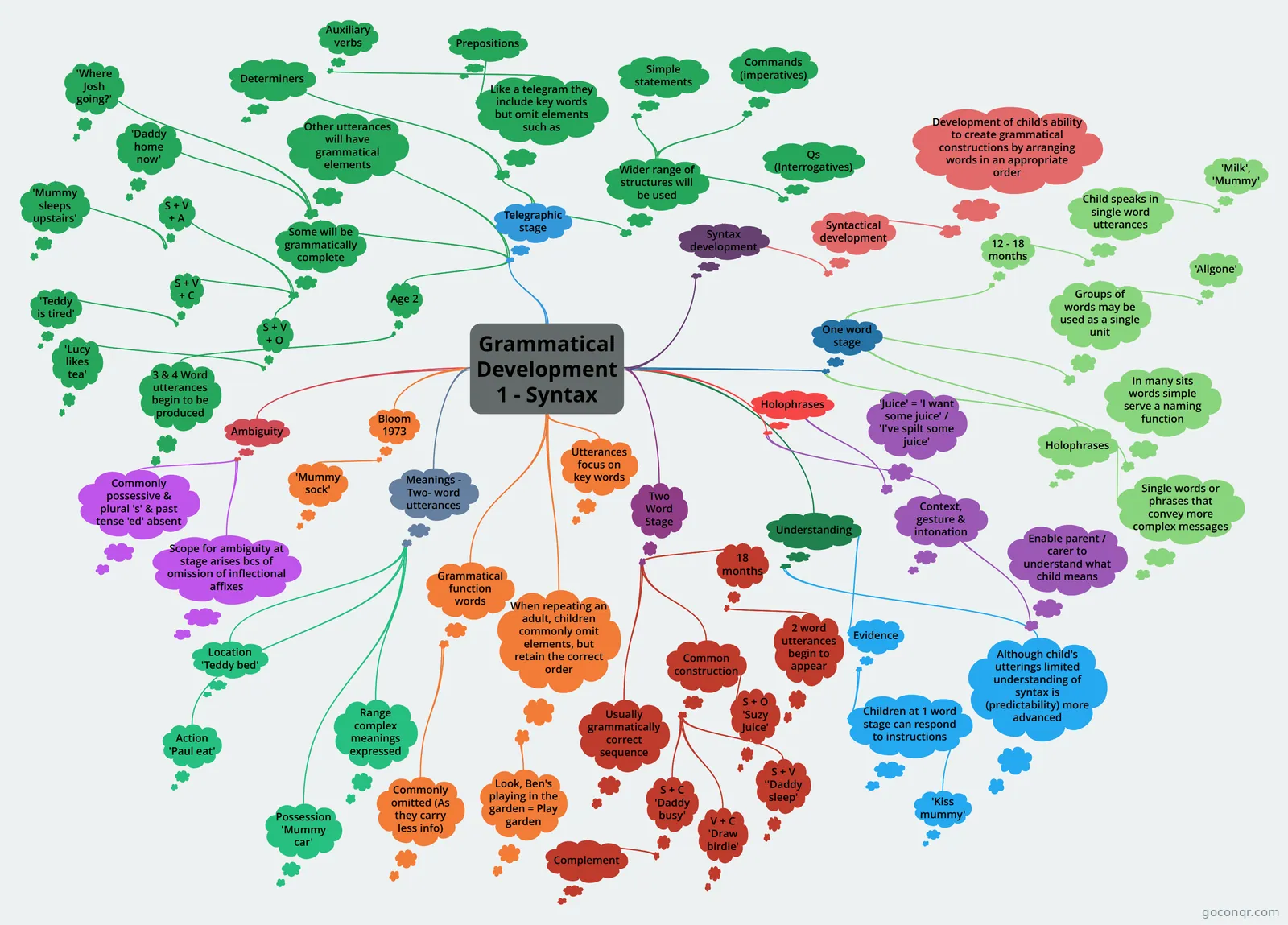 Mind map Grammatical Development 1 - Syntax Child Language Acquisition mind map on the early development of language
-
2 questionsKrashen's 5 Hypothesis of L2 Acquisition Krashen’s Hypotheses in the Classroom Identify which of Krashen’s hypotheses are related to each of the stu...
-
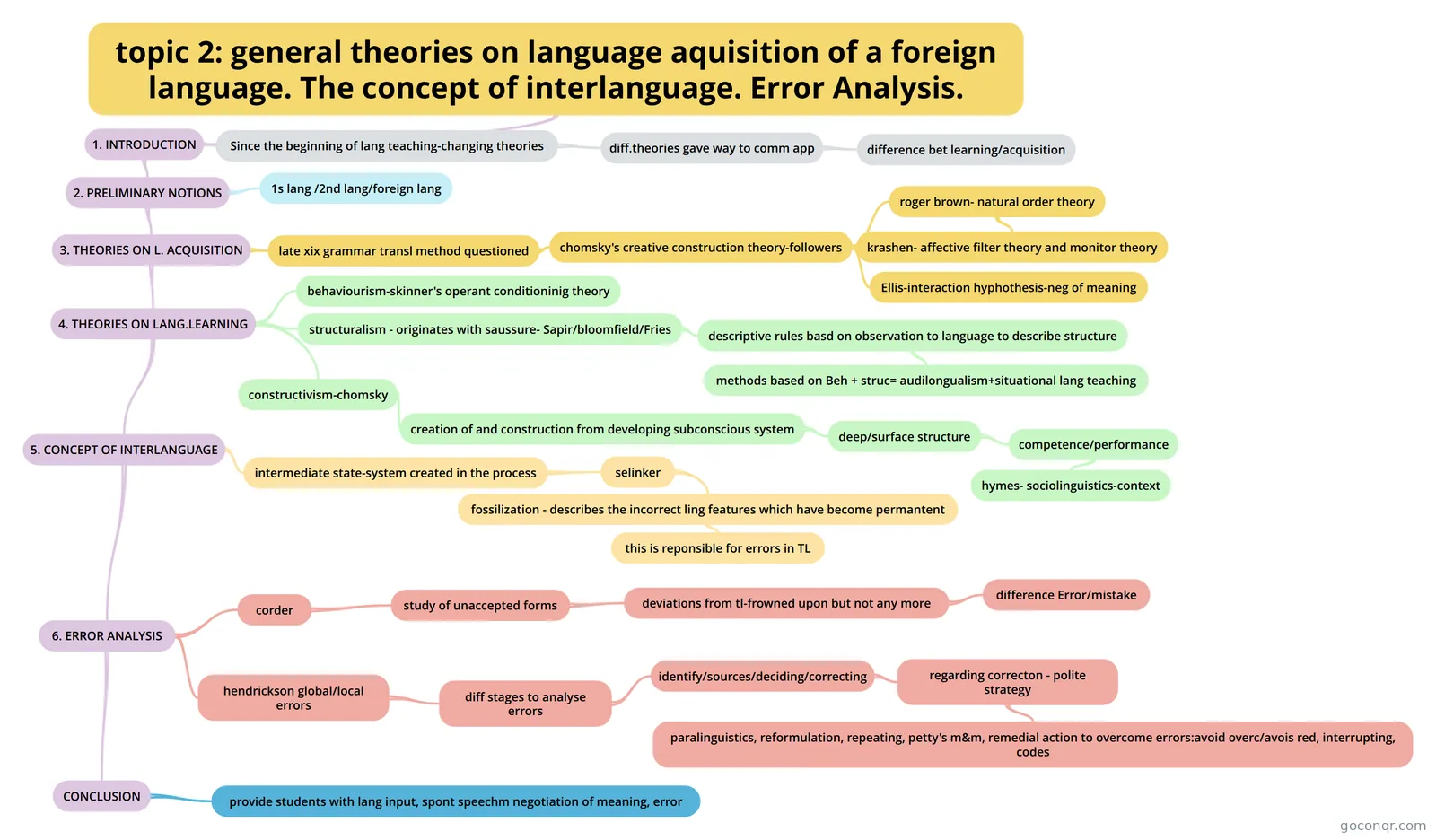 Mind map topic 2: general theories on language aquisition of a foreign language. The concept of interlanguage. Error Analysis.
-
10 questionsTheories of child language acquisition Who created the behaviourist approach?
-
4 cardsKroll's Stages of Writing Development Stage One: Preparation
Quizzes
-
2 questionsKrashen's 5 Hypothesis of L2 Acquisition Krashen’s Hypotheses in the Classroom Identify which of Krashen’s hypotheses are related to each of the stu...
-
10 questionsTheories of child language acquisition Who created the behaviourist approach?
-
6 questionsMatch the Theory to the Theorist - Language Acquisition Zone of Proximal Development Theory
-
28 questionsUNIT 2 Sociocultural Theory: author
-
13 questionsSpoken Language Acquisition Quiz Quiz of key information about child language acquisition theorists.
-
9 questionsquiz development Languages are learned mainly through imitation?
-
5 questionsWarm-Up Day 1 Quiz After watching Warm-Up Day 1, test yourself and get a prize at the end of the quiz
-
2 questionsSecond Language What is grammar translation method?
Mind maps
See all 50 mind maps-
Second Language Acquisition Theories This mind map details the Second Language Acquisition theories of 5 experts.
-
Grammatical Development 1 - Syntax Child Language Acquisition mind map on the early development of language
-
topic 2: general theories on language aquisition of a foreign language. The concept of interlanguage. Error Analysis.
-
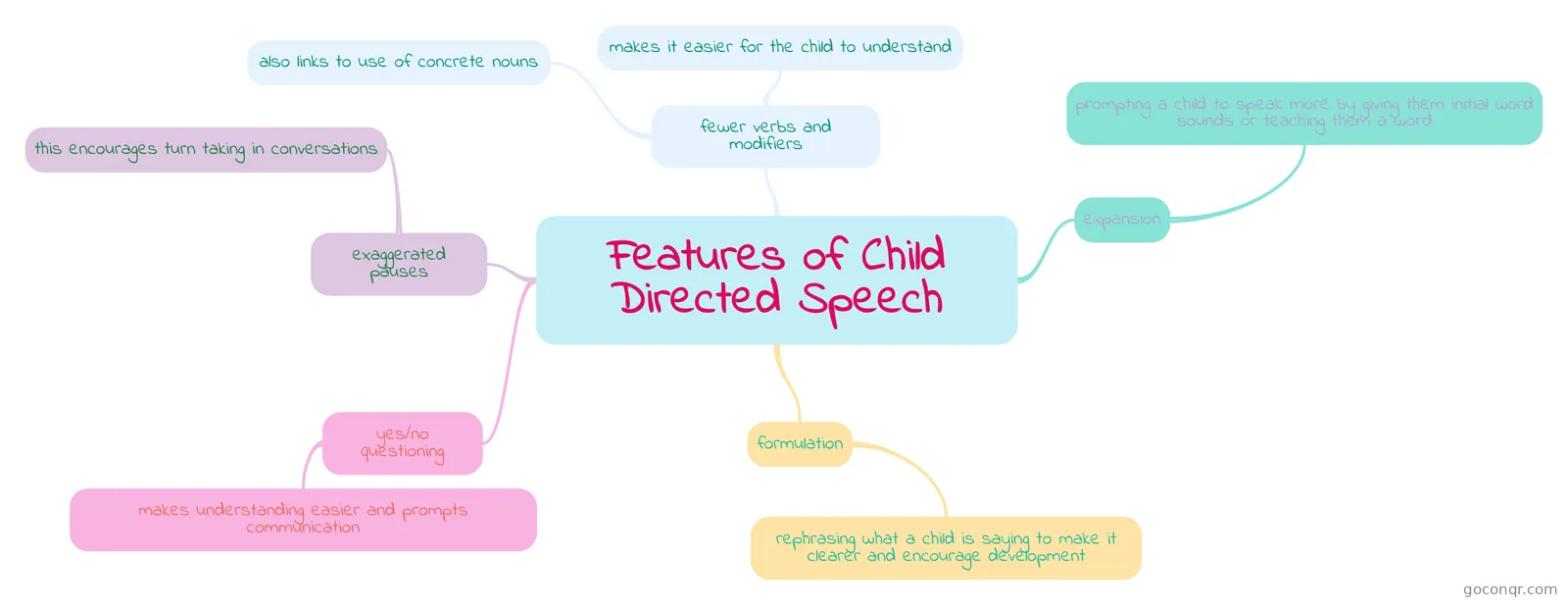 Features of Child Directed Speech
-
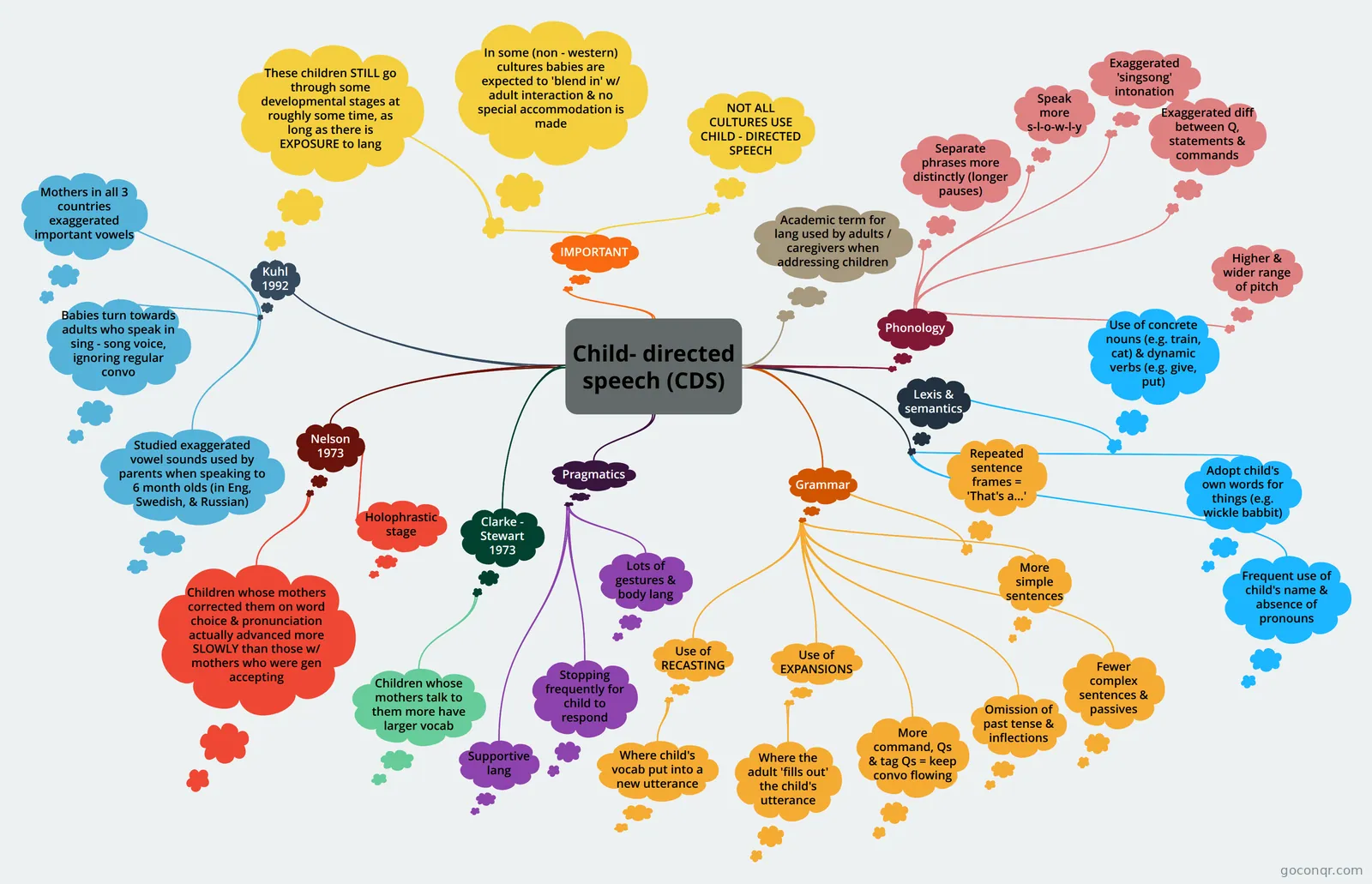 Child- directed speech (CDS) Child language acquisition mind map on the early development of language
-
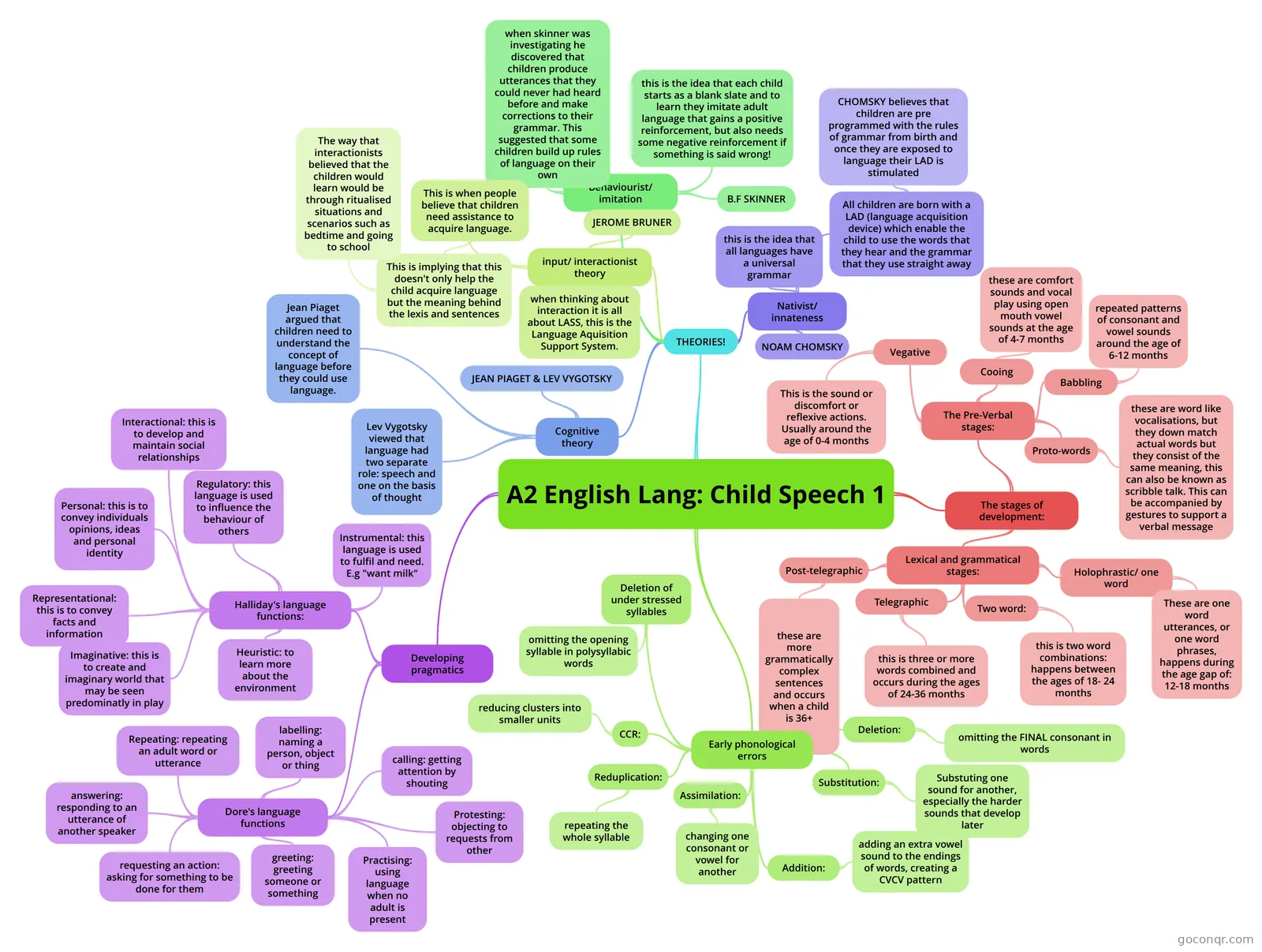 A2 English Lang: Child Speech 1
-
Second Language Acquisition Second Language Acquisition Mind Map as part of Auburn University's CTRD5003 course.
-
SECOND LANGUAGE ACQUISITION solemne 2
Flashcards
See all 23 flashcards-
48 cardsChild Language Acquisition Key Terms and Theories Key Terms
-
4 cardsKroll's Stages of Writing Development Stage One: Preparation
-
6 cardsReading Cues - Language Acquisition
-
4 cardsRothery's Categories for Evaluation of Children's Writing Observation and Comment
-
3 cardsBritton's Modes of Writing in Children
-
12 cardsEnglish
-
21 cardsTeaching Reading Important content for teaching reading, excellent strategies, advice, resources, and so on.
-
69 cardsLanguage Acquisition key words
Flowcharts
Notes
-
Child Language Acquisition Theorists Piaget's Cognitive TheorySchemasThis is the basis of intelligent behaviour, in other words, how a child develops their own understanding of the meaning of words. As a child's schema progresses, their understanding of ...
-
Language Acquisition Past Paper Write Up January 2013 English Language A2 Exam Write Up: Language Acquisition - Question One What Was Written: Throughout the transcript one key factor highlights Ruby's linguistic development consistently: false starts. On li...
-
Stages of Language Acquisition Stage One: Vegetative Features: sounds and reflexive actions Age: 0 - 4 months Stage Two: Cooing Features: vocal play, laughing, pitch, vowels + consonantsAge: 4 - 7 months Stage Three: BabblingFeatures: repeated patt...
-
Written Up Analysis of Owl Babies Activity Write Up: Analysis of Owl Babies by WaddellKey Points: - the use of names instead of pronouns makes each of the characters memorable and the story easier to follow- repetition in speaking order promotes turn ...
-
COGNITIVE FACTORS
Slides
More English language topics
About Language Acquisition and Learning
GoConqr OriginalWhat this unit covers
The resources split into two broad strands: how children acquire their first language, and how people learn a second one. Both are well served by the community-made material listed here.
On the child language side, you will find flashcard decks such as Child Language Acquisition Key Terms and Theories, which covers the pre-verbal stage, reduplicated babbling, variegated babbling and the holophrastic stage. There are also mind maps on child directed speech, phonological development, lexis and semantics, and grammar. Writing development has its own decks, including Britton's modes of writing and Rothery's categories for evaluating children's writing.
On the second language side, the mind map Second Language Acquisition Theories brings together Universal Grammar, the Input Hypothesis, BICS vs CALP and Input Processing. A flowchart looks at consciousness, noticing and restructuring, and other maps compare first and second language acquisition.
Where to start
- Begin with a mind map for the big picture: the one on child language theories, or the second language theories map if that is your focus.
- Move to the flashcard decks to learn the key terms and theorists.
- Read the note on child language acquisition theorists, which starts with Piaget's cognitive theory and schemas.
- Finish with a quiz to test what stuck.
Using quizzes and maps together
Try Theories of child language acquisition to check who proposed which approach. Every time you miss a question, go back to the matching map branch and reread it. For second language work, the quiz on Krashen's five hypotheses asks you to match each hypothesis to a learner's thoughts, which is a good test of whether you can apply a theory, not just name it.
If you are revising for A-level English Language, the note on a January 2013 past paper write-up shows how a response to a child language transcript can be structured, and a slide set covers how to analyse a child language transcript.
Where it sits
This unit belongs to the strand Linguistics, Culture and Language Teaching within English language. It sits beside other work on how language is used and taught.
Open a map or a deck today, then build your own versions to fill any gaps you spot.
Frequently asked questions
Which resource should I open first?
Start with a mind map for an overview. Second Language Acquisition Theories covers Universal Grammar, the Input Hypothesis and BICS vs CALP, while the child language maps cover theories, child directed speech and phonological development. Then use a flashcard deck for key terms and finish with a quiz.
Are the resources free to use?
Yes. Every resource listed here is free to open, study and take, with no account needed. They were made by GoConqr users, not by GoConqr itself. A free account additionally saves your quiz scores and lets you make your own quizzes, mind maps, flashcards and notes.
Which quizzes are available on this page?
There are more than 20 quizzes. Examples include Krasen-style practice on Krashen's 5 Hypothesis of L2 Acquisition, Theories of child language acquisition, a match-the-theory-to-the-theorist quiz, and a spoken language acquisition quiz. A literacy development quiz and quizzes on popular ideas about language learning are also listed.
Does the page help with A-level English Language?
Yes, several listed resources mention A-level English Language. They include child language acquisition decks, theorist glossaries, a past paper write-up note and a slide set on analysing child language transcripts. Use them alongside your own course materials.
Is there anything on writing and reading development?
Yes. Flashcard decks cover Britton's modes of writing in children, Rothery's categories for evaluating children's writing and Kroll's stages of writing development. There are also decks on reading cues and features of reading schemes, plus a literacy development quiz.
What if the topic I need is missing?
Try a nearby term in the search, such as a theorist's name or a stage of development. If you still cannot find it, make your own mind map, flashcards or notes on it. A free account lets you do that, and the community may find your version useful too.