
Mapa mental
Endocrine System
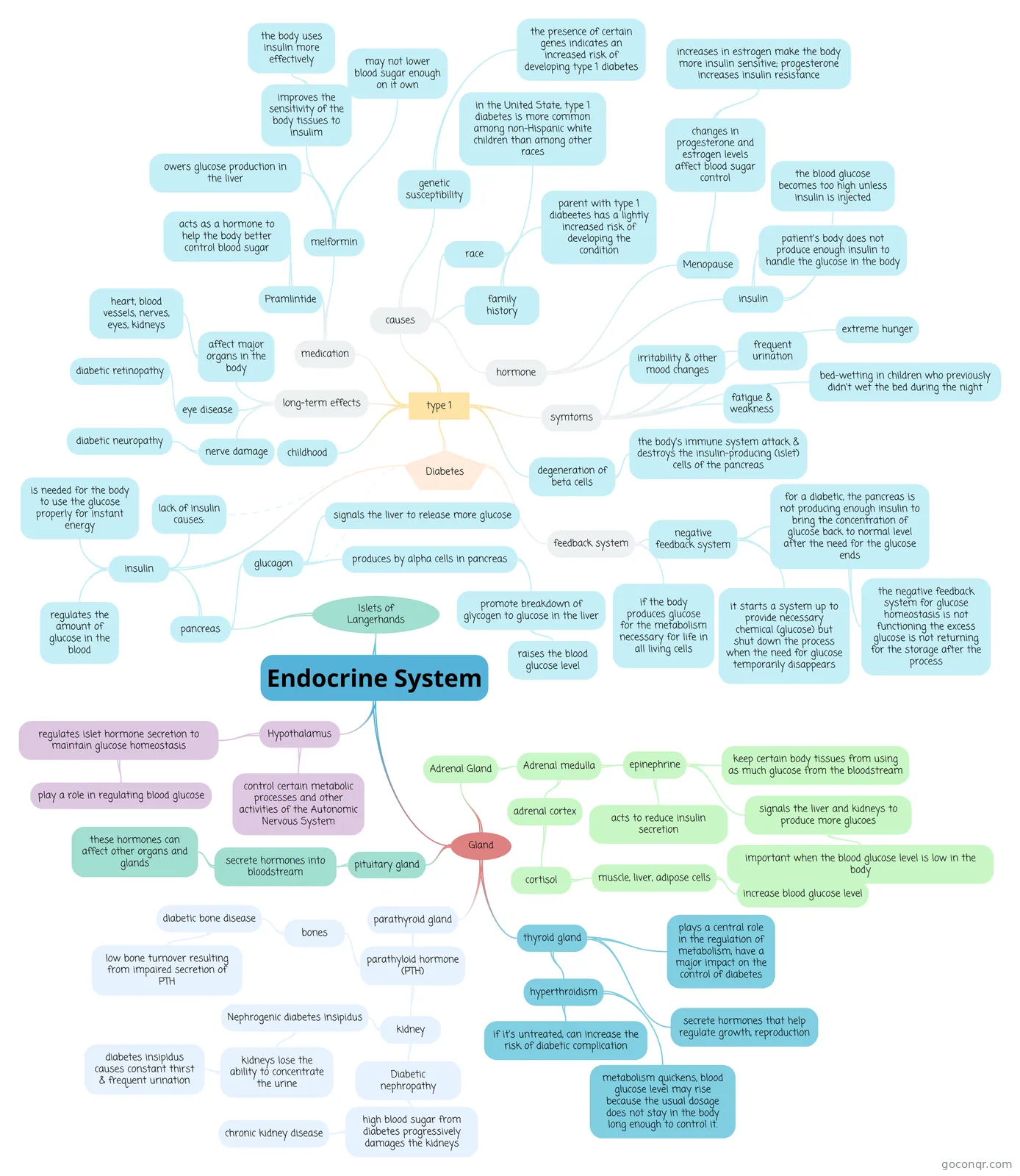
Mind map: Endocrine system
Contenido del mapa
Endocrine System
Islets of Langerhands
- pancreas
- insulin
- Diabetes
- type 1
- childhood
- degeneration of beta cells
- the body's immune system attack & destroys the insulin-producing (islet) cells of the pancreas
- symtoms
- bed-wetting in children who previously didn't wet the bed during the night
- extreme hunger
- irritability & other mood changes
- fatigue & weakness
- frequent urination
- causes
- family history
- parent with type 1 diabeetes has a lightly increased risk of developing the condition
- genetic susceptibility
- the presence of certain genes indicates an increased risk of developing type 1 diabetes
- race
- in the United State, type 1 diabetes is more common among non-Hispanic white children than among other races
- hormone
- insulin
- patient's body does not produce enough insulin to handle the glucose in the body
- the blood glucose becomes too high unless insulin is injected
- Menopause
- changes in progesterone and estrogen levels affect blood sugar control
- increases in estrogen make the body more insulin sensitive; progesterone increases insulin resistance
- changes in progesterone and estrogen levels affect blood sugar control
- insulin
- family history
- medication
- melformin
- may not lower blood sugar enough on it own
- improves the sensitivity of the body tissues to insulim
- the body uses insulin more effectively
- owers glucose production in the liver
- Pramlintide
- acts as a hormone to help the body better control blood sugar
- melformin
- long-term effects
- affect major organs in the body
- heart, blood vessels, nerves, eyes, kidneys
- eye disease
- diabetic retinopathy
- nerve damage
- diabetic neuropathy
- affect major organs in the body
- feedback system
- if the body produces glucose for the metabolism necessary for life in all living cells
- negative feedback system
- it starts a system up to provide necessary chemical (glucose) but shut down the process when the need for glucose temporarily disappears
- for a diabetic, the pancreas is not producing enough insulin to bring the concentration of glucose back to normal level after the need for the glucose ends
- the negative feedback system for glucose homeostasis is not functioning the excess glucose is not returning for the storage after the process
- type 1
- is needed for the body to use the glucose properly for instant energy
- regulates the amount of glucose in the blood
- lack of insulin causes:
- Diabetes
- glucagon
- produces by alpha cells in pancreas
- promote breakdown of glycogen to glucose in the liver
- raises the blood glucose level
- promote breakdown of glycogen to glucose in the liver
- signals the liver to release more glucose
- produces by alpha cells in pancreas
- insulin
- pancreas
Gland
- Adrenal Gland
- Adrenal medulla
- epinephrine
- signals the liver and kidneys to produce more glucoes
- important when the blood glucose level is low in the body
- keep certain body tissues from using as much glucose from the bloodstream
- acts to reduce insulin secretion
- signals the liver and kidneys to produce more glucoes
- adrenal cortex
- cortisol
- muscle, liver, adipose cells
- increase blood glucose level
- muscle, liver, adipose cells
- cortisol
- epinephrine
- Adrenal medulla
- thyroid gland
- hyperthroidism
- metabolism quickens, blood glucose level may rise because the usual dosage does not stay in the body long enough to control it.
- if it's untreated, can increase the risk of diabetic complication
- secrete hormones that help regulate growth, reproduction
- plays a central role in the regulation of metabolism, have a major impact on the control of diabetes
- hyperthroidism
- parathyroid gland
- parathyloid hormone (PTH)
- bones
- diabetic bone disease
- low bone turnover resulting from impaired secretion of PTH
- diabetic bone disease
- kidney
- Nephrogenic diabetes insipidus
- kidneys lose the ability to concentrate the urine
- diabetes insipidus causes constant thirst & frequent urination
- kidneys lose the ability to concentrate the urine
- Diabetic nephropathy
- high blood sugar from diabetes progressively damages the kidneys
- chronic kidney disease
- high blood sugar from diabetes progressively damages the kidneys
- Nephrogenic diabetes insipidus
- bones
- parathyloid hormone (PTH)
- pituitary gland
- secrete hormones into bloodstream
- these hormones can affect other organs and glands
- secrete hormones into bloodstream
- Adrenal Gland
Hypothalamus
- regulates islet hormone secretion to maintain glucose homeostasis
- play a role in regulating blood glucose
- control certain metabolic processes and other activities of the Autonomic Nervous System
- regulates islet hormone secretion to maintain glucose homeostasis
Información
- Descripción
- Mapa Mental sobre Endocrine System, creado por Karen Wong el 09/01/2019.
- Creado por
- Karen Wong
- Visitas
- 0
- Valoración