
Mapa mental
Long term Physiological Prep
Contenido del mapa
Long term Physiological Prep
Periodisation
- Periodisaton= splitting training into periods ain order to focus better ion specific objectives
- Periodisation is an organised approach to training that involved progressive cycling of various aspect s
- Macrocycle=the entire period
- Each macrocycle is split into mesocycles
- Each mesocycle is split into microcycles
- Most players season is no longer then 8 or 9 months followed by 6 weeks rest
- Dependent on sport and objective
- The growing trend is a continuous macrocycle with an infinite number of mesocycle
- Specific objective in each mesocycle
Aerobic and Anaerobic training
- Aerobic and anaerobic refer to the energy systems used
- All 3 energy systems are continuioslly in use producing ate for the working body but only 1 will be dominant depending on intensity and duration
- Aerobic Training
- Energy produced with oxygen present Aerobic energy system
- Aerobic Training is a zone where other methods of training can be performed
- Training is undertaken to make us more efficient when using either energy system
- Also to target the intensity at when we come anaerobically dependent
- Marathon runner will have to think about where they will be getting the energy from to burn the oxygen
- Either from fat or glycogen stores
- Only have 90 minutes of glucose in our body
- Need to try and Maximise fat use and minimise glycogen use
- Hitting the wall is known as when you have come very wall to depleting your glycogen stores
- Athlete will have to train to encourage their body to adapt and work aerobically at a higher intensity
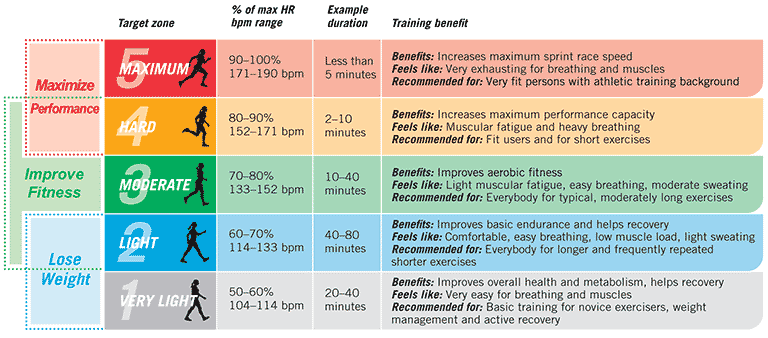
- Associate aerobic execerise with low to medium intensity
- Likely adaptations to aerobic training
- This depends on the frequency and the intensity
- Increase SV
- Increase in delivery of O2 to muscles and removal of waste products
- Increased vascularisation
- Cardiac Hypertrophy
- Increase vo2 max
- Increase Mitochondria
- increase in energy production rate
- Decrease in body fat
- Bradycardia
- Increase capacity to utilise tolerate and transport lactic acid
- Anaerobic Training
- Energy produced with insufficient oxygen ATP-PC and Lactic acid system
- You undertake anaerobic training when the intensity of training is too high for the body to satisfy aerobically
- Reach anaerobic threshold when the production of lactic acid begins to exceed the body's ability to break it down
- Glucose is used as fuel derived from muscle glycogen stores.
- Likely adaptations to anaerobic training
- Increase the body efficiency at utilisng lactic acid
- increase body capacity to transport lactic acid
- Increase body ability to tolerate levels of lactic acid
- Physical effects
- Increased thickness of ventricular myocardium
- Increase SV
- Myofibril hypertrophy
- Increase muscle mass
- Aerobic and anaerobic refer to the energy systems used
Methods of training
- Continuous
- Constant work rate
- Long duration
- low-medium intensity
- Aerobic benefits
- Ultimately improve aerobic fitness
- Interval
- Work to rest ratio W:R
- Specific intensity and duration
- Aerobic and anaerobic benefits
- Plyometric
- Stress body ability to work explosively
- Develops power coordination and balance
- Max intensity short duration
- More fibres will be recruited
- Susceptible to DOMS
- Weight, circuit resistance
- Different exercises performed in sequences
- Fixed load and individual circuits
- Fixed and free weights
- Intensity and duration manipulated
- Fartlek
- Long duration various intensities and terrains
- Suitable for games players
- Trains multiple energy systems and muscle fibre types
- Encourages active recovery
- Speed
- Muscle fibres recruited
- stimulated to contract at faster rate
- Muscle fibres recruited
- SAQ
- High intensity
- Trains neuromuscular system
- Explosive movements done in short bursts
- Improves coordination
- Ladder training
- Core stability
- Target of training rather than type
- Targeted with interval circuits and resistance training
- Anaerobic benefits
- Continuous
Imágenes y archivos del mapa
Información
- Descripción
- PE year 13 Mapa Mental sobre Long term Physiological Prep, creado por Kendog 123 el 07/01/2017.
- Creado por
- Kendog 123
- Visitas
- 23
- Etiquetas
- Valoración