
Mapa mental
unit 2
Contenido del mapa
unit 2
energy
- fuels
- fossil fuels
- biomass
- heats steam, convection currents that turn a turbine, turns generator
- dynamo effect, produces current using a coil and magnet (increase my increasing coils, current or moving faster)
- AC ELECTRICITY
- solar energy
- passive solar heating ( heats water in pipes (black) short wavelength passes through, absorbed and changed into longer wavelength, emit longer wavelength that can't escape so is reflected back into room
- wind power - energy from sun heats the earth causing convection currents, which turn the turbine on wind turbines these then convert into kinetic energy which then turn the blades turning a generator (dynamo)
- photocells - silicon (semiconductor) crystals absorb energy, then knocks electrons out, these then produce a flowing current
- DC ELECTRICITY
- passive solar heating ( heats water in pipes (black) short wavelength passes through, absorbed and changed into longer wavelength, emit longer wavelength that can't escape so is reflected back into room
- dynamo effect, produces current using a coil and magnet (increase my increasing coils, current or moving faster)
- heats steam, convection currents that turn a turbine, turns generator
- nuclear
- waste - reprocessing (incineration) landfill (NO) glass casing and put into the sea
- fossil fuels
- nuclear radiation
- causes ionisation (atoms lose or gain electrons) (causes cancer due to mutations)
- alpha are big, slow moving (2 protons 2 neutrons) stopped quickly and don't penetrate far into materials, stopped by paper and skin) very ionising
- smoke detectors - two electrodes, ionises the air and current flows between the electrodes, but if there is a fire the smoke absorbs the radiation and the current stops
- beta are electrons, small and fast, penetrate moderately, think sheet of metal
- tracers and thickness gauges - swallowed and detected, see if body is working properly, short half life and pass out of the body, thickness control if thickness is detected as dropped the unit can make the rollers thinner
- gamma are high frequency em waves, no mass, no charge, takes a lot to stop it, weakly ionising
- sterilising equiptment, kills of microbes, kill cancer (directed carefully)
- fuels
the universe
- big bang (explosion that causes the galaxies to move apart) began very small, then exploded and expansion (still occuring) 14 billion years ago, hard to get exact age of earth as hard to tell how much speed has changed
- red shift
- light from other galaxies is lower on the spectrum than it should be it means that they're shifted to the red end of the visable light spectrum, (drop in frequency) more distant galaxies have greater red shift
- microwave radiation from all parts of the univerese
- light from other galaxies is lower on the spectrum than it should be it means that they're shifted to the red end of the visable light spectrum, (drop in frequency) more distant galaxies have greater red shift
- red shift
- stars/planets
- 1) interstellar dust cloud, 2) protostar 3) red giant( small stars, planetary nebula then white dwarf) 4) big stars red supergiant, then supernova (to either a neutron star or a black hole)
- copernicus - all planets orbit sun, in perfect circles, fixed stars in the background 1543.
- ptomley - everything orbits the earth, fixed stars in the background 1500's
- galileo - his findings orbit sun, basically same as copernicus but that there are eliptical orbits, and not everything orbits sun (moons orbiting planets)
- 1) interstellar dust cloud, 2) protostar 3) red giant( small stars, planetary nebula then white dwarf) 4) big stars red supergiant, then supernova (to either a neutron star or a black hole)
- big bang (explosion that causes the galaxies to move apart) began very small, then exploded and expansion (still occuring) 14 billion years ago, hard to get exact age of earth as hard to tell how much speed has changed
solar system
- held together by gravitational attraction, keeps satellites, comets and asteroids in orbit, gravity on an object gets smaller the further away, caused by a centripental force (gravity)
- comets and asteroids
- asteroid belt mars-jupiter, planet didn't form as jupiter's gravitational attraction kept interfering therefore we have millions of piles of rubble and rock, these usually stay in orbit but sometimes they are pushed or pulled out by other ones
- meteorites - rocks that enter atmosphere very rare, make holes called craters in the ground, dust or smoke from impact can block out light for days or moths causing climate change which can cause species to become extinct, happened in mexicos, half the species on earth died out, including maybe the last of dinosaurs, evidence in unusual elements in rocks, and sudden changes in fossil numbers
- comets have elliptical orbits, rock dust and ice that orbits the sin, come from orbiting the sun way beyond the planets, when approaches sun the tail of ice melts, speed up as they approach sun as gravity increases.
- (NEOS)
- collision course with the earth (basically like this gcse) calculate objects tranjectory, small neos burn up harmlessly in the atmosphere, but larger ones need to be defelected, for example a bomb.
- asteroid belt mars-jupiter, planet didn't form as jupiter's gravitational attraction kept interfering therefore we have millions of piles of rubble and rock, these usually stay in orbit but sometimes they are pushed or pulled out by other ones
space exploration
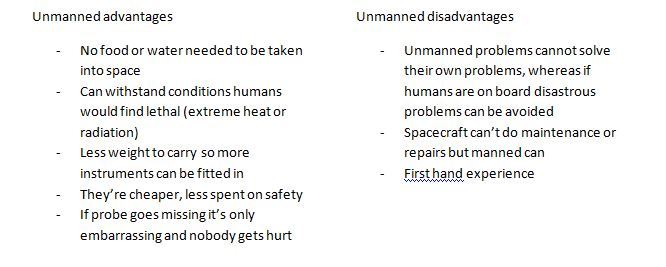
- food, water needed, regulate temp and remove toxic gasses, shield to protect from radiation (muscle wastage, low blood pressure and heart rate, stressful, loss of bone tissue, needs fuel and can be expensive
greenhouse gases
- methane, carbon dioxide, water vapour, cause global warming as infared is absorbed by gases, as short wavelengths are changed into shorter ones that cannot escape the atmsosphere
- humans - people use more energy which is made from burning fossil fuels, that release carbon dioxide, land is needed for houses so trees are chopped down (less oxygen being taken out of atmosphere) respiration as well, methane - cattle farming has increased as population has, cattle digestion means methane, decaying waste in landfill produces methane, as amount of waste is increasing so is methane, volcanoes, wetlands and wild animals also release methane. water vapour comes from natural sources such as the ocean, as global temperatures increase so does the amount of water vapour. ash from volcanoes also reflects the radiation back into space, changes in orbit around the sun can cause ice ages, soot increases temperature
Imágenes y archivos del mapa
Información
- Descripción
- Physics 1,2,3 Mapa Mental sobre unit 2, creado por nicolesarah97 el 14/04/2014.
- Creado por
- nicolesarah97
- Visitas
- 17
- Valoración