Mapa mental
Memory Models
Contenido del mapa
Memory Models
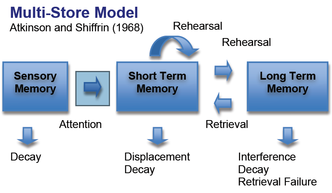
Multi-Store Model
- Evaluation
- Strengths
- High face validity
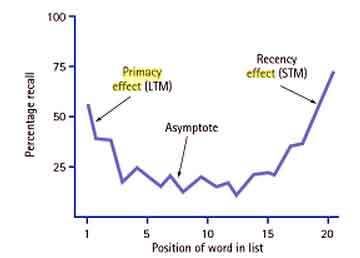
- Glanzer &Cunitz (1966
- Participants given a list of words and asked to recall them immediately or after a 30 second delay
- Participants only remembered last few words more in immediate condition. They had time to rehearse first few but remembered the last few because they were recent
- Milner (1966) case study
- Amnesia patents
- Clive Wearing
- Severe form of herpes that caused brain damage.
- Could remember memories from before the damage but could not form new ones. Suggests LTM was functional but STM was not.
- Severe form of herpes that caused brain damage.
- HM
- Brain damaged in surgery to reduce epileptic fits.
- Brain damaged in surgery to reduce epileptic fits.
- Clive Wearing
- Amnesia patents
- Participants given a list of words and asked to recall them immediately or after a 30 second delay
- Glanzer &Cunitz (1966
- High face validity
- Weaknesses
- KF case study
- LTM normal but STM capacity damaged (2 items). LTM could still form new memories. According to the model this should not be possible.
- Brain damage in motorcycle accident
- HM case study
- Could not form new LTM memories but could take on new skills (rotary disc), could not remember doing it, but still improved. Suggests LTM is split into different units.
- Declarative memory- Facts and Knowledge
- Non-Declarative (Implicit) memory- Non- concious memory (skills)
- Could not form new LTM memories but could take on new skills (rotary disc), could not remember doing it, but still improved. Suggests LTM is split into different units.
- KF case study
- Strengths
- Evaluation
Working Memory Model
- Baddeley and Hitch (1974)- Replaces unitary STM
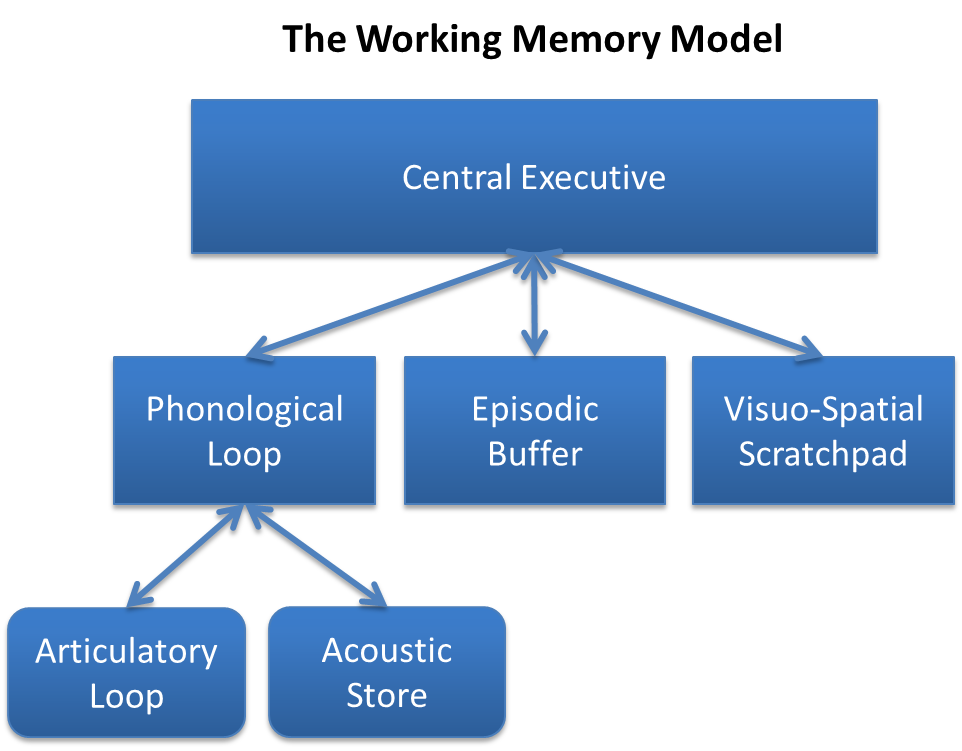
- Components
- Central Executive- Monitors incoming information and allocates slave systems
- Phonological Loop- Temporary storage system for holding auditory information in a speech based form. Key role in development of reading
- Phonological Store (inner ear)- Stores words you hear
- Articulatory Process (inner voice)- Allows maintenance rehearsal (repeating words to keep them in working memory as long as they are needed)
- Visio-Spatial Sketchpad- Holds visual and spatial information
- Inner Scribe- Records arrangement of objects
- Visual Cache- Stores visual data
- Episodic Buffer- Temporary store that communicates with long term memory and slave systems
- Evaluation
- Strengths
- Supports dual task studies. It is easier to do something using different slave systems (verbal and visual) than using the same ones (visual and visual). Competes for limited resources of one system
- KF's impairment was mainly verbal but visual was mainly unaffected. Suggests they're different components.
- Brain damage patients are not reliable as they are unique cases of people with traumatic experiences.
- Weaknesses
- Little is known about how the central executive works. It is an important part of the model but it's exact role is unclear.
- Does not explain the link between working memory and LTM
- Strengths