
Mapa mental
Approaches and Methodologies
Contenido del mapa
Approaches and Methodologies
Grammatical
- outdated “historical artifact”
- Teacher centered emphasis on the rules and structure of target language
- Isolated sentences to complex texts
- Grammar-translation
- More emphasis on development of reading writing and grammar.
- Became popular in the nineteenth century
- memorization of rules and vocabulary lists
- Less emphasis on oral language development.
- Direct
- Focus on total immersion in L2: Sink or Swim
- No use of L1 allowed in the classroom
- Involves an open ended response to materials the teacher brings into the classroom.
- Audiolingual
- Grammar structures are carefully sequenced and taught.
- Minimal use of L1.
- Emphasizes error correction drills and repetitive practice designed to develope particular language structures
- Memorization and recall that become habbit
- Emphasizes error correction drills and repetitive practice designed to develope particular language structures
- Minimal use of L1.
- Some importance on context through objects, photos, diagrams, and drawings.
- Grammar structures are carefully sequenced and taught.
- Dialog taught in context; exposure was key
- Teacher model; student practice
- Audiolingual
- Involves an open ended response to materials the teacher brings into the classroom.
- Originated in late nineteenth century
- No use of L1 allowed in the classroom
- Direct method:
- teachers model, students practice
- less on explicit instruction more on repetition and memorization
- teachers model, students practice
- Dialogue memorization.
- Repetition.
- Mnemonics.
- Kinetics
- Mnemonics.
- Repetition.
- Dialogue memorization.
- Direct method:
- Used by troops in WW2
- learning experiences must emphasize the explicit teaching of grammar
- Rule based instruction
- Rule based instruction
- outdated “historical artifact”
Communicative
- Emerged in the 1960s
- Due to concerns with the effectiveness of grammatical method
- Learning through communication, constructivism, and social interaction
- Student-centered emphasis on communication and meaningful acquisition of knowledge
- Silent Way
- Teacher does the talking and doing: All L2 not L1
- Emphasis on pronunciation and word flow
- Simple linguistic situations: observe and describe
- Natural way
- Stresses comprehensible input.
- Comprehension proceeds production
- language progression emerges in stages.
- Communicative goals should guide instruction
- Suggestopedia
- Emphasis on relaxed physical setting: No Fear
- Visual aides to support meaning with L1 explanations of test, working with text through role play, conversation, and retelling
- Not necessarily content-based
- Integrated content-based
- Emphasizes L2 development.
- Based on Academic & Linguistic needs including grade level collaboration across subject areas
- Subject are content integrated into themed units
- Sheltered instruction
- Modified for grade level or second language classroom as they have integrated language and content objectives aligned with curriculum and best practice standards for CDL students
- Scaffold grade level instruction with hands on applications/ modified grade-level content
- Visuals, coop. learning, & guarded vocabulary
- Sheltered instruction method
- Scaffolding.
- Guarded vocabulary.
- Cooperative learning.
- Hands-on activities
- Cooperative learning.
- Guarded vocabulary.
- Scaffolding.
- Reduced use of idioms.
- Manipulative and realia.
- Simulations / big books.
- Heterogenious grouping
- Simulations / big books.
- Manipulative and realia.
- Reduced use of idioms.
- Sheltered instruction method
- Sheltered Instruction Observation Protocol-SIOP
- Visuals, coop. learning, & guarded vocabulary
- Scaffold grade level instruction with hands on applications/ modified grade-level content
- Modified for grade level or second language classroom as they have integrated language and content objectives aligned with curriculum and best practice standards for CDL students
- Sheltered instruction
- Subject are content integrated into themed units
- Based on Academic & Linguistic needs including grade level collaboration across subject areas
- Emphasizes L2 development.
- Integrated content-based
- Not necessarily content-based
- Visual aides to support meaning with L1 explanations of test, working with text through role play, conversation, and retelling
- Emphasis on relaxed physical setting: No Fear
- Should be designed to lower the affective filter
- Suggestopedia
- Communicative goals should guide instruction
- language progression emerges in stages.
- Comprehension proceeds production
- Referred to as the Natural Approach
- Stresses comprehensible input.
- learner developed own criteria for quality of speaking, listening, and correction.
- Natural way
- Simple linguistic situations: observe and describe
- Emphasis on pronunciation and word flow
- Teacher does the talking and doing: All L2 not L1
- Silent Way
- research and theory based approach
- Interpersonal interaction leads to language acquisition
- Language Acquisition Device
- Language Acquisition Device
- Interpersonal interaction leads to language acquisition
- Student-centered emphasis on communication and meaningful acquisition of knowledge
- Emerged in the 1960s
Cognitive
- Origins in 1980s and 90s research
- Concerned with the structure and nature of complex knowledge processes (discovering recognizing, conceiving, judging, reasoning, and reflecting)
- Learning as knowledge construction
- Concerned with the structure and nature of complex knowledge processes (discovering recognizing, conceiving, judging, reasoning, and reflecting)
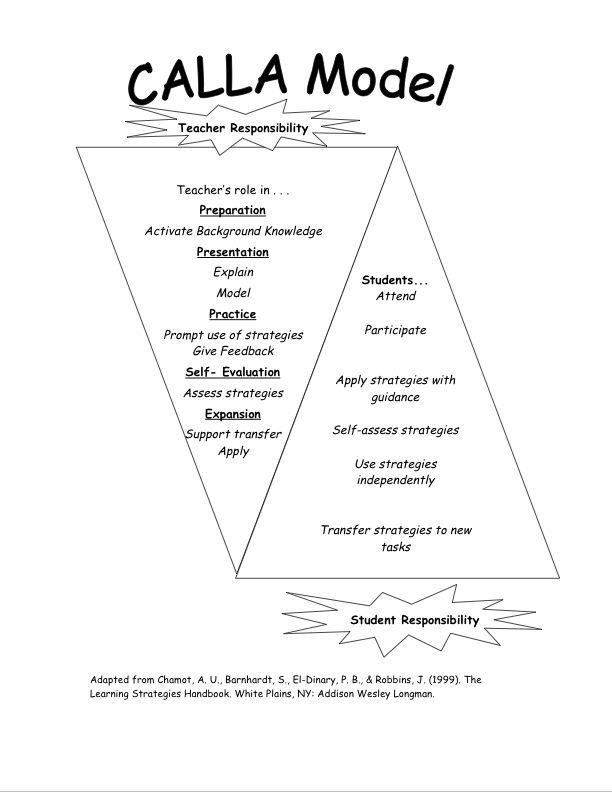
- Learner-centered focus on explicit teaching of learning strategies (LS) in communicative ways
- CALLA
- Developmentally appropriate language instruction with focus on prior knowledge
- Intentional focused on CALP development in l1 and l2 as related to content areas: emphasis on academic language.
- Explicit instruction in the metacognitive learning strategy, the cognitive learning strategy, and the social or affective learning strategy
- Content is introduced and scaffolded with contextual supports and reduced linguistic demands
- Explicit instruction that targets both content and language acquisition
- Content is introduced and scaffolded with contextual supports and reduced linguistic demands
- Explicit instruction in the metacognitive learning strategy, the cognitive learning strategy, and the social or affective learning strategy
- Intentional focused on CALP development in l1 and l2 as related to content areas: emphasis on academic language.
- Developmentally appropriate language instruction with focus on prior knowledge
- CALLA method
- cooperative learning.
- Explicit LS instruction.
- Maximizing content and language objectives
- Explicit LS instruction.
- cooperative learning.
- KWL chart.
- Questioning.
- Word walls.
- Outlines
- Word walls.
- Questioning.
- Interactively variable
- Piaget; Gazzaniga; Edelman; Oxford; Chamot; O'Malley; Hakuta; Bialystok
- In this method the learner expands what he knows by adding new information to prior knowledge. This is an example of active learning. It’s a complex dance between declarative knowledge, procedural knowledge, and conditional knowledge that eventually allows us to process that in our environment and learn from it. Johnson argued that declarative and procedural were the two most important processes for automatization, or the restructuring of large amounts of information. In this model the student is self-aware of his learning, what he wants to achieve, and the techniques to get him there.
- Piaget; Gazzaniga; Edelman; Oxford; Chamot; O'Malley; Hakuta; Bialystok
- Interactively variable
- KWL chart.
- CALLA method
- CALLA
- Relating known concepts to known information in order to facilitate learning.
- Learner-centered focus on explicit teaching of learning strategies (LS) in communicative ways
- Origins in 1980s and 90s research
- References
- Chamot, A. U. (2009). The CALLA Handbook: Implementing the Cognative Academic Language Learning Approach (2nd ed.). White Plains, NY: Pearson Education Inc.
- Herrera, S. G., & Murry, K. G. (2011). Mastering ESL and Bilingual Methods:Differentiated Instruction for Cullturally and Linguistically Diverse (CLD) Students (2nd ed.). Boston, MA: Pearson Education, Inc.
- Chamot, A. U. (2009). The CALLA Handbook: Implementing the Cognative Academic Language Learning Approach (2nd ed.). White Plains, NY: Pearson Education Inc.
History
- Dates back to Mesopotamia
- Most prevalent in the Middle Ages, the 18th, the 19th, and 1st half of the 20th centuries
- Charateristics
- Methods
- Strategies:
- Examples from...
- Techniques
- Perspectives on Human Developments
- Fixed/ Staged/ Predictable
- Locke; Hume; Watson; Skinner; Palmer; Fries; Oller; Obrecht
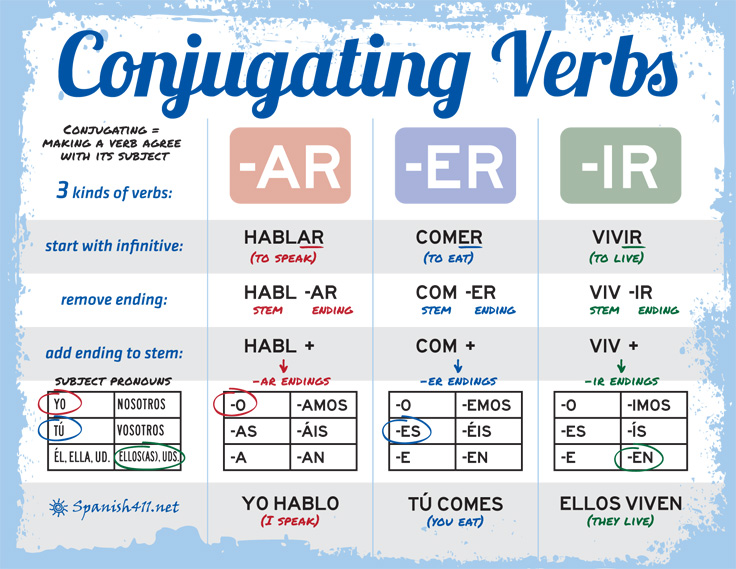
- This approach, though used for many many years essentially fails in offering the best options of instruction. Rather than teaching students how to use a language it focused on teaching about the language. This is how I felt in my high school Spanish class when we would spend weeks on conjugating verbs. This method does not provide students with comprehensible input, and research has shown that students that are educated in this manner do worse on standardized tests. This method doesn't work well and is outdated.
- Locke; Hume; Watson; Skinner; Palmer; Fries; Oller; Obrecht
- Fixed/ Staged/ Predictable
- Typically staged but environmentally variable
- Vygotsky; Bakhtin; Brunner; Ansubel; Papert; Krashen; Terrell; Echevarria; Vogt; Short
- This approach places a major emphasis on communication and stresses that it is the primary objective in learning, which makes sense. Why are we learning a new language except to communicate with it? The theoretical foundation for this approach is constructivism. Believing that people are born with certain abilities to comprehend, construct, and produce language, theorists argued that learning took place through interactions between the learner’s mind and his environment. Learners do not require explicit instruction but rather the environment in which they can socially interact with others and therefore construct the language for themselves
- Vygotsky; Bakhtin; Brunner; Ansubel; Papert; Krashen; Terrell; Echevarria; Vogt; Short
- Typically staged but environmentally variable
- Researchers/ Theorists
- Summary
- Perspectives on Human Developments
- Strategies:
- Methods
- Dates back to Mesopotamia
Imágenes y archivos del mapa
Información
- Descripción
- Methodologies and Approaches
- Creado por
- Stone167
- Visitas
- 70
- Etiquetas
- Valoración