
Mapa mental
Respiratory system 3
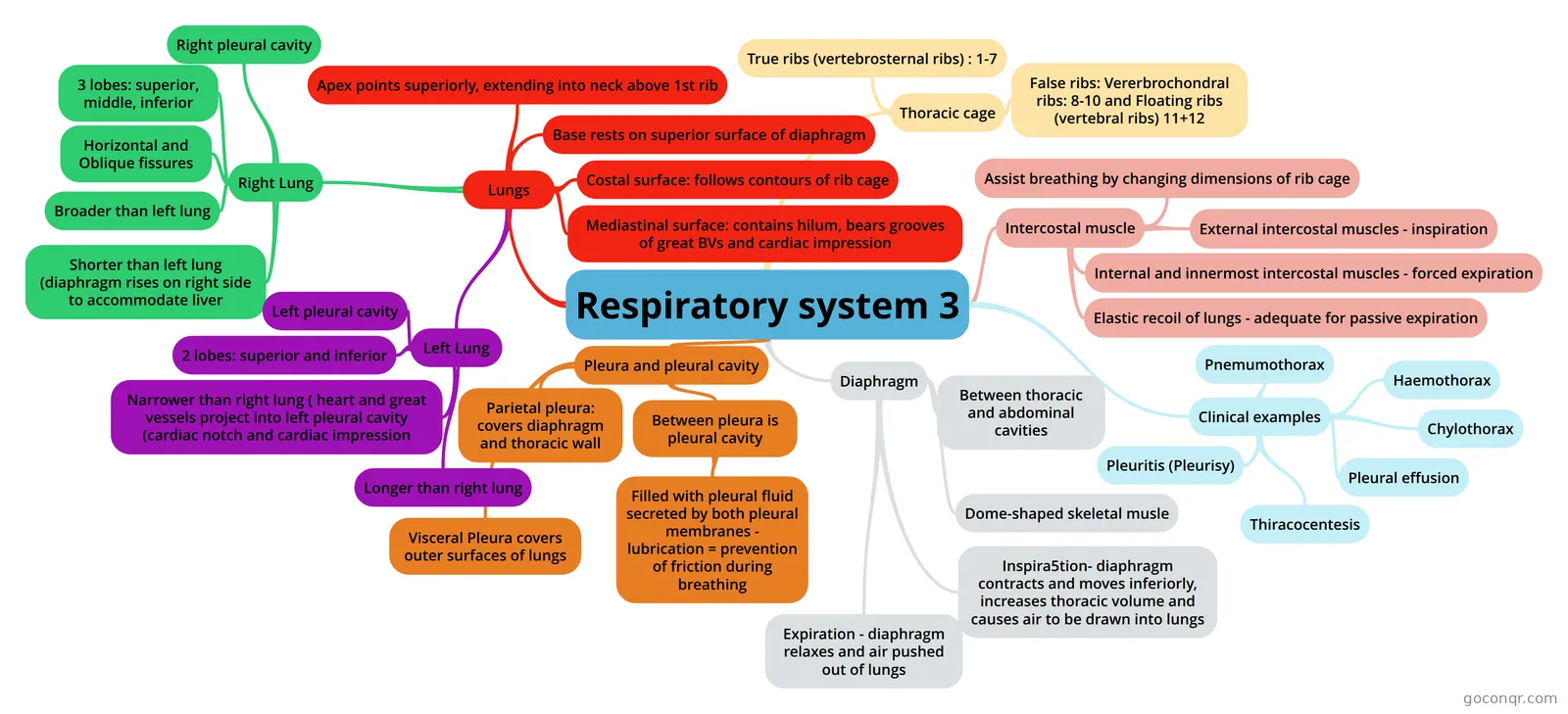
Mind map: Respiratory system
Contenido del mapa
Respiratory system 3
Lungs
- Apex points superiorly, extending into neck above 1st rib
- Base rests on superior surface of diaphragm
- Costal surface: follows contours of rib cage
- Mediastinal surface: contains hilum, bears grooves of great BVs and cardiac impression
- Right Lung
- Right pleural cavity
- 3 lobes: superior, middle, inferior
- Horizontal and Oblique fissures
- Broader than left lung
- Shorter than left lung (diaphragm rises on right side to accommodate liver
- Left Lung
- Left pleural cavity
- 2 lobes: superior and inferior
- Narrower than right lung ( heart and great vessels project into left pleural cavity (cardiac notch and cardiac impression
- Longer than right lung
Pleura and pleural cavity
- Parietal pleura: covers diaphragm and thoracic wall
- Visceral Pleura covers outer surfaces of lungs
- Between pleura is pleural cavity
- Filled with pleural fluid secreted by both pleural membranes - lubrication = prevention of friction during breathing
Clinical examples
- Pnemumothorax
- Haemothorax
- Chylothorax
- Pleural effusion
- Thiracocentesis
- Pleuritis (Pleurisy)
Thoracic cage
- True ribs (vertebrosternal ribs) : 1-7
- False ribs: Vererbrochondral ribs: 8-10 and Floating ribs (vertebral ribs) 11+12
Intercostal muscle
- Assist breathing by changing dimensions of rib cage
- External intercostal muscles - inspiration
- Internal and innermost intercostal muscles - forced expiration
- Elastic recoil of lungs - adequate for passive expiration
Diaphragm
- Between thoracic and abdominal cavities
- Dome-shaped skeletal musle
- Inspira5tion- diaphragm contracts and moves inferiorly, increases thoracic volume and causes air to be drawn into lungs
- Expiration - diaphragm relaxes and air pushed out of lungs
Información
- Descripción
- Bachelors Degree Human Structure and Function (Systematic body functions) Mapa Mental sobre Respiratory system 3, creado por Colleen Curley el 19/04/2016.
- Creado por
- Colleen Curley
- Visitas
- 70
- Etiquetas
- Valoración