
Mapa mental
Causes of the revolt in Upper Canada
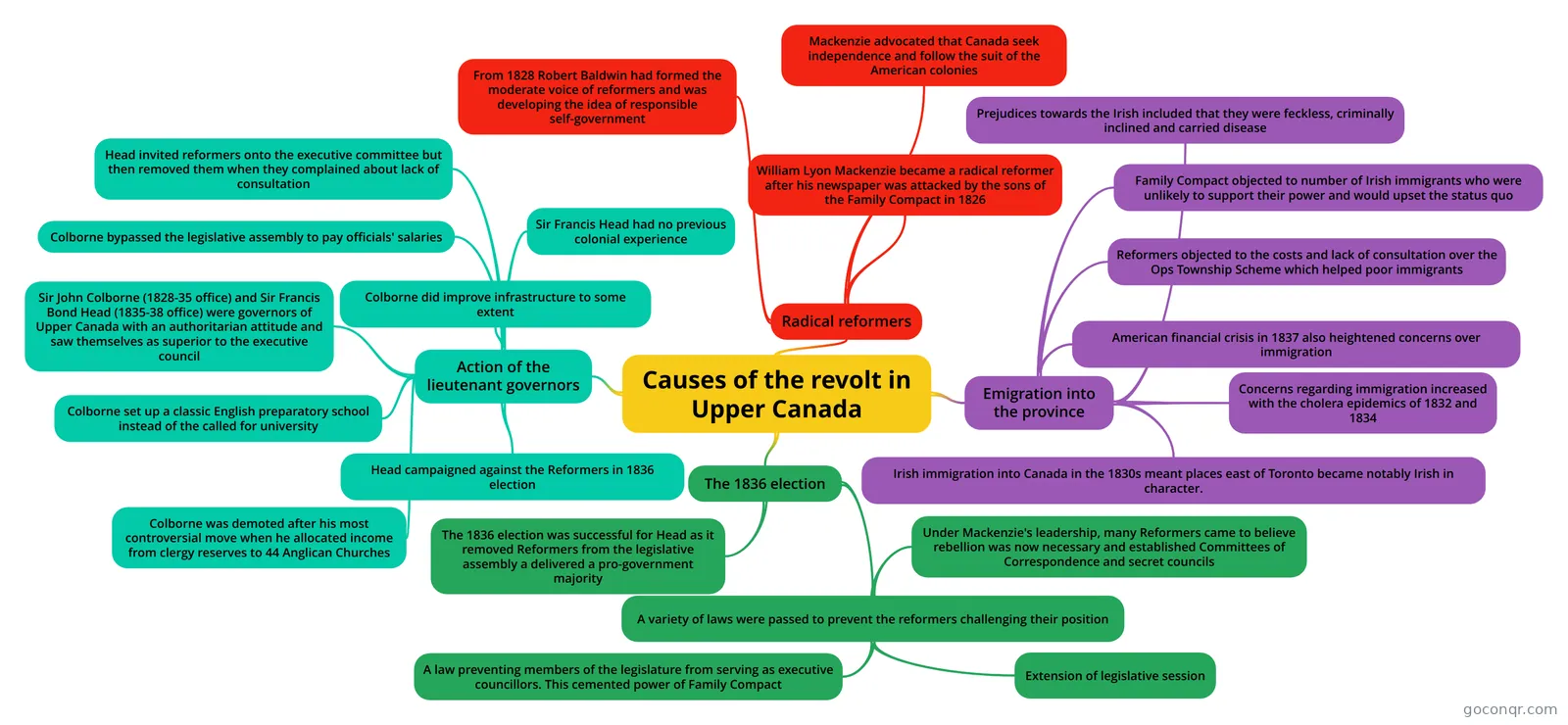
Mind map: Causes of the revolt in Upper Canada
Contenido del mapa
Causes of the revolt in Upper Canada
Radical reformers
- From 1828 Robert Baldwin had formed the moderate voice of reformers and was developing the idea of responsible self-government
- William Lyon Mackenzie became a radical reformer after his newspaper was attacked by the sons of the Family Compact in 1826
- Mackenzie advocated that Canada seek independence and follow the suit of the American colonies
Emigration into the province
- Irish immigration into Canada in the 1830s meant places east of Toronto became notably Irish in character.
- Prejudices towards the Irish included that they were feckless, criminally inclined and carried disease
- Reformers objected to the costs and lack of consultation over the Ops Township Scheme which helped poor immigrants
- Family Compact objected to number of Irish immigrants who were unlikely to support their power and would upset the status quo
- Concerns regarding immigration increased with the cholera epidemics of 1832 and 1834
- American financial crisis in 1837 also heightened concerns over immigration
The 1836 election
- The 1836 election was successful for Head as it removed Reformers from the legislative assembly a delivered a pro-government majority
- A variety of laws were passed to prevent the reformers challenging their position
- Extension of legislative session
- A law preventing members of the legislature from serving as executive councillors. This cemented power of Family Compact
- Under Mackenzie's leadership, many Reformers came to believe rebellion was now necessary and established Committees of Correspondence and secret councils
Action of the lieutenant governors
- Sir John Colborne (1828-35 office) and Sir Francis Bond Head (1835-38 office) were governors of Upper Canada with an authoritarian attitude and saw themselves as superior to the executive council
- Colborne did improve infrastructure to some extent
- Colborne bypassed the legislative assembly to pay officials' salaries
- Colborne set up a classic English preparatory school instead of the called for university
- Colborne was demoted after his most controversial move when he allocated income from clergy reserves to 44 Anglican Churches
- Sir Francis Head had no previous colonial experience
- Head invited reformers onto the executive committee but then removed them when they complained about lack of consultation
- Head campaigned against the Reformers in 1836 election
Información
- Descripción
- Mind map illustrating the 4 medium and short term causes of the outbreak of revolt in Upper Canada for the Edexcel A2 history course
- Creado por
- Danni Watts
- Visitas
- 85
- Etiquetas
- Valoración