
Apuntes
Chapter 12
Contenido del apunte (1)
Página 1
A. Developmental Research Designs
i. Used to examine changes in behavior related to age
a. Example research questions
1. Do adolescence become more conscientious as young adults
2. Do adults become less agreeable as they become elderly?
3. How does moral reasoning change form childhood to young adulthood?
4. How does IQ change across the life span?
ii. Three main types of developmental research designs
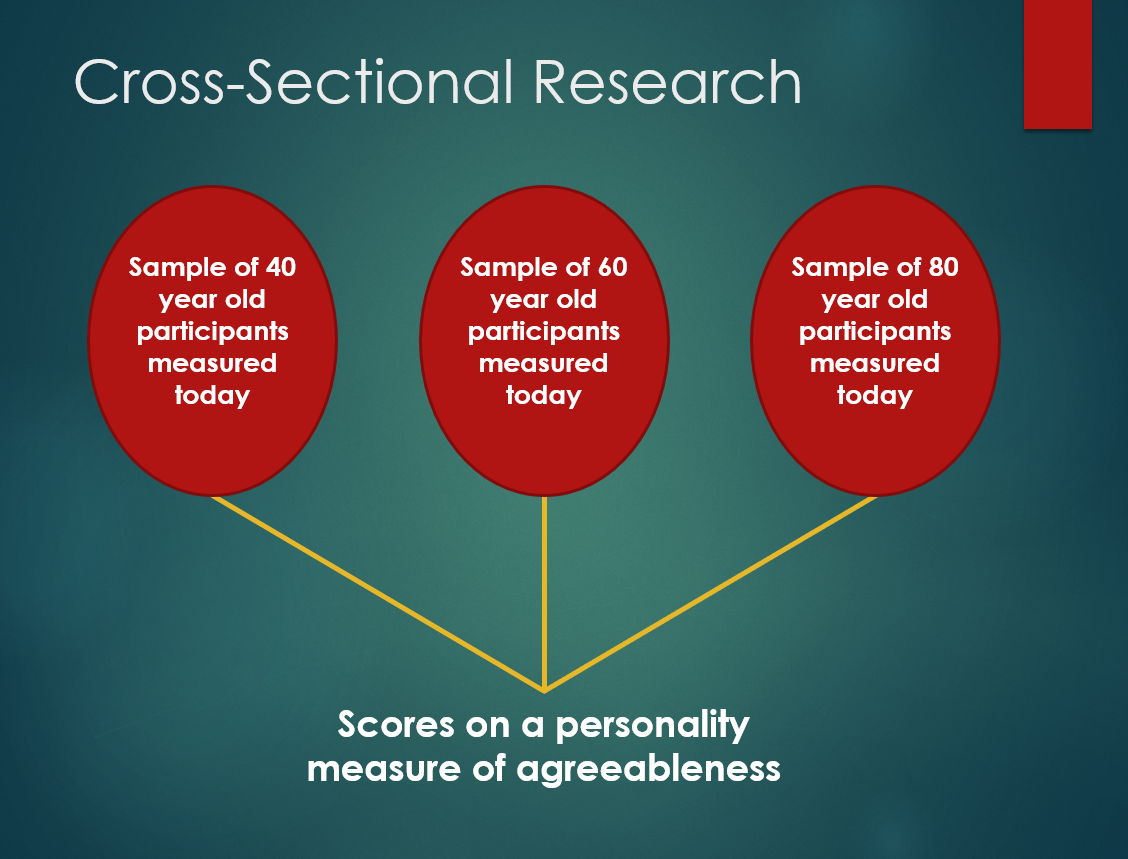
a. Cross-sectional: Compare different groups of individuals, each group representing a different age
1. Pros (Compared to longitudinal research)
- Requires less time to complete study
- Less expensive
- Participants are less likely to drop out
2. Cons
- Cannot be sure differences among groups are sue to age
- The cohort effect can act as a confound
- Equivalent measures problem
- This type of research does not do a good job picking up on individual differences in developmental milestones
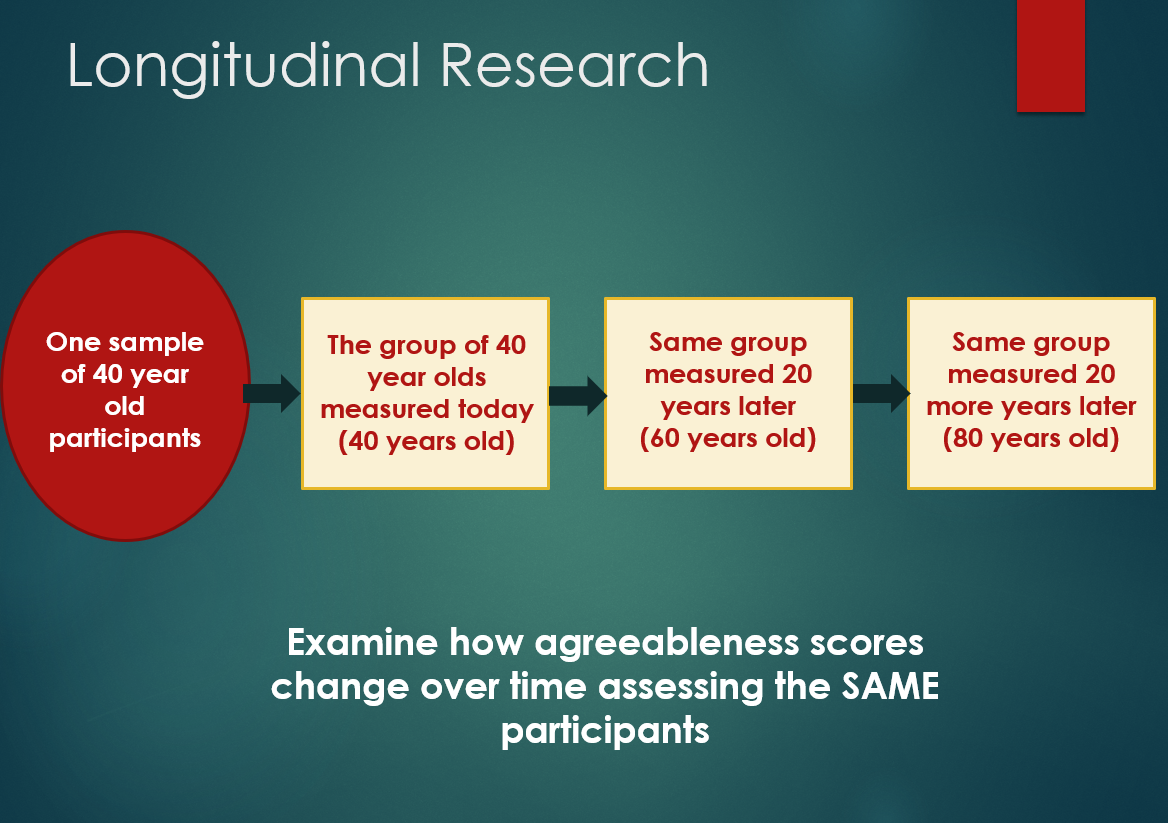
b. Longitudinal: Examines development by measuring the same group of individuals over time
1.Pros
- Greater ability to infer changes are due to aging (participants are all form the same cohort)
- Other findings emerge from the data as new questions are posed
2. Cons
- Time consuming
- Expensive
- Loss of research staff members, participants attrition, history effects, and practice/fatigue effects due to repeated testing can be problematic
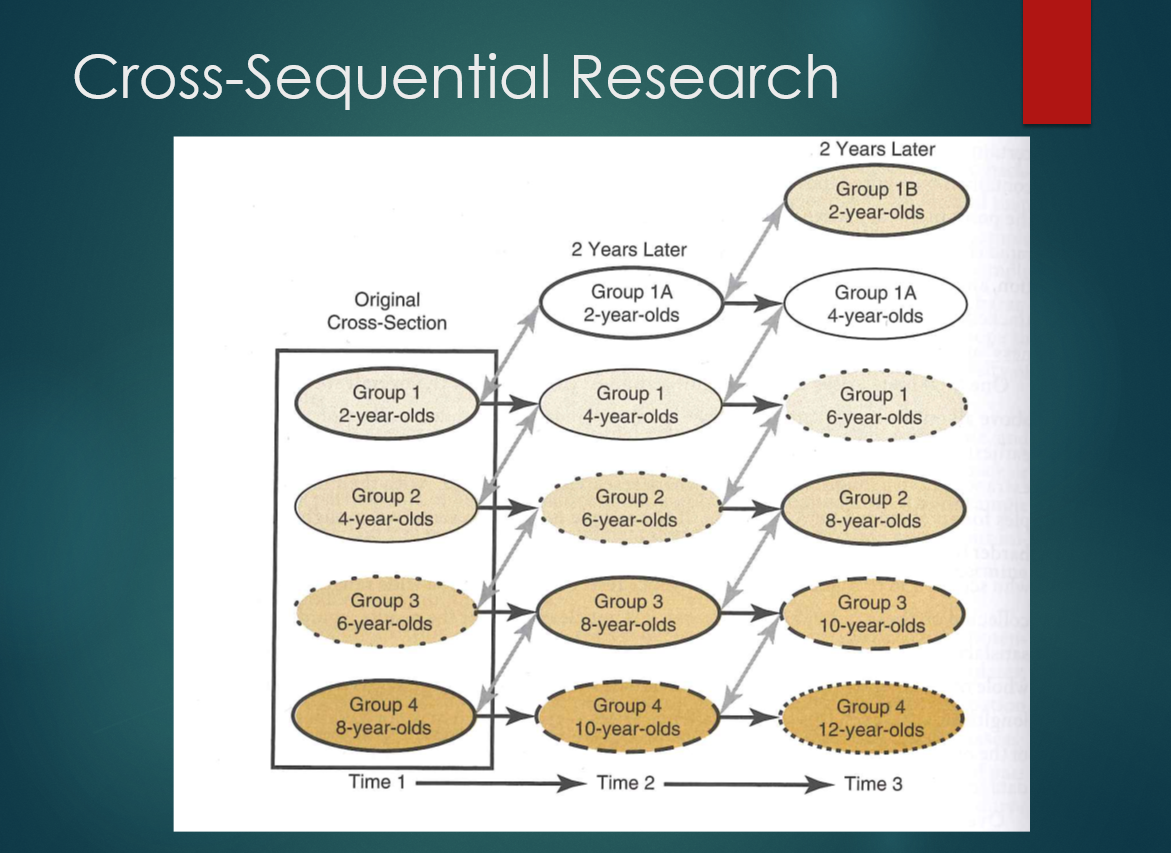
c. Cross- sequential: Combo of the two above; multiple age groups are examined over time
1. PROS
- A much wider mage range can be studied in a much shorter period of time compared to a longitudinal study
- An even greater ability to infer what changes are due to in participants
2. CONS
- Time consuming
- Extensive, but less so than longitudinal studies
- Participant attrition and practice/fatigue effects due to repeated testing can be problematic
B. Cohort
i. Cohort: Individuals who were born at roughly the same time and grew up under similar circumstances (e.g. Millennial Generation)
ii. Cohort Effect: Differences between cohorts that are caused by unique characteristics or experiences other than age
iii. Example: We compare writing skills of 20, 30, & 40 year old's and find that writing skills are better among older cohorts
a. Is this a developmental process? Does aging cause writing skills to improve
b. Alternative explanation is that 20 year olds grew up using smart phones and computers (corrects spelling/ grammar for you) and that this cohort effect responsible for the differences between groups
C. Longitudinal Research- some things to consider:
i. Participant Attrition
a. What if disagreeable people are more likely to drop out of our study (they don’t like completing the measures). Then our sample becomes more agreeable at each measurement but not because of age processes
ii. History Effects
a. An economic recession occurs between measurements causing all participants’ agreeableness to decline, but not because of aging processes
iii. Practice/Fatigue Effects
a. Participants improve IQ scores over multiple assessments due to familiarity with the test