
Introduction to Research Methods
374 resources created by 307 users
This Introduction to Research Methods page on GoConqr gathers community-made quizzes, mind maps, flashcards and notes, from hypotheses, variables and sampling to reliability, validity, ethics and interviews. It's built for university students and professional candidates, school students, and teachers after ready-made material. There are over 3,800 resources here, including more than 290 quizzes, over 2,400 mind maps and more than 800 flashcards. Pick a topic, try a quiz to find your gaps, then build your own revision sets.
Top Introduction to Research Methods resources
-
175 questionsResearch methods 2 Sheila is concerned about reactivity and wants to use an unobstrusive research technique to examine her res...
-
200 questionsResearch methods Michele believes her boss is an extremely difficult person. To see if her belief has merit, she asks all of...
-
54 cardsAdvanced Higher Modern Studies - Research Methods Research Methods - Ethical Considerations in Research
-
73 questionsMCQ practice for research methods, psychology Basic scientific research is carried out:
-
101 cardsPsych 2300 Review for Exam 1 Benefits of being a good consumer of research
-
8 cardsCHAPTER 1 CHAPTER ONE METHODS FOR ACQUIRING KNOWLEDGE *Methods of acquiring knowledge - ways a person can know things...
-
33 questionsPsyc 201W Final - Research Methods The advantage of using the Internet for selecting participants is:
-
16 questionsResearch Methods in Psychology Questions from throughout the course (Spring quarter 2018) taken from the worksheets and lectures.
Quizzes
See all 69 quizzes-
175 questionsResearch methods 2 Sheila is concerned about reactivity and wants to use an unobstrusive research technique to examine her res...
-
200 questionsResearch methods Michele believes her boss is an extremely difficult person. To see if her belief has merit, she asks all of...
-
73 questionsMCQ practice for research methods, psychology Basic scientific research is carried out:
-
33 questionsPsyc 201W Final - Research Methods The advantage of using the Internet for selecting participants is:
-
16 questionsResearch Methods in Psychology Questions from throughout the course (Spring quarter 2018) taken from the worksheets and lectures.
-
8 questionsResearch Methods IV - Week 9 Factorial ANOVA II What is a mixed factorial design?
-
15 questionsPsychology Research Methods What is the experimental design of 'Matched Pairs'?
-
15 questionsRRM MCQ 2 A review of the literature prior to formulating research questions allows the researcher to do which of the...
Mind maps
See all 152 mind maps-
UNIT 4 Collecting and analysing data with specialised software Unit 4 summary by Mónica Gallego
-
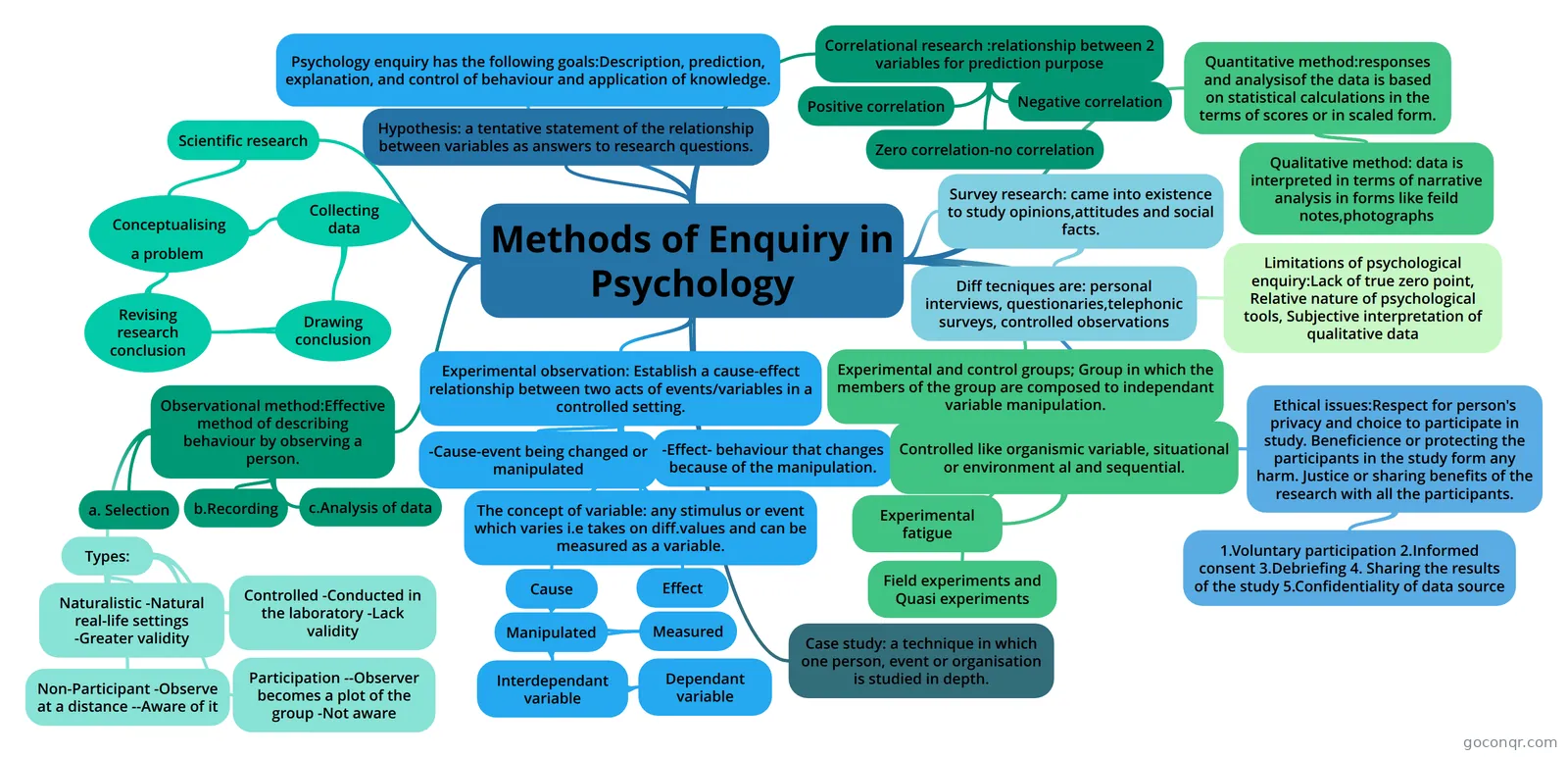 Methods of Enquiry in Psychology
-
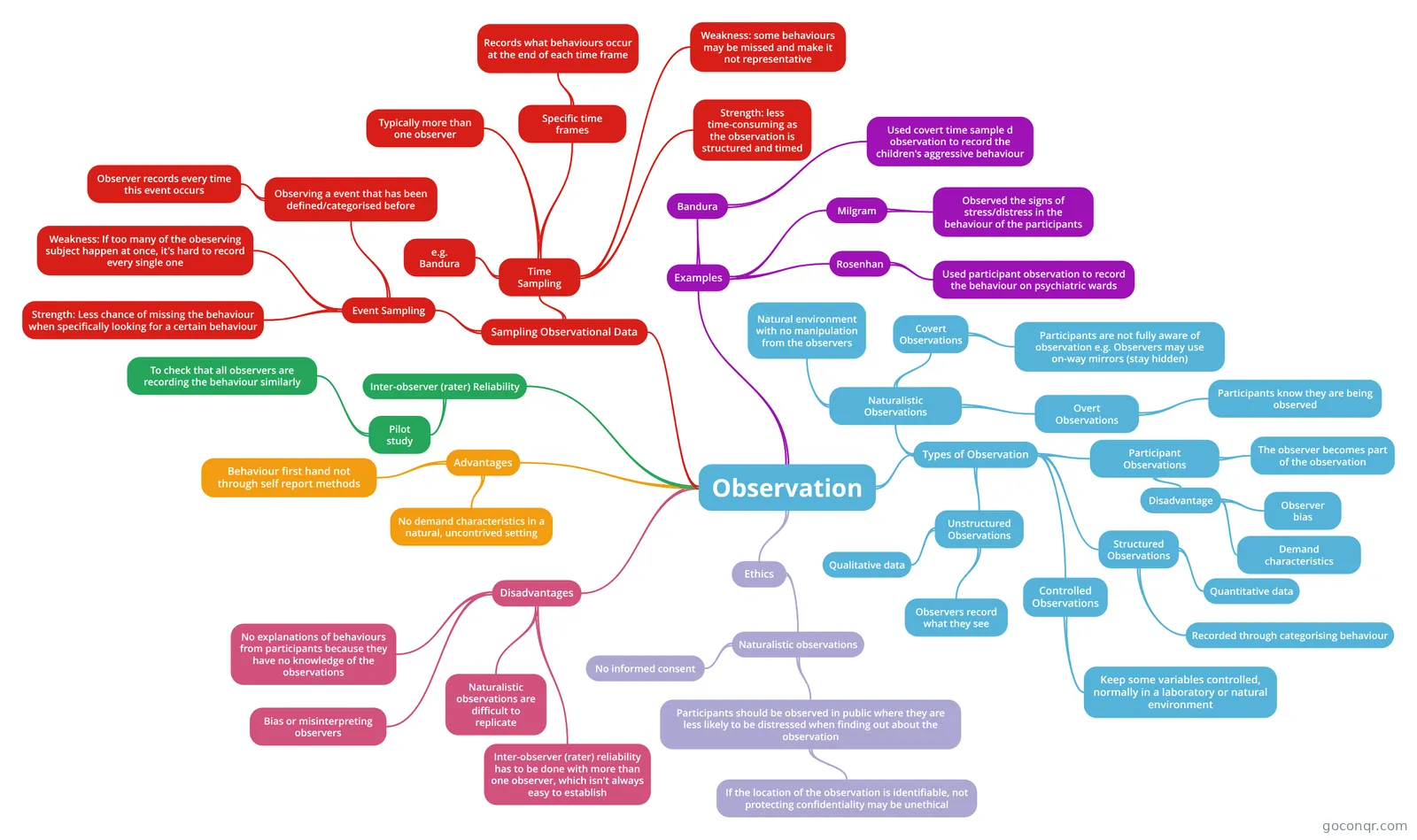 Observation Investigations
-
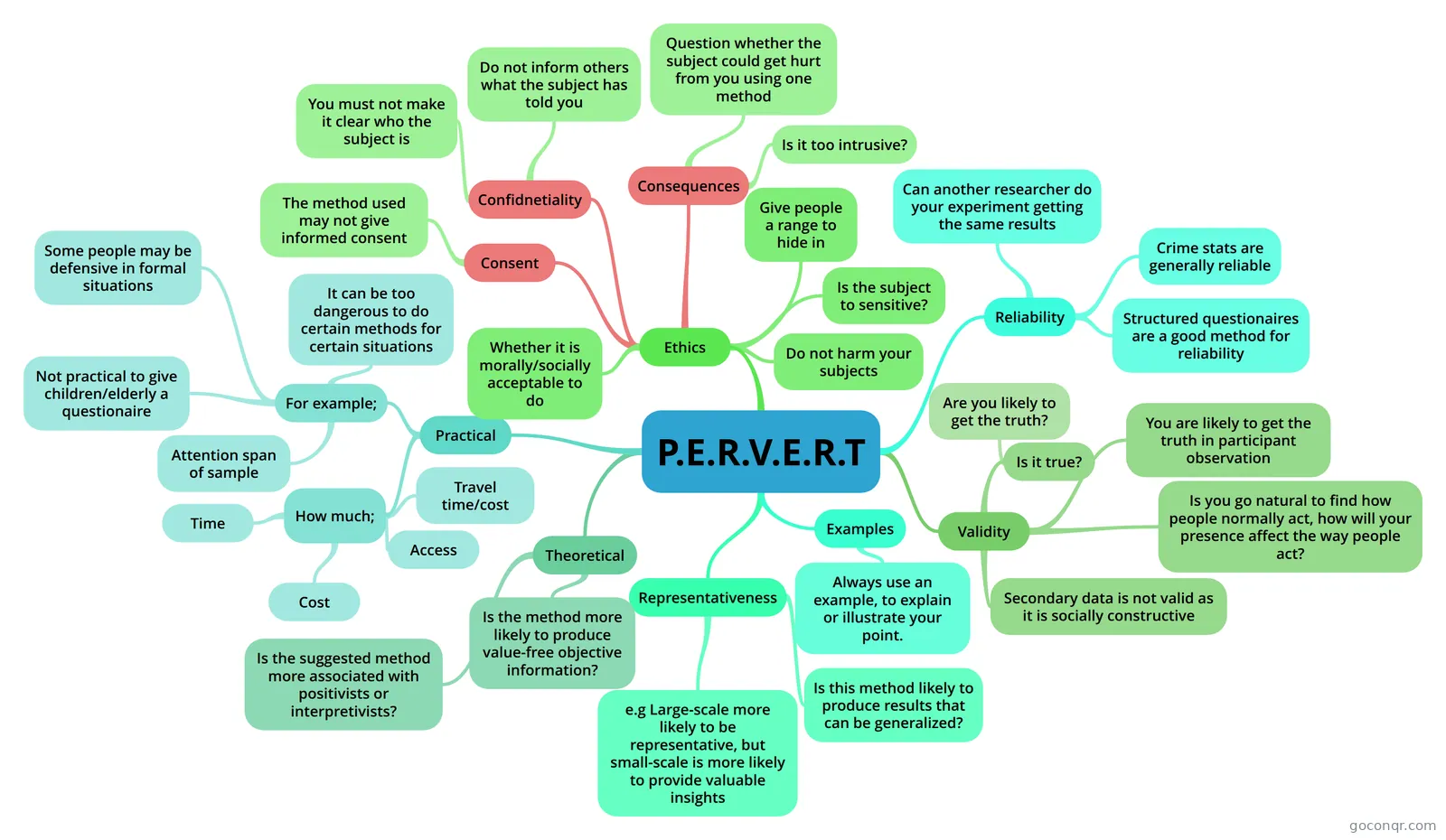 P.E.R.V.E.R.T Using P.E.R.V.E.R.T to describe the factors affecting which method you use
-
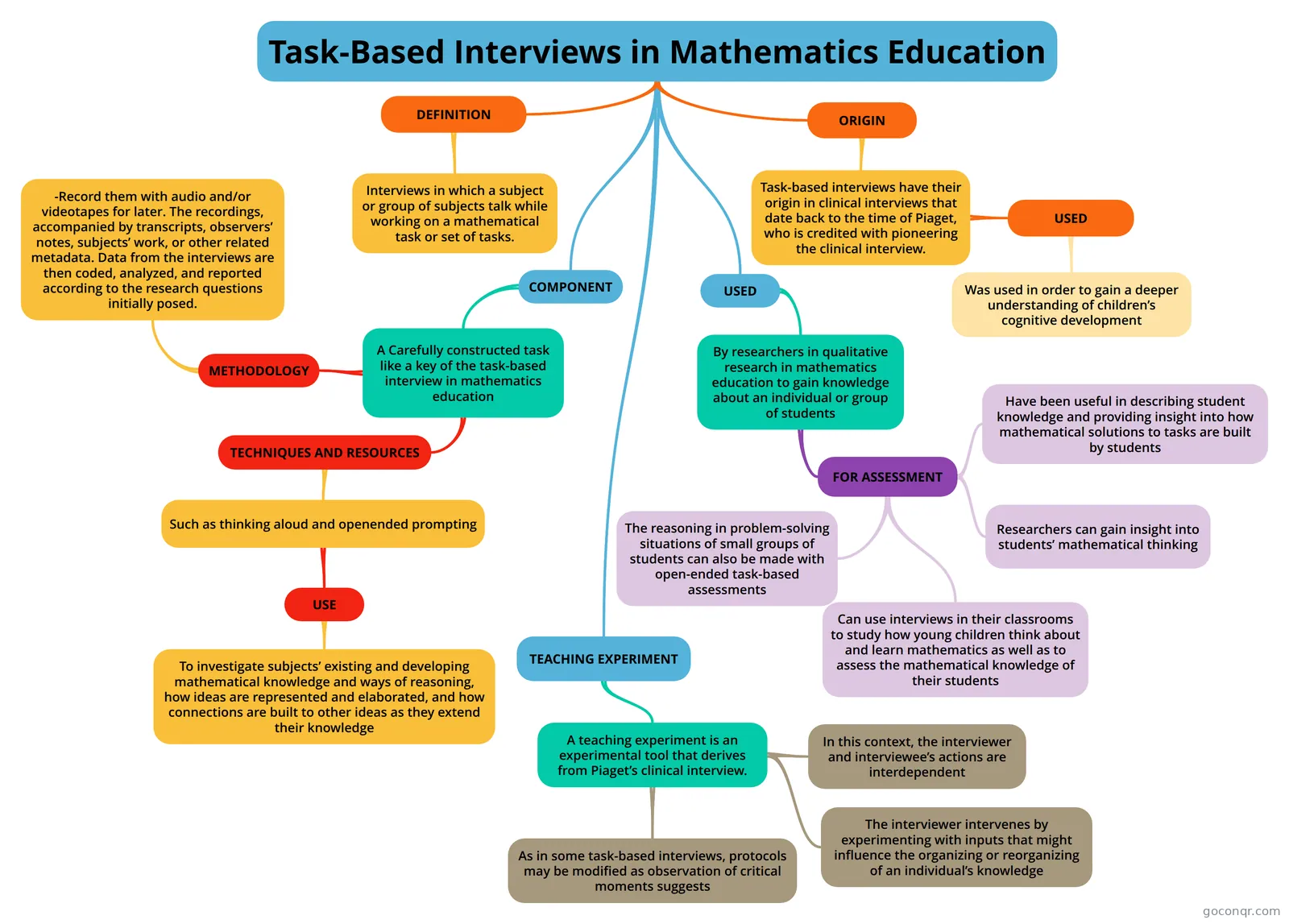 Task-Based Interviews in Mathematics Education MAPA MENTAL DE ENTREVISTA MATEMATICA
-
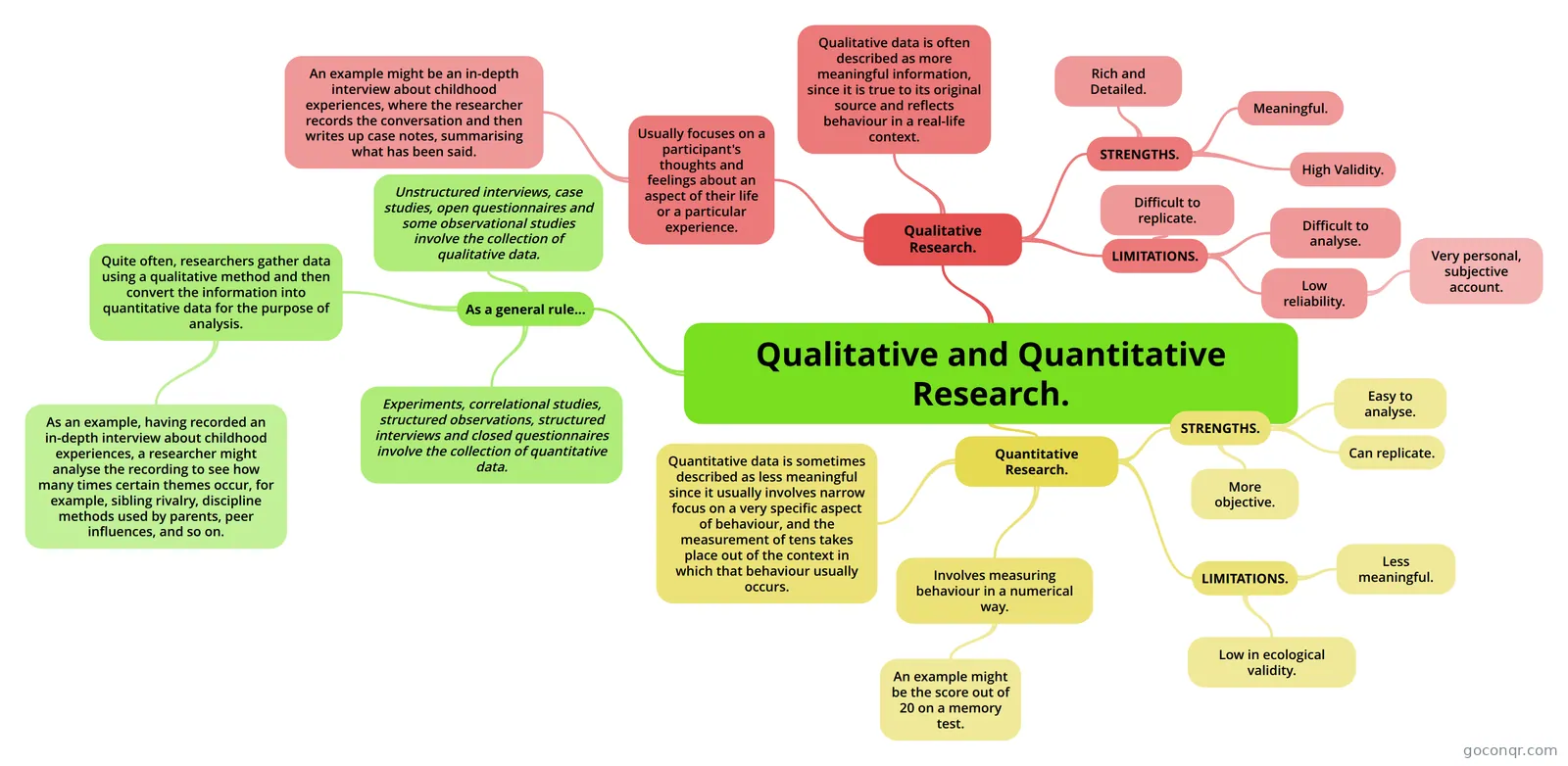 Qualitative and Quantitative Research.
-
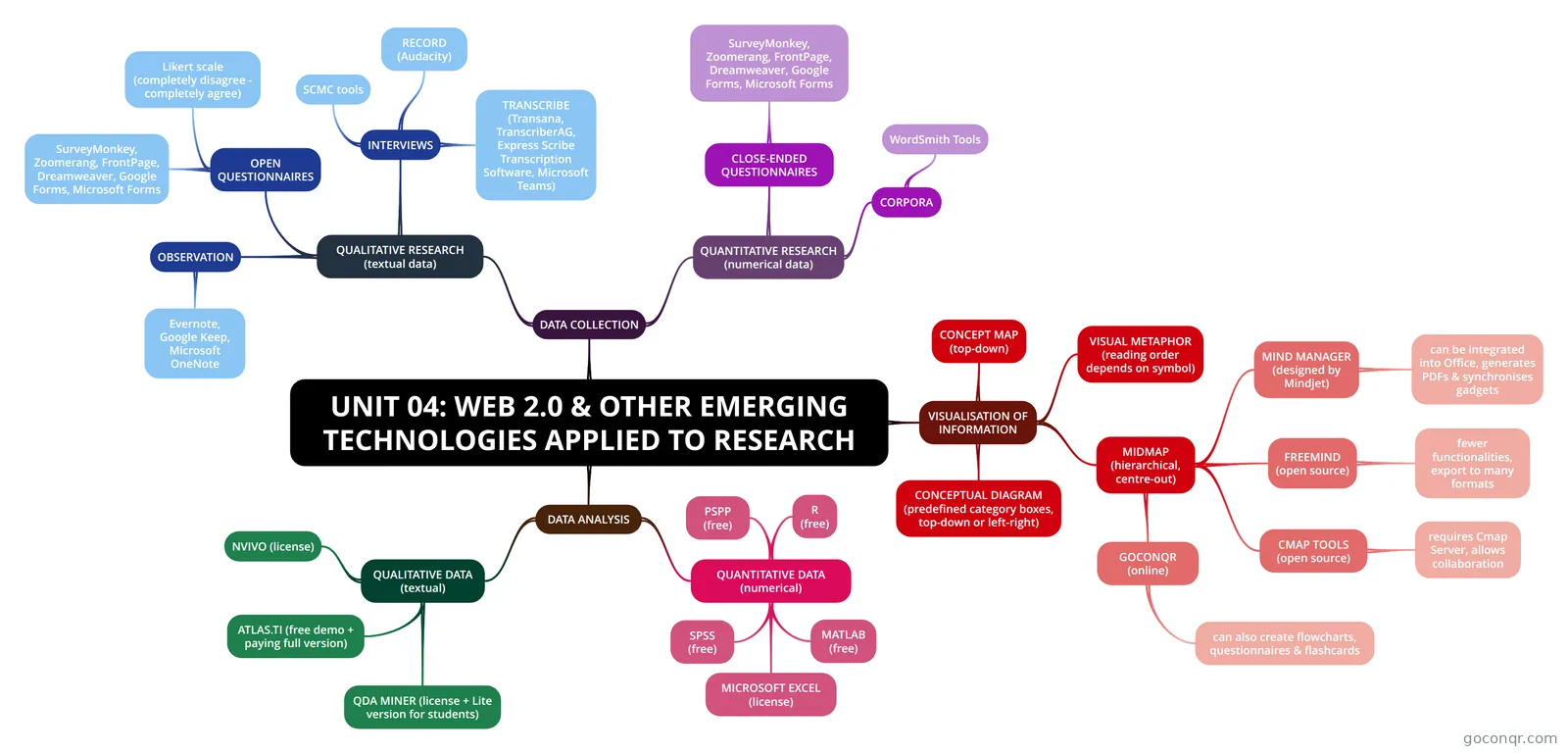 UNIT 04: WEB 2.0 & OTHER EMERGING TECHNOLOGIES APPLIED TO RESEARCH
-
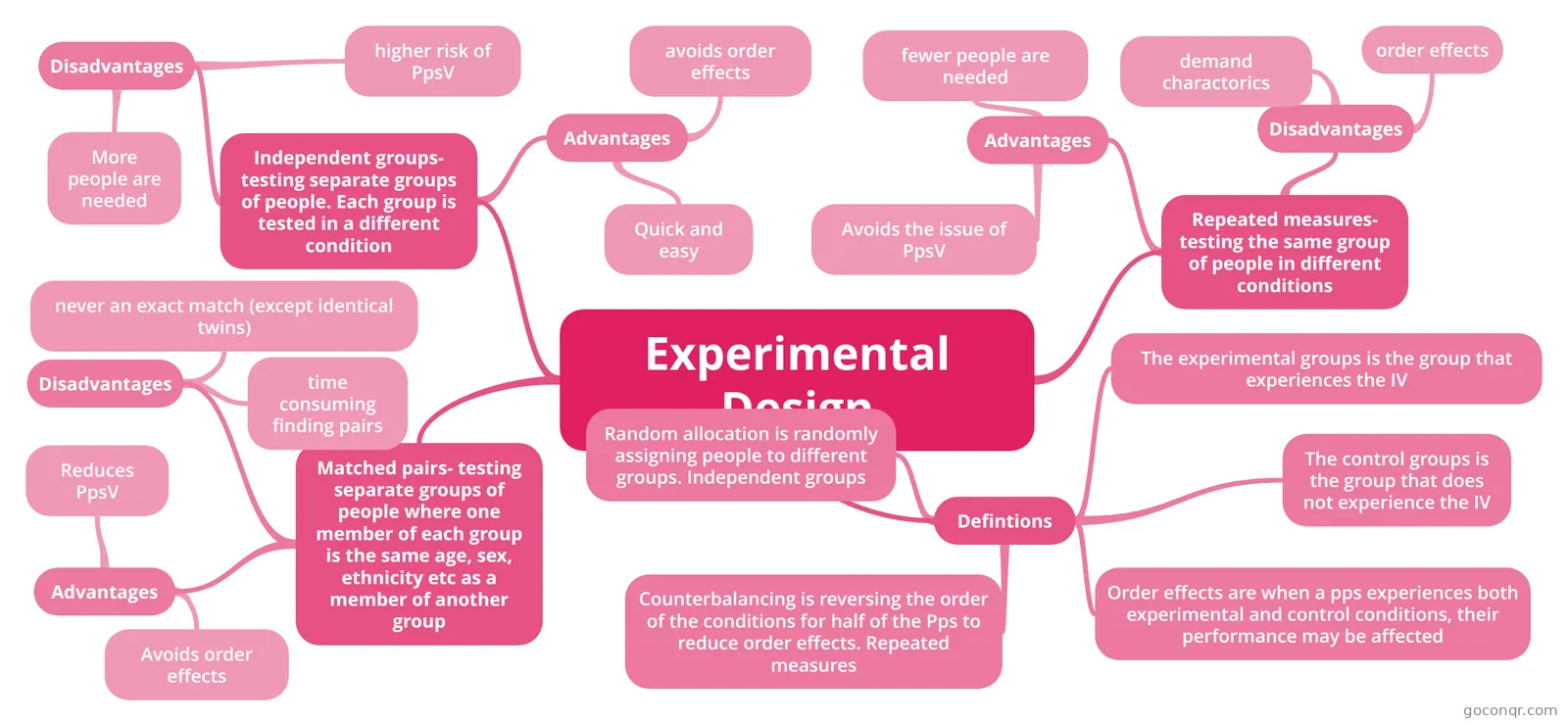 Experimental Design
Flashcards
See all 113 flashcards-
54 cardsAdvanced Higher Modern Studies - Research Methods Research Methods - Ethical Considerations in Research
-
101 cardsPsych 2300 Review for Exam 1 Benefits of being a good consumer of research
-
8 cardsCHAPTER 1 CHAPTER ONE METHODS FOR ACQUIRING KNOWLEDGE *Methods of acquiring knowledge - ways a person can know things...
-
35 cardsResearch methods What is content analysis?
-
23 cardsResearch Methods Aim - statement of what the researcher intends to find out in a research study
-
9 cardsTypes of Data Strengths of Nominal Data
-
27 cardsQUALITATIVE ANALYSIS what is a broad definition of a document?
-
60 cardsResearch Methods THE EXPERIMENTAL METHOD
Flowcharts
Notes
See all 19 notes-
Self-Report Techniques - Validity, Reliability and Ethical Issues Validity External ValidityIn interviews and questionnaires this concerns the extent to which the findings can be generalised to other situations and other people. A major factor will be the representativeness&nbs...
-
Sampling Random Sample:A random sample is where all the members of the target population have an equal chance of being picked. First a list of all the members of the target population is made and all the names are a given numb...
-
Chapter 8 Chapter 8: Experimental Designs A. Purpose of experiments i. To demonstrate that one variable caused changes in other variables (cause and...
-
Chapter 10 A. Correlational Research Approach i. This type of strategy a. Describes relationships between variables 1. W...
-
Social Science Intro How Social Scientists Do Their Work: A Hypothesis is an educated guess which starts an investigation/ that you hope to proveHow many households are like yours (NY Times) Social science works through Classifying common...
-
GEO1315A research methods for geographers (BA) 26/9/18 first lecture - introductory lecture setting out the module - lecture slides on ELE GEO1315A Lecture 2 Bristol field trip: 3/10/18 Pre-departure Lectures: Week 2: Fieldwork in Geography (Sam Kinsley) We...
-
Scientific methods scientific methods What is science? Use of empirical methods? Replicability? Objectivity?Theory construction?Hypothesis testingPeer reviews science: is a scientific process where we gain information from observable an...
-
Research Methods- A Level final revision Content analysis- observational technique that indirectly observes behaviour via analysis of communication e.g. the media. Coding is used to systematically categorise data. + Circumnavigates ethical issues of experime...
Slides
See all 18 slidesMore Research methods and academic skills topics
About Introduction to Research Methods
GoConqr OriginalWhat this unit covers
The resources here introduce how research is planned and judged. You will find hypotheses, independent and dependent variables, sampling, data types, interviews, observation, case studies and ethics. Some material is psychology-focused, and some covers wider social science, including qualitative and quantitative approaches.
Where to start
Begin with a quick quiz to see what you already know. Psychology Research Methods checks hypotheses, null hypotheses and variables. Reliability and Validity Quiz! What are the different types? is a good second step, as it covers inter-observer agreement and consistency.
Then move to the maps. Sampling Techniques explains random sampling and why it gives a representative sample. Methods of Enquiry in Psychology sets out the aims of psychological enquiry, such as description, prediction, explanation and control.
Using quizzes and maps together
- Take a quiz and note the questions you missed.
- Find the matching mind map, such as Reliability and Validity - Research Methods, and read that branch.
- Check key terms with a flashcard deck, for example Key Term Definitions in Research Methods.
- Retake the quiz after a break.
The mind map P.E.R.V.E.R.T is handy for evaluating a method. It uses the headings practical, ethics, reliability, validity, examples, representativeness and theoretical.
Where it fits
This unit sits in the Foundations of Research strand of Research methods and academic skills. Many resources mention A-level Psychology, A-level Sociology, GCSE Psychology, GCSE Sociology, AP Psychology and HSC, while the larger share is university material. Teachers can use the notes, slide sets and quizzes as ready-made starting points.
Choose one resource that matches your course today, work through it, and then make a mind map of your own to fill any gaps.
Frequently asked questions
Which quiz should I try first?
Try Psychology Research Methods first. It asks about non-directional hypotheses, what a complete null hypothesis says, and how the dependent variable relates to the independent variable. After that, the reliability and validity quiz is a natural next step, because it covers different types and how agreement between observers is calculated.
What do the mind maps cover?
The mind maps cover sampling techniques, reliability and validity, methods of enquiry in psychology, interviews, observation, case studies, primary and secondary sources, and ethics. There are over 2,400 of them, so you can usually find a visual summary of a topic before moving on to quizzes or flashcards.
Are the resources free to use?
Yes. Every resource on this page is free to open, study and take, with no account needed. They were made by GoConqr users rather than by GoConqr itself, so it is worth checking that a resource matches your own course before relying on it.
Which levels and exams do these resources suit?
Most are aimed at university students and professional candidates, with a smaller share for school students. Listed resources mention A-level Psychology, A-level Sociology, GCSE Psychology, GCSE Sociology, AP Psychology and HSC, so school students can look for titles that match their course.
Can teachers use this page?
Yes. Teachers can pick from quizzes, slide sets, notes, flashcard decks and mind maps made by other users. For example, the slide set From Epistemology to Methodology and the notes on self-report techniques could be used as starting points for a lesson or revision task.
What if I cannot find the topic I need?
Try a different wording, such as qualitative, sampling or questionnaires, and look across quizzes, maps and flashcards. If it still is not there, a free account lets you make your own quizzes, mind maps, flashcards and notes for that topic.