
Apuntes
Memory models - created from Mind Map
Contenido del apunte (1)
Página 1
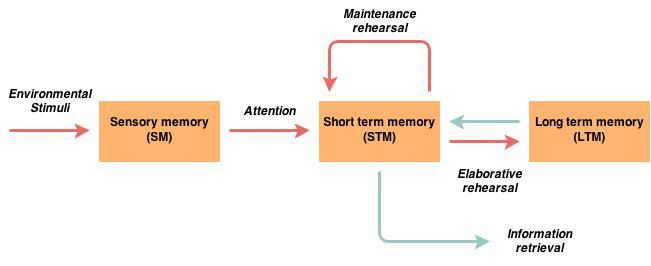
The Multi-store model
Evidence to support 3 separate memory stores
Strengths
Weaknesses
The sensory store
The serial position effect
Areas of the brain associated with STM and LTM
Strong evidence of seperate stores
Provides an account of memory in terms or structure and process
Has clear predictions for memory
STM and LTM are not unitary stores
Rehearsal Vs Processing
STM actually relies on LTM
The Working Memory model
Evidence supporting this model
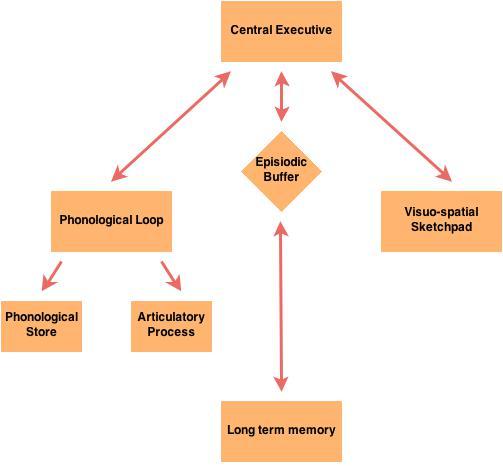
Components
Strengths
Weaknesses
Evidence for the four components
Doing two tasks using the same or different components
Evidence from brain damaged patients
Central Executive
Phonological Loop
Visuo-spatial Sketchpad
Episiodic Buffer
Direct attention to particular tasks
Determines how 'resources' are allocated to tasks
Data arrives from LTM or SM
Limited capacity
Deals with auditory information and preserves the order
Phonological Store
Articulatory Process
Limited capacity
Holds words we hear
Used for words heard or seen
Used when you have to plan a
spatial task
Visual information is temporarily stored here
Extra storage system
Integrates memory from other stores
Limited capacity
Explains observations made by psychologists
Lots of evidence to support this
Different kinds of memory
Central executive too vague
Some of the key evidence is not comparible before and after
Memory models
Información
- Descripción
- A Levels Psychology Apunte sobre Memory models - created from Mind Map, creado por kati.lombardi el 13/05/2014.
- Creado por
- kati.lombardi
- Visitas
- 22
- Historial
-
- Creado por kati.lombardi · 13 may 2014
- Copiado a Apunte por kati.lombardi · 13 may 2014
- Valoración