
Apuntes
Ancient Egypt
Contenido del apunte (1)
Página 1
River Nile
called gift because it provided egyptions with food and water and was names it by the greek Herodus
the Delta is parts of the river that split into different parts
provided them with fish, dick, geese, oxen, birds, lions ect.
most hunters gave it up and became farmers
used spears to catch fish
travelled up river on a sail boat
provided land on either side
longest river in the world
Flooding Of The Nile
three seons
flooding season was when the river flooded, called 'Akhet' season, goes from mid july- October
Peret season was when they planted the seeds, goes from November- Febuary
Shemu seosen was when they harvested the seeds, went from March- June
measured flooding with a Nilometre which showed the height
river experts measured the river
Hyrogliphics
was egyption form of writing
had symbols as letters
Rosetta Stone
stone which has two languages on it
taught people how to read hyrogliphics
found by french soldiers while rebuilding a fort in england
carved in 196 BC
found in 1799 AD
found in village called rosetta in the delta
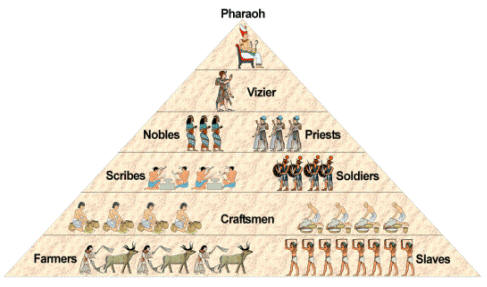
Pharo
most important
made sure that the Nile floods properly
make sure there is enough food
made sure that gods were kind
made sure army could defend themselves
Pharos married their releatives
owned all farming land
wore a red and white crown, a colona, a false beard, a croqk, a flal and a bulls tail
Advisers
each pharo had a viser
vizer lead government
kept pharo informed about events
head of each district reported to vizer
vizers collected tax
supervized irrigation
looked over building projects
High Priests
responsible for religous matters
oversee buildings
hold festivals and ceremonys
Military Commanders
commanded army and navy
reported to pharo
created millitary strategy
Scribes
could read and write hyrogliphics
took 12 years to become one
worked closely to pharo
Religion
worshipped many gods and goddesses
there were state, local and household gods
each god had a different meaning
some had special responsibilities
often shown with animal head and human body
Tutankhamun
ruled the 18th dynasty
died when 18
ruled for 10 years
tomb was discovered by Howard Cater in November 1922
Mummification
body is taken into ibu and washed with palm wine
all organs are removed
body is covered in natron drys body out
washed again in forty days
organs are wrapped and put into canopic jars and are ther placed back into the body with sawdust, leaves ect.
Wrapping
head and neck are wrapped in linen
arms and legs are wrapped seperately
amulets can be wrapped in layers
a preist then reads out spells to prevent evil spirits
arms and legs are tied together
a scroll with spells is placed inbetween hands
more linen strips are wrapped around body with liqued resin
cloth is wrapped around body with the god orisis painted on it
another large peice of cloth is wrapped around the body
a board of wood is painted and then placed on top of the mummy and it is then lowered in to a coffin
the coffin is then placed into a sarcophagus
Canopic Jars
store organs from mummified bodies
Imsety - liver
Hapy - lungs
Baumtef - stomach
Qbehenuef - intestines
River Nile
Rosseta Stone and Hyroglifics
Role of Pharos and Society
Religion and Tutankhamun
Mummification
Información
- Descripción
- Year 7 History Apunte sobre Ancient Egypt, creado por dalexanb el 19/05/2013.
- Creado por
- dalexanb · may 2013
- Actualizado
- 3 feb 2018
- Visitas
- 460
- Etiquetas
- Valoración