
Flashcards
Chapter 2: Microbial Cell Structure and Function
Cards in this deck (86)
- 1Properties of all cells- metabolism
- growth
- evolution - 2properties of some cells- differentiation
- communication
- motility
- genetic exchange - 3morphologycell shape
- 4MORPHOLOGY coccus (plural, cocci)- A cell that is spherical or ovoid
- staph: clusters
- strips: strepto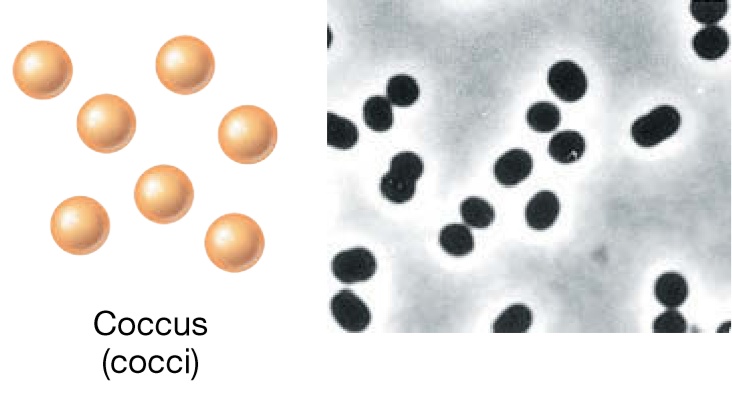
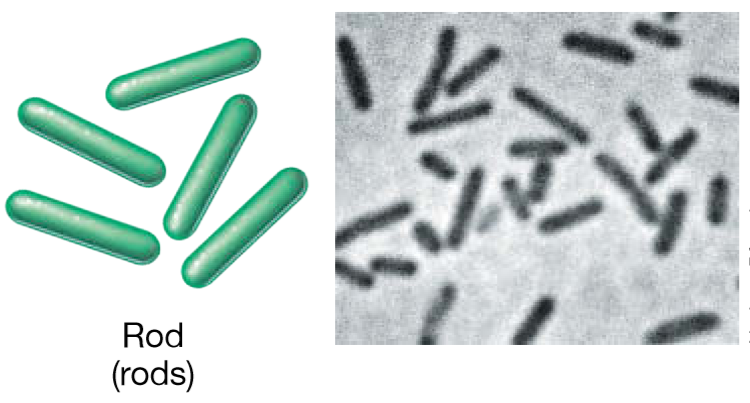
- 5MORPHOLOGY rod, bacilluscylindrically shaped cell
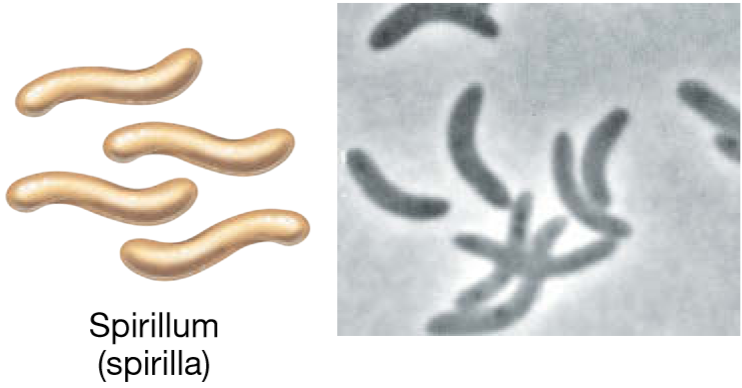
- 6MORPHOLOGY spirillacurved (vibrio) or loose spiral shapes (spirilum)
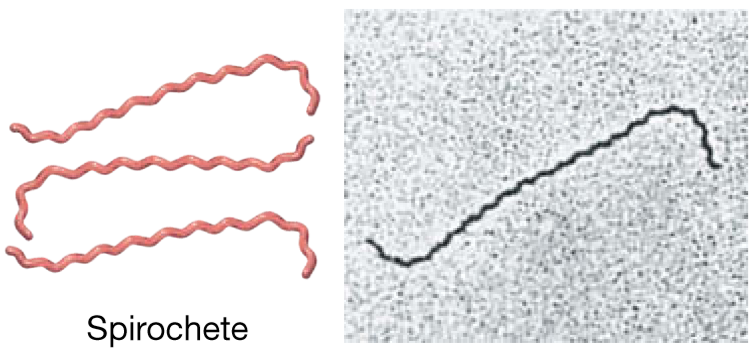
- 7MORPHOLOGY spirochetestightly coiled
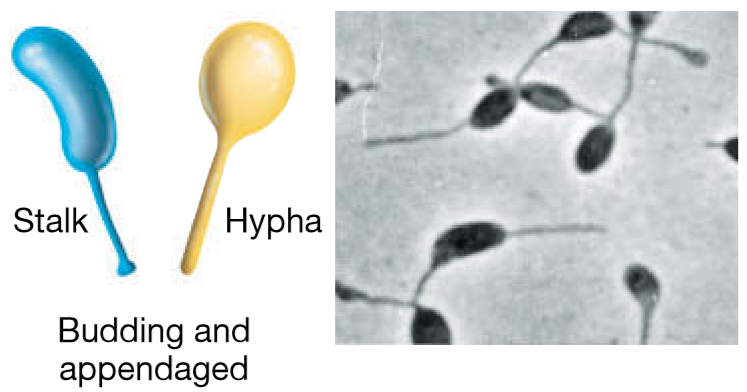
- 8MORPHOLOGY budding and appendagedextensions of their cells as long tubes or stalks
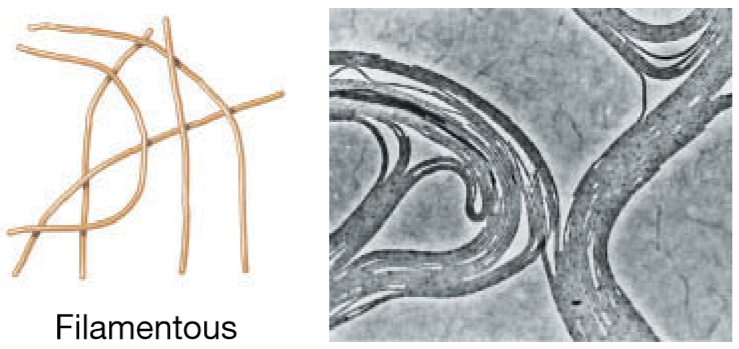
- 9MORPHOLOGY filamentous bacteriaform long, thin cells or chains of cells
- 10Size range for prokaryotes:- 0.2 µm to > 700 µm in diameter
- 11hypothesized that the upper size limit for prokaryotic cells results from ...- decreasing ability of larger cells to transport nutrients
- surface-to-volume ratio is very small
- metabolic rate varies inversely w/square of cell size
- nutrient uptake limits metabolism to where cell can't compete w/smaller cells - 12The S/V ratio of a cell controls many of its properties, including its ...- growth rate and evolution
- 13higher S/V ratio of small cells supports ...- faster rate of nutrient and waste exchange
- 14because prokaryotic cells are quite small and genetically haploid (typically have one copy of each gene, allowing mutations to be expressed immediately), prokaryotic cells can ...- grow faster and evolve more rapidly than larger cells
- 15when the genomes of ultramicrobacteria are unraveled, they are typically found to be _____ ______ and to be _____ many genes whose products or functions must be ... sometimes both cannot ...- highly streamlined
- missing
- supplied to them by other microbial cells or by the host organisms
- survive w/out each other
- mycobacterium (TB), mycoplasma - 16cytoplasmmixture of macromolecules and small molecules inside the cell
- 17cytoplasmic membrane- surrounds cytoplasm & separates it from environment
- selective permeability: “gatekeeper” for entrance & exit of dissolved substances
- has proteins facilitate
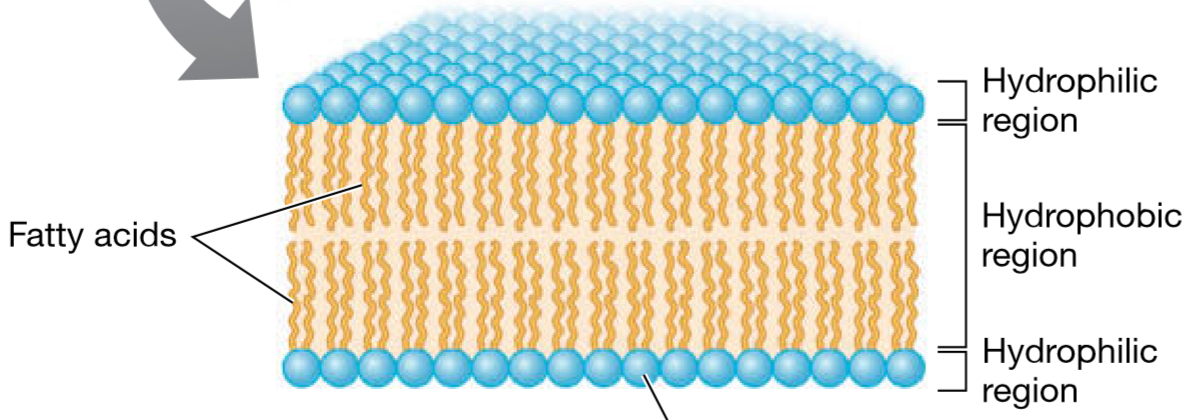
- physically weak - 18BACTERIAL & EUKARYA CYTOPLASMIC MEMBRANE- phospholipid bilayer w/embedded proteins
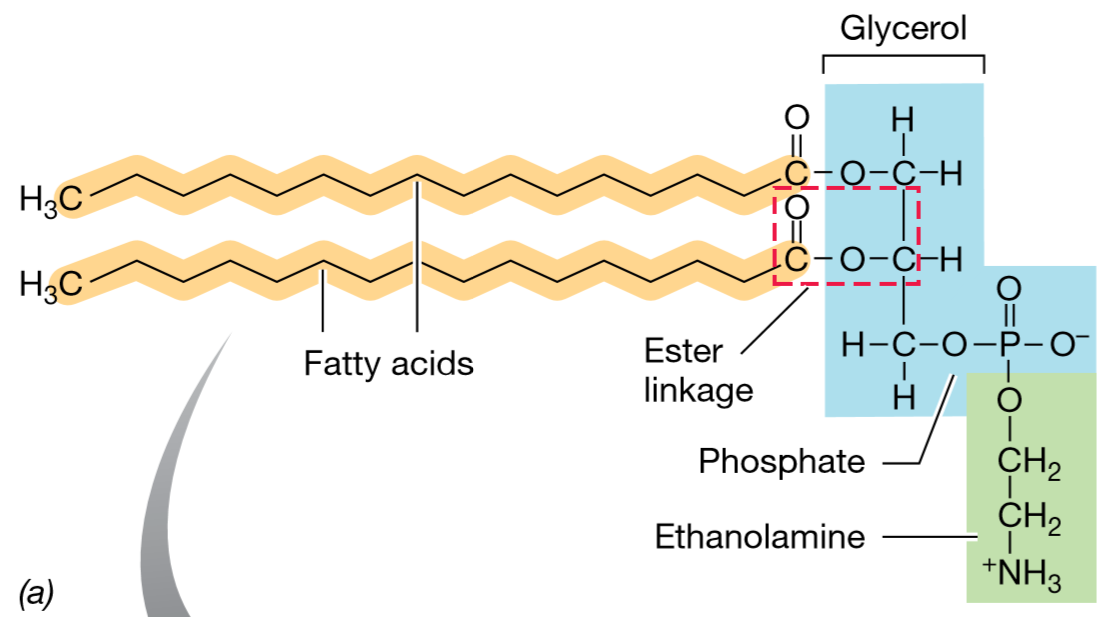
- some are strengthened by hopanoids (sterol-like molecules) that strengthen the membranes of eukaryotic cells - 19BACTERIAL CYTOPLASMIC MEMBRANE Phospholipids- has hydrophobic / hydrophilic parts
- hydrophilic (glycerophosphates): glycerol molecule w/phosphate and a functional group bonded to phosphate
- hydrophobic: fatty acids
- ester link between hydrophilic/phobic - 20lipid bilayer / unit membrane- hydrophilic region faces environment
- hydrophobic region faces cytoplasm & interacts with cytoplasmic milieu - 21amphipathichas both a hydrophilic region and a hydrophobic region
- 22integral proteins- spans membrane
- amphipathic
- majority are transmembrane proteins
- some extend partway into the hydrophobic interior
- i.e. lipoproteins - 23Peripheral proteins- Not embedded in the lipid bilayer
- loosely bound to surface of membrane, often exposed to integral proteins
- typically interact w/integral proteins in energy metabolism and transport - 24BACTERIAL CYTOPLASMIC MEMBRANE
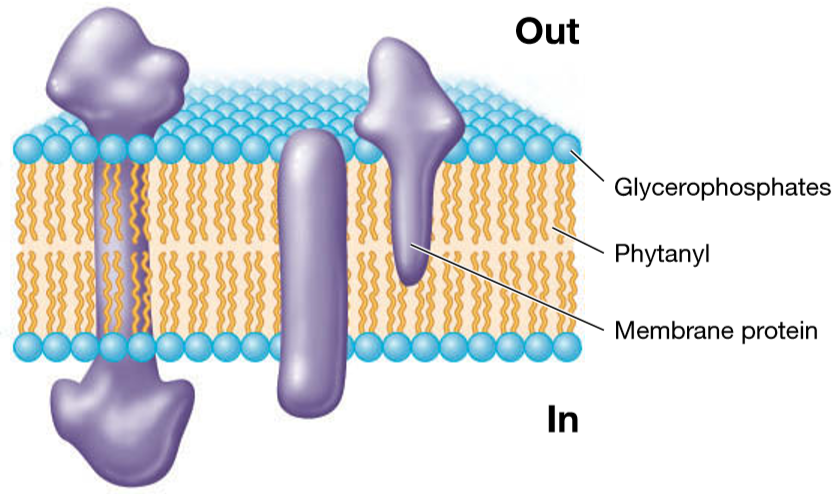
- 25ARCHAEAL CYTOPLASMIC MEMBRANE- has hydrophobic / hydrophilic parts
- hydrophilic (glycerophosphates): glycerol molecule w/phosphate and a functional group bonded to phosphate
- hydrophobic: isoprene (phytanil, biphytanil, crenarchaeol)
- ether link between hydrophilic/phobic
- no hopanoids - 26—
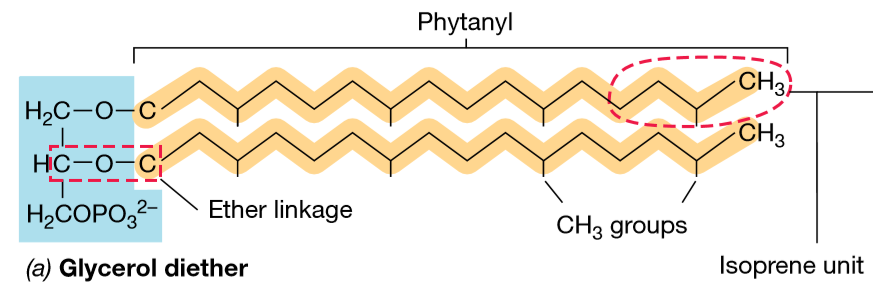
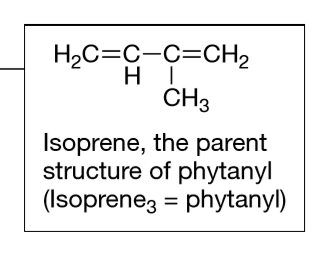
- 27—

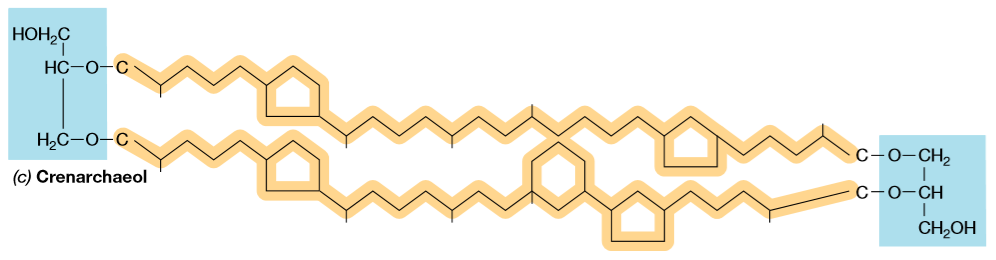
- 28—
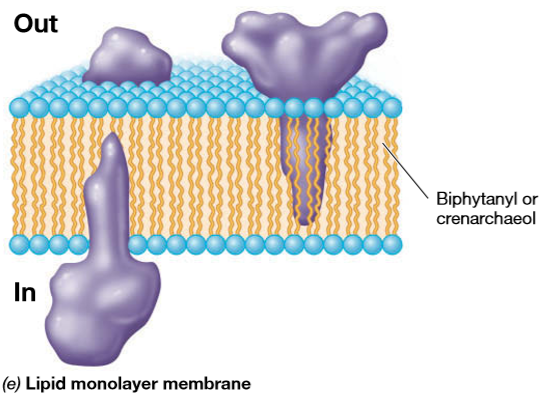
- 29list 3 major cytoplasmic membrane function- permeability barrier: prevents passive leakage of solutes in or out of cell
- anchors several proteins
- energy conservation and consumption - 30CYTOPLASMIC MEMBRANE permeability barrier - transport proteins part 1 of 2- carries most substances in/out of cell
- accumulate solutes against [ ] gradient
- requires energy
- displays high sensitivity & high specificity - 31CYTOPLASMIC MEMBRANE permeability barrier - transport proteins part 2 of 2some transport proteins of a single kind while others carry related class of molecules (different sugars or amino acids)
- 32CYTOPLASMIC MEMBRANE energy & conservation- cytoplasmic membrane energized when protons (H+) are separated from hydroxyl ions (OH−) across membrane
- charge separation creates an energized state (proton motive force), similar to potential energy present in a charged battery - 33cell wall- a layer outside the cytoplasmic membrane that prevents cell lysis due to osmotic pressure (2 atm)
- two major types identified via gram stain: gram-positive and gram-negative - 34BACTERIA CELL WALL Peptidoglycan- key molecule found in cell wall
- confers structural strength on the cell
- in all bacteria
- not present in Archaea or Eukarya - 35BACTERIA CELL WALL peptidoglycan structure part 1 of 2- alternating repeats of 2 modified glucose residues N-acetylglucosamine (NAG) and N-acetylmuramic acid (NAM)
- and amino acids (l-alanine, d-alanine, d-glutamic acid) and either l-lysine or diaminopimelic acid (DAP) - 36BACTERIA CELL WALL peptidoglycan structure part 2 of 2- constituents form glycan tetrapeptide
- long chains of this form peptidoglycan (universal across bacteria)
- when adjacent forms sheet around cell
- strands are connected by peptide cross-links, which are different in gram (-) and gram (+) - 37BACTERIA CELL WALL lysozyme- destroys peptidoglycan by cleaving glycosidic bond between NAG & NAM
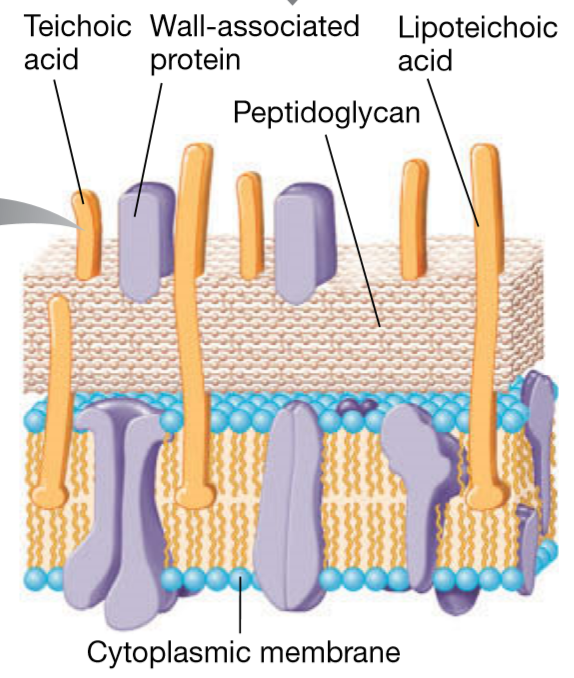
- weakens peptidoglycan, causing cell lysis - 38BACTERIA CELL WALL Gram Positive Cell Wall- one layer: 90% peptidoglycan
- many form several layers of peptidoglycan stacked one upon another
- many produce teichoic acids embedded in cell wall linked to peptidoglycan or lipids - 39BACTERIA CELL WALL very few bacteria and archaea ______ cell walls altogether; when they do they contain unusually ...- lack
- tough cytoplasmic membranes - 40BACTERIA CELL WALL Gram Positive Cell Wall visual
- 41BACTERIA CELL WALL Gram Negative Cell Wall- 2 layers: peptidoglycan & LPS
- small amount of peptidoglycan
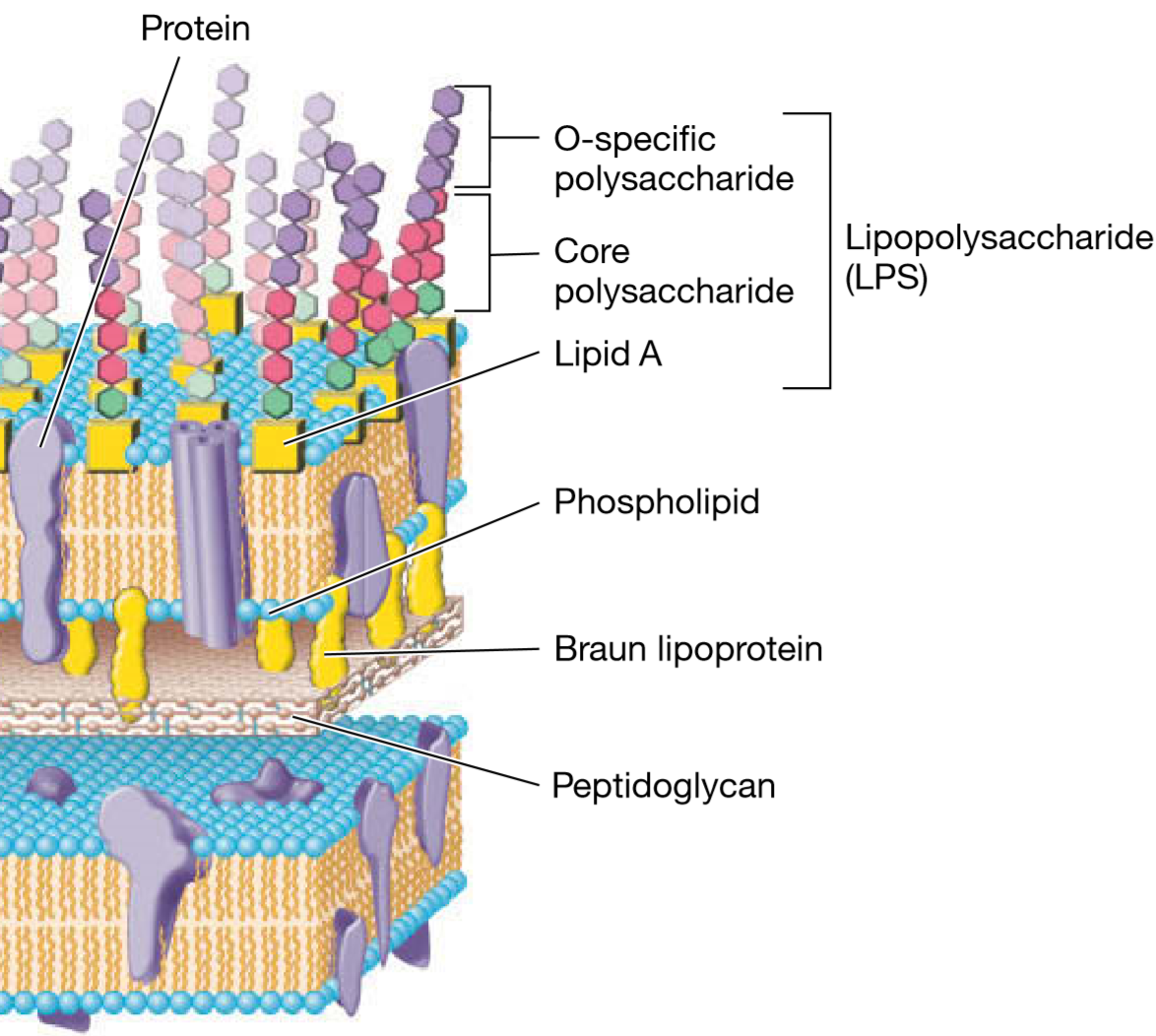
- mostly made of lipid & polysaccharide linked to form the outer membrane/ lipopolysaccharide LPS - 42BACTERIA CELL WALL Gram Negative Cell Wall - LPS- confers only modest structural strength
- effective barrier against many substances such as lipophilic antibiotics
- replaces much of the phospholipid in the outer half of the outer membrane
- anchored to the peptidoglycan layer by the Braun lipoprotein - 43BACTERIA CELL WALL Gram Negative Cell Wall - LPS Structure- 3 layers: O-specific polysaccharide, Core polysaccharide, and Lipid A
- lipid A can be toxic to animals and comprises the endotoxin complex - 44BACTERIA CELL WALL Gram Negative Cell Wall - Braun lipoproteinmolecule that spans the gap (periplasm) between the LPS layer and the peptidoglycan layer
- 45—
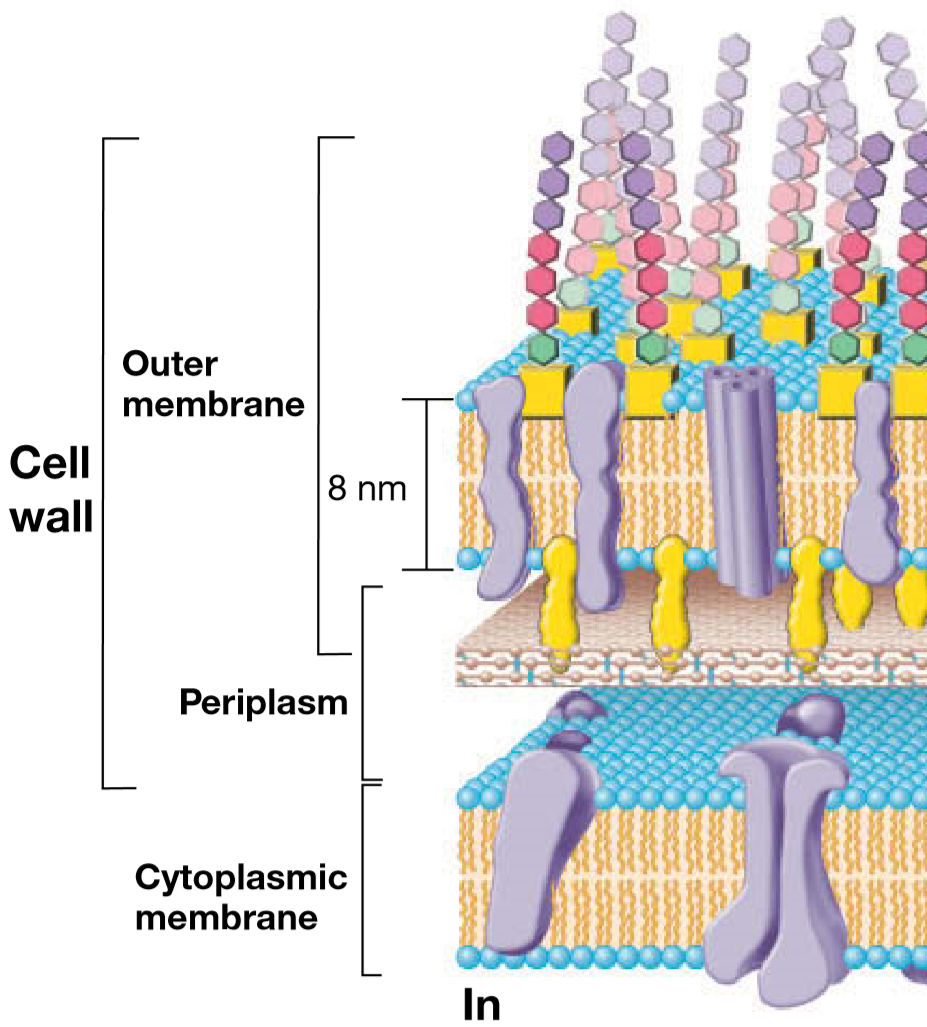
- 46BACTERIA CELL WALL periplasm- space located between the outer surface of the cytoplasmic membrane and the inner surface of the outer membrane
- spans about 15 nm - 47BACTERIA CELL WALL porinfunction as channels for the entrance and exit of solutes
- 48BACTERIA CELL WALL outer membrane is _____ to proteins and large molecules. A major function of it is to prevent ...- impermeable
- cellular proteins whose activities must occur outside the cytoplasm from diffusing away from the cell - 49ARCHAEAL CELL WALL- variety of cell wall structures: Pseudomurein and Other Polysaccharide and S Layer
- no peptidoglycan
- typically no outer membrane - 50ARCHAEAL CELL WALL Pseudomurein and Other Polysaccharide- polysaccharide similar to peptidoglycan
- backbone made of alternating repeats of N-acetylglucosamine and N-acetyltalosaminuronic acid
- immune from destruction by lysozyme & penicillin
- in certain methanogenic Archaea - 51ARCHAEAL CELL WALL Cell walls of some other Archaea lack ______ and instead contain other polysaccharides- pseudomurein
- 52ARCHAEAL CELL WALL S-Wall part 1 of 1- most common type of cell wall
- paracrystalline surface layer
- interlocking molecules of protein or glycoprotein
- can form various symmetries
- sufficiently strong to withstand osmotic pressures w/out any other components - 53ARCHAEAL CELL WALL S-Wall part 2 of 2- present in addition to other cell wall components, usually polysaccharides
- when it's accompanied by other wall components, the S-layer is always the outermost wall layer; that is - 54capsule- tight matrix that excludes small particles and is tightly attached
- visible by light microscopy when treated w/India ink (stains background & not capsule) or electron microscope - 55slime layer- layer more easily deformed & loosely attached
- will not exclude particles and is more difficult to see microscopically - 56capsule and slime layer functions- Surface polysaccharides assist in attachment to surfaces & in development & maintenance of biofilms
- virulence factors: contribute to pathogenicity, protect against phagocytosis
- prevents dehydration by binding water - 57biofilma thick layer of cells on solid surface
- 58pelliclesthin sheets of cells on liquid surface
- 59twitching motility- gliding motility, movement along a solid surface
- extension of pili followed by retraction drags cell along a solid surface
- assists in locating specific sites for attachment - 60Fimbriae- thin (2–10 nm in diameter)
- filamentous structures made of protein
- extend from cell surface
- enable cells to stick to surfaces
- form pellicles or biofilms - 61Pili- similar to fimbriae; longer, has 1 or few
- All gram (-), many gram (+) have them
- facilitating genetic exchange (conjugation)
- stick to specific host tissues for invasion
- twitching motility - 62hamus- resemble type IV pili except for barbed terminus (tiny grappling hook)
- affix cells to a surface to form a networked biofilm
- attaches cells to surfaces & each other - 63cell inclusions- function as energy/carbon reserves or have special functions
- enclosed by a thin membrane that partitions off inclusion in cytoplasm
- results in ↓ osmotic stress if same amt of substance in dissolved in cytoplasm - 64different types of cell inclusions- Carbon Storage Polymers
- Polyphosphate, Sulfur, and Carbonate Minerals
- Magnetic Storage inclusions: Magnetosomes - 65Carbon Storage Polymers- glycogen: glucose polymer
- PHA
- synthesized when there's excess C & broken ↓ as C or energy sources when conditions warrant - 66gas vesicles- confer buoyancy allowing cells to position themselves in regions of water columns that best suit their metabolisms
- not found in microbial eukaryotes
- conical-shaped made of protein
- composition/pressure of gas inside a gas vesicle is same as its environment - 67endospores 1 of 3- formed during endosporulation
- highly differentiated cells
- resistant to heat, harsh chemicals & radiation
- survival structures: allows organism to endure unfavorable growth conditions: temp, drying, nutrient depletion - 68endospores 2 of 3- dormant stage of a bacterial life cycle: vegetative → endospore → vegetative
- easily dispersed by wind, water, or through the animal gut, and hence
- formed when growth ceases due to exhaustion of an essential nutrient - 69endospores 3 of 3- only in some gram-positive bacteria
- can remain dormant for years
- sequential activation of endospore genes & inactivation of vegetative cell functions
- quickly convert back to vegetative cell in 3 steps: activation, germination & outgrowth - 70endospores activationendospores heated for several minutes at an elevated temperature
- 71endospores germination- signaled by loss of refractility, resistance to heat and chemicals of endospore
- germinates when supplied with certain nutrients - 72endospores outgrowth- visible swelling due to water uptake and synthesis of RNA, proteins, and DNA
- vegetative cell emerges from endospore and begins to grow
- remains in vegetative growth until environmental signals trigger sporulation - 73Endospore Structure 1 of 3- visible by light microscopy as strongly refractile structures
- impermeable to most dyes
- special stains/procedures used: malachite green is used and is infused into the spore with steam - 74Endospore Structure 2 of 3- outermost layer, exosporium, a thin protein covering
- inward are several spore coats
- Below spore coat is the cortex
- inside cortex is the core: has core wall, cytoplasmic membrane, cytoplasm, nucleoid, ribosomes, cellular essentials - 75Endospore Structure 3 of 3- differs structurally from vegetative cell primarily in kinds of structures found outside the core wall
- has dipicolinic acid & SASPs not found in vegetative cells
- Some survive 150°C temp → 121°C is standard for microbiological sterilization - 76flagellum- long, thin appendages in bacteria that assist w/motility
- don't rotate at constant speed but increase or decrease speed
- not straight but helical - 77tuftgroup of flagella
lophotrichous: attached to one end
amphitrichous: attached to both ends - 78polar flagellation- flagella attached at one or both ends
- can be lophotrichous or amphitrichous
- move rapidly - 79peritrichous flagellation- flagella are inserted around cell surface
- typically move slowly in a straight line - 80archaellum- long, thin appendages in archaea that assist w/motility
- half the diameter of flagella - 81gliding motility- Some bacteria are motile but lack flagella & move by gliding
- slower/smoother & typically occurs along the long axis of the cell
- typically filamentous or rod-shaped in
morphology - 82virus is a _____ not a microorganism- microbe
- 83LUCAlast universal common ancestor
- 84Eukaryia cell walls are made ofchitin or cellulose
- 85difference between prokaryotic and eukaryotic flagella attachment- Eukaryotic flagella: microtubule-based structures, anchored at the cell membrane
- prokaryotic: spans LPS, peptidoglycan, cell membrane to cytosol - 86examples of endosporesClostridium, Bacillus, anthrax
Information
- Description
- Microbiology (Exam I) Flashcards on Chapter 2: Microbial Cell Structure and Function, created by Alexandra Bozan on 18/01/2020.
- Created by
- Alexandra Bozan
- Views
- 0
- Rating