
Flashcards
Untitled
Cards in this deck (77)
- 1Gram staining Steps1) crystal violet
2) iodine (moldant)
3) acetone
4) safranin (countersatin) - 2spore steps1)cut piece of paper towel and place itover slide and place slide in water bath
2) add malachite green
3) remove paper
4) DI water (challenger step)
5) safranin (counterstain) and di water - 3acid-fast1) water bath and paper towel,
2) carbol fuchsin and remove slie after 5 min and remve paper
3)methelyne blue (counterstain) and DI water - 4Acid fact vs non acid fastacid fast: gram negative bacteria contain waxes in celll wall, important to detect tuberculosis and leprosy
- 5shape of cellscocci, bacillus, vibrio and spirochaetes
- 6Dilution vs dilution factordilution facteor has a positive exponnt
- 7Viable titer mathCFU/mlx dl
1000ul to ml is 1ml
cfu has to be between 20-200 - 8streaking techniqueperformed by placing a small amount of bacteria into a agar plate with an inoculating loop and gradually thinning it out the concentration of the cellby pulling the original sample around the agar plate systematically.three sreek done + tail region. The loop has to be steralize by the flame evry new streek.
- 9cellular vs coloney morphologycellular mrphology
2s cas( size, shape, color, arrangement and staining)
coloney morphology
3s come (size,shape, surface, color, opacity, margine, elevation) - 10Complex vs deffined mediacomplex media a large number of bacteria will grow, no exact ingredients known
- 11API 20 E vs API 20 NEgram neg rods
API 20 E oxidase -
API 20NE oxidase + - 12Agram p cocci
API 20 staph catalase +
API 20 strep catalase- - 13API 50 CHgram positive rods
- 1416s rRNAportion of bacteria geneome that is highly conserved and is used in molecular approach to stablich a phylogenetic relationship bw various groups of bacteria
- 15phage titerPFU/mLx DF
- 16plaqueplaces where bateria lysis occured
- 17parts of phageprotain coat, sheath and core
- 18OF MediumTest for: weather the bacteria can metabolize glucose fermentably or oxidatavly
ingredients: peptone, glucose, bromo thymol blue,
material: two test tubes one onil one without
Results: if yellow (acidic), if blue (basic), if green neutral and if crack it means gas production - 19Read the Kirby-Bauermeasure diameter around halo antibiotic disk
- 20Heat fixing purposebacteria to adhear to slide, steralize and to kill the bacteria
- 21magnificationn of a sample under 40x objective lense B) coarse adjustment knub used for C) when should fine adj knub be usedA) 400x
B) 4-10x
C)40x-100x - 22MICthe minimum concentration of antibiotic needed to inhibit a particular bacteria
- 23—OF medium control
- 24ZOIwhere there is no bacteria growth becuase t was inhibited nby antibiotic measured in mm
- 25Muller-Hinton Plateneutral agaar for antibiotic assay
- 26Incubation temp for animal and human samples b) incubation for air, soil and planta) 37c
b)30C - 27A) What is the difference in color bw gram - and gram + B)whyb) gram neg=pink
gram += purple
C) gram+ thick peptidoglycan layer
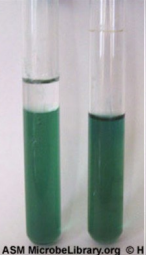
gram - think peptioglycan layer - 28—urea - (yellow) acidic
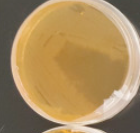
- 29a) example of an apandage for true motility b) best approach fo viewing ita) flagella
b)hanging drop - 30—OF medium slightly basic under aerobic condition
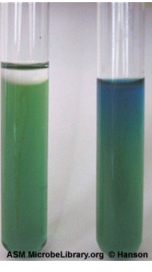
- 31—+ for starch hydrolysis
clear zone visible around the bacteria growth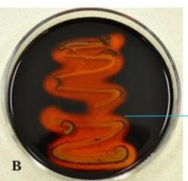
- 32—Nitrate reducing test in this case it is positive because the zinc not added yet
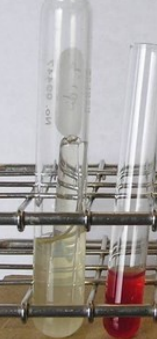
- 33—OF facultative fermenter. acidic under aerobic and anaerobic conditions
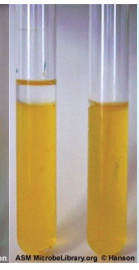
- 34—urea test + (alkaline ) ammonia formation
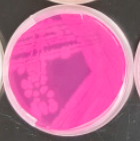
- 35—- for starch hydrolysis
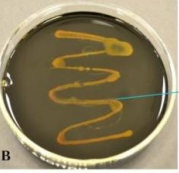
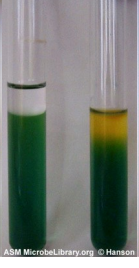
- 36—OF medium slighly acidic under aerobic condition
- 37Urease Testtest: to determine if the bacteria has the ability to produce and utilize urease enxyme
ingredients: glucose, peptone, urea agar, phenol red and
Results: pink (alkaline) = urase present
yellow= acidic not present - 38—- becuase after addition of zinc
no bubbles un durhan test means no gas production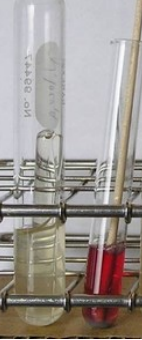
- 39—top catalase positive
bottom catalase -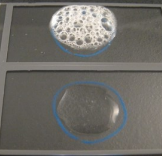
- 40—methyl red test + (acidic)
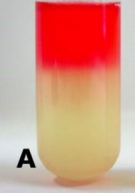
- 41catalase testtest: for the presence of the catalase enzyme whih can breaks down hydrogen peroxide to h20 and o2
ingredients: slide and hydrogen peroxide
bubbles +
no bubbles - - 42oxidasetest for : presence of the cytochrome c enzyme
material oxidase reagent and cotton swab
result: blue +
colorless- - 43—Nitrate reducing test - no color change abter the addition of the KNO3, zinc not added yet
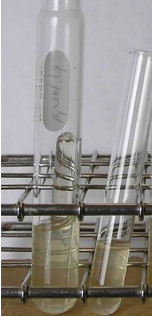
- 44—oxidase test
top +
bottom -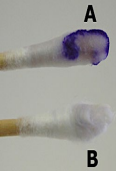
- 45Nitrate Reduction testTest: to determine if the bacteria has teh nitrate reducimg enzyme
ingredients: nutrient broth and KNO3
Material: two test tubes each one has two durham tubes inside
Result: if red before zinc=+
if yellow before zinc=-
if red after zinc=-
if yellow after think=+
if buggles is durha tube it means gas production(nitrate fully reduced to N2) - 46—methyl red
negative result ph higher than 6
no mixed acid fermentation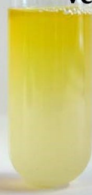
- 47methyl red testtest: if a mix acid fermentation can be used to ferment glucose and produce stabel organic acids
material: MR/VP broth and methyl red reagent
result : if red (acid) =+
if yellow= no acid produced - - 48—Kigler's Triple iron sugar test (TSI)
all red: no sugar fermentation (obligate aerobe)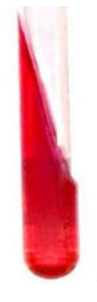
- 49VP testtest for: if 2,3 butanediol can be used as the pathway to ferment glucose.
materials VP1 (alpha naphthol) and VP2 (KOH)
redult: if red= acetoin present
if yellow= no acetoin present - 50—Kigler's
yellow but and red slant means only glucose fermented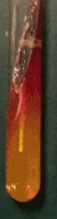
- 51—VP test
left + (acteoin present)
right - (acteoin absent)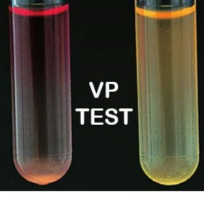
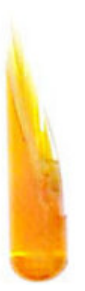
- 52—all yellow fermentation of glucose, sucrose and lactose
- 53—Gelatinase test
top+
bottom -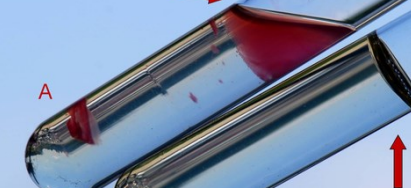
- 54—Kigler's
gas production anarobe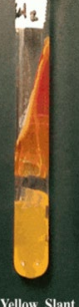
- 55Gelatin hydrolysistest: if bacteria has the gelatinase enzyme
ingredients: gelatin and ice bath 4C - 56Citrate testtest: differential if the bacteria produces the enzyme citrase which converst citrate into pyruvate
ingredients: citrate, ammonium salts and dibromothymol blue
Results:
blue (alkaline) positive (ammonia produced)
green (neutral= - - 57—Macconkey agar +
lactose fermentation acidic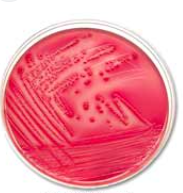
- 58Kigler's Triple Iron sugar tetstest: if sucrose, glucose and lactose can be metabolized
material: glucose, sucrose and phenol red - 59—Citrate test
+ for citrase converted the ammonium salts to ammonia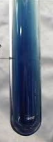
- 60—kigler's
h2S production
also positive for gas (anaerobe)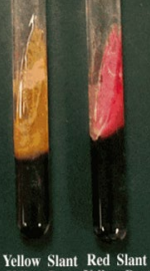
- 61—blood agar
A hemolysis ( partial hemolysis)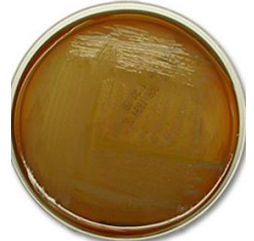
- 62Indoletest: differential : if organism can produce indole which breaks down the amino acid tryptophan
ingrediets: tryptophan broth, peptone, water, Kovac reagent
Result: red ring at the top=+
yellow= - - 63—Indole positive: tryptophan broken down by indole
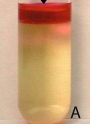
- 64—Citrate
negative( neutral) no ammonia produced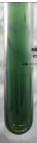
- 65—EMB
positive for lactose fermentation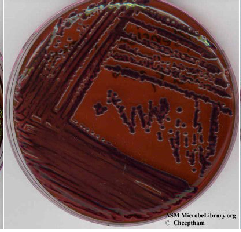
- 66MSAContains: mannitol, NaCl, phenol red,
Selective: only halophiles can grow
Differential
yellow: (acid)manitol fermented
red:(neutral) no mannitol fermentation - 67—MSA negative neutral no mannitol fermentation
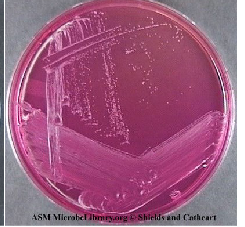
- 68—blood agar
gamma hemolysis( no hemolysis)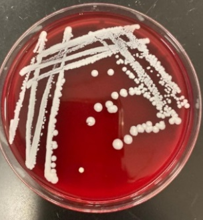
- 69—MSA( acidic)
Mannitol fermentation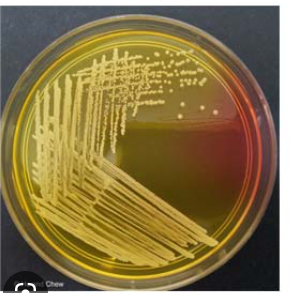
- 70—Indole -
tryptophan not broken down by indole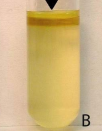
- 71Blood Agarcontain: sheap blood
no seletive
differential: alpha hemolysis: partial RBC hemolysis (green-brownish)
B hemolysis: complete hemolysis. clear zone around bacteria growth
Gamma hemolysis: no hemolysis at all ( white) - 72—blood agar
B hemolysis comehte hemolysis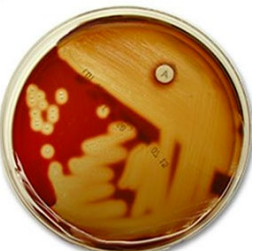
- 73EMBcontains: Eoxin Y, methylene blue and lactose
Selective: against gram + bacteria
Differential lactose metabolism
dark purple=+
colorless or light pink= -
green sheeth= + colifrom like E.Coli - 74—EMB
coliform bacteria (E.coli)
+ for lactose femrentation quick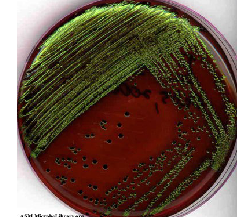
- 75—EMB
negative for lactose femrentation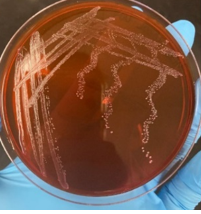
- 76MacConkey AgarContains: peptone, NaCl, lactose, crystal violet, bile salts and natural red
Selective: only gram neg can grom
Differential: if lactose fermented
red=+(acid)
yellow=- - 77—MacConkey -
no lactose fermentation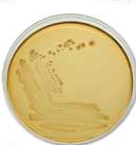
Information
- Description
- Biology Flashcards on Untitled, created by kat cang on 11/04/2023.
- Created by
- kat cang
- Views
- 0
- Rating