
Flashcards
Skull continued
Cards in this deck (42)
- 1Evaluation criteria for the AP Axial (Modified Towne) projection of the zygomatic arches:-Proper collimation
-No overlap of zygomatic arches by mandible
-No rotation demonstrated by:
*symmetric arches
*arches projected lateral to mandibular rami
*MSP of head aligned to long axis of collimated field - 2Evaluation criteria for PA mandible:-Proper collimation
-Entire mandible
-No rotation demonstrated by:
*mandibular body and rami symmetric on each side
*MSP of head aligned with long axis of collimated field - 3What are the PA/PA Axial projections of the mandible done to show?Medial or lateral displacement fractures
- 4Evaluation criteria for PA Axial mandible:-Proper collimation
-Entire mandible
-No rotation demonstrated by:
*mandibular body and rami symmetric on each side
*MSP of head aligned to long axis of collimated field
-Condylar process - 5Evaluation criteria for the AP Axial (Towne) projection of the mandible:-Proper collimation
-Entire mandible
-TMJs just inferior to mastoid process
-No rotation demonstrated by:
*symmetric rami
*MSP of head aligned with long axis of collimated field - 6What does the AP Axial (Towne) projection of the mandible best demonstrate?Mandibular body & TMJs
- 7What does the parietoacanthial (Waters) projection of the mandible best demonstrate?Mandibular body
- 8Evaluation criteria for the Ramus & Body in the Axiolateral/Axiolateral Oblique projection of the mandible:-No overlap of ramus by opposite side of mandible
-No elongation or foreshortening of ramus or body
-No superimposition of ramus by c-spine - 9Evaluation criteria for the Symphysis in the Axiolateral/Axiolateral Oblique projection of the mandible:-No overlap of mentum region by opposite side of mandible
-No foreshortening of mentum region - 10Evaluation criteria for the submentovertex projection of the mandible:-Proper collimation
-Condyles of mandible are anterior to the pars petrosa
-Symphysis extends almost to anterior border of face so mandible is not foreshortened
-No rotation demonstrated by:
*distance between lateral border of skill and mandible equal on both sides
*MSP of head aligned to long axis of collimated field - 11Evaluation criteria for AP Axial TMJs:-Proper collimation
-No rotation of head
-Minimal superimposition of petrosa on condyle in closed-mouth position
-Condyle and TMJ below pars petrosa in open-mouth position - 12Evaluation criteria for the Axiolateral (Shuller) projection of the TMJs:-Proper collimation
-TMJ anterior to EAM
-Condyle in mandibular fossa in closed mouth exam
-Condyle inferior to articular tubercle in open mouth exam - 13Evaluation criteria for the Axiolateral Oblique projection of the TMJs:-Proper collimation
-TMJ
-Condyle lying in mandibular fossa in closed mouth position
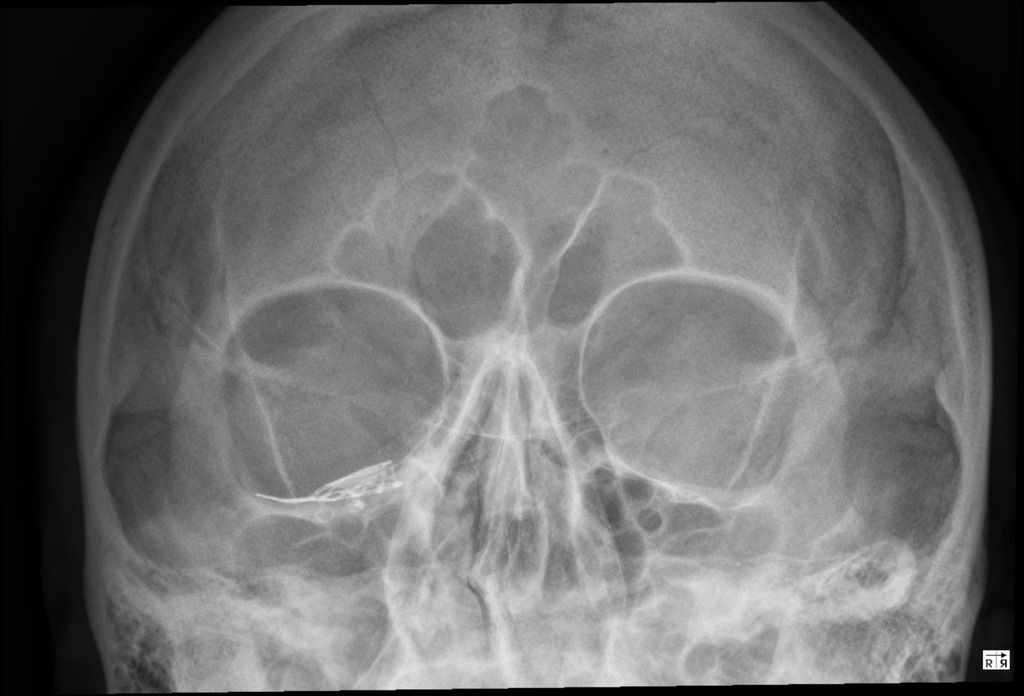
-Condyle lying inferior to articular tubercle in open mouth position, if normal - 14Evaluation criteria for the parietoacanthial (Waters) projection of the orbits:-Entire orbits
-Petrous ridges projected immediately below the maxillary sinuses
-No rotation demonstrated by:
*distances between lateral borders of orbits equal on both sides
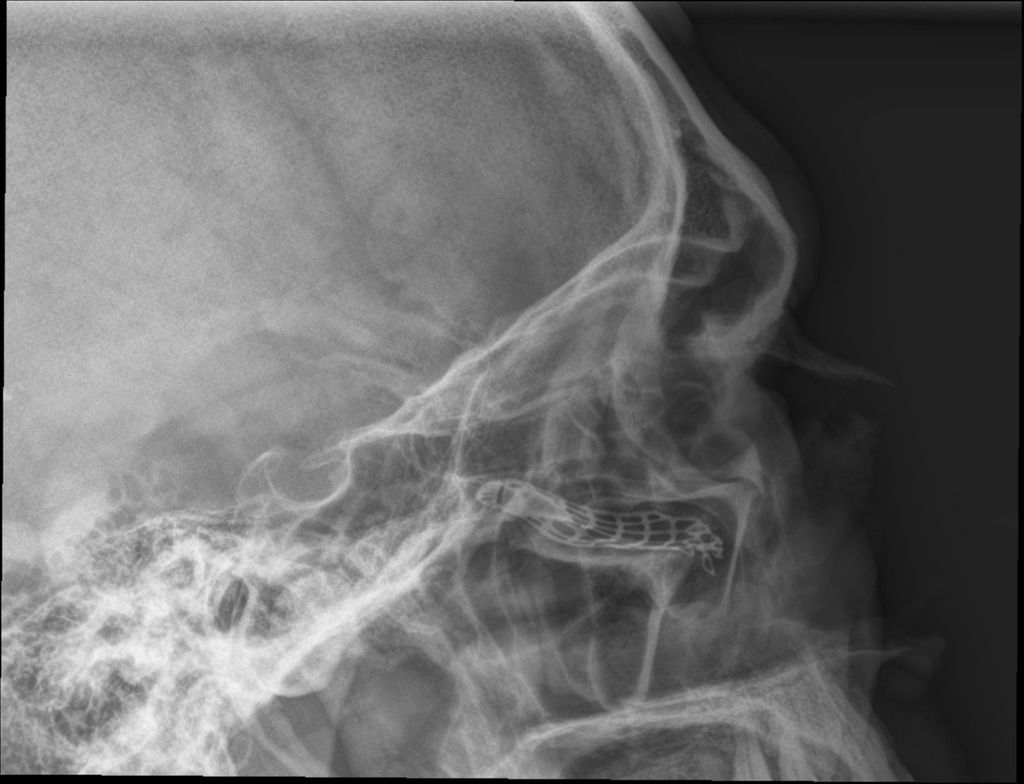
*MSP aligned with long axis of collimated field - 15Evaluation criteria for lateral orbits:-Entire orbit
-Close beam restriction centered to orbital region - 16Evaluation criteria for the PA Axial (Caldwell) projection of the orbits:-Entire orbits
-Petrous pyramids lying below orbital shadows
-No rotation demonstrated by:
*symmetric visualization of orbits
-Close beam restriction centered to orbital region - 17Evaluation criteria for the parietoacanthial (Modified Waters) projection of the orbits:-Entire orbits
-Petrous pyramids lying well below the orbital shadows
-No rotation demonstrated by:
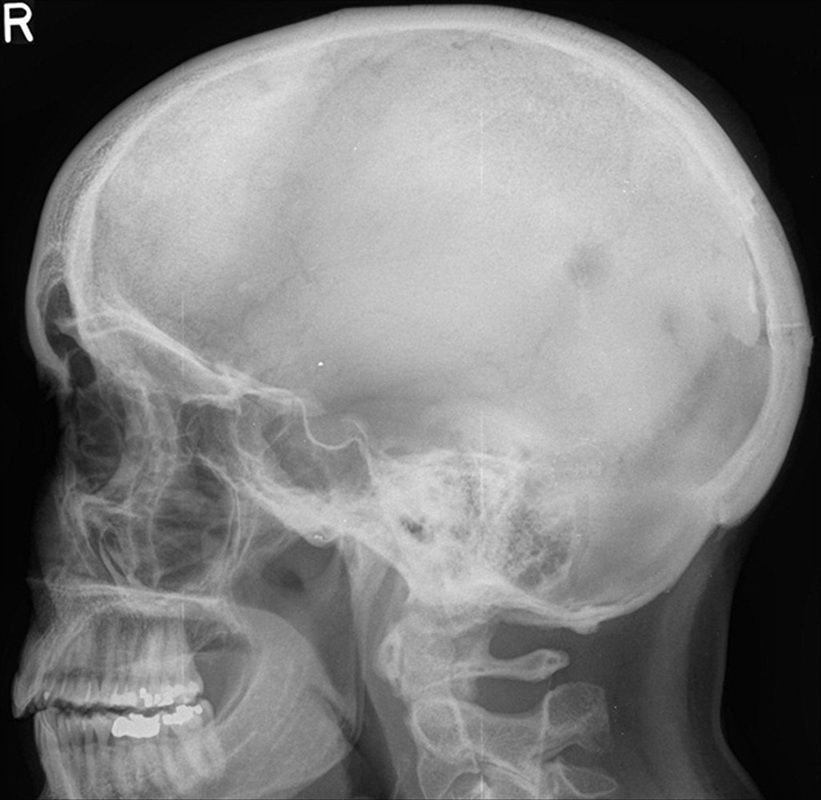
*symmetric visualization of orbits - 18What projection is displayed?Lateral skull
- 19What projection is displayed?PA Skull
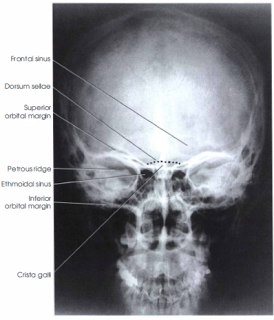
- 20What projection is displayed?PA Axial (Caldwell) Skull
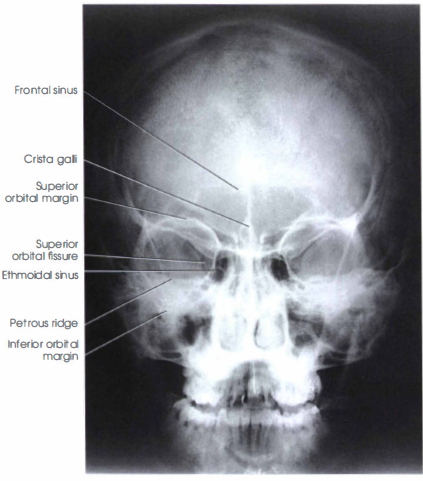
- 21What projection is displayed?AP Axial (Towne) Skull
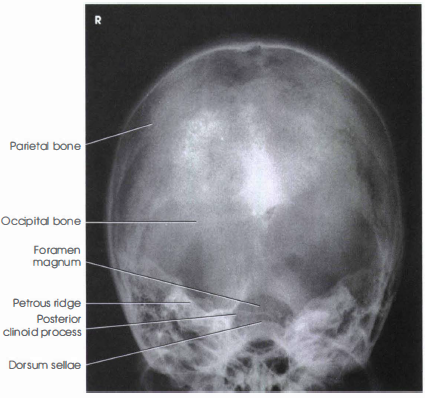
- 22What projection is displayed?PA Axial (Haas) Skull
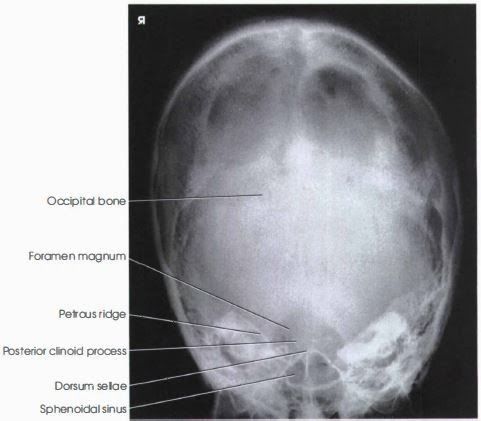
- 23What projection is displayed?SMV (Schuller) Skull
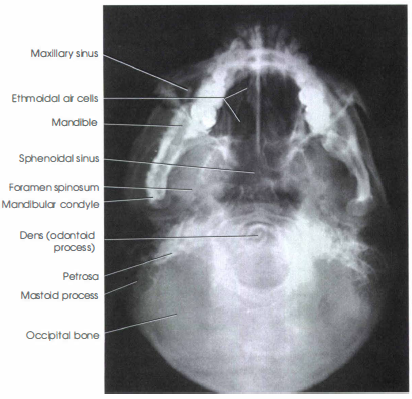
- 24What projection is displayed?Lateral Facial Bones
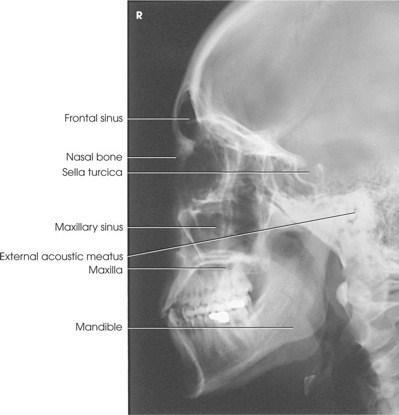
- 25What projection is displayed?Parietoacanthial (Waters) Facial Bones
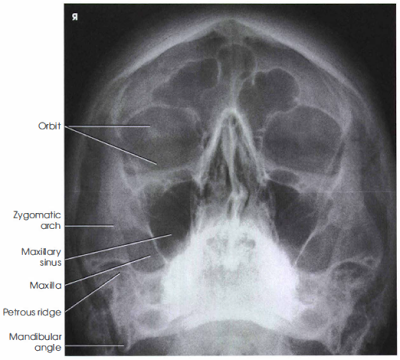
- 26What projection is displayed?Parietoacanthial (Modified Waters) Facial Bones
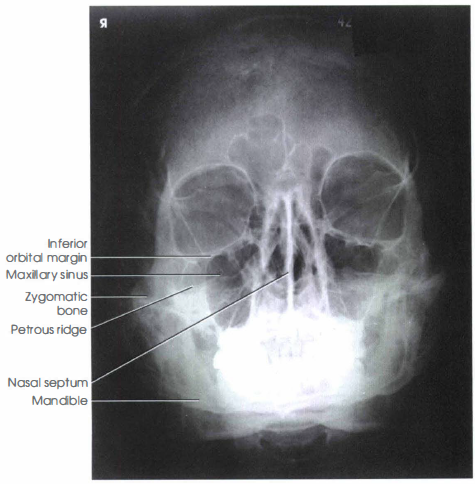
- 27What projection is displayed?Acanthioparietal (Reverse Waters) Facial Bones
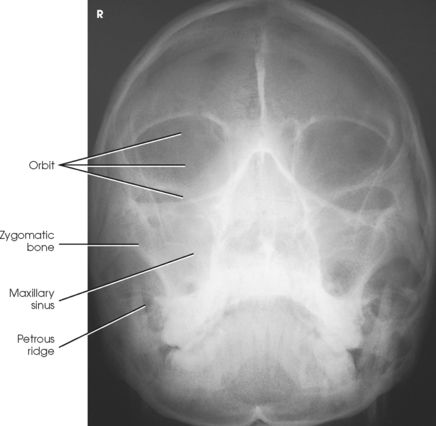
- 28What projection is displayed?Lateral Nasal Bones
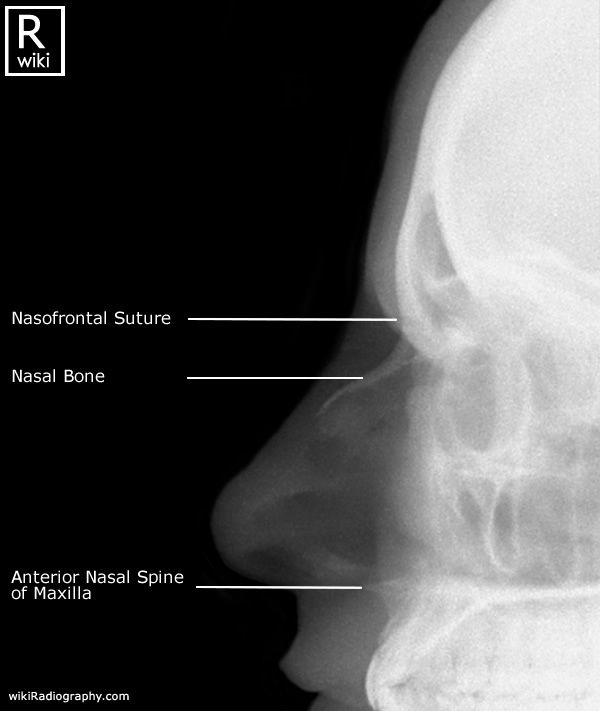
- 29What projection is displayed?SMV Zygomatic Arches
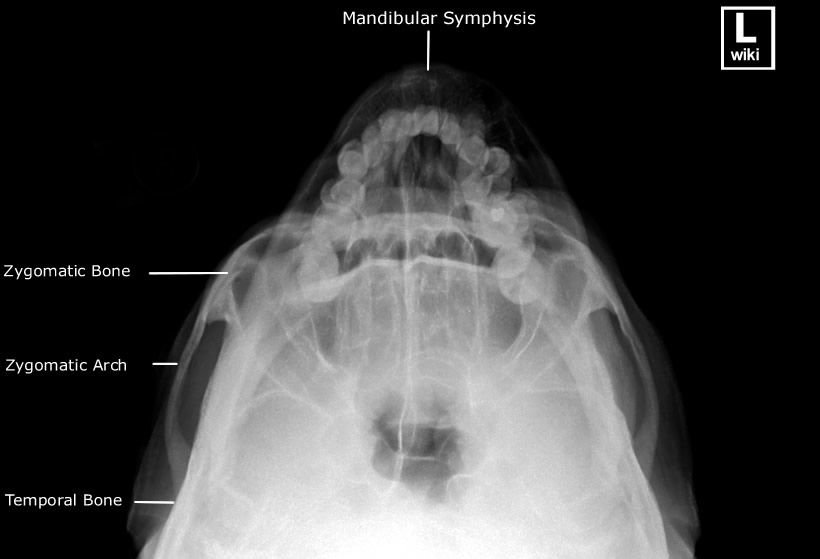
- 30What projection is displayed?Tangential Zygomatic Arches
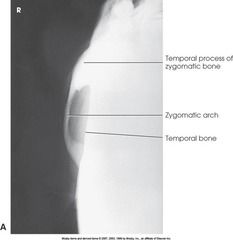
- 31What projection is displayed?AP Axial (Towne) Zygomatic Arches
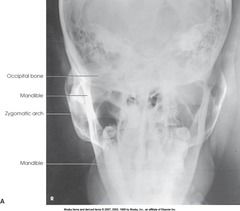
- 32What projection is displayed?PA Mandible
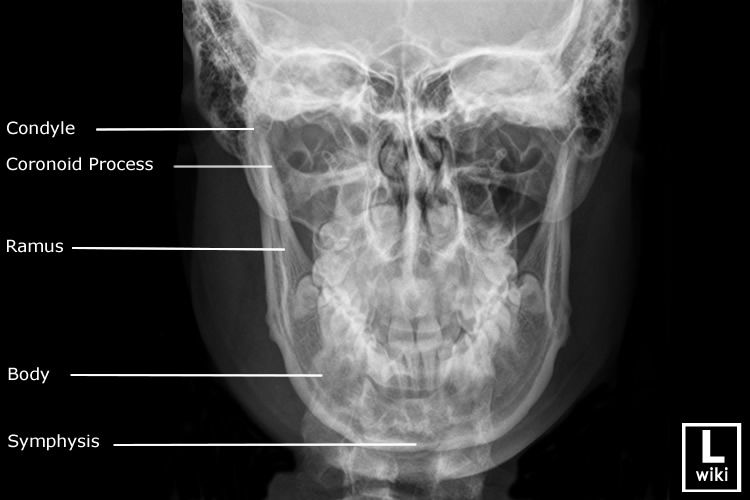
- 33What projection is displayed?PA Axial Mandible
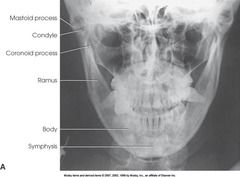
- 34What projection is displayed?Axiolateral Oblique Mandibular Body
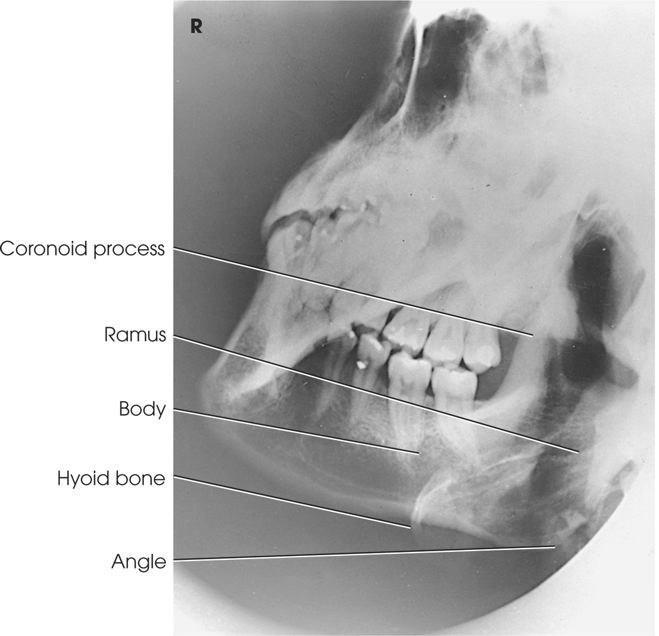
- 35What projection is displayed?Axiolateral Oblique Mandibular Ramus
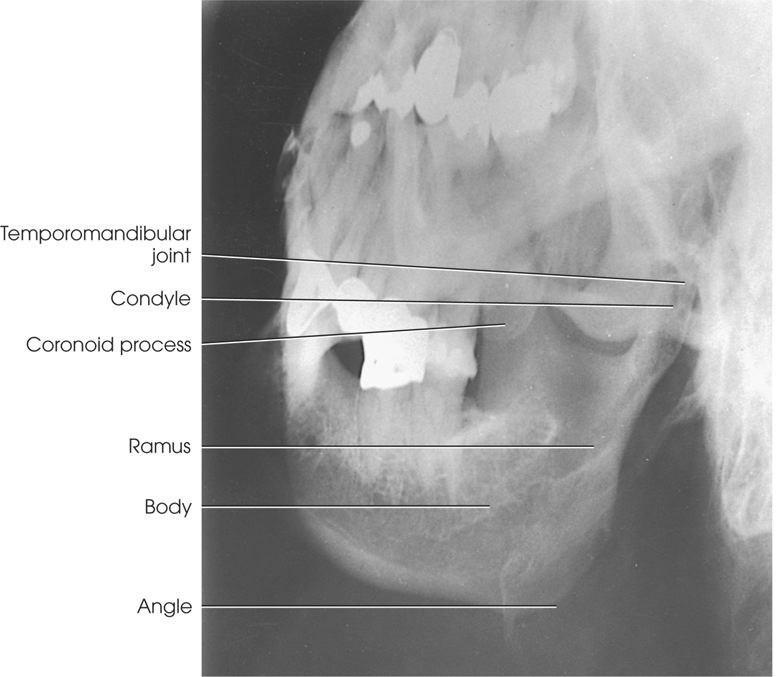
- 36What projection is displayed?Axiolateral Oblique Mandibular Symphysis
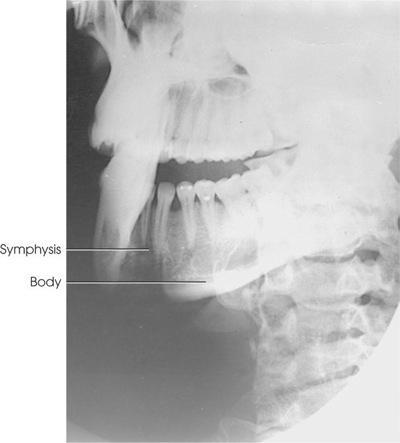
- 37What projection is displayed?SMV Mandible
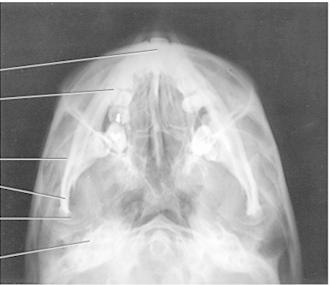
- 38What projection is displayed?Axiolateral Oblique (Shuller) TMJs
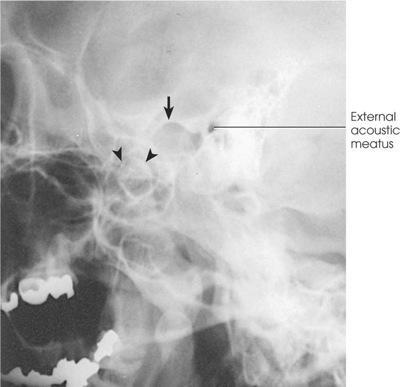
- 39What projection is displayed?Axiolateral Oblique (Modified Law) TMJs
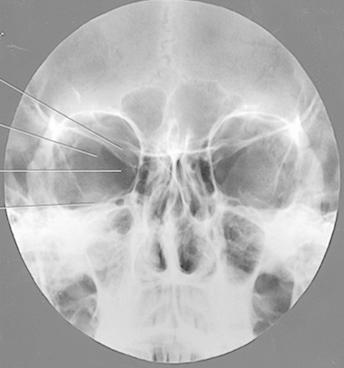
- 40What projection is displayed?Parietoacanthial (Waters) Orbits
- 41What projection is displayed?Lateral Orbits
- 42What projection is displayed?Parietoacanthial (Modified Waters) Orbits
Information
- Description
- Radiology Flashcards on Skull continued, created by Mikayla Ott on 24/07/2017.
- Created by
- Mikayla Ott
- Views
- 1
- Rating