
Mind map
Core 1.3 Energy Generation, Storage and Use
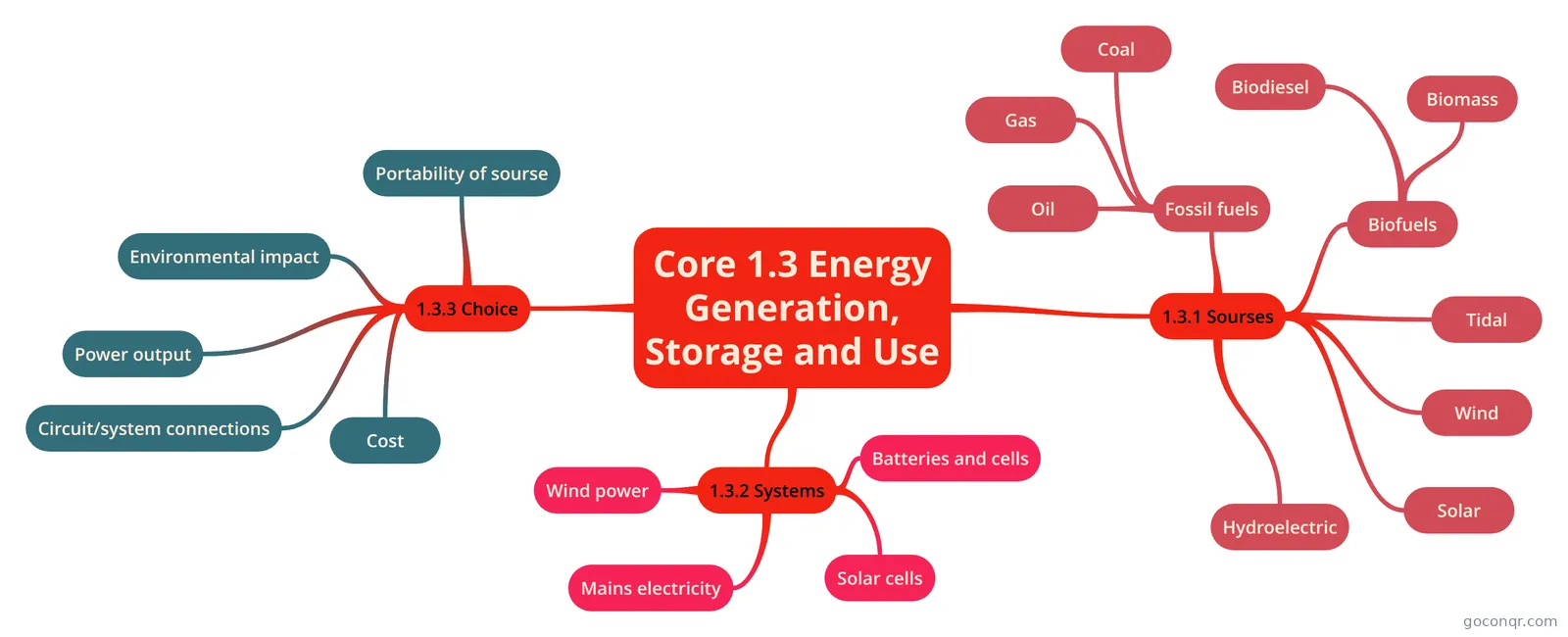
Mind map: Energy generation, storage and use
Map content
Core 1.3 Energy Generation, Storage and Use
1.3.1 Sourses
- Fossil fuels
- Crude oil, coal and gas are fossil fuels. They were formed over millions of years, from the remains of dead organisms.
- Gas
- Natural gas can power turbines, with the waste heat powering a steam turbine. Advantages: cleaner than coal or oil. Disadvantages: Burning gases are highly polluting.
- Coal
- Heat energy and hot gasses convert water into steam which powers a turbine to create high-voltage electricity. Advantages: Stable, Large-scale and high-power electricity generation.Disadvantages: Coal mining impacts significantly on the landscapes.
- Oil
- Processed and split into petroleum products such as petrol, paraffin and diesel. Advantages: Relatively cheap to extract and convert. Disadvantages: Oil power plants are highly polluting Impacts on the landscape risks environmental disasters
- Biofuels
- A biofuel is a fuel that is produced through contemporary biological processes, such as agriculture and anaerobic digestion.
- Biodiesel
- Made from natural elements such as plants, vegetables and fermented waste cooking oil. Advantages:Uses waste from plants and farming.Does not give off harmful chemicalsDisadvantages:Large areas needed to cultivate crops
- Biomass
- Organic matter derived from organisms, such a wood, crops, rubbish, landfill gas and alcohol fuels. Advantages: Waste from plants and farming can be used.Disadvantages:Large areas needed to cultivate cropsEmits fumes that add to global warming.
- Tidal
- Turbines generate electricity from the movement of tidal water. Advantages:No emissionsDisadvantages:Lower energy output than fossils fuels.
- Wind
- Wind turbines use propeller blades, which spin a shaft to create electricity through a generator. Advantages:can be used in remote areas.Disadvantages:Wind can be unpredictable.
- Hydroelectric
- A dam traps water that flows through tunnels and turns turbines to make electricity. Advantages:Large amount of low-cost power.Disadvantages:Expensive to set up Damage the environment
- Solar
- Solar power is the conversion of energy from sunlight into electricity, using photovoltaic. Advantages:Reliable source of power in warmer countriesDisadvantages:could change ecology when large solar farms replace traditional farms.
- Fossil fuels
1.3.2 Systems
- Batteries and cells
- Use chemical energy to make electricity. Two terminals, one positive (+) and one negative (-).A chemical reaction produces electrons that collect at the negative terminal and when connected in a circuit will flow to the positive terminal.
- Solar cells
- electronic device that can turn sunlight into electricity. Contains two layers of silicone treated to allow electons to flow when sunlight falls on them. Provide free energy once initial costs are recovered. Non-polluting. Solar Farms change the look of the landscapes.
- Wind power
- Converts the movement of the wind into mechanical power or electricity. A wind turbine consists of a bladed rotor that drives a rotating shaft in a generator to creator electricity.
- Mains electricity
- Supplied from power stations through the National Grid. Alternating Currents (AC)- it flows in one direction and then the other at a rate of 50 times a sec. Electricity enters a home at 230 Volts and is ready to be used.
- Batteries and cells
1.3.3 Choice
- Portability of sourse
- remote working requires access to device with a power source that does not need to be plugged into mains electricity. such devices can be portable and compact as they do not need power converters.
- Environmental impact
- no entirely ''clean energy source exists. The impact may be active, like fossil fuel emissions or the destruction of habitats through extraction. Passive impacts includes the sound of generators or the appliance of wind farms. Other environmental factors include the impact of transportation or waste disposal.
- Power output
- A generators output may vary according to conditions at the power
- Circuit/system connections
- When considering alternative power sources, a designer will need to consider how the circuit or system will be connected to it, for example to use available plugs, connectors and terminals.
- Cost
- The choice of the energy supply, for example batteries or a mains electricity power pack, will impact the running cost of the product costs of alternative power supplies must be considered carefully by a designer.
- Portability of sourse
Information
- Description
- GCSE Design and Technology Mind Map on Core 1.3 Energy Generation, Storage and Use, created by Jose Dos Santos on 03/10/2017.
- Created by
- Jose Dos Santos
- Views
- 1
- History
-
- Created by T Andrews · Jul 26, 2017
- Copied by T Andrews · Jul 26, 2017
- Copied by Jose Dos Santos · Oct 3, 2017
- Rating