
Mind map
Algebra
Map content
Algebra
Factoring Introduction
- Greatest Common Factor
- Factoring by Grouping
- 1.Factor out the GCF
- 2. Make groups out of two terms. If the third term of the polynomial is subtracted before grouping, rewrite it as an addition by the additive inverse
- 3. For each group of the two terms, determine the GCF
- 4. Remove the GCF from each group
- 5. If each group has a common polynomial factor, factor out. If not, return to step 2 and try a different grouping
- 6. Verify that the factorization is correct.
- Toolkit B.1 Combining Algebraic Expressions Section 6.1 Working with Functions: Algebraic Operations
- A Monomial is an algebraic expression with one term
- A Binomial is an algebraic expression with two terms
- A Trinomial is an algebraic expression with three terms
- A Polynomial is the highest exponent. The exponents must be integers for an expression to be a polynomial
- Special Product formulas
- (A+B)(A-B)= A^2-B^2
- (A+B)^2= A^2+2AB+B^2
- (A-B)^2= A^2-AB+B^2
- Factoring Review
- Factoring out common factors
- Finding the greatest common factor (GCF) for the terms of the polynomial. The GCF is the largest factor that all terms have in common.
- (Optional) Rewrite each term as the product of the GCF and the remaining factor.
- Factor out the GCF from each term. Simplify the remaining factor if possible.
- Verify that the factorization is correct.
- S.A.M stands for Skip, Add, Multiply
- Guess and check method
- AC Method
- Special Factoring Formulas
- A^2+2AB+B^2= (A+B)^2
- A^2-2AB+B^2= (A-B)^2
- A^2-B^2 =(A+B)(A-B)
- Toolkit C.2 Solving Quadratic Functions
- Product Property of zero.
- Set equal to zero, factor completely set each factors equal to zero and solve.
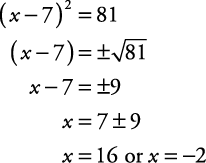
- Square Root Property
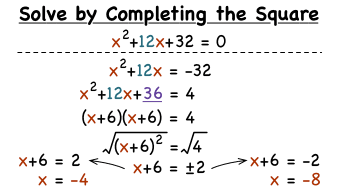
- Complete the square
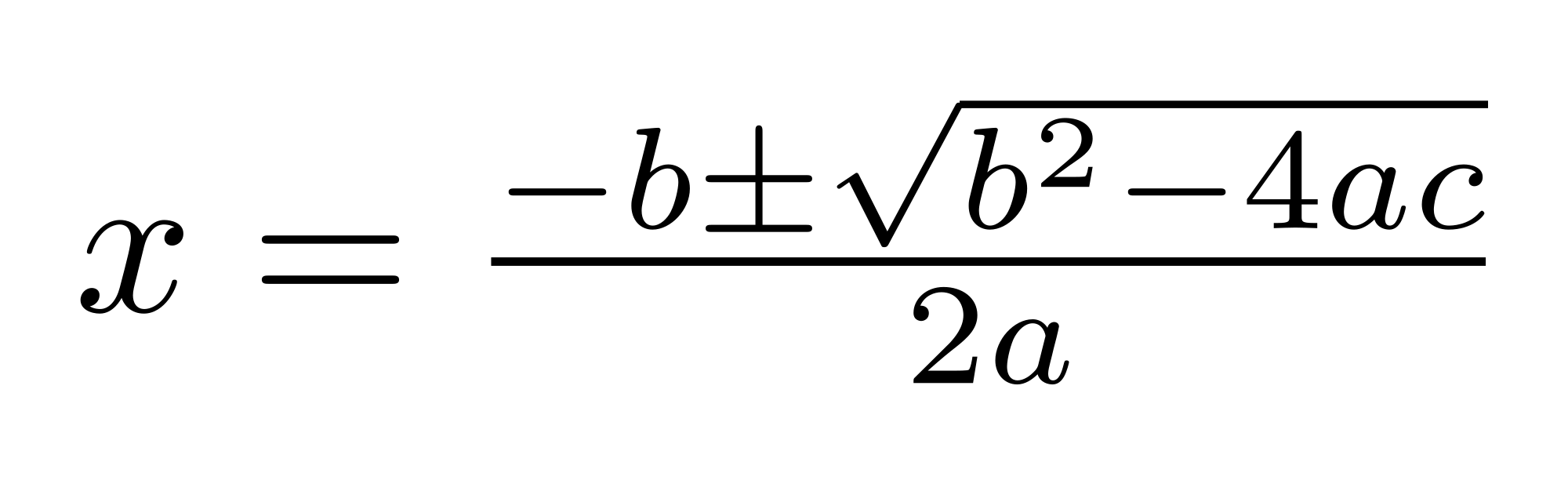
- Quadratic Formula
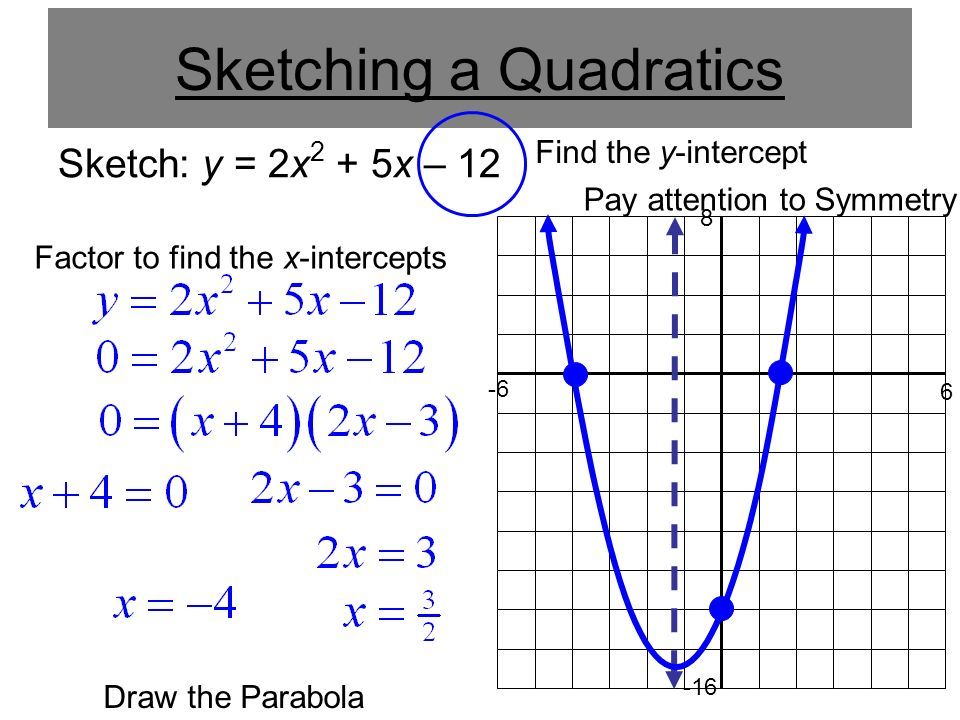
- Section 5.2 Quadratic Functions and their graphs
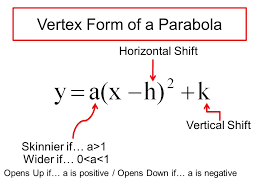
- Vertex form of a parabola
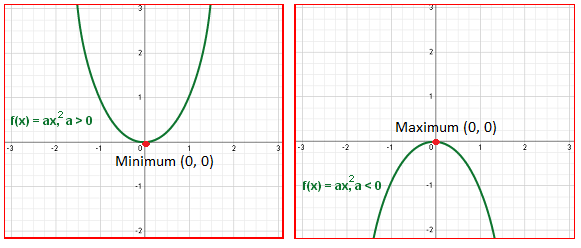
- Section 5.3 Maxima and Minima: Getting Info from a model
- Section 5.4 Quadratic Equations: Getting Info from a model
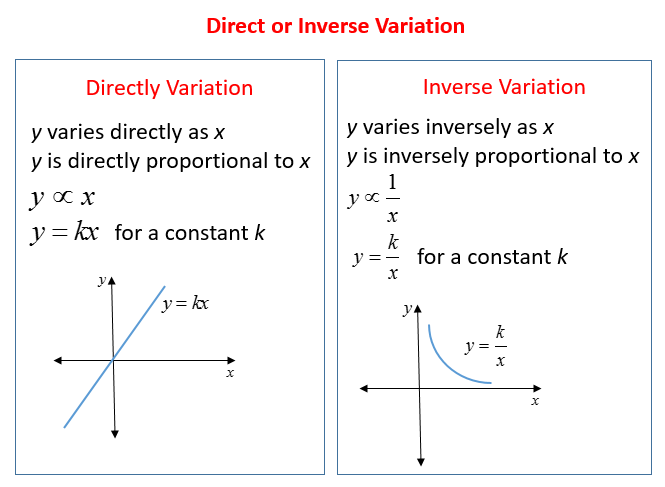
- Direct & Inverse Variation
- Multiplying & Dividing Rational Expressions
- To Multiply rational Expressions, Factor the numerators and denominators completely. Simplify by dividing out common factors in the numerator and the denominator. Multiply the remaining factors of the numerators together and multiply the remaining factors of the denominator together.
- To Divide rational expressions, invert the divisor and multiply.
- Rational Functions
- A Rational function is the quotient of two polynomials
- Simplifying Rational Expressions
- A rational expression is a fractional expression in which the numerator and denominator are both polynomials
- To simplify a rational expression, factor the numerator and the denominator completely and divide out any common factors using the following property of fractions.
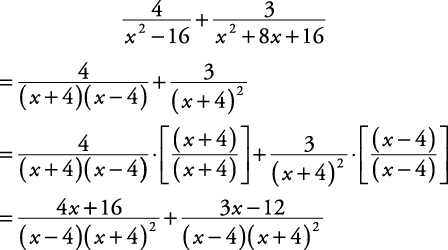
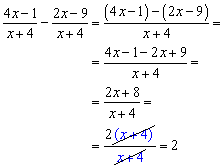
- Adding & Subtracting Rational Expressions
- To add or subtract rationals expressions, first find a common denominator and then use the following properties of fractions
- Adding
- Subtracting
- Adding
- To add or subtract rationals expressions, first find a common denominator and then use the following properties of fractions
- Adding & Subtracting Rational Expressions
- To simplify a rational expression, factor the numerator and the denominator completely and divide out any common factors using the following property of fractions.
- A rational expression is a fractional expression in which the numerator and denominator are both polynomials
- Simplifying Rational Expressions
- A Rational function is the quotient of two polynomials
- Rational Functions
- To Divide rational expressions, invert the divisor and multiply.
- To Multiply rational Expressions, Factor the numerators and denominators completely. Simplify by dividing out common factors in the numerator and the denominator. Multiply the remaining factors of the numerators together and multiply the remaining factors of the denominator together.
- Multiplying & Dividing Rational Expressions
- Direct & Inverse Variation
- Section 5.4 Quadratic Equations: Getting Info from a model
- Section 5.3 Maxima and Minima: Getting Info from a model
- Vertex form of a parabola
- Section 5.2 Quadratic Functions and their graphs
- Quadratic Formula
- Complete the square
- Square Root Property
- Set equal to zero, factor completely set each factors equal to zero and solve.
- Product Property of zero.
- Toolkit C.2 Solving Quadratic Functions
- A^2-B^2 =(A+B)(A-B)
- A^2-2AB+B^2= (A-B)^2
- A^2+2AB+B^2= (A+B)^2
- Special Factoring Formulas
- AC Method
- Guess and check method
- S.A.M stands for Skip, Add, Multiply
- Verify that the factorization is correct.
- Factor out the GCF from each term. Simplify the remaining factor if possible.
- (Optional) Rewrite each term as the product of the GCF and the remaining factor.
- Finding the greatest common factor (GCF) for the terms of the polynomial. The GCF is the largest factor that all terms have in common.
- Factoring out common factors
- Factoring Review
- (A-B)^2= A^2-AB+B^2
- (A+B)^2= A^2+2AB+B^2
- (A+B)(A-B)= A^2-B^2
- Special Product formulas
- A Polynomial is the highest exponent. The exponents must be integers for an expression to be a polynomial
- A Trinomial is an algebraic expression with three terms
- A Binomial is an algebraic expression with two terms
- A Monomial is an algebraic expression with one term
- Toolkit B.1 Combining Algebraic Expressions Section 6.1 Working with Functions: Algebraic Operations
- 6. Verify that the factorization is correct.
- 5. If each group has a common polynomial factor, factor out. If not, return to step 2 and try a different grouping
- 4. Remove the GCF from each group
- 3. For each group of the two terms, determine the GCF
- 2. Make groups out of two terms. If the third term of the polynomial is subtracted before grouping, rewrite it as an addition by the additive inverse
- 1.Factor out the GCF
Images and files in the map

Information
- Description
- Mind Map on Algebra, created by Payton Kopp on 11/27/2017.
- Created by
- Payton Kopp
- Views
- 1
- Rating