
Mind map
Chemistry Unit 1
Map content
Chemistry Unit 1
Atoms and Isotopes
- Ionisation energy highest in Level 1 because the electrons are closest to the nucleus
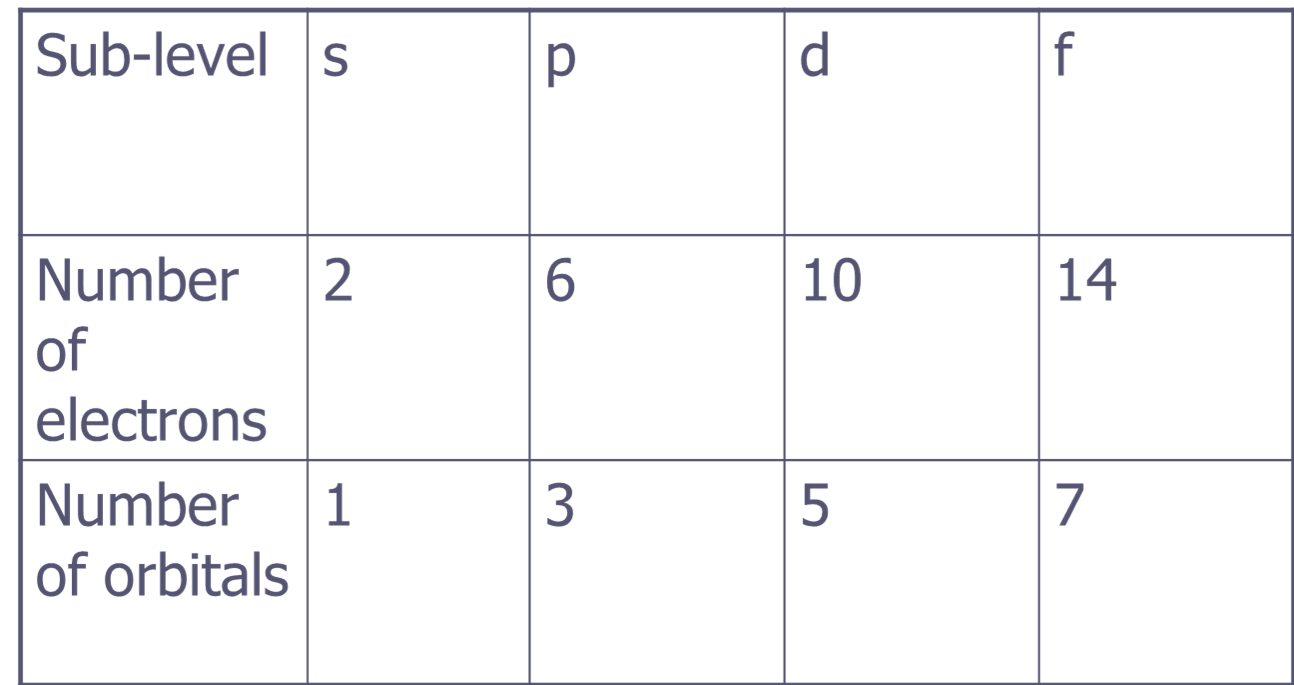
- Energy Level 1 - 1s sublevel, Energy Level 2 - 2s and 2p sublevels, Energy Level 3 - 3s, 3p and 3d sublevels, Energy Level 4 - 4s, 4p, 4d and 4f sublevels
- First Ionisation Energy = The energy required to remove one mole of electrons from one mole of gaseous atoms to form one mole of positive ions
- The further away from the nucleus the electrons in an atom are, the lower the nuclear attraction due to more shielding
- There is a general increase in First Ionisation Energy across a period before dropping at the start of another period
- There is a decrease in First Ionisation Energy as you move down a group as there is a greater distance between the nucleus and the electrons and more shielding
- Isotopes = Atoms with the same number of protons but a different number of neutrons
- Ionisation = gaseous atoms have an electron knocked off by a high speed electron gun to become positive ions
- Acceleration = ions pass through an electric field where they are accelerated through slits into a beam
- Deflection = beam of ions passes through a magnetic field and are deflected according to their m/z ratio
- Detection = the ions hit a negative plate and generate an electric current when they gain an electron to become an atom
- Deflection = beam of ions passes through a magnetic field and are deflected according to their m/z ratio
- Acceleration = ions pass through an electric field where they are accelerated through slits into a beam
Amount of Substance
- Atom Economy molecular mass of desired product / sum of molecular mass of all products x 100
- moles = mass / Mr
- moles = conc x vol
- Ideal Gas Equation = pV=nRT
Bonding
- Molecular Shapes- Linear, Trigonal Planar, Tetrahedral, Trigonal Bipyramidal, Octahedral
- Chemical Bonds - ionic, covalent, co-ordinate, metallic
- Physical Bonds - van der Waals forces, dipole-dipole, hydrogen bonds
- Ionic Bonding occurs between those that need to gain electrons and those that need to lose them (oppositely charged ions) i.e. sodium chloride
- Ionic compounds have high melting points, are very brittle, conduct electricity when molten or in aqueous solution and are soluable in water
- Covalent bonding consists of a shared pair of electrons, one being supplied by each atom in the bond
- Covalently bonded compounds don't conduct electricity, are soluble in organic compounds and have a low boiling point
- Macromolecular compounds have an extremely high boiling point, don't conduct electricity (apart from graphite) and and very hard
- Metallic bonding is a lattice of positive ions surrounded by delocalised electrons
- Has a high melting point, is malleable and ductile
- Coordinate bond = a chemical bond between two atoms where the shared pair of electrons are supplied by one atom
Periodicity
- Electrons always enter the lowest energy sublevel available
- There is a drop in First Ionisation Energy from Mg to Al because there is increased shielding as the electron is in a 3p sublevel
- There is a drop in First Ionisation Energy from P to S as the outer electron is paired with an electron in the 3p sublevel, which causes repulsion making the electron easier to remove
- Electronegativity = the ability of an atom to attract the pair of electrons in a covalent bond
Organic Chemistry
- Molecular Formula = The exact number of atoms of each element present in a molecule
- Empirical Formula = The simplest ratio of atoms in a molecule
- Structural Formula = The arrangement of atoms in a molecule without showing all the bonds
- Displayed Formula = The arrangement of atoms in a molecule showing all the bonds
- Homologous series = compounds that have the same general formula and similar properties but differ by one variable
Images and files in the map
Information
- Description
- Mind Map on Chemistry Unit 1, created by sophiedunlevy on 22/02/2015.
- Created by
- sophiedunlevy
- Views
- 12
- Rating