
Mind map
Renal Function Tests & Nitrogen Metabolism
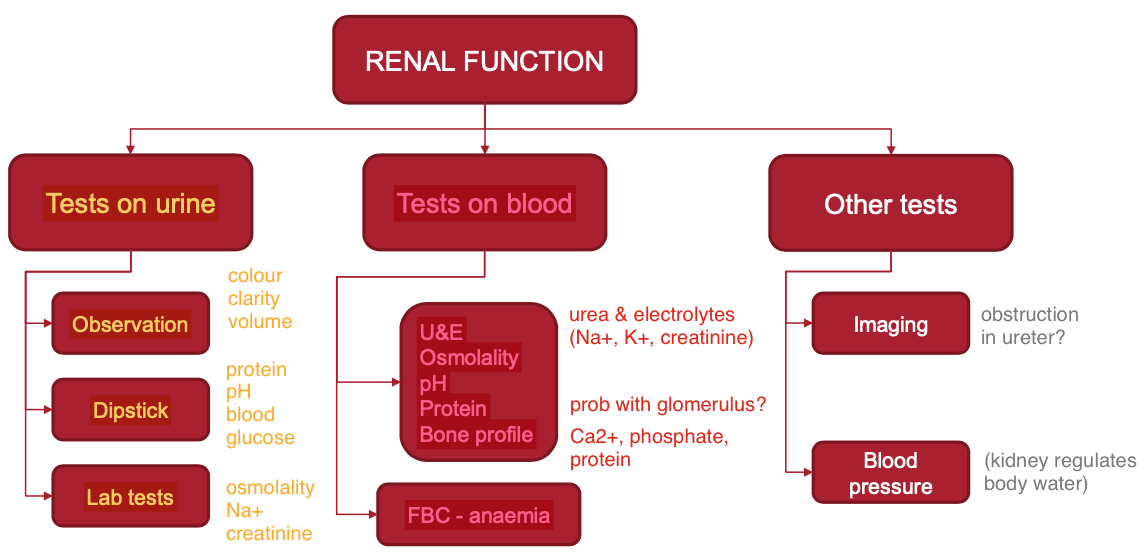
Map content
Renal Function Tests & Nitrogen Metabolism
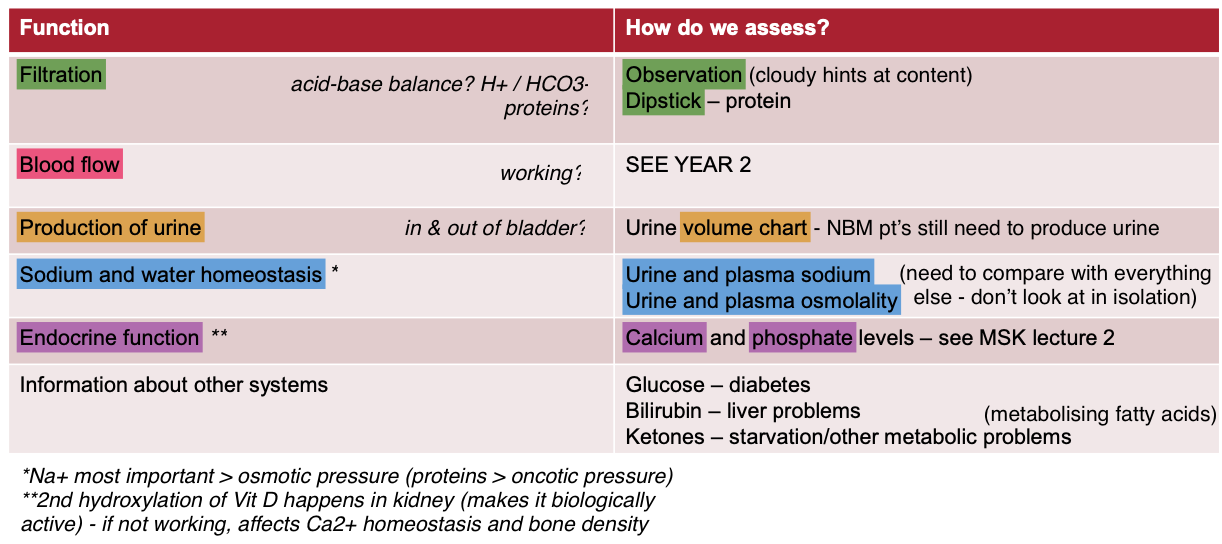
WHAT do we assess? WHY? HOW?
- When you ask for a test, you should be ASKING A QUESTION!
- INFECTION? kidney or UTI?
- SATURATION OF FILTRATION SYSTEM - glucose in diabetes?
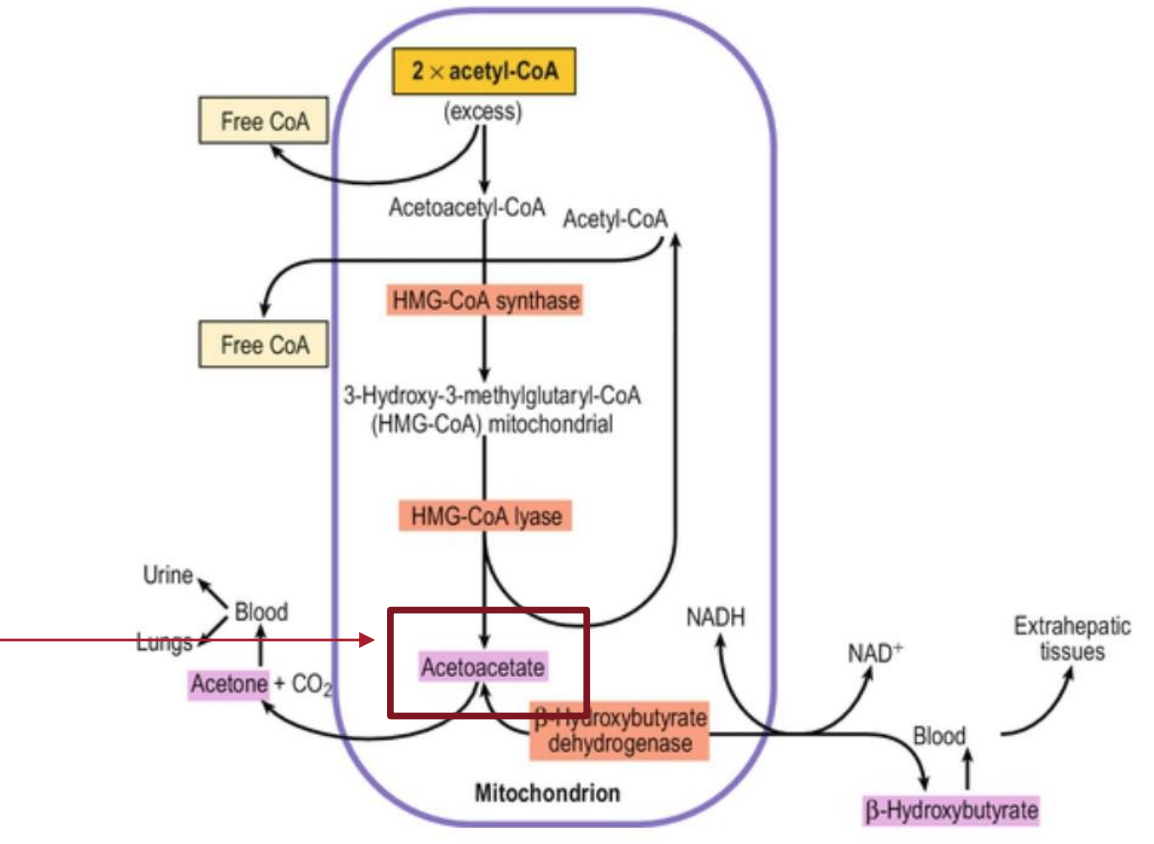
- FAT METABOLISM - ketones?
- RENAL FAILURE?
- Remember 95% reference ranges normal
- U&E MOST REQUESTED TEST ON WARDS
- When you ask for a test, you should be ASKING A QUESTION!
GFR / eGFR
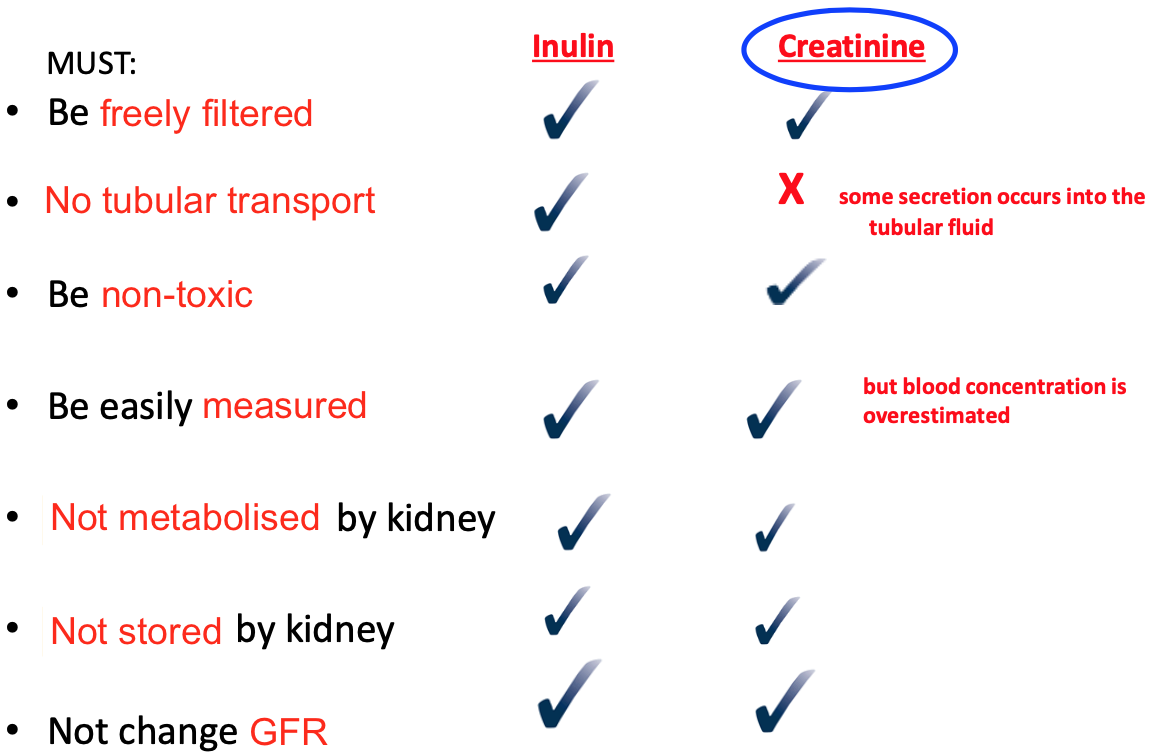
- Substance used to determine GFR...
- GFR estimated CLINICALLY using CREATININE, rather than inulin clearance (must be given via IV - so ONLY in research setting)
- To estimate GFR: CKD-EPI equation (2009) - Don't learn equation, but learn variables
- Gender Ethnicity Creatinine Age
- eGFR is a non-invasive method for testing kidneys
- Substance used to determine GFR...
URINE
- Volume charts
- Especially important when pt on IV fluid
- NB. also insensible H2O losses via: exhalation, sweating (with Na+), stool
- Dipstick
- Sterile container, Midstream, Visual analysis (colour, clarity), RECORD results of stick
- Blood, ketones, nitrites, pH, glucose, proteins
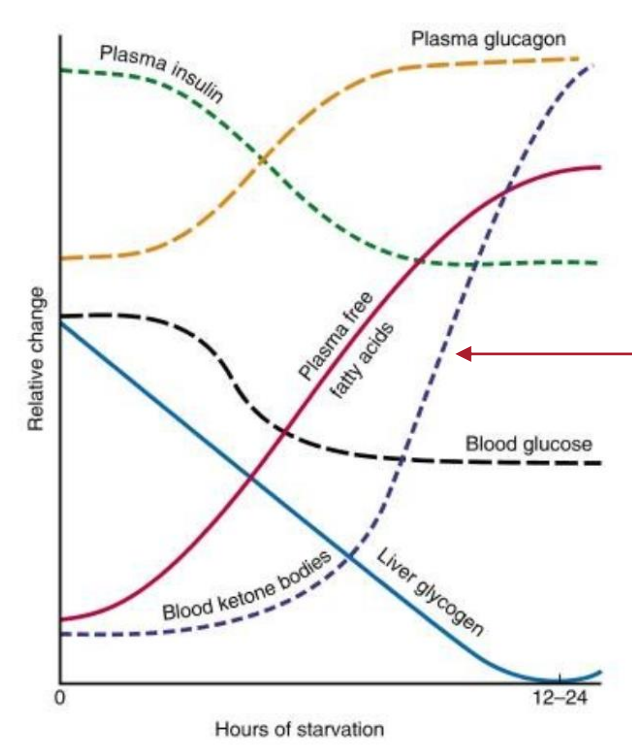
- FASTED patient = KETOGENESIS - fatty acid metabolism > ^ketones
- (Acetoacetate detected by dipstick – not acetone or βOHB)
- KETOACIDOSIS
- (Acetoacetate detected by dipstick – not acetone or βOHB)
- Volume charts
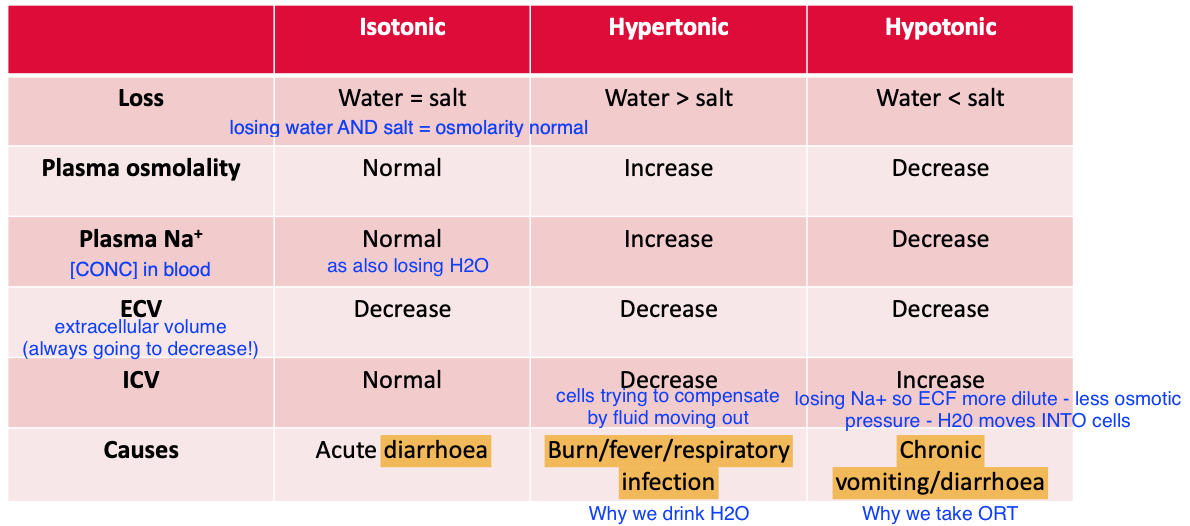
DEHYDRATION
- Dehydration = Loss of salt VS. Loss of H2O
- Revisit signs of dehydration (first mind map)
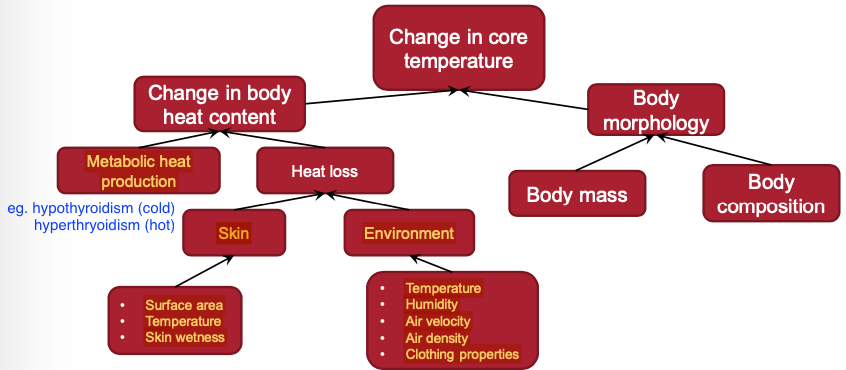
- Kidneys vital in THERMOREGULATION
- Factors affecting Body Temp
- Kidneys vital in BLOOD PRESSURE
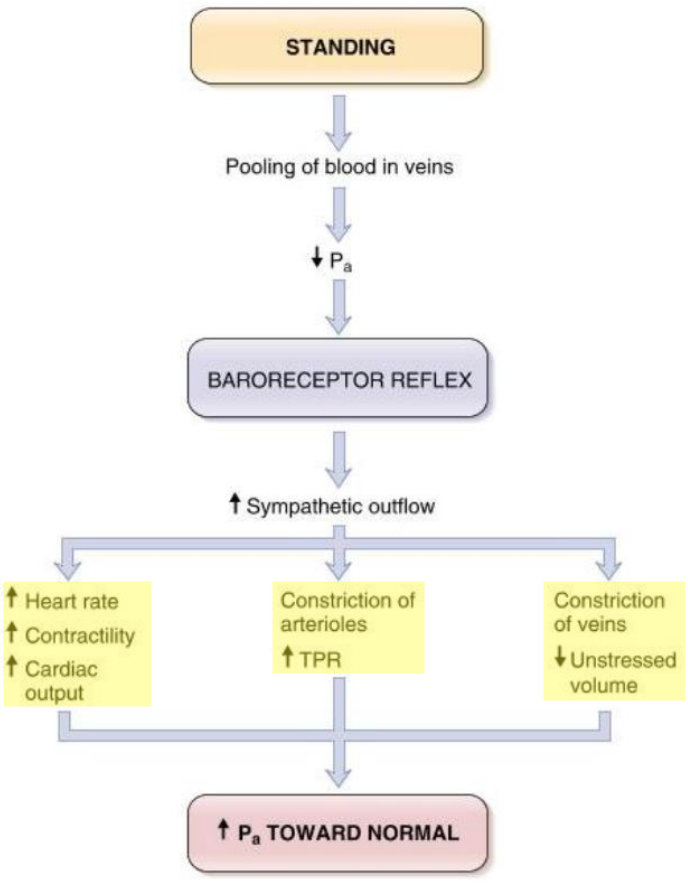
- Decrease in blood volume > Postural (orthostatic) hypotension - BP falls rather than rises when stand up *CVS lectures
- Plasma Renin Activity (PRA) is higher when UPRIGHT than supine. Also higher in NORMOvolaemic people than HYPOvolaemic people (renin regulates BP)
- Decrease in blood volume > Postural (orthostatic) hypotension - BP falls rather than rises when stand up *CVS lectures
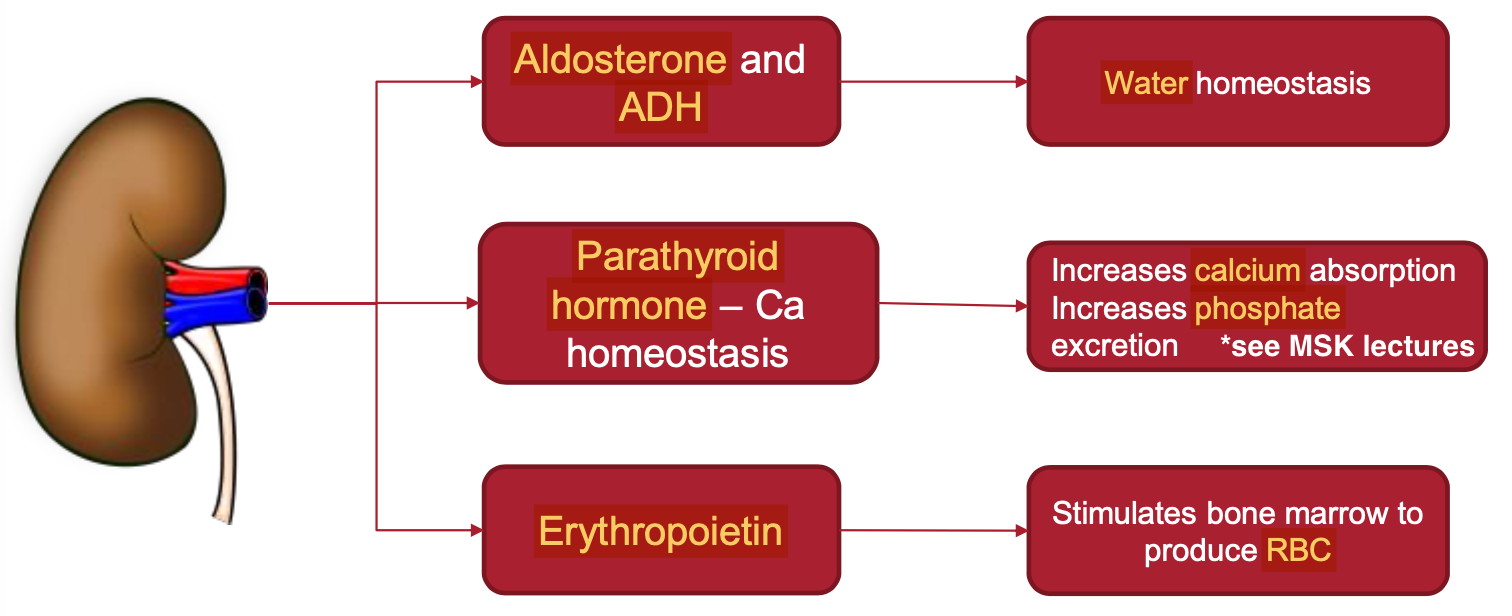
ENDOCRINE FUNCTION of kidney
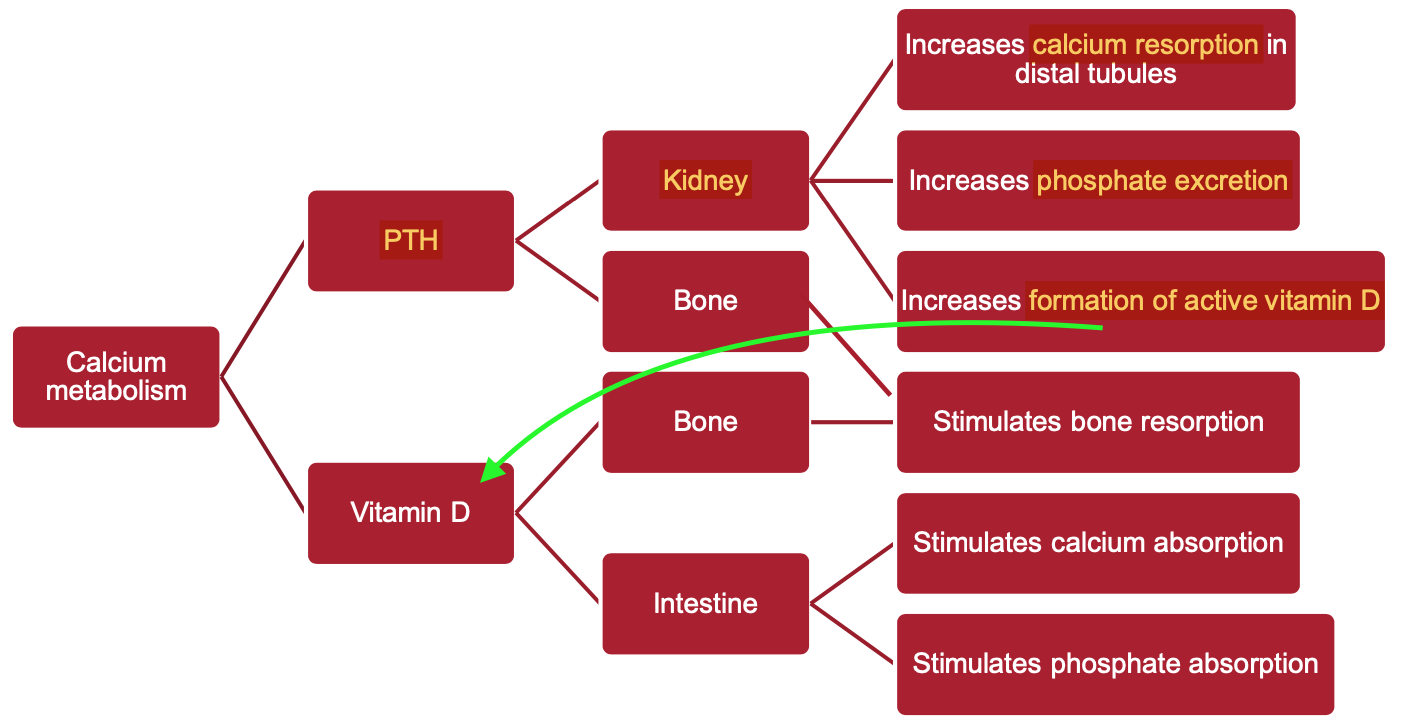
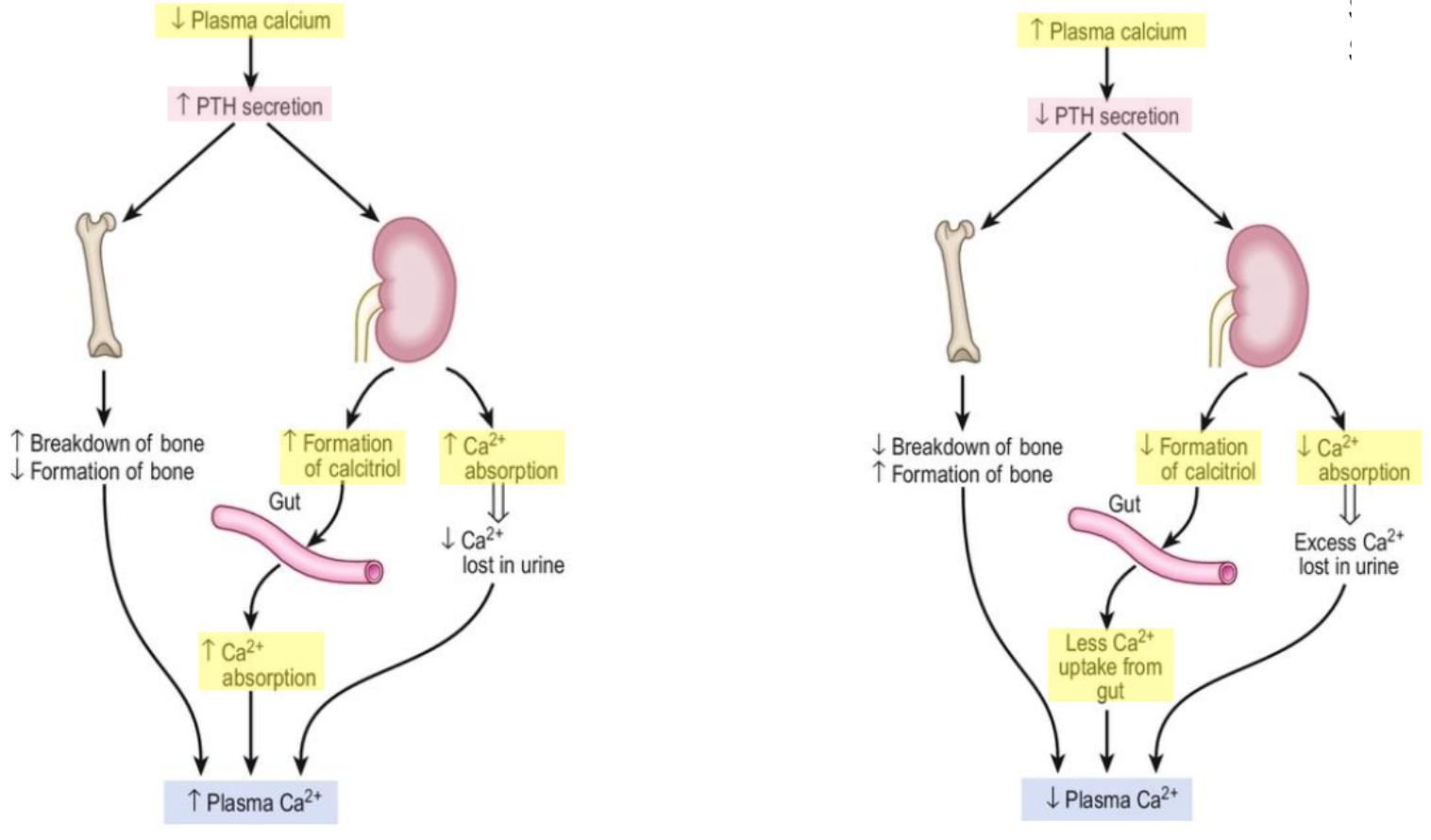
- Activation of Vitamin D is occurs in kidney and is highly regulated
- 25-hydroxycholecalciferol
- 1,25-dihydroxycholecalciferol BIOLOGICALLY ACTIVE FORM
- 1α-hydroxylase
- 1,25-dihydroxycholecalciferol BIOLOGICALLY ACTIVE FORM
- Enhanced by vPhosphate, v1,25-OHD, ^PTH
- HYPOCALCAEMIA
- HYPERCALCAEMIA
- 25-hydroxycholecalciferol
- Activation of Vitamin D is occurs in kidney and is highly regulated
SALTS HOMEOSTASIS Na+ & K+
- Na+ and K+
- NHS = <6g of NaCl/day. We need ~500mg.
- [Chemistry! Mr[Na] = 23, Mr[Cl] = 35.5 (Mr is amount in 1g). Therefore Na+ per day = 6x (23/58.5) = 2.4g/day]
- NICE = 1mmol/kg/day of Na+ & K+
- If pt on IV fluids, need 25-30ml/kg/day
- NB. 0.9% saline is 154mmol/L NaCl (but can also use 5% dextrose - stops pt becoming ketotic)
- eg. 65kg pt = needs ~65mmol K+. Can use 2L fluid in one bag: 1x bag of 20mmol K+, 1x bag of 40mmol K+
- How many g of K+ is this? Mr Mole lives under the Mass
- Mr [K] = 40. Moles = 20+40mmol = 60mmol = 0.06moles
- 40 x 0.06 = 2.4g of K+
- Mr [K] = 40. Moles = 20+40mmol = 60mmol = 0.06moles
- How many g of K+ is this? Mr Mole lives under the Mass
- If pt on IV fluids, need 25-30ml/kg/day
- NHS = <6g of NaCl/day. We need ~500mg.
- Na+ and K+
NITROGEN METABOLISM
- N2 Balance
- -ve N2 balance due to MALNUTRITION (lack of essential aa) or RECENT TRAUMA (surgery, burns, sepsis)
- +ve N2 balance due to GROWTH, PREGNANCY, CONVALESCENCE
- Healthy = net 0 N2 balance
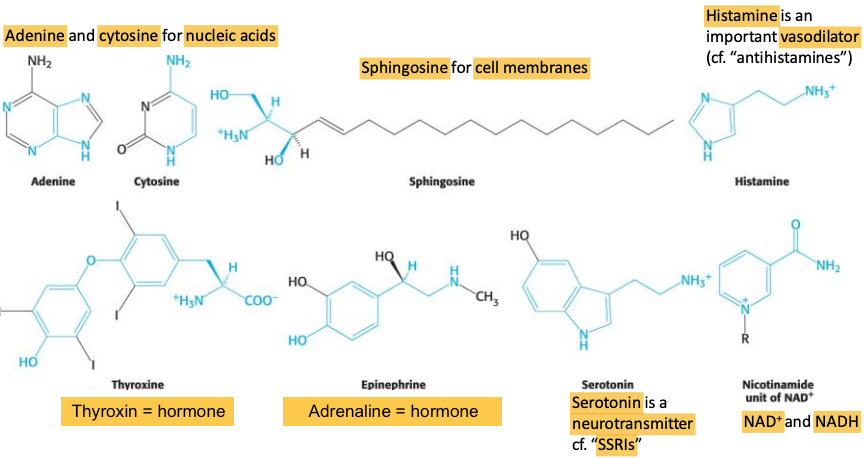
- N2 found in NUCLEIC ACIDS & PROTEINS (& COFACTORS eg. NAD+, HORMONES eg. adrenaline, NEUROTRANSMITTERS eg. serotonin)
- Virtually all N2 originates from proteins in diet (nucleic acids have smaller mass).
- Proteins constantly formed/degraded. Unlike carbohydrates, AA's CAN'T BE STORED As excess amino acids cannot be stored so their breakdown takes precedence over breakdown of carbohydrate and fat.
- Virtually all N2 originates from proteins in diet (nucleic acids have smaller mass).
- N2 found in NUCLEIC ACIDS & PROTEINS (& COFACTORS eg. NAD+, HORMONES eg. adrenaline, NEUROTRANSMITTERS eg. serotonin)
- AA SYNTHESIS
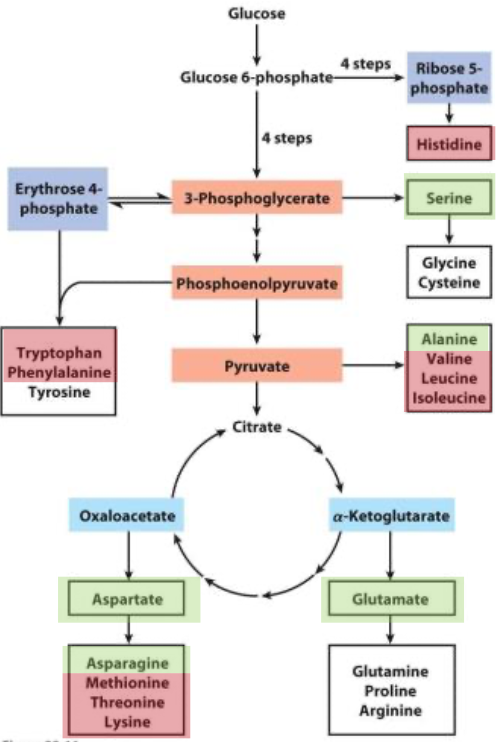
- So long as have the appropriate a-keto acids we can make AA’s. So long as glycolysis and citric acid cycle (CENTRE OF METABOLISM), PENTOSE PHOSPHATE PATHWAY are working, we can make all these:
- Some AA are non-essential (green), conditionally essential (white), and essential (red)
- We cannot synthesise ESSENTIAL (red), but plants and bacteria can > Dietary for us
- We can synthesis CONDITIONALLY ESSENTIAL to some degree. Absolutely required in CHILDREN and/or during CATABOLIC STRESS
- AAs essential to make...
- PROTEIN: Men need 55g/day. Women need 45g/day. Shouldn't exceed 100g/day.
- Countries which risk too high protein: UAE, Greece, Iceland. BUT averages!
- DISEASES
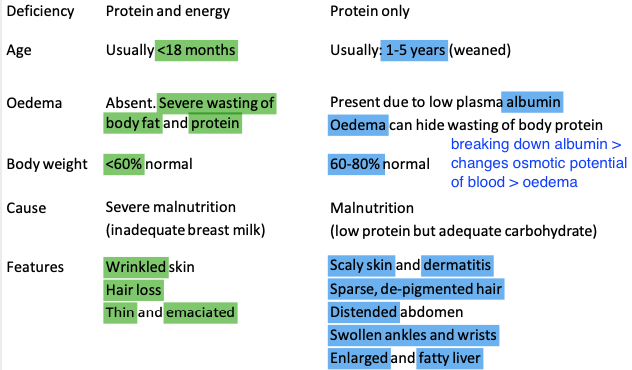
- Protein deficiency
- MARASMUS (starvation)
- KWASHIORKOR (protein)
- PHENYLKETONURIA (PKU) (inborn problem with AA metabolism)
- Phenylalanine (Phe) = essential AA. 75% is converted to Tyrosine (Tyr) AA.
- In PKU, a gene defect for Phe hydroxylase stops this conversion.
- Phe accumulates in blood
- elevated Phe in brain > GLYCOLYSIS & MYELINATION reduced
- Tyr and Trytophan can't cross BLOOD-BRAIN BARRIER as transporter is saturated with Phe
- Mental retardation. Affects ~1:10,000. Mild PKU treated with Phe-restricted diet.
- Tyr and Trytophan can't cross BLOOD-BRAIN BARRIER as transporter is saturated with Phe
- elevated Phe in brain > GLYCOLYSIS & MYELINATION reduced
- Tyr is reduced
- NEUROTRANSMITTERS from Tyr are reduced
- NEUROTRANSMITTERS from Tyr are reduced
- Phe accumulates in blood
- In PKU, a gene defect for Phe hydroxylase stops this conversion.
- Phenylalanine (Phe) = essential AA. 75% is converted to Tyrosine (Tyr) AA.
- Protein deficiency
- DISEASES
- Countries which risk too high protein: UAE, Greece, Iceland. BUT averages!
- We can synthesis CONDITIONALLY ESSENTIAL to some degree. Absolutely required in CHILDREN and/or during CATABOLIC STRESS
- We cannot synthesise ESSENTIAL (red), but plants and bacteria can > Dietary for us
- Some AA are non-essential (green), conditionally essential (white), and essential (red)
- So long as have the appropriate a-keto acids we can make AA’s. So long as glycolysis and citric acid cycle (CENTRE OF METABOLISM), PENTOSE PHOSPHATE PATHWAY are working, we can make all these:
- AA BREAKDOWN
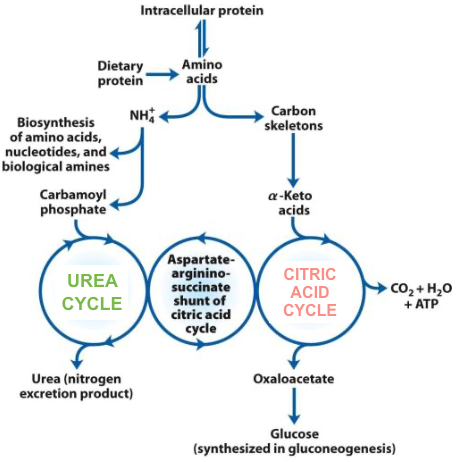
- Proteins broken down to AA's inside cells
- AA's in muscle transported to liver as GLUTAMINE or ALANINE
- produces NH3/NH4+ = HIGHLY TOXIC > removed as urea (in urine)
- fish > NH3 directly into water birds > uric acid (white bird poo)
- UREA = highly soluble, uncharged, low toxicity but only formed in LIVER (not muscles)
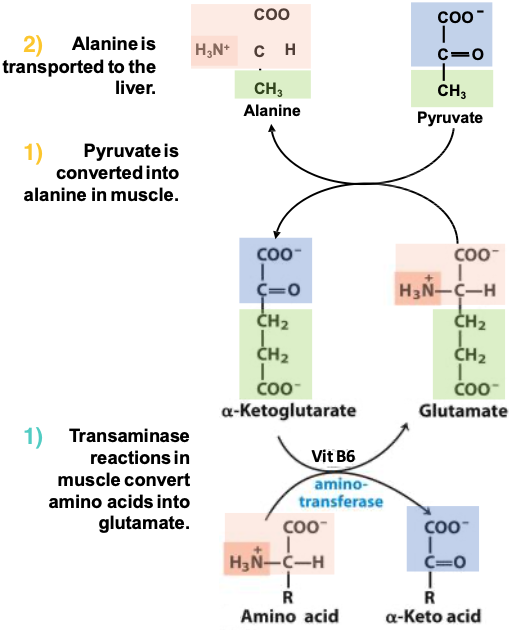
- Making alanine in MUSCLE:
- 1) GLUTAMATE + PYRUVATE = ALANINE, and reforms α-KETOGLUTARATE
- 2) ALANINE transported to LIVER ('carries' PYRUVATE to liver)
- 3) Once in LIVER, ALANINE converted back to PYRUVATE + GLUTAMATE
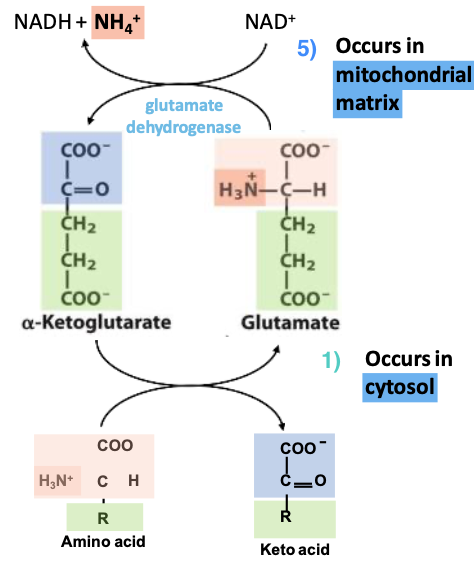
- 4) Glutamate into UREA CYCLE
- 5) GLUTAMATE is deaminated in LIVER MITOCHONDRIA > releases NH4+ Regenerates α-ketoglutarate (needed in mitochondria for citric acid cycle)
- CITRIC ACID CYCLE IN MITOCHONDRIA
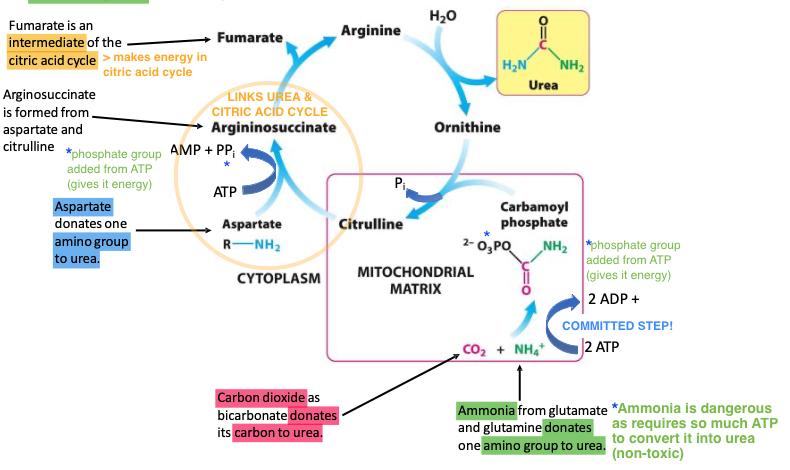
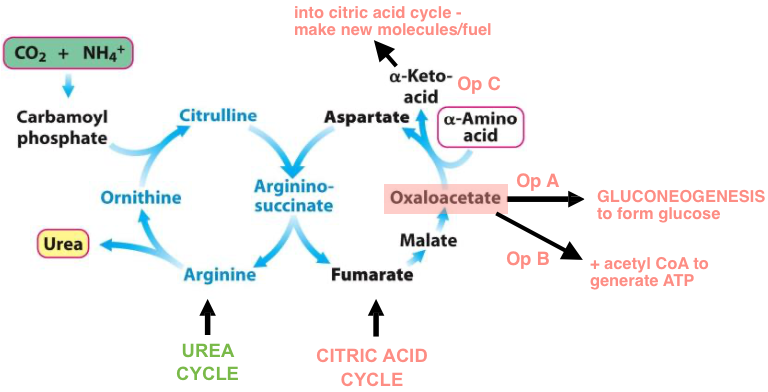
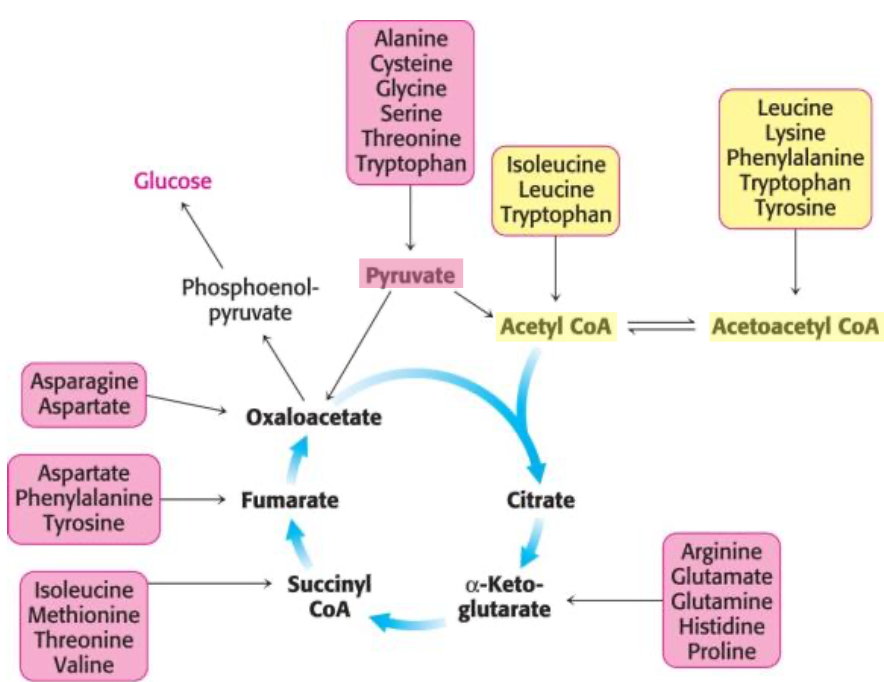
- How are Urea cycle & CAC linked? Urea cycle consumes aspartate, produces fumarate...
- AA Breakdown Overview:
- (Some AAs can be both)
- "GLUCOGENIC" AAs donate their carbon skeletons > PYRUVATE for GLUCONEOGENESIS
- "KETOGENIC" AAs donate their carbon skeletons > ACETYLCoA and thus KETONE BODIES (as well as entering the citric acid cycle)
- AA Breakdown Overview:
- How are Urea cycle & CAC linked? Urea cycle consumes aspartate, produces fumarate...
- NH4+ into UREA CYCLE IN LIVER
- We excrete ~25g urea/day
- CITRIC ACID CYCLE IN MITOCHONDRIA
- 5) GLUTAMATE is deaminated in LIVER MITOCHONDRIA > releases NH4+ Regenerates α-ketoglutarate (needed in mitochondria for citric acid cycle)
- 4) Pyruvate for GLUCONEOGENESIS - back to glucose)
- 4) Glutamate into UREA CYCLE
- 3) Once in LIVER, ALANINE converted back to PYRUVATE + GLUTAMATE
- 2) ALANINE transported to LIVER ('carries' PYRUVATE to liver)
- 1) GLUTAMATE + PYRUVATE = ALANINE, and reforms α-KETOGLUTARATE
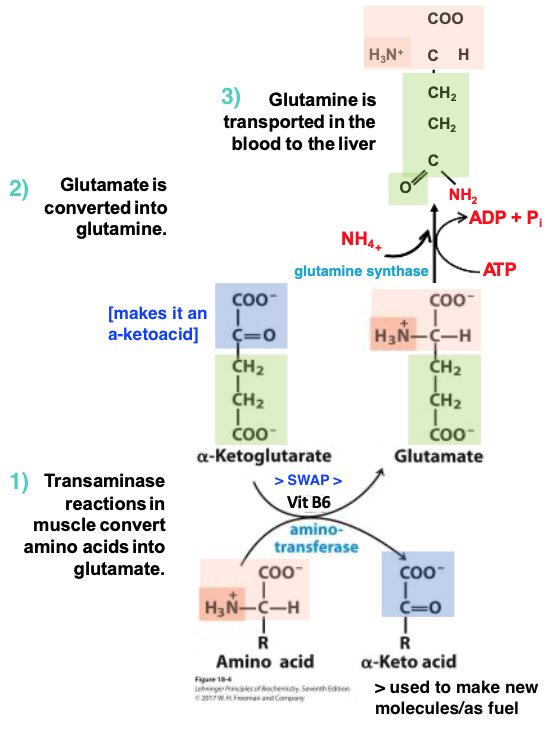
- Making glutamine in MUSCLE:
- 1) AA's + α-KETOGLUTARATE (intermediate of citric acid cycle) = GLUTAMATE + α-KETO ACIDS.
- 2) Glutamine synthase then uses NH4+ (from nucleotide degradation) and ATP to make GLUTAMINE.
- 3) GLUTAMINE is transported to LIVER ('carries' NH4+ to liver)
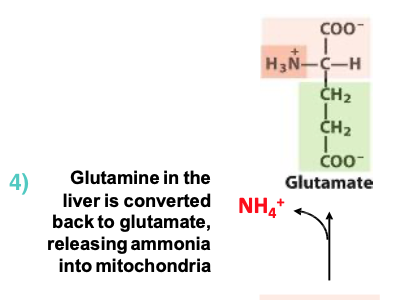
- 4) Once in LIVER, GLUTAMINE converted back to GLUTAMATE, releasing NH4+
- 4) Once in LIVER, GLUTAMINE converted back to GLUTAMATE, releasing NH4+
- 3) GLUTAMINE is transported to LIVER ('carries' NH4+ to liver)
- α-keto acids leftover in muscle used to make new molecules/as fuel *see citric acid cycle
- 2) Glutamine synthase then uses NH4+ (from nucleotide degradation) and ATP to make GLUTAMINE.
- 1) AA's + α-KETOGLUTARATE (intermediate of citric acid cycle) = GLUTAMATE + α-KETO ACIDS.
- Proteins broken down to AA's inside cells
- N2 Balance
Images and files in the map
Information
- Description
- Year 1 - CBL Weeks 11-20 (Urinary) Mind Map on Renal Function Tests & Nitrogen Metabolism, created by Ella Breese on 26/03/2020.
- Created by
- Ella Breese
- Views
- 0
- Rating