
Mind map
1.3 The Sun
Map content
1.3 The Sun
surface and atmosphere
- the sun has a diameter of 1.4 million km
- the suns atmosphere consists of 75% hydrogen and 25% helium and small amounts of other elements
- It's visible 'surface', the photosphere has a temperature of 5800 K
- the chromosphere and corona make up the suns atmosphere
- the chromoshere is not usually visible
- The sun is 150 million km from the earth
energy source
- In the central core of the sun nuclear fusion reactions occur
- the temperature of the suns core is around 15 million K
- the temperature is so hot that hydrogen nuclei are able to fuse together to make helium nuclei in a series of reactions called the proton-proton chain
- In each stage of the reaction matter is lost and converted into an equivalent amount of energy according to Einsteins famous equation
- the sun is losing 4 million tonnes of matter each second
observing the sun
sunspots
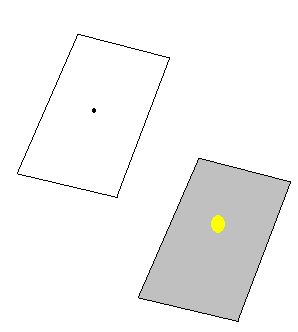
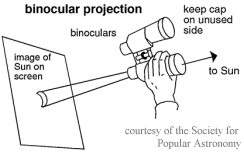
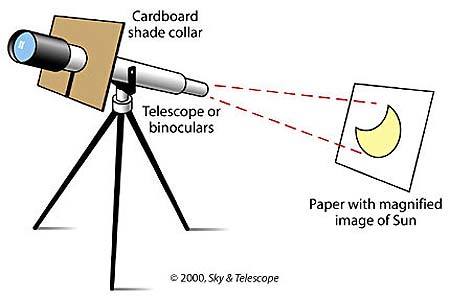
- the projection method is an excellent method for observing sunspots
- sunspots are around the size of earth
- sunspots are cooler areas of the photosphere that correspond to strong localised magnetic fields.
- sunspots usually occur in pairs or groups of opposite magnetic polarity
- the typical structure of an individual sunspot consits of:
- An umbra- a central darker region, around 2000 K cooler than the photosphere
- a penumbra- a lighter surrounding area with a temperature about 200 K cooler than the photosphere
solar wind
- solar wind is a steady stream of charged particles flying outwards in all directions from the suns corona at speeds of 400 km/s
- the high temperature of the corona partly explains how these particles gain sufficient kinetic energy to escape the suns pull of gravity, but astronomers believe that other mechanisms are also responsible
- There is a second component to the solar wind- the fast solar wind.
- this is thought to originate from the from coronal holes where open magnetic field lines permit charged particles from the photosphere to escape more easily, at speeds as fast as 850 km/s.
appearance of the sun at different wavelengths
- By studying the sun at different wave lengths of the electromagnetic spectrum, astronomers can build up a much more comprehensive picture of our local star
- in reacent years, a number of space probes and solar observatories have been launched from earth, containing scientific instruments designed specifically to study the sun a different wavelengths
- H-alpha
- when a telescope is fitted with an H-alpha filter it allows a narrow range of wavelengths either side of an 656 nm to pass through and blocks the remaining light
- the increased contrast allows solar features such as prominences, filaments, solar flares, sunspots and the chromosphere to be observed clearly
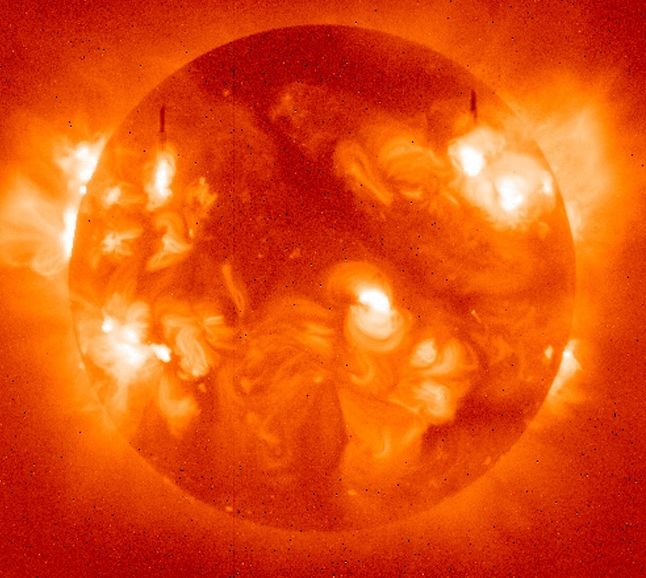
- X-ray's
- exceptionally hot regions of the sun emit X-rays
- The bright regions at the edge of the solar disc reveal the suns extremely hot corona
- The bright areas on the solar disc are associated with active region loops where ionised hydrogen flows along curved magnetic field lines
Images and files in the map
Information
- Description
- Astronomy Mind Map on 1.3 The Sun, created by Danielle Watts on 12/04/2015.
- Created by
- Danielle Watts
- Views
- 0
- Rating