
Mind map
Democracy
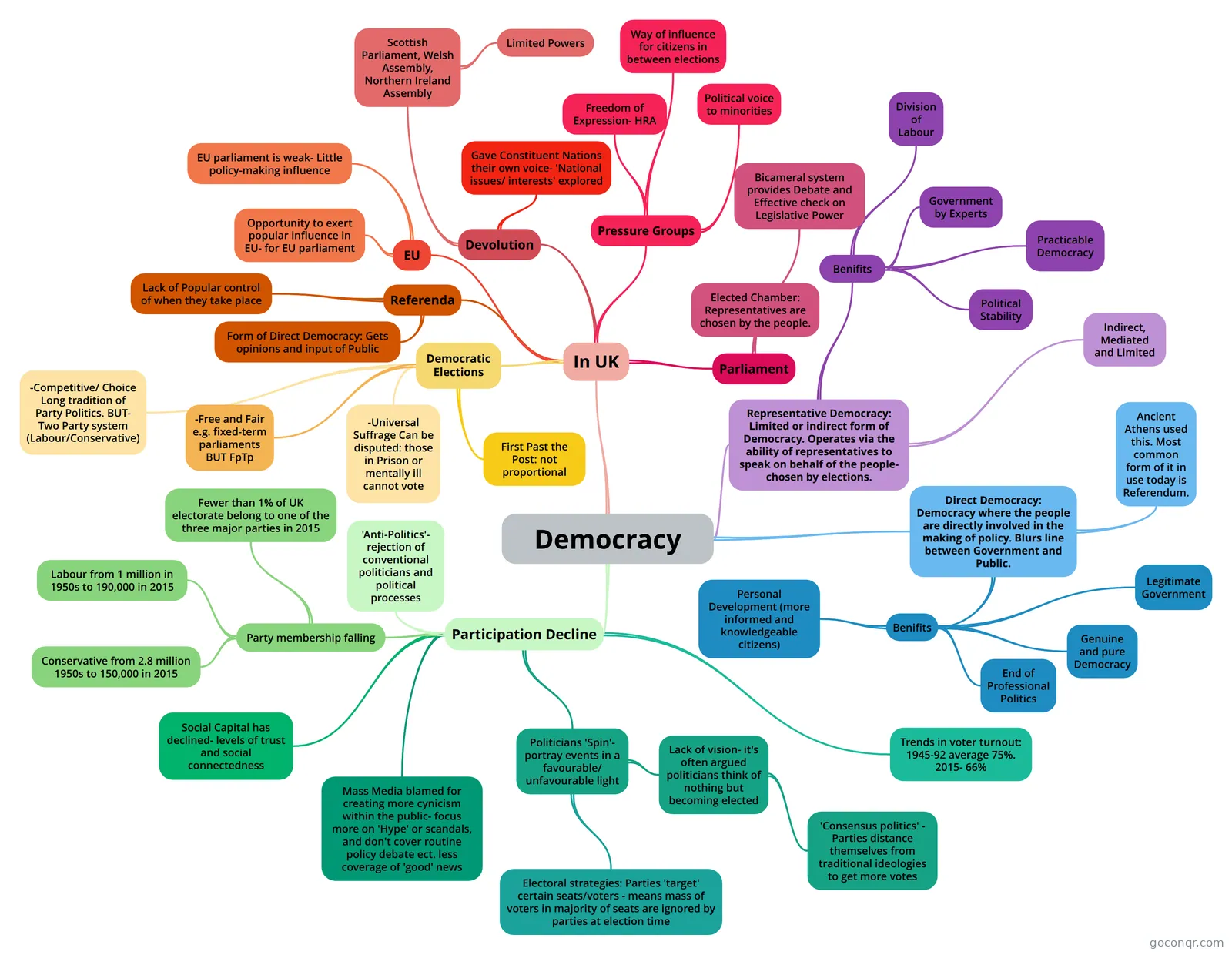
Mind map: Democracy
Map content
Democracy
Direct Democracy: Democracy where the people are directly involved in the making of policy. Blurs line between Government and Public.
- Ancient Athens used this. Most common form of it in use today is Referendum.
- Benifits
- Genuine and pure Democracy
- End of Professional Politics
- Legitimate Government
- Personal Development (more informed and knowledgeable citizens)
Representative Democracy: Limited or indirect form of Democracy. Operates via the ability of representatives to speak on behalf of the people- chosen by elections.
- Indirect, Mediated and Limited
- Benifits
- Practicable Democracy
- Government by Experts
- Division of Labour
- Political Stability
In UK
- Democratic Elections
- -Free and Fair e.g. fixed-term parliaments BUT FpTp
- -Universal Suffrage Can be disputed: those in Prison or mentally ill cannot vote
- -Competitive/ Choice Long tradition of Party Politics. BUT- Two Party system (Labour/Conservative)
- First Past the Post: not proportional
- Parliament
- Elected Chamber: Representatives are chosen by the people.
- Bicameral system provides Debate and Effective check on Legislative Power
- Pressure Groups
- Freedom of Expression- HRA
- Political voice to minorities
- Way of influence for citizens in between elections
- Devolution
- Scottish Parliament, Welsh Assembly, Northern Ireland Assembly
- Limited Powers
- Gave Constituent Nations their own voice- 'National issues/ interests' explored
- Scottish Parliament, Welsh Assembly, Northern Ireland Assembly
- EU
- Opportunity to exert popular influence in EU- for EU parliament
- EU parliament is weak- Little policy-making influence
- Referenda
- Form of Direct Democracy: Gets opinions and input of Public
- Lack of Popular control of when they take place
- Democratic Elections
Participation Decline
- 'Anti-Politics'- rejection of conventional politicians and political processes
- Trends in voter turnout: 1945-92 average 75%. 2015- 66%
- Party membership falling
- Labour from 1 million in 1950s to 190,000 in 2015
- Conservative from 2.8 million 1950s to 150,000 in 2015
- Fewer than 1% of UK electorate belong to one of the three major parties in 2015
- Social Capital has declined- levels of trust and social connectedness
- Mass Media blamed for creating more cynicism within the public- focus more on 'Hype' or scandals, and don't cover routine policy debate ect. less coverage of 'good' news
- Politicians 'Spin'- portray events in a favourable/ unfavourable light
- Lack of vision- it's often argued politicians think of nothing but becoming elected
- 'Consensus politics' - Parties distance themselves from traditional ideologies to get more votes
- Electoral strategies: Parties 'target' certain seats/voters - means mass of voters in majority of seats are ignored by parties at election time
- Lack of vision- it's often argued politicians think of nothing but becoming elected
Information
- Description
- AS - Level Government and Politics (Massey/Venning: Topic 1) Mind Map on Democracy, created by Isabel O'Neill on 19/04/2016.
- Created by
- Isabel O'Neill
- Views
- 0
- Rating