
Mind map
The Cardiac Cycle
Map content
The Cardiac Cycle
In the left side of the heart:
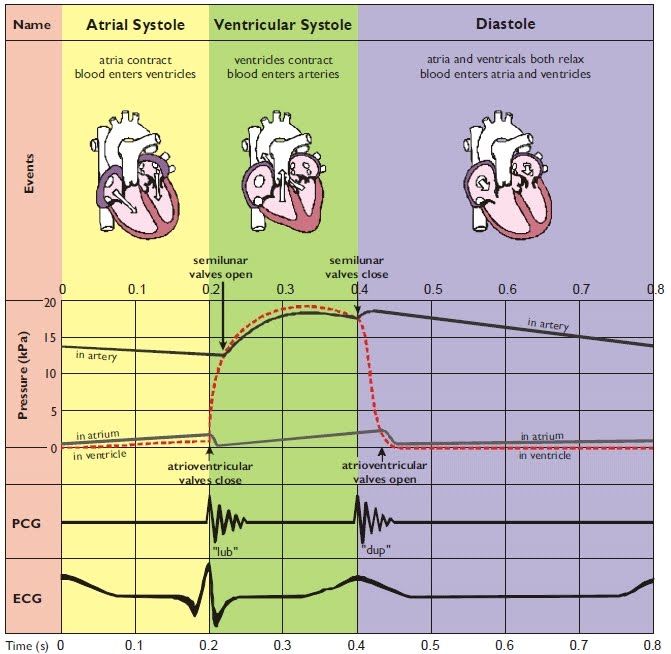
- 1) Blood drains into left atrium along the pulmonary vein.
- 2) As blood pressure raises in left atrium the atrioventricular valves are forced open.
- 3) Contraction of left atrial muscle (left atrial systole) forces more blood through the valve.
- 4) After left atrial systole (muscle contraction), the left ventricular muscles start to contract. This is called left ventricular systole.
- 5) This action forces the left atrioventricular valve to close. It opens the semi-lunar valve in the mouth of the aorta, and the blood then leaves the left ventricle along the aorta.
- 4) After left atrial systole (muscle contraction), the left ventricular muscles start to contract. This is called left ventricular systole.
- 3) Contraction of left atrial muscle (left atrial systole) forces more blood through the valve.
- 2) As blood pressure raises in left atrium the atrioventricular valves are forced open.
- Same steps are repeated on the right side at the same time.
- 1) Blood drains into left atrium along the pulmonary vein.
Phase 1) Atrial Systole
- Phase 2) Ventricular Systole
- Phrase 3) Distole
- 3) Diastole occurs when atria and ventricles relax. Elastic recoil of the heart walls in relaxation lower the pressure in atria and ventricles. Blood under higher pressure in the pulmonary arteries and aorta is drawn back into ventricles, closing the semilunar valves and preventing further backflow into ventricles. Coronary arteries fill during diastole. Low pressure in atria helps draw blood into the heart from the veins.
- 2) Atrial systole is followed up by ventricular systole. Ventricles contract from base of heart upwards - increases pressure in ventricles. The pressure forces open semilunar valves and blood is pushed up and out through pulmonary arteries and aorta. Pressure of blood against atrioventricular valves closes the valves and prevents backflow of blood into atria.
- Phrase 3) Distole
- 1) Blood returns to heart under low pressure. Blood flows into left and right atria from the pulmonary vein and vena cava. As the atria fill, increased blood pressure against atroventricular valves pushes them open. Blood leaks into ventricles. Atria walls contract - more blood is forced into ventricles.
- Contraction of atria is known as atrial systole.
- Phase 2) Ventricular Systole
Images and files in the map
Information
- Description
- A level Biology (Unit 1) Mind Map on The Cardiac Cycle, created by Lauren Garner on 28/01/2017.
- Created by
- Lauren Garner
- Views
- 250
- Tags
- Rating