
Mind map
Earthquakes
Map content
Earthquakes
Basics
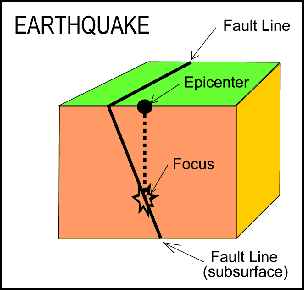
- Earthquakes are violent ground termors caused by rapid movement of blocks of rock along a fault. They occur in response to a build up of pressure in cold and brittle rocks. The stress builds until the rocks slides or fractures and the energy is released in the form of an earthquake.
Distribution
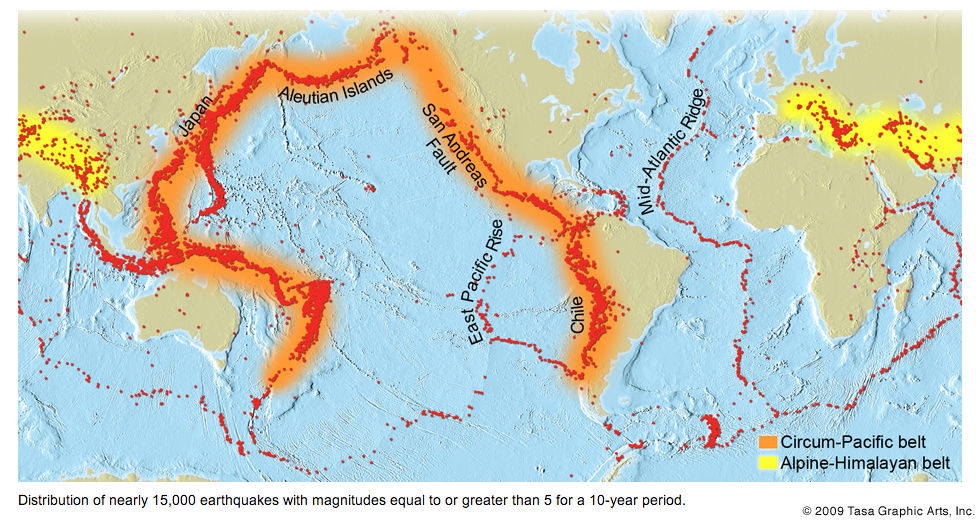
- The distribution of earthquakes is closely linked to tectonic settings. Thicker bands of earthquakes indicate a destructive boundary where the earthquakes cover a larger distance around the boundary, Thinner bands indicate a constructive boundary where the distance covered by earthquakes is much narrower
Plate margins
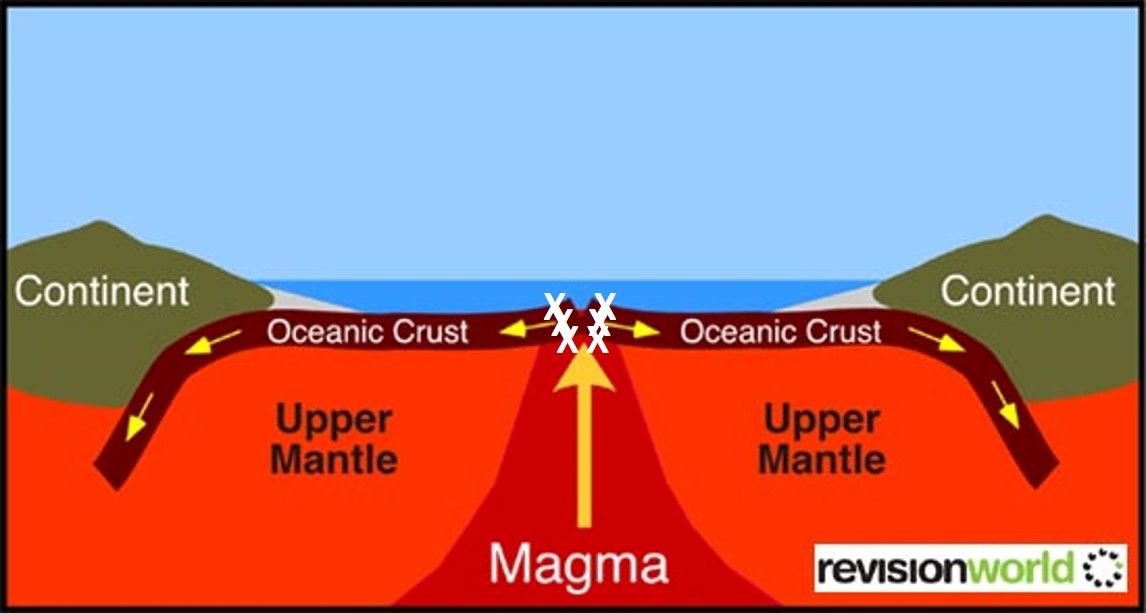
- Constructive - The earthquakes in this setting occur close to the centre of the margin where the rock at the center slumps inwards as it is pulled apart. This creates a series of normal faults either side
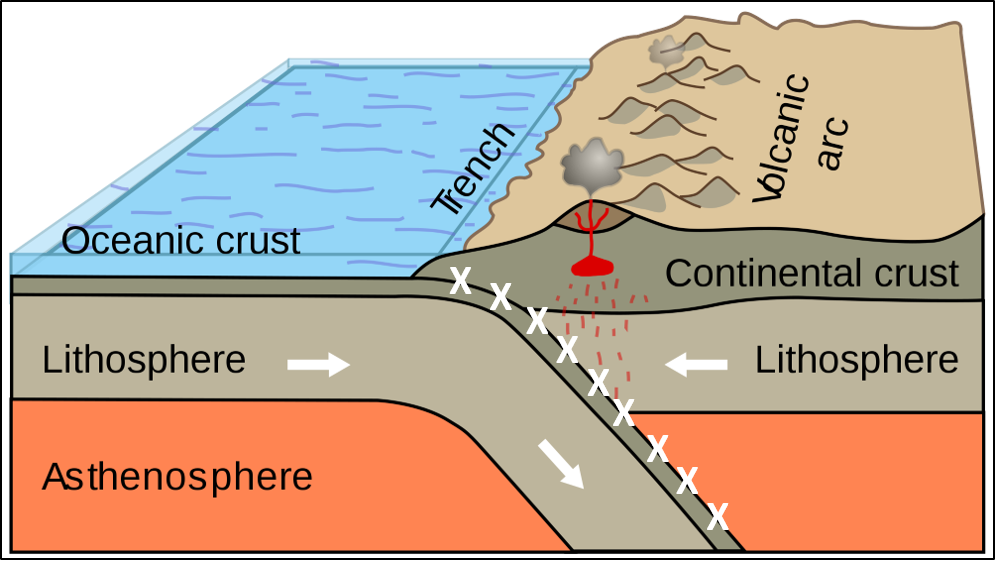
- Destructive - The earthquakes in this setting occur in a distinct inclined line following the upper margin of the subducting plate we call this distinct pattern a Benioff zone
Seismic Waves
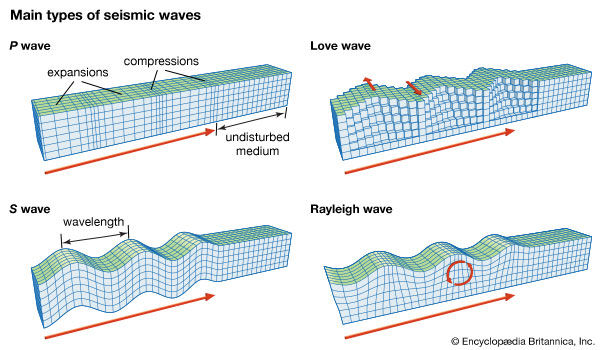
- There are two types of Seismic Waves - Body Waves and Surface waves. P Waves and S Waves are the body waves being emitted from the focus beneath the ground. Rayleigh Waves and Love Waves are the surface waves which are emited from the epicentre at the surface
Seismographs
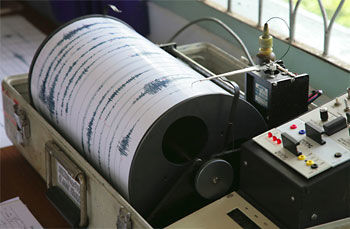
- This is a modern day Seismometer
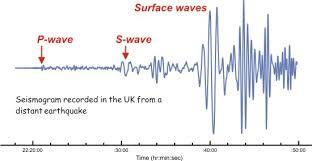
- This graph shows the diagram a Seismometer will produce and the arrival order of seismic waves
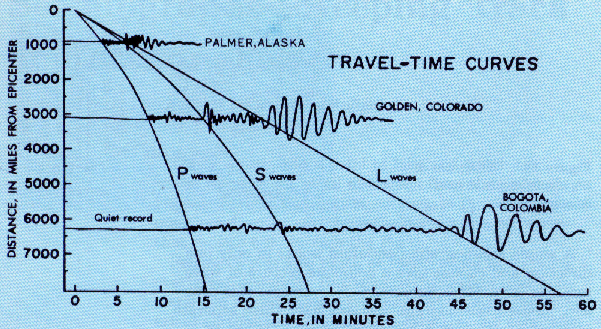
- Using the arrival times of the same earthquake at different locations we can calculate wave speed and magnitudes
Scales of Measurement
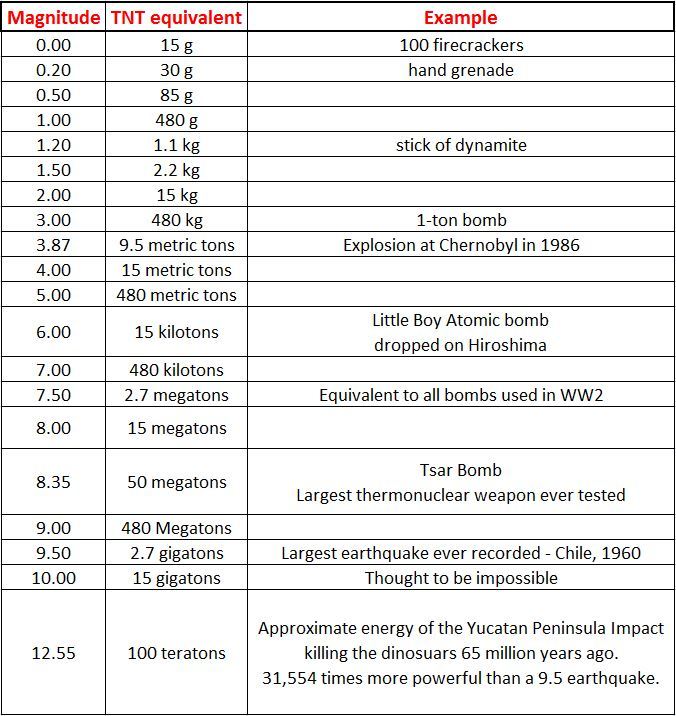
- Richter
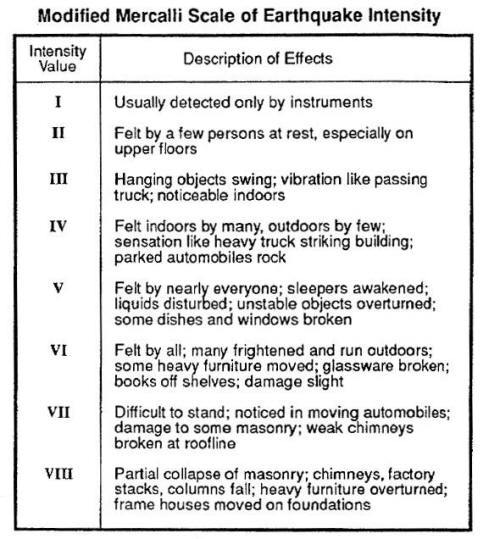
- Mercalli
Prediction
- Foreshocks - Small tremors that precede a big quake however these aren't always relaible as they don't occur everytime. The 1975 Haicheng quake was predicted in this way
- Radon Gas - Tectonic stress and strain triggers CO2 outgassing which in turns acts as a carrier for radon gas.. Before an earthquake we see an increase in radon gas, this can easily be detected by electronic equipment.
- Seismic Gap Theory - The displacement of any segment of fault must be equal to the movement around it. So if we have segment that hasn't recently slipped we know it is due to slip next. This was the case of the 1989 Loma Prieta in San Andreas
- Electromagnetic fields- Before an eazrthquake we see an increase in EMF. Compressed rock will release large electric currents, Fault zones are very conductive as they are highly fractured and sometimes flood proir to the quake, We measure the electrical resistivity as this will show a drop before the earthquake. This was the case for Loma Prieta in 1989
- Time Gap Theory - Analysis of data shows an alost cyclic pattern. By following this we may able to predict future quakes
- Animal Behaviour - Animals can actually hear the P-Waves which arrive before the damaging surface waves. So animals will often display abnormal, unusual or agitated behaviour just before an earthquake event
- Ground Deformation - This is caused by the build of stress and strain in fault zone and causes a change in shape and volume of surrounding rock. This can be measured using strain and tiiltmeters.
- Earthquake Lights - Bright colourful lights which are seen in the sky, they last from minutes to seconds and can be seen up to 70 miles from the epicentre. We believe they are created by the compression of sillicates which induces a current that ionises atmospheric gases
- Groundwater Pressure - Quakes may be caused by an increase in groundwater pressure lubricating fault planes. Water table levels can be monitred using piezometers. There is a common long term pattern prior to an earthquake: Gradual lowering of water levels and even more rapid in the last few weeks, the few days before the quake however there is then a sudden rebound. This was the case for the Tanghshan quake in 1976 which killed 240,000 people. The pumping rate tripled between 2 days and 3 hours before the quake
Effects
- Primary - Ground shaking. Amount of damage dependent on 5 main factors: Magnitude, Proximity to Epicentre, Focus Depth, Rocky Type (Soft rock amplifies waves) and Economic Development (Determines building structure)
- Secondary
- Liquefaction - The shaking temporarily reduces the load pressure under saturated sediment causing it to liquefy and lose strength. If this occurs beneath a building it will cause subsidence
- Landslide/Rockfall - Sections of rock or entire slopes become unstabalised and subsequently collapse
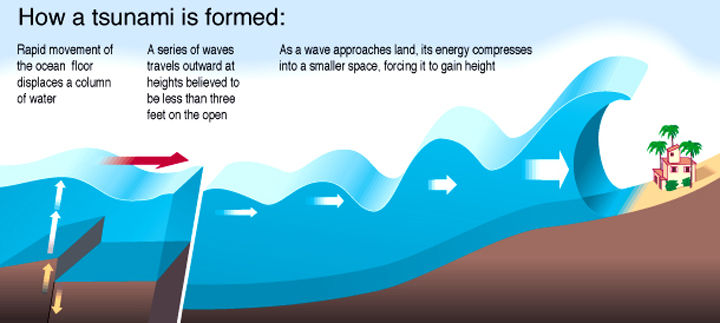
- Tsunamis - Large amounts of water are displaced at the sea bad by an earthquake or landslide
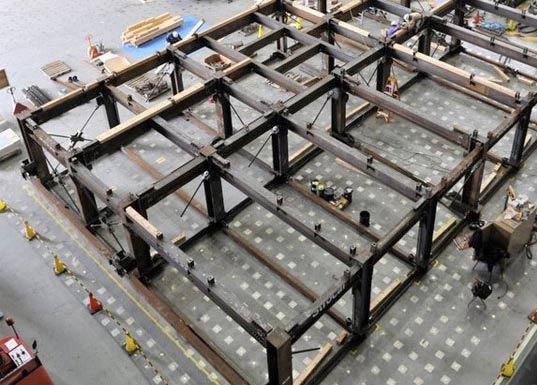
Engineering
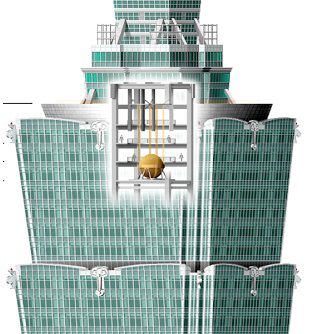
- Pendulum - Ball will tilit to counter act shaking (e.g. Tapei 101)
- Strong light structures to limit injuries and reduce impacts incase it does collapse
- Flexible Materials - Wood will twist and bend with shaking
- Elevation control - Pyramid structure reduces upward vibrations e.g. Trans-America
- Retrofitting - Brittle material replaced by steel supports (e.g. Cyprus Viaduct)
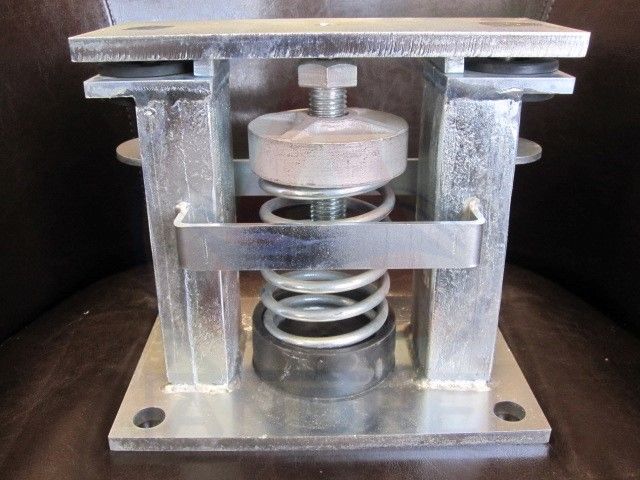
- Vibration dampers - Reduce transfer of vibrations from the ground to the surface
Education
- National Disaster Prevention Day - 1st September - Assess how well prepared Japan is , 1st Sep is 1923 Kanto quake anniversary
- Japanese phone apps with P Wave detection alert. Few seconds to minute warning
- Children are taught from a early age what to do: Crouch beneath a desk or run outside to open land., Children are also taken to EQ Simulator so they can expierence what a real earthquake will feel like.
- TV Programmes or Work Based training schemes
- Everyone in the house is taught how to switch of gas and electricity.
- Each household has a raion pack containing: Flashlight + Batteries, Radio and Batteries, Weeks supply of fresh water, Non-Perishable foods, First aid kit, Fire extinguishers and any medications
- Offices and schools must keep emergency supplies as well as Hard hats and Gloves for each person
- Immeadeatly after an EQ all TVs and Radios switch to official EQ coverage whicih informs the public of any risks. E.g. Tsunamis so they can evacuate to higher ground
Images and files in the map


Information
- Description
- A level Geology (GL3) Mind Map on Earthquakes, created by Samantha Bradley on 14/03/2017.
- Created by
- Samantha Bradley
- Views
- 0
- Rating