
Notes
chapter 36: arthropods
Content of the notes (1)
Page 1
phylum arthropoda
arthropods- members of the phylum arthropoda
true coelom
segmented animals
wings
respiratory and excretory structures
bear jointed extensions called appendages
has an exoskeleton
chitin- tough polysaccharide that makes up the middle layer of the exoskeleton
high amount of cephalization
compound eyes- eyes made only out of light detectors with own lenses
-know the sensitive structures of the eye
rhabdom
ommatidia
facet
cyrstalline cone
pigment cells
visual cells
optic nerve fibers-
all arthropods have an open circulatory system
molting- arthropods goes through cycles of molting to be able to grow; the process of shedding an exoskeleton or outer layer
begins at the tissues that gradually swell
when pressure is so strong a hormone is triggered to secrete enzymes that will digest the inner layer of the exoskeleton
new exoskeleton stretches to fit the animal and takes hours to days to become hard like the old one
*biologists believe arthropods came from a common ancestor. they are similar to...
-triloites- many body segments and one pair of appendages on each segment
tagma- some segments that are fused into this larger structure; specialized for either feeding, movment, or reproduction
two major different mouthparts
mandible- jaw like
chelicerae- pincer like
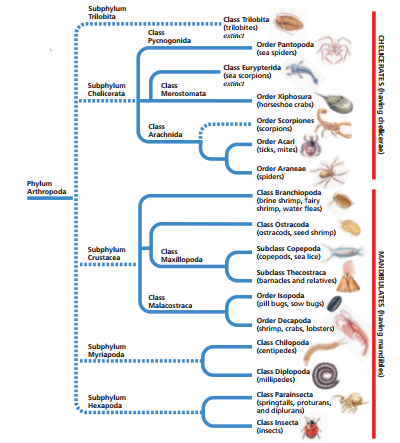
5 main subphyla
Trilobita
Crustacea
Chelicerata
Myriapoda
Hexapoda
types of arthropods
spiders, scorpions
insects
centipedes and millipedes
crustaceans
Information
- Description
- 9th grade Biology Note on chapter 36: arthropods, created by Finley Coleman on 28/01/2020.
- Created by
- Finley Coleman
- Views
- 0
- Rating