
Notes
The Periodic Table
Content of the notes (1)
Page 1
The Periodic Table
History Of The Periodic Table
All things are made of Elements, and before they knew about chemical elements, early scientists described things as being made from fire, air, earth and water.
The idea of elements was first mentioned in the mid-1600s.
Before the modern periodic table was developed, a number of attempts were made to arrange the elements. It wasn't until 1896 that Dmitri Mendeleev developed the modern periodic table.
- He arranged the elements in order of atomic mass
- The table included all the known elements and left gaps for elements that hadn't been discovered yet
- Each element was put into the group where its properties fitted best
- Elements that didn't fit were put into spare columns.
Using his periodic table, Mendeleev was able to predict the existence and properties of undiscovered elements.
The modern periodic table can also be used to predict the properties of artificial elements
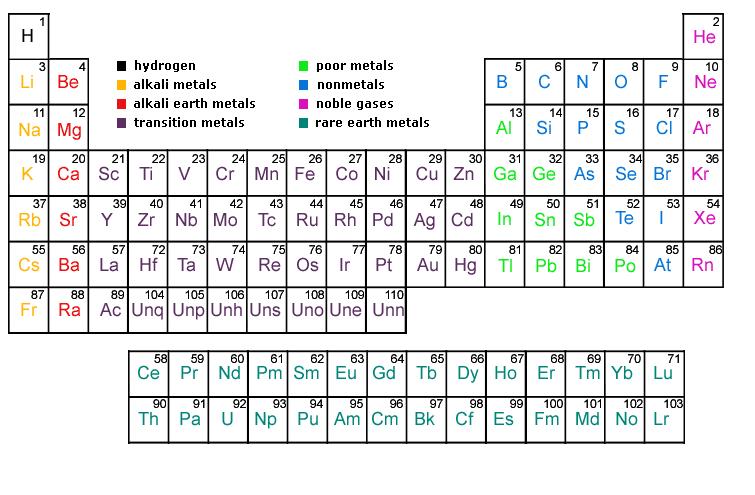
The Modern Periodic Table
The elements are arranged in rows (Periods) so that elements with similar properties are in the same column (Group). This forms the basis of the periodic table.
- More than three-quarters of the elements are non-metals
New Page
Information
- Description
- GCSE Science (Chemistry) Note on The Periodic Table, created by lisharding on 08/01/2014.
- Created by
- lisharding
- Views
- 49
- Tags
- Rating