
Mapa mental
Diabetes
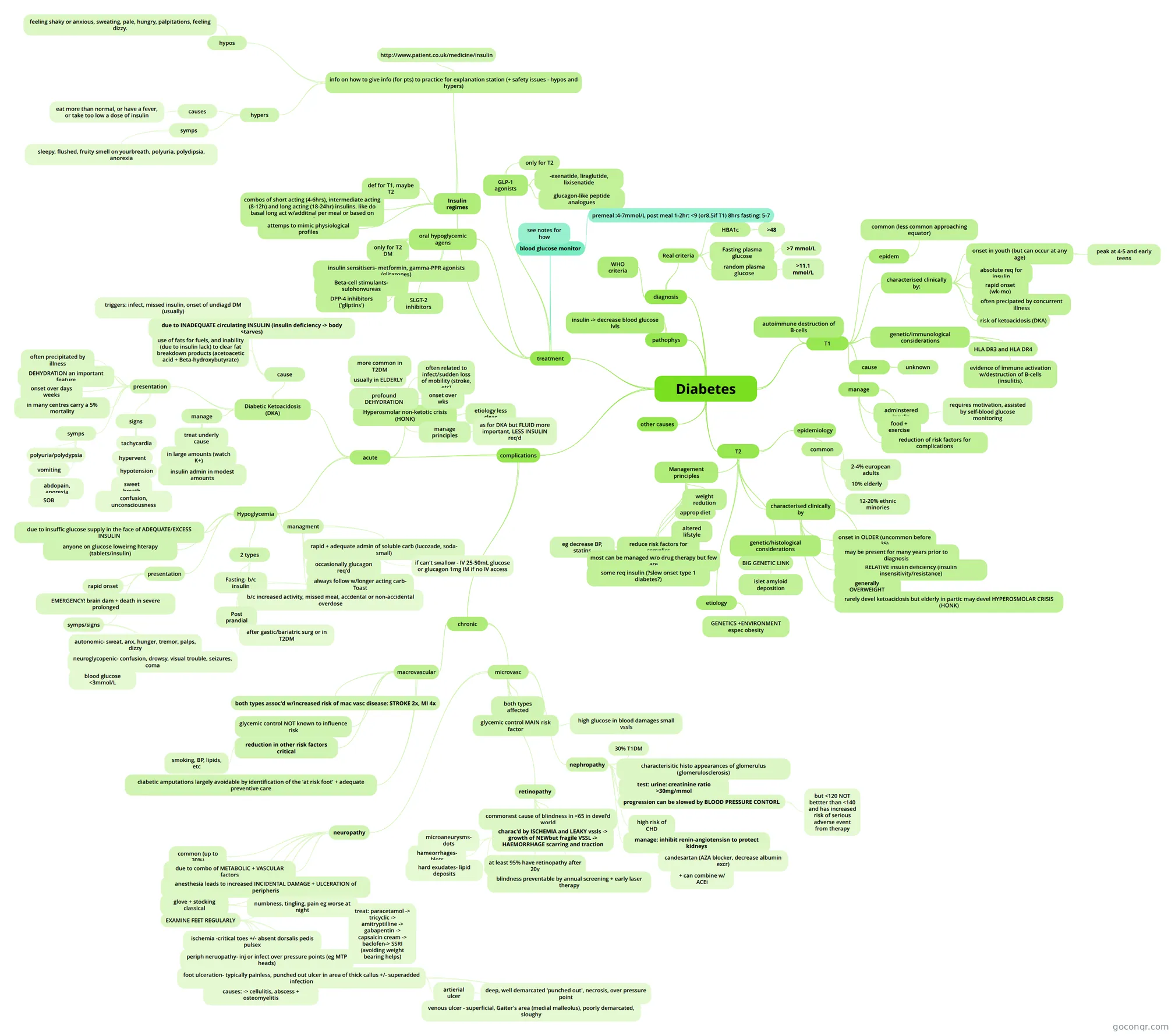
Mind map: diabetes
Conteúdo do mapa
Diabetes
- think of as vascular disase commonest metabolic disorder in ocmmunity high lvls of morbidity (much avoidable) from complications common cause of admission health cost enormous (2bn /yr in UK)
pathophys
- insulin -> decrease blood glucose lvls
- control of this occurs in Beta-cell (direct response to portal glucose lvls) and is achived by: -reducing hepatic glucose output -increasing peripheral glucose intake -a wide variety of other actions which regulate fat and protein metabolism -insulin produciton and activity are goverened principally by 1. circulating glucose lvls 2. diet 3. weight
- insulin -> decrease blood glucose lvls
diagnosis
- WHO criteria
- symps of hyperglycemia (eg polyruia, polydipsia, unexplained weight loss, visual blurring, genital thrush, lethargy) AND raised venous glucose detected once - fasting > 7mmol/L or random >11.1moml OR raised venous glucose on 2 separate occasions- fasting >7mmol/L, random >11.1mmol/L or OGtt- 2h valve >11.1 mmol/L
- Real criteria
- HBA1c
- >48
- normal <42
- >48
- Fasting plasma glucose
- >7 mmol/L
- <6
- >7 mmol/L
- random plasma glucose
- >11.1 mmol/L
- normal <7.8
- >11.1 mmol/L
- HBA1c
- WHO criteria
T1
- epidem
- common (less common approaching equator)
- autoimmune destruction of B-cells
- characterised clinically by:
- onset in youth (but can occur at any age)
- peak at 4-5 and early teens
- absolute req for insulin
- rapid onset (wk-mo)
- often precipated by concurrent illness
- risk of ketoacidosis (DKA)
- onset in youth (but can occur at any age)
- genetic/immunological considerations
- ; 50% concord only in identical twins
- HLA DR3 and HLA DR4
- evidence of immune activation w/destruction of B-cells (insulitis).
- offers the possiblity of pre-clin diag +/-intervention?
- cause
- unknown
- theories incl viruses (mumps, coxsakie B, measles) and cows milk/ breast milk
- unknown
- manage
- adminstered insulin
- individualised)
- requires motivation, assisted by self-blood glucose monitoring
- food + exercise
- reduction of risk factors for complications
- eg reduce BP
- adminstered insulin
- epidem
T2
- epidemiology
- common
- 2-4% european adults
- 10% elderly
- 12-20% ethnic minories
- common
- characterised clinically by
- onset in OLDER (uncommon before 35)
- RELATIVE insulin deficiency (insulin insensitivity/resistance)
- generally OVERWEIGHT
- may be present for many years prior to diagnosis
- rarely devel ketoacidosis but elderly in partic may devel HYPEROSMOLAR CRISIS (HONK)
- genetic/histological considerations
- BIG GENETIC LINK
- almost 100% identical twin concordance
- islet amyloid deposition
- leads to 2ndry Beta-cell failure?
- BIG GENETIC LINK
- etiology
- GENETICS +ENVIRONMENT espec obesity
- Management principles
- weight redution
- approp diet
- reduce risk factors for complics
- eg decrease BP, statins
- altered lifstyle
- reqs high lvls motivation. diet, exercise, etc
- most can be managed w/o drug therapy but few are
- some req insulin (?slow onset type 1 diabetes?)
- epidemiology
complications
- acute
- Diabetic Ketoacidosis (DKA)
- cause
- due to INADEQUATE circulating INSULIN (insulin deficiency -> body starves)
- triggers: infect, missed insulin, onset of undiagd DM (usually)
- use of fats for fuels, and inability (due to insulin lack) to clear fat breakdown products (acetoacetic acid + Beta-hydroxybutyrate)
- due to INADEQUATE circulating INSULIN (insulin deficiency -> body starves)
- presentation
- often precipitated by illness
- DEHYDRATION an important feature
- onset over days weeks
- in many centres carry a 5% mortality
- symps
- polyuria/polydypsia
- vomiting
- abdopain, anorexia
- SOB
- signs
- tachycardia
- hypervent
- hypotension
- sweet breath
- confusion, unconsciousness
- manage
- treat underly cause
- in large amounts (watch K+)
- insulin admin in modest amounts
- cause
- Hyperosmolar non-ketotic crisis (HONK)
- etiology less clear
- profound DEHYDRATION
- usually in ELDERLY
- more common in T2DM
- often related to infect/sudden loss of mobility (stroke, etc)
- onset over wks
- manage principles
- as for DKA but FLUID more important, LESS INSULIN req'd
- Hypoglycemia
- due to insuffic glucose supply in the face of ADEQUATE/EXCESS INSULIN
- anyone on glucose loweirng hterapy (tablets/insulin)
- presentation
- rapid onset
- EMERGENCY! brain dam + death in severe prolonged
- symps/signs
- autonomic- sweat, anx, hunger, tremor, palps, dizzy
- neuroglycopenic- confusion, drowsy, visual trouble, seizures, coma
- blood glucose <3mmol/L
- 2 types
- Fasting- b/c insulin
- b/c increased activity, missed meal, accdental or non-accidental overdose
- Post prandial
- after gastic/bariatric surg or in T2DM
- Fasting- b/c insulin
- managment
- rapid + adequate admin of soluble carb (lucozade, soda- small)
- if can't swallow - IV 25-50mL glucose or glucagon 1mg IM if no IV access
- occasionally glucagon req'd
- always follow w/longer acting carb- Toast
- rapid + adequate admin of soluble carb (lucozade, soda- small)
- Diabetic Ketoacidosis (DKA)
- chronic
- NB- may be present at diagnosis w/T2DM
- macrovascular
- both types assoc'd w/increased risk of mac vasc disease: STROKE 2x, MI 4x
- glycemic control NOT known to influence risk
- reduction in other risk factors critical
- smoking, BP, lipids, etc
- diabetic amputations largely avoidable by identification of the 'at risk foot' + adequate preventive care
- microvasc
- both types affected
- glycemic control MAIN risk factor
- high glucose in blood damages small vssls
- nephropathy
- 30% T1DM
- characterisitic histo appearances of glomerulus (glomerulosclerosis)
- test: urine: creatinine ratio >30mg/mmol
- progression can be slowed by BLOOD PRESSURE CONTORL
- but <120 NOT bettter than <140 and has increased risk of serious adverse event from therapy
- high risk of CHD
- manage: inhibit renin-angiotensisn to protect kidneys
- candesartan (AZA blocker, decrease albumin excr)
- + can combine w/ ACEi
- retinopathy
- commonest cause of blindness in <65 in devel'd world
- charac'd by ISCHEMIA and LEAKY vssls -> growth of NEWbut fragile VSSL -> HAEMORRHAGE scarring and traction
- microaneurysms- dots
- hameorrhages- blots
- hard exudates- lipid deposits
- at least 95% have retinopathy after 20y
- blindness preventable by annual screening + early laser therapy
- neuropathy
- REFER EARLY! GOOD CARE SAVES LEGS
- common (up to 30%)
- due to combo of METABOLIC + VASCULAR factors
- anesthesia leads to increased INCIDENTAL DAMAGE + ULCERATION of peripheris
- glove + stocking classical
- numbness, tingling, pain eg worse at night
- treat: paracetamol -> tricyclic -> amitryptilline -> gabapentin -> capsaicin cream -> baclofen-> SSRI (avoiding weight bearing helps)
- numbness, tingling, pain eg worse at night
- EXAMINE FEET REGULARLY
- ischemia -critical toes +/- absent dorsalis pedis pulsex
- periph neruopathy- inj or infect over pressure points (eg MTP heads)
- foot ulceration- typically painless, punched out ulcer in area of thick callus +/- superadded infection
- artierial ulcer
- deep, well demarcated 'punched out', necrosis, over pressure point
- venous ulcer - superficial, Gaiter's area (medial malleolus), poorly demarcated, sloughy
- artierial ulcer
- causes: -> cellulitis, abscess + osteomyelitis
- acute
treatment
- Insulin regimes
- def for T1, maybe T2
- combos of short acting (4-6hrs), intermediate acting (8-12h) and long acting (18-24hr) insulins. like do basal long act w/additnal per meal or based on carbs
- attemps to mimic physiological profiles
- info on how to give info (for pts) to practice for explanation station (+ safety issues - hypos and hypers)
- http://www.patient.co.uk/medicine/insulin
- hypos
- feeling shaky or anxious, sweating, pale, hungry, palpitations, feeling dizzy.
- hypers
- causes
- eat more than normal, or have a fever, or take too low a dose of insulin
- symps
- sleepy, flushed, fruity smell on yourbreath, polyuria, polydipsia, anorexia
- causes
- oral hypoglycemic agens
- only for T2 DM
- insulin sensitisers- metformin, gamma-PPR agonists (glitazones)
- Beta-cell stimulants- sulphonyureas
- DPP-4 inhibitors ('gliptins')
- SLGT-2 inhibitors
- GLP-1 agonists
- only for T2
- -exenatide, liraglutide, lixisenatide
- glucagon-like peptide analogues
- blood glucose monitor
- see notes for how
- premeal :4-7mmol/L post meal 1-2hr: <9 (or8.5if T1) 8hrs fasting: 5-7
- Insulin regimes
other causes
- steroids; anti-HIV durgs; newer antipsychotics; thiazides pancreatitis, panc surg removal, trauma, panc destruc (hemochromatosis, CF), panc cancer cushings, acromegaly, phaeocrhomocytoma, hyperthyroidism, pregnancy others: acanthosis nigricans LADA- laten autoimmune diabetes in adults (if ketotic +/- a poor response to oral hypoglycemics) Imparied glucose tolerance (IGT) impaired fasting glucose (IFG) gestational diabetes (4% of pregs) (increased birhtweight, neonatal hypoglycemia, sacral agenesis)
Informações
- Descrição
- Endocrine Mapa Mental sobre Diabetes, criado por greenfylde em 08-12-2013.
- Criado por
- greenfylde
- Visualizações
- 53
- Tags
- Avaliação