
Mapa mental
UNIT 2
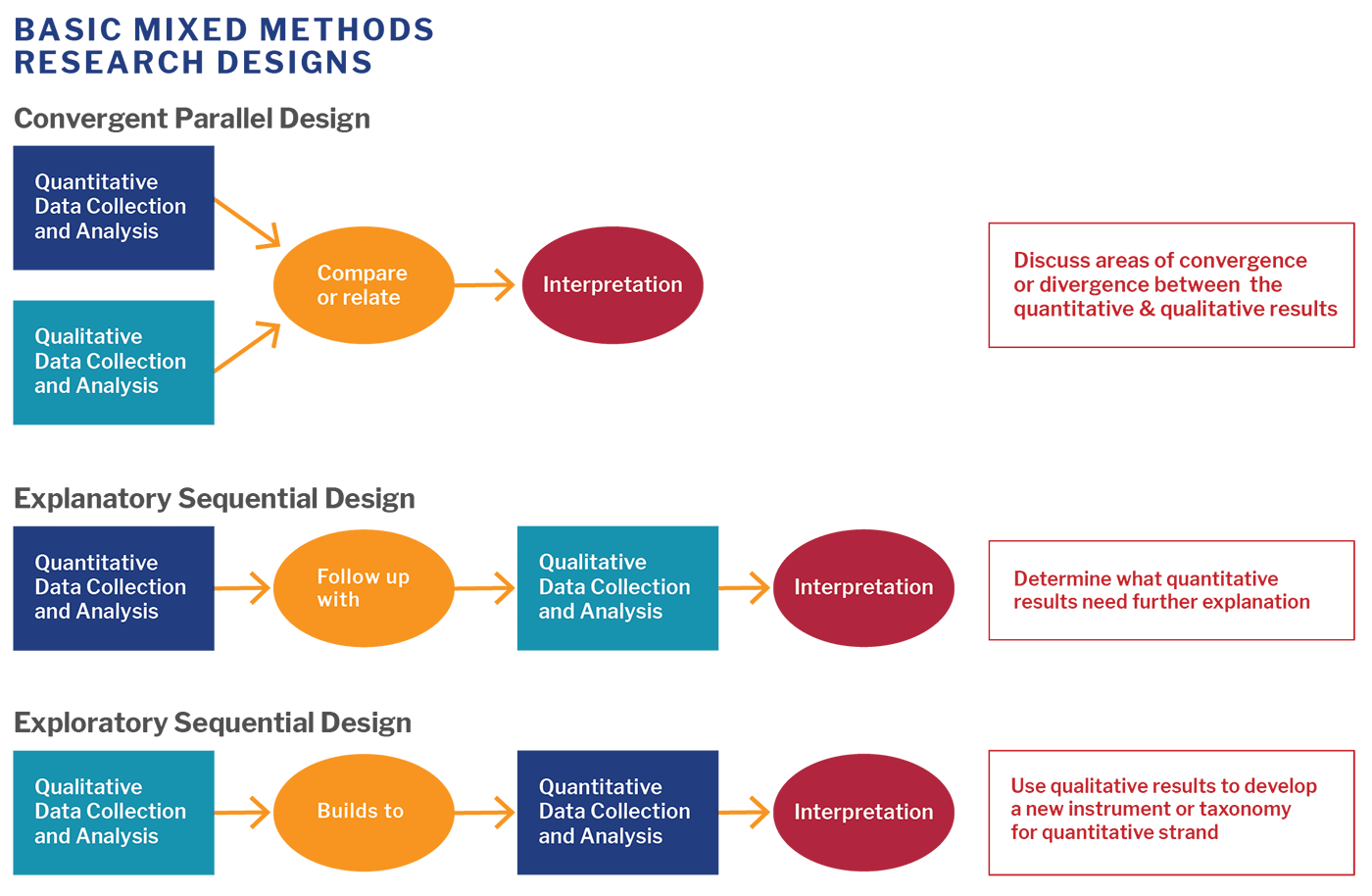
Conteúdo do mapa
UNIT 2
WHAT ARE THE TYPES OF MIXED METHODS DESIGNS?
- One strategy is to ask the following questions to help you identify a study as mixed methods research:
- Is there evidence in the title? Look at the title to determine if it includes words such as quantitative and qualitative, mixed methods, or other related terms to signify the collection of both quantitative and qualitative data.
- Is there evidence in the data collection section? Examine the “Methods” or “Procedure” section where the author addresses data collection and identify if researchers discuss forms of quantitative data
- Is there evidence in the purpose statement or the research questions? Examine the abstract or the introduction of the study to identify the purpose or research questions.
- One strategy is to ask the following questions to help you identify a study as mixed methods research:
The designs are:
- The Convergent Parallel Design
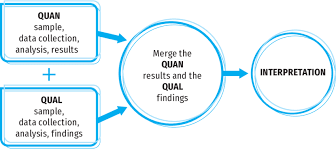
- The purpose of a convergent (or parallel or concurrent) mixed methods design is to simultaneously collect both quantitative and qualitative data, merge the data, and use the results to understand a research problem.
- A basic rationale for this design is that one data collection form supplies strengths to offset the weaknesses of the other form, and that a more complete understanding of a research problem results from collecting both quantitative and qualitative data.
- For example, quantitative scores on an instrument from many individuals provide strengths to offset the weaknesses of qualitative documents from a few people. Alternatively, qualitative, in-depth observation of a few people offers strength to quantitative data that does not adequately provide detailed information about the context in which individuals provide information (
- A basic rationale for this design is that one data collection form supplies strengths to offset the weaknesses of the other form, and that a more complete understanding of a research problem results from collecting both quantitative and qualitative data.
- The purpose of a convergent (or parallel or concurrent) mixed methods design is to simultaneously collect both quantitative and qualitative data, merge the data, and use the results to understand a research problem.
- The Explanatory Sequential Design
- Instead of collecting data at the same time and merging the results, a mixed methods researcher might collect quantitative and qualitative information sequentially in two phases, with one form of data collection following and informing the other.
- The rationale for this approach is that the quantitative data and results provide a general picture of the research problem; more analysis, 15lassify15ally through qualitative data collection, is needed to refi ne, extend, or explain the general picture.
- Instead of collecting data at the same time and merging the results, a mixed methods researcher might collect quantitative and qualitative information sequentially in two phases, with one form of data collection following and informing the other.
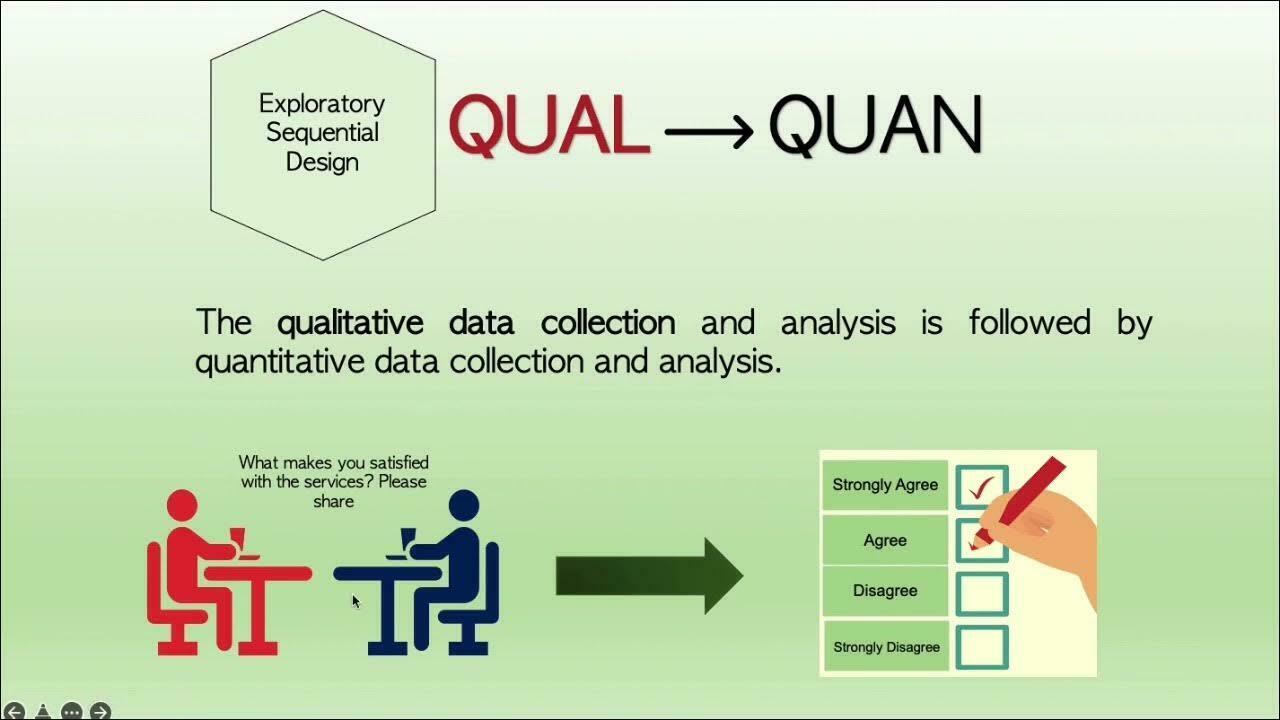
- The Exploratory Sequential Design
- The purpose of an exploratory sequential mixed methods design involves the procedure of fi rst gathering qualitative data to explore a phenomenon, and then collecting quantitative data to explain relationships found in the qualitative data.
- popular application of this design is to explore a phenomenon, identify themes, design an instrument, and subsequently test it. Researchers use this design when existing instruments, variables, and measures may not be known or available for the population under study.
- One advantage of this approach is that it allows the researcher to identify measures actually grounded in the data obtained from study participants. The researcher can initially explore views by listening to participants rather than approach a topic with a predetermined set of variables.
- They fi rst conducted a qualitative study of teachers’ practical knowledge from 13 teachers about reading comprehension by collecting semistructured interviews and concept-mapping assignments.
- popular application of this design is to explore a phenomenon, identify themes, design an instrument, and subsequently test it. Researchers use this design when existing instruments, variables, and measures may not be known or available for the population under study.
- The purpose of an exploratory sequential mixed methods design involves the procedure of fi rst gathering qualitative data to explore a phenomenon, and then collecting quantitative data to explain relationships found in the qualitative data.
- Multiphase Design
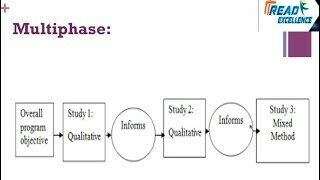
- Multiphase mixed methods designs occur when researchers or a team of researchers examine a problem or topic through a series of phases or separate studies.
- The phases or studies may employ a combination of concurrent or sequential designs and this form of design is popular in large-scale health research and in evaluation research.
- The multiphase design builds on the basic mixed methods designs and adds to these designs multiple phases or projects conducted over time
- The phases or studies may employ a combination of concurrent or sequential designs and this form of design is popular in large-scale health research and in evaluation research.
- Multiphase mixed methods designs occur when researchers or a team of researchers examine a problem or topic through a series of phases or separate studies.
- The Embedded Design
- The purpose of the embedded design is to collect quantitative and qualitative data simultaneously or sequentially, but to have one form of data play a supportive role to the other form of data.
- The supportive data may be either qualitative or quantitative, but most examples in the literature support adding qualitative data into a quantitative design.
- The strength of this design is that it combines the advantages of both quantitative and qualitative data. Quantitative data are more effective at recording outcomes of the experiment than identifying through qualitative data how individuals are experiencing the process.
- The supportive data may be either qualitative or quantitative, but most examples in the literature support adding qualitative data into a quantitative design.
- The purpose of the embedded design is to collect quantitative and qualitative data simultaneously or sequentially, but to have one form of data play a supportive role to the other form of data.
- The Transformative Design
- The intent of the transformative mixed methods design is to use one of the four designs (convergent, explanatory, exploratory, or embedded), but to encase the design within a transformative framework or lens
- The typical frameworks found in mixed methods are feminist, racial, ethnic, disability, and gay or lesbian perspectives. A challenge in using this design is that we are still learning about how to best integrate the framework into a mixed methods study.
- In this sequential design, a quantitative fi rst phase study of the girls’ attitudes toward science was collected on an inventory to provide descriptive results.
- The typical frameworks found in mixed methods are feminist, racial, ethnic, disability, and gay or lesbian perspectives. A challenge in using this design is that we are still learning about how to best integrate the framework into a mixed methods study.
- The intent of the transformative mixed methods design is to use one of the four designs (convergent, explanatory, exploratory, or embedded), but to encase the design within a transformative framework or lens
- The Convergent Parallel Design
Imagens e arquivos do mapa
Informações
- Descrição
- idiomas Mapa Mental sobre UNIT 2, criado por Rachell Medrano em 15-05-2024.
- Criado por
- Rachell Medrano · mai 2024
- Atualizado
- 15 mai 2024
- Visualizações
- 1
- Histórico
-
- Criado por Rachell Medrano · 15 mai 2024
- Copiado por Rachell Medrano · 15 mai 2024
- Avaliação