
Mapa mental
C1
Conteúdo do mapa
C1
- Pollutants - chemicals that harm the environment and your health
Pollutants
- Chemicals that harm the environment and your health
- Burning fossil fuels releases them
- Acid rain
- Rivers become too acidic and organisms die
- Affects food chains and natural resources
- Rivers become too acidic and organisms die
- Measure pollutants by ppb (parts per billion)
- Repeat measurements to calculate a mean
- Can't disappear so cause environmental problems
- Particulate carbon is deposited on surfaces such as stone buildings
- Produce too much carbon dioxide
- Not all used up naturally
- Greenhouse gas so contributes to global warming
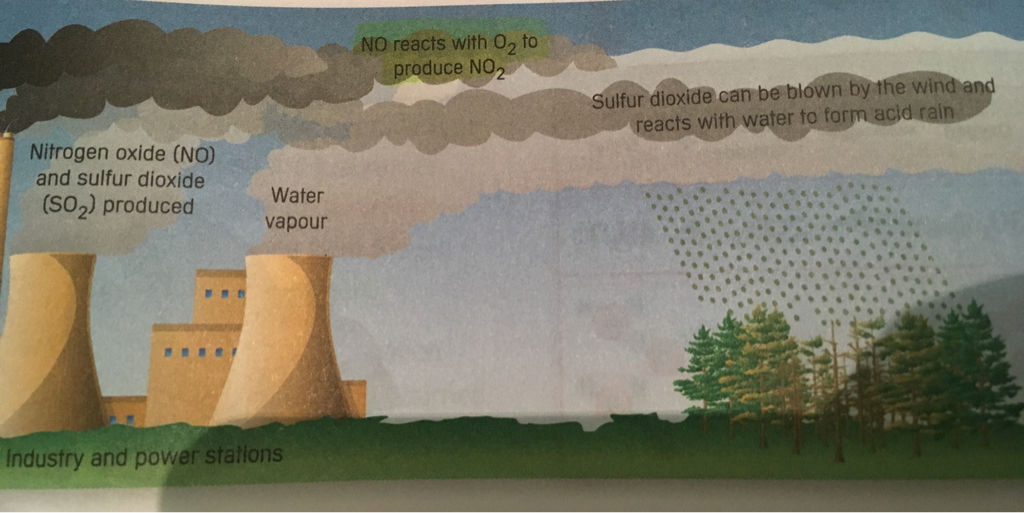
- Sulfur dioxide and nitrogen dioxide
- React with water to produce acid rain
- Cause and effect relationship seen in laboratory
- Burn sulfur in oxygen
- Dissolve gas in water
- Produces strongly acidic solution
- Dissolve gas in water
- Burn sulfur in oxygen
Atmosphere
- Early atmosphere created by volcanic activity
- Consisted of carbon dioxide and water vapour
- Water vapour condensed to form oceans
- Simple photosynthetic organisms evolved, adding oxygen and removing carbon dioxide
- Carbon dioxide removed from dissolving in oceans, forming sedimentary rocks and fossil fuels
- Early atmosphere created by volcanic activity
Chemicals
- Properties of compounds are very different to properties of the elements
- Reactions
- Joined atoms separated
- Separate atoms joined
- Joined atoms separated then joined again differently
- Mass is conserved as reaction never loses mass
Combustion
- Fuel reacts with oxygen to release energy
- Type of oxidation
- Complete combustion
- Enough oxygen present for fuel to burn completely
- Hydrocarbons
- Methane
- Methane + oxygen = carbon dioxide + water
- Only consist of hydrogen and carbon
- Produce carbon dioxide and water when burned in air
- Methane
- Incomplete combustion
- Fuel burns when there's not enough oxygen
- Carbon particulates or carbon monoxide may be produced
- Methane + oxygen = carbon + water
- Methane + oxygen = carbon monoxide + water
- Occurs in car engines
- Coal contains sulfur
- Produces sulfur dioxide when burnt
- Nitrogen
- High temperatures in car engines cause nitrogen to react with oxygen
- Produces nitrogen monoxide
- Nitrogen + oxygen = nitrogen monoxide
- Then oxidised to form nitrogen dioxide
- Nitrogen monoxide + oxygen = nitrogen dioxide
- Produces nitrogen monoxide
- High temperatures in car engines cause nitrogen to react with oxygen
- Fuel reacts with oxygen to release energy
Pollution
- Power stations
- Use less electricity
- Remove sulfur and toxic chemicals from fossil fuels before burning
- Use sustainable resources e.g. Hydroelectricity energy
- Remove sulfur dioxide from chimney gases
- "Wet scrubbing" with spray of calcium oxide and water or seawater
- Car pollution
- Low-sulfur fuel with modern fuel-efficient engine
- Legal limits for exhaust emissions enforced by MOT tests
- Use public transport
- Cars use "catalytic converters"
- Reduce carbon monoxide and nitrogen monoxide in engine exhaust gases
- Carbon monoxide + oxygen = carbon dioxide
- Reduce emissions by burning fewer fuels
- Very hard as the world has a growing population
- Nitrogen monoxide + oxygen = nitrogen and carbon dioxide
- Power stations
Imagens e arquivos do mapa
Informações
- Descrição
- Mind Map on Chemistry, created by Olivia Evenson on 18/03/2017.
- Criado por
- Olivia Evenson
- Visualizações
- 13
- Avaliação