
Notas
B3
Conteúdo das notas (1)
Página 1
Adaptation and Variation
Definition of a species: A group of organisms that can breed together to produce fertile offspring
Animals and plants can live in different environments because they are adapted to do so
Adaptations make it more likely for them to survive and produce fertile offspring
Cacti are adapted to environment by having rounded shape which gives small surface area to volume to reduce water loss
Thick waxy layer (cuticle) and spine instead of leaves to reduce water loss
Store water in thick stem to survive when not much water around
Have shallow and extensive roots to reach water over large surface area
Fish have gills to extract oxygen for respiration
Tail fins with large SA to propel through water and other fins to keep them stable with movement
Streamline bodies to reduce resistance
Have a swim bladder to adjust amount of gas to change their depth without using energy
Differences between individuals in species called variation
Some variation can be passed on to offspring
One cause is when genes change- known as mutation
Mutation caused by outside factors like radiation or mistakes during cell division
Usually no effect if they happen in body cells can lead to cancer though
But if occurs during formation of sex cells then has more effect because passed on in offspring
Causes offspring to develop new characteristics some harmful and some can actually help them survive
Natural Selection
Resources for living things limited and individuals must compete for resources to survive- only some will survive
Varieties that have increased chance of survival will produce more offspring passing on their genes
Greater proportion of individuals will have these characteristics to aid survival in the next generation
Over generations and generations only best characteristics will appear making individual more adapted for environment
Only characteristics that help survival appear in later generations because the other individuals with other characteristics that weren't as helpful died out before having offspring to pass the genes on
However, selective breeding is characteristics being passed down due to humans and not nature
Humans chose the desirable characteristics and only breed from the animals or plants that have these characteristics
This doesn't help survival
Evolution
Estimate that life began 3500 mil years ago
First living things were simple organisms then evolved to more complex and varied organisms
Sometimes organisms from same species get isolated from each other and can't interbreed e.g. two populations from same species stuck on different islands meaning these things can happen:
Different mutations making different features between the two populations
Natural selection works on these best features so they spread around population
Environmental changes, causing different adaptations to different conditions they live in
Evidence for evolution in fossils which show development of species and increase in complexity
More evidence is in DNA: DNA mutates over time. Living things have similarities in DNA and the more closely related species are more similar their DNA is, these similarities and differences can be used by scientists to work out how life evolved
Darwin proposed idea of evolution by natural selection
Lamarck also had theory that acquired characteristics (from developing the characteristic) could be passed on to offspring
But people discarded this theory because acquired characteristics don't have genetic basis (e.g. playing the piano)
Biodiversity and Classification
Biodiversity includes:
Number of different species on Earth
Range of different types of organisms
Genetic variation between organisms of same species
Maintaining biodiversity is important because more plants we have means more resources for developing new food crops and for creating new medicines out of chemicals produced by these living things
Rate of extinction has increased
Correlation between increase in human population and rate of extinction
Sometimes humans cause it directly e.g. hunting
Sometimes indirectly e.g. harming its habitat
Organisms classified according to similarities in genetics/characteristics
Main 5 kingdoms: Bacteria, Fungi, Algae, Plants and Animals
Each kingdom divided into more and more groups until you have species
As you go down number in each group decreases but similarities increase
Classification is used to evolutionary relationships between organisms and can suggest that two very similar organisms evolved from same ancestor organism
Interactions Between Organisms
Environment organism lives in provides it with factors essential for life
Light, food, minerals, oxygen, carbon dioxide (for plants), water
If essential factor in habitat in short supply different species have to compete for it
If not enough to go around some organisms won't survive
Organisms depend on other organisms usually for food this is called interdependence
With interdependence any major changes will have far reaching effects
If one organisms in food web is being killed off then it will affect other organisms even at the top of the food web
3 changes that cause extinctions:
Change in environmental conditions meaning species can't adapt to change
New species introduced being either competitor, disease organism or predator
Organism that it was relying on in food web becomes extinct
Energy in an Ecosystem
Energy from sun is source of energy for nearly all life
Plants use small % of light energy from sun during photosynthesis.
Light energy stored by converting it to chemicals which make up plant's cells
Energy transferred between organisms when animals eat other plants/animals
Energy also transferred when decay organisms feed on dead organisms and waste materials
Energy lost at each stage (mostly used for life processes e.g. respiration)
Most energy eventually lost to surroundings as heat especially for mammals due to keeping bodies at constant temp
Energy also lost at each stage through waste products and uneaten parts
This is why food chains only about 5 stages long
You can work out how much energy lost at each stage by taking away energy available to next stage from energy available to previous stage
Can also calculate efficiency: energy available to next stage/ energy available from previous stage X 100
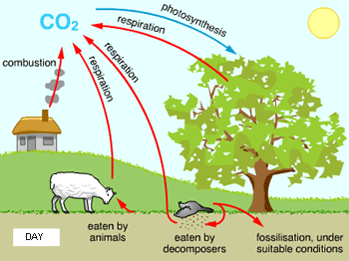
The Carbon Cycle (notes on diagram)
Only one arrow going down, whole thing powered photosynthesis
In photosynthesis plants convert Carbon from CO2 to sugars
Plants incorporate this carbon into carbohydrates, fats and proteins as well
Eating passes carbon compounds down from plants to animals
Plants and animals release CO2 through respiration
When plants and animals decompose, broken down by microorganisms, these release CO2 into air by respiring when decomposing
Combustion of fossil fuels releases CO2
The Nitrogen Cycle
Nitrogen can't be used directly by plants and animals
Nitrogen needed for making proteins for growth
Plants get nitrogen from soil and animals get it from eating plants or other animals
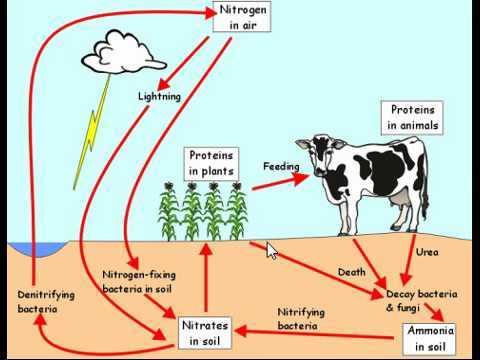
Nitrogen fixation is process of turning nitrogen into nitrates in soil which plants can use
Lightning does this by creating so much energy that nitrogen reacts with oxygen to make nitrates
Nitrogen fixing bacteria in soil and roots also change nitrogen to nitrates
Decomposers break down proteins in dead plants and animals and urea (from animal waste into ammonia which is then turned into nitrates by nitrifying bacteria found in soil
Decomposers: decompose proteins and urea and turn it into ammonia
Nitrifying bacteria: turns ammonia in decaying matter into nitrates (nitrification)
Nitrogen fixing bacteria: turns atmospheric N2 into nitrates
Denitrifying bacteria: turn nitrates back into N2
Measuring Environmental Change
Non-living indicators:
Temp: temp measurements taken over long period of time could indicate climate of environment is changing
Nitrate level: Indicator of change in a body of water, increase in nitrate level caused by sewage or fertilisers entering water. Meaning water is polluted
CO2: Increase in CO2 caused by lots of factors like human activity burning fossil fuels which increases global warming
Living indicators:
Lichen: Used for air pollution, very sensitive to sulfur dioxide. Number of lichen can indicate how clean air is, if there is lots of lichen then air is clean
Mayfly Nymphs: Raw sewage released into river, bacteria population increases and uses up oxygen. Mayfly Nymphs good indication of water pollution, very sensitive to oxygen levels, if there are mayfly nymphs in river then it is clean
Phytoplankton: Increases when levels of nitrates and phosphates increase in water- called algal bloom. Adding fertilisers or sewage causes increase of nitrates and phosphates thus creating an algal bloom.
Sustainability
Humans damage environment which can't be easily repaired
We are also using lots of earth's limited resources limiting those for the future generations
Sustainability: meeting the needs of today's population without harming the environment so future generations can meet their needs
Maintaining biodiversity very important for sustainability so they can still produce food and find new medicines
Some packaging materials aren't sustainable because the resources used no longer available to future generations when thrown away and lots of energy used to make packaging which then thrown into landfill sites which use up space and damage the environment
However sustainability of packaging can be improved
Renewable materials: Like paper or card, can improve sustainability because they can be replaced once they've been used e.g. planting more trees
Using less energy: By using recycled materials instead of making new ones. Environment isn't damaged as much because less energy required
Creating less pollution; Using biodegradable materials because they will rot faster instead of polluting land for 100's years
Most sustainable thing is to use less packaging because even if material is biodegradable, there isn't much oxygen in landfill sites so it will take a while to break down.
Informações
- Descrição
- Notas sobre B3, criado por sally20st em 05-05-2015.
- Criado por
- sally20st
- Visualizações
- 28
- Tags
- Histórico
-
- Criado por um usuário excluído · 5 mai 2015
- Copiado por sally20st · 5 mai 2015
- Avaliação