
Notas
Carbohydrates
Conteúdo das notas (1)
Página 1
Carbohydrates:
A molecule that contains CARBON HYDROGEN & OXYGEN
Examples:
Glucose
Cellulose
Fructose
Starch
Sucrose
Glycogen
Sugars:
Monosaccharides - SINGLE
sugar units
Condensation reaction- join together to form:
Disaccharides - 2 sugar units
Polysaccharides - many chains
Monosaccharides used for ENERGY and BUILDING BLOCKS
CxH2Oy
x + y = variables
for example:
Glucose =
C6H2O6
(CH2O)n
n can be any number
If N = 3 = Triose (Glyceraldehyde)
If N = 5 - Pentose (Fructose)
If N= 6 - Hexose (Glucose)
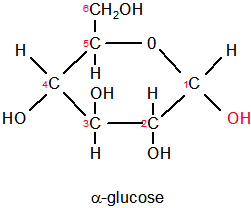
Alpha Glucose:
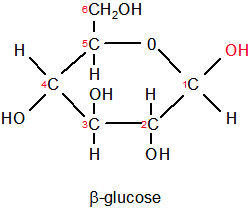
Beta Glucose:
Isomerism:
Isomer = Compound with SAME chemical formula but DIFFERENT chemical structure
E.g Alpha & Beta Glucose
Testing for monosaccharides:
Benedict's Reagent
Alkaline copper sulfate solution
Heated with reducing sugar = insoluble red precipitate of copper oxide
Disaccharides:
Glycosidic Bond
Condensation Reaction:
Allow monosaccharides to make polysaccharides
- glucose + glucose = MALTOSE
- glucose + galactose = LACTOSE
- glucose + fructose = SUCROSE
Hydrolysis Reaction:
Allow polysaccharides to break apart using
water
Polysaccharides:
Formed from many Monosaccharides
STARCH:
Insoluble store of glucose in plants formed from 2 GLUCOSE POLYMERS
GLYCOGEN:
Insoluble compact store of glucose in humans
Alpha glucose units
1,4 and 1,6 glycosidic bonds
Branched structure
Amylose:
Alpha glucose
1,4 Glycosidic bonds
Spiral Structure
Amylopectin:
Alpha glucose
1,4 & 1,6 Glycosidic bonds
Branched structure
Cellulose:
Made of beta glucose
Main structural sugar in PLANTS
Structural component of cell walls
VERY strong - 33% of plant matter
Polymer of Beta Glucose:
Each monomer = inverted
Form chains - run parallel with Hyrdogen bonds between chains to form microfibrils (very strong)
New Page
Informações
- Descrição
- Notas sobre Carbohydrates, criado por emilyboynton em 28-10-2014.
- Criado por
- emilyboynton
- Visualizações
- 363
- Tags
- Avaliação