
Weimar Germany
Slides in this set (9)
-
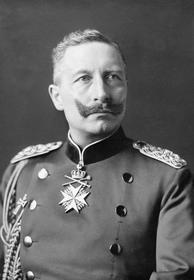
- Caption: Kaiser Wilhelm II, Germany's last Kaiser.
- He was described as energetic, unpredictable and obsessed with military power. He had fits of rage in which he was uncontrollable.
- He thought that a country could not develop without going to war and being ambitious in the territories they wanted to take over.
- He was intelligent, well informed, and hated those that disagreed with him. He quarrelled with his Chancellor, Bismarck, who later resigned in 1890. From then, he appointed ministers that would do his bidding. If they didn't, they were sacked.
- He led Germany into the First World War.
-
- At first, everyone thought things were going very well as they made a breakthrough all along the Western Front in the Ludendorff Offensive. They were advancing quickly through Belgium and northern France. People thought they were going to win the war
- The USA entered the war in 1917 and joined the Allies, who were stronger than Germany, as the USA was always sending fresh soldiers and equipment. The German Army had lost its best officers in the earlier battles and supplies were running low due to the British blockade. The Ludendorff Offensive had stopped by June 1918
- In August 1918 the allies counter attacked and Germany lost all previously conquered territory. By September, it was clear that the war had been lost. Civilians faced starvation
-
- Opposition leaders against the Kaiser got arrested and control of opposition got stronger (though it was ineffective anyway). Germany was ruled as a military dictatorship, which weakened the Reichstag further.
- Farming was distrupted as there was a shortage of workers (they had all been drafted into the. In 1918, Germany was only producing 50% of the milk and 60% of the butter and meat that it had been before the War. Civilians were starving to death because of this combined with the British blockade.
- Before the war, Germans were proud of their country and its success. They were prepared to work hard. The War, however, made them bitter and angry, and all looked for someone to blame for the war. Their unity crumbled.
- The country became unstable: armed demobilised soldiers were returning home and joining in violent demonstrations against the Kaiser.
-
The German 'revolution' of 1918
- Cause: The Kaiser refused to abdicate, though it was part of the peace treaty.
- Effects:
- 25 Oct. 1918: Kiel ships sent out to fight British on a suicidal attempt for glory. Sailors mutinied.
- 26 Oct. to 5 Nov: Strikes and demonstrations against the war. Kaiser gave up trying to crush the opposition.
- 6 Nov: Soldiers and workers' councils take control in many cities, as they just wanted to end the war. Politicians saw a danger of a revolution like the one in Russia in 1917.
- 7 November: Ultimatum was sent to the Kaiser from the Social Democrats: he would either abdicate or they would join the revolution
- 9 November: General Strike and the Social Democrats became afraid that the extremists would gain control. So one of Freidrich Ebert's colleagues announced the abdication of the Kaiser and proclaimed the setting up of a German Republic. Ebert became chancellor.
-
Strengths and weaknesses of Constitution
- Strengths
- Everyone had the right to vote, including women, all over the age of 20.
- Every German citizen had free speech, freedom of religion and equality under the Law.
- President and Reichstag were elected. President appointed the Chancellor, who had to have a Reichstag majority.
- Reichstag made the laws, which people voted on.
- Weaknesses
- Proportional representation - Germans voted for a party. Each party was proportionally represented in the Reichstag. However, this resulted in lots of tiny parties, none of which could win a majority and refused to work together.
- Article 48 - It stated that in an emergency, a president did not need to consult the Reichstag and could pass decrees. The problem was that it did not specify what an emergency was.
-
Reactions to the Treaty of Versailles
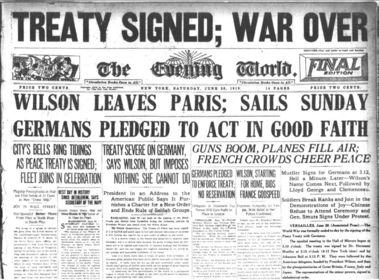
- It was so hated that the first government refused to sign it and resigned. But the Allies threatened to continue the War if they did not.
- Many refused to accept the terms and that they had lost the War. It was met with extremely negative reactions, and a myth that the army had been 'stabbed in the back' by weak politicians developed. This weakened the Weimar Republic from the start.
-
Spartacist uprising: January, 1919
- Causes: People were extremely dissatisfied with the political situation in Germany. There had been previous clashes in Dec, '18 between revolutionaries and the Government.
- Events: On the 5th of January, the Spartacists captured the government newspaper and telegraph HQ/Bureau. They did not have the support of other left-wing groups and it was poorly planned. The Spartacist leaders only supported it once it had began. The uprising was crushed by the Freikorps, and it was all over by the 15th.
- Effects: Rosa Luxemburg and Karl Leibknecht were murdered, leaving Communists without leaders. The Freikorps killed thousands of communists over the next months, and Ebert had put his government into the hands of the Freikorps and the Army.
- He undermined the position of the Social Democrats as representatives of the working class.
-
- March, 1920
- Led by a right-wing
- group, leaders consisting of Kapp
- with the support of Luttwitz and Ludendorff
- Marched through Berlin with
- Freikorps, proclaimed new government
- Putsch lasted 5 days
- Ebert called a General
- Strike, which paralysed the whole thing and so the putsch failed
- It showed that the Berliners
- wanted peace more than anything and that they did somewhat support Ebert's
- government
- Kapp Putsch
- 1. Weimar Republic: its early problems and achievements
-
- Weimar Germany 1919: The Spartacists and the constitution
- Crisis in Weimar Germany 1919-1923
- The Weimar Republic, 1919-1929
- Germany 1918-39
- Weimar Germany 1919: The Spartacists and the constitution
- Weimar Revision
- History Knowledge Test: Germany
- AQA GCSE History Unit 2 Section A ~ Weimar Germany 1919-1929
Information
- Description
- GCSE History (Germany) Slide Set on Weimar Germany, created by Carolina Nina Matos on 23/10/2016.
- Created by
- Carolina Nina Matos
- Views
- 0
- Rating