
Karteikarten
What are the gas planets like?
Karten in diesem Stapel (14)
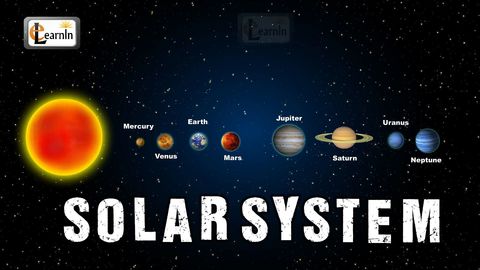
- 1—The planets of the miky way are Mercury,Venus,Earth,Mars,Jupiter,Saturn,
Uranus and Neptune. - 2—Jupiter is the fifth planet from the
sun and it is the largest
from the solar system.It is a giant planet with a mass one-thousandth that of the Sun, but two and a half times that of all the other planets in the Solar System combined.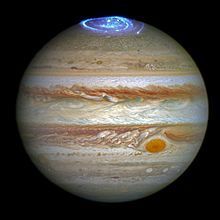
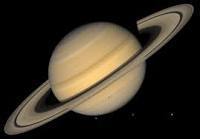
- 3—Saturn is the sixth planet from the Sun and the second-largest in the Solar System, after Jupiter. It is a gas giant with an average radius about nine times that of Earth.
- 4—Uranus is the seventh planet from the Sun. It has the third-largest planetary radius and fourth-largest planetary mass in the Solar System.
- 5—Neptune is the eighth and farthest known planet from the Sun in the Solar System. In the Solar System, it is the fourth-largest planet by diameter, the third-most-massive planet, and the densest giant planet.
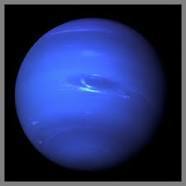
- 6—Mercury is the smallest and innermost planet in the Solar System. Its orbital period is less than any other planet in the Solar System. Seen from Earth, it appears to move around its orbit in about 116 days. It has no known natural satellites.
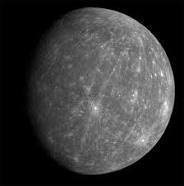
- 7—Venus is the second planet from the Sun, orbiting it every 224.7 Earth days. It has the longest rotation period of any planet in the Solar System and rotates in the opposite direction to most other planets. It has no natural satellite.
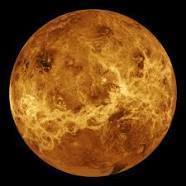
- 8—Earth is the third planet from the Sun, the densest planet in the Solar System, the largest of the Solar System's four terrestrial planets, and the only astronomical object known to harbor life.
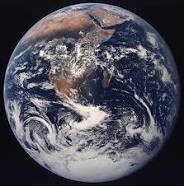
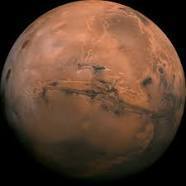
- 9—Mars is the fourth planet from the Sun and the second-smallest planet in the Solar System, after Mercury.Mars revolves or orbits around the Sun once every 1.88 Earth years, or once every 686.93 Earth days. Mars travels at an average speed of 53,979 miles per hour or 86,871 kilometers per hour in its orbit around the Sun.
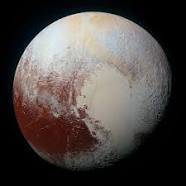
- 10—Pluto is a dwarf planet in the Kuiper belt, a ring of bodies beyond Neptune. It was the first Kuiper belt object to be discovered.Pluto, which until recently was considered to be the farthest planet from all the planets.
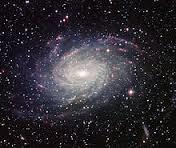
- 11—The Milky Way is the galaxy that contains our Solar System. Its name "milky" is derived from its appearance as a dim glowing band arching across the night sky whose individual stars cannot be distinguished by the naked eye.
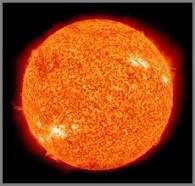
- 12The sun.The Sun is the star at the center of the Solar System. It is a nearly perfect sphere of hot plasma, with internal convective motion that generates a magnetic field via a dynamo process.
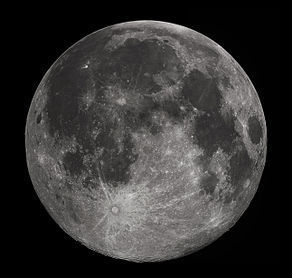
- 13—The Moon is Earth's only permanent natural satellite. It is the fifth-largest natural satellite in the Solar System, and the largest among planetary satellites relative to the size of the planet that it orbits . It is the second-densest satellite among those whose densities are known after Jupiter's satellite
- 14—A star is a luminous sphere of plasma held together by its own gravity. The nearest star to Earth is the Sun. Many other stars are visible to the naked eye from Earth during the night, appearing as a multitude of fixed luminous points in the sky due to their immense distance from Earth. Historically, the most prominent stars were grouped into constellations and asterisms, the brightest of which gained proper names. Astronomers have assembled star catalogues that identify the known stars and provide standardized stellar designations. However, most of the stars in the Universe, including all stars outside our galaxy, the Milky Way, are invisible to the naked eye from Earth. Indeed, most are invisible from Earth even through the most powerful telescopes.
Informationen
- Beschreibung
- about the planets and what they're made of. :)
- Erstellt von
- Zara Nadeem
- Aufrufe
- 17
- Bewertung