
Flashcards
Geology ID quiz
Cards in this deck (55)
- 1What is a mineralA mineral is a naturally occurring, inorganic, solid formed by geologic processes with a fixed (or variable within certain limits) chemical composition and a definite crystalline structure
- 2What is luster?The appearance of a fresh mineral surface in reflected light
- 3What are the main types of luster?Metallic luster: looks like metal
Non-metallic luster: isnt metallic
Vitreous luster: resembles glass
Earthy luster: not bright, dull - 4What is the softest mineral on the Mohs relative hardness scale?Talc
- 5What is the hardest mineral on Mohs relative hardness scale?Diamond
- 6What is clevageThe tendency of a mineral to break along planes of weakness
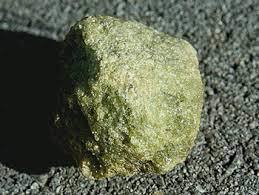
- 7—Olivine
Luster: Dull/earthy/green
Hardness: Scratches glass
Cleavage: No planes of cleavage - 8—Augite (pyroxene)
Luster: non-metallic, dull, black, tiny bits of green
Hardness: Scratches glass
Cleavage: 90 degree angle of cleavage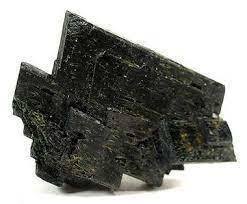
- 9—Hornblende (amphibole)
Luster: Glassy(?) black
Hardness: Scratches glass
Cleavage: No angle of cleavage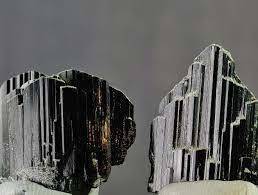
- 10—Plagioclase
Luster: white/dull/non-metallic
Hardness: scratches glass
Cleavage: 90 degree angle of cleavage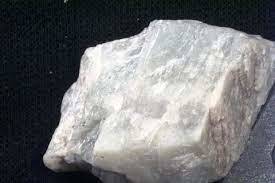
- 11—Potassium feldspar (orthoclase feldspar)
Luster: light red/pinkish
Hardness: scratches glass
Cleavage: 90 degree angle of cleavage
(Resembles muscle fiber striations)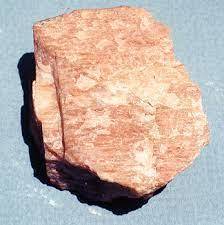
- 12—Pure quartz
Luster: White/glassy
Hardness: Scratches glass
Cleavage: There is no cleavage
(One of three types of quartz on the test)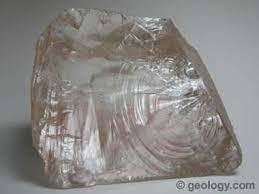
- 13—Smokey Quartz
Luster: Greyish/glassy
Hardness: scratches glass
Cleavage: no cleavage
(One of three types of quartz on the test)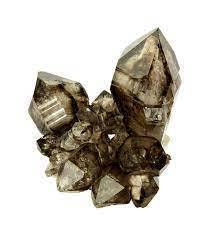
- 14—Rose quartz
Luster: pink
Hardness: scratches glass
Cleavage: No planes of cleavage
(One of three types of quartz on the test)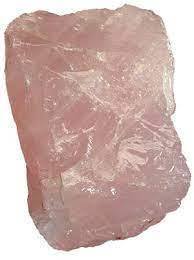
- 15—Biotite Mica
Luster: Glassy/dark
Hardness: Does not scratch glass, very soft
Cleavage: one basal plane of cleavage (its a sheet silicate)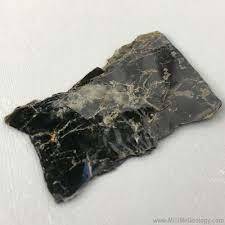
- 16—Muscovite mica
Luster: Lighter than biotite mica/ almost see-through and slightly shiny
Hardness: soft/ will break if you try to scratch glass
Cleavage: One basal line of cleavage (it is a sheet silicate)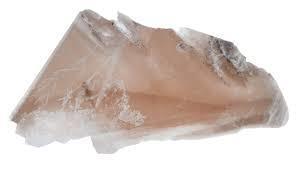
- 17—Talc
Luster: pearly/shiny
Hardness: Very soft, will crumble if you try
Cleavage: one plane of cleavage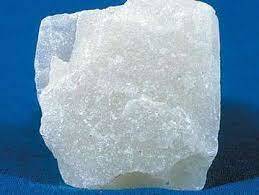
- 18—Kaolinite
Luster: White and chalky
Hardness: doesn't scratch glass
Cleavage: no planes of cleavage
(Soft and smooth, but dull. Confused often with talc)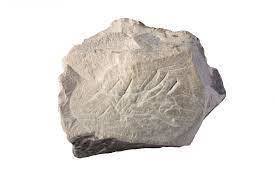
- 19—Graphite
Luster: Metallic/grey
Hardness: doesn't scratch/soft
Cleavage: no planes of cleavage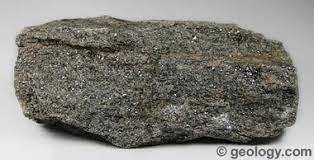
- 20—Hematite
Luster: Metallic/copperis/reddish
Hardness: scratches glass
Cleavage: Has planes of cleavage
(Light orange/red streak)
(two samples of hematite)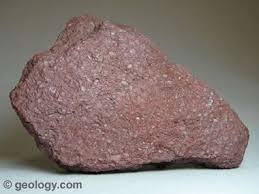
- 21—Magnetite
Luster: Greyish
Hardness: Scratches glass
Cleavage: No planes of cleavage
(Dark black/ magnetic)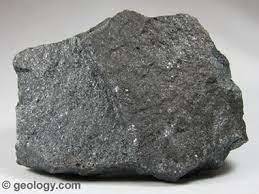
- 22—Sphalerite
Luster: Resinous
Hardness: Does not scratch glass
Cleavage: weird looking with planes of cleavage
(Looks somewhat glassy and metallic but dark colored and in a dodecahedron shape)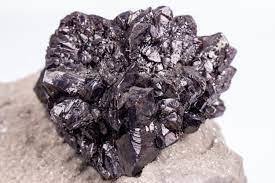
- 23—Pyrite (fools gold)
Luster: metallic/glassy and gold color
Hardness: Scratches glass
Cleavage: One plane of cleavage
(pointy in many directions)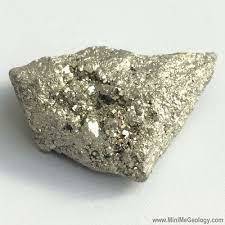
- 24—Galina
Luster: very reflective/metallic
Hardness: Scratches glass
Cleavage: planes of cleavage visible
(Known for its cuboidal shape)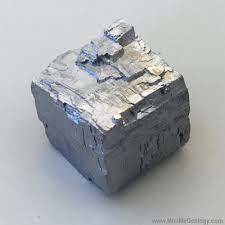
- 25—Gypsum (selenite)
Luster: Clear/somewhat pearly
Hardness: super soft, will crumble if you try
Cleavage: One basal plane of cleavage (sheet)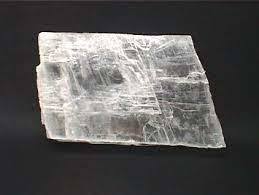
- 26—Calcite
Luster: Transparent/dull/colorless
Hardness: soft
Cleavage: 90 degree angle of cleavage
(Rhomboidal shape/almost see-through)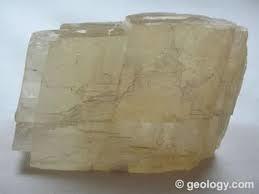
- 27—Halite
Luster: Colorless/transparent
Hardness: soft
Cleavage: planes of cleavage present
(Similar to calcite:but smoother and more perfectly shaped/cubed)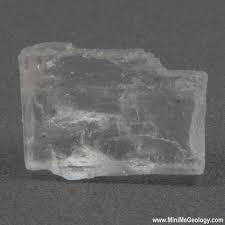
- 28—Fluorite
Luster: Opaque/ can be a range of colors
generally darker in color
Hardness: Soft
Cleavage: One basal plane of cleavage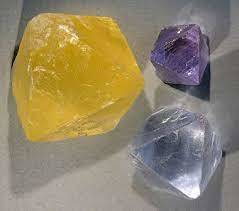
- 29In what order does the Mohs relative hardness scale go?From softest-hardest:
- Talc
-Gypsum
-(fingernail)
-calcite
-(copper penny)
-fluorite
-apatite
-(knife blade)
-(glass plate)
-orthoclase
-(steel file)
-quartz
-topaz
-corundum
-Diamond - 30What are all of the silicate minerals we are responsible for?Olivine
Pyroxene (augite)
amphibole (hornblende)
biotite/muscovite mica
plagioclase and orthoclase (potassium) feldspar
quartz
talc
kaolinite - 31What is a rock?A naturally occurring, solid, aggregate of minerals or of organic material
- 32What are the three major rock groups?Igneous
Sedimentary
Metamorphic - 33What is an igneous rock?Rocks whose origin is from the cooling and subsequent crystallization of magma
- 34What are phaneritic rocks?Minerals are macroscopic in size (coarse-grained
- 35What are aphanitic rocks>Minerals are microscopic in size
- 36What are porphyritic rocks?Rocks with a mixture of both macro and microscopic crystals embedded within the rock
- 37What are porous rocks?Igneous rocks with vesicles: holes, usually spherical, tubular, or oval in shape
(Vesicular rocks) - 38The three major types of compositions of igneous rocks are:Mafic: igneous rocks that contain lots of magnesium, calcium and iron rich materials. Usually dark colored
Felsic: igneous rocks that contain lots of minerals that have compositions like feldspars. These rocks are usually light colored
Intermediate: These igneous rocks have both mafic and felsic components - 39What are four minerals present in granite?Quartz
Orthoclase (potassium) feldspar
Muscovite Mica
Biotite Mica
Lesser amounts of amphibole (hornblende) and plagioclase feldspar - 40What are three minerals present in gabbro?Plagioclase feldspar
Pyroxene (augite)
Olivine
Lesser amounts of amphibole (hornblende) - 41Which of our studied rocks has a slow cooling history?All of the phaneritic (course grained) rocks have a slow-cooling history. The minerals had time to crystalize before the entire rock was formed:
Granite
Diorite
Gabbro - 42Which of our studied rocks has a fast cooling history?All of the aphanitic (fine-grained) rocks have a fast cooling history, because the minerals did not have tome to grow larger before the rock was formed:
Rhyolite
Andesite
Basalt - 43Which of our studied rocks has had a mixture of both slow and fast cooling history?All of the porphyritic textured rocks, because it cooled slow enough for large crystals to form, but quickly began cooling not allowing all of the crystals to form:
Rhyolite Porphyry
Basalt Porphyry - 44—Basalt
Color: Mafic
Texture: Aphanitic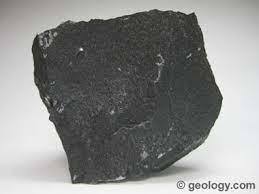
- 45—Pumice
Color: Felsic
Texture: Vesicular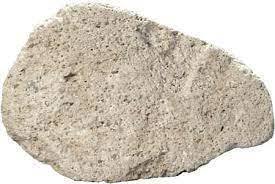
- 46—Obsidian
Color: Mafic
Texture: Glassy/smooth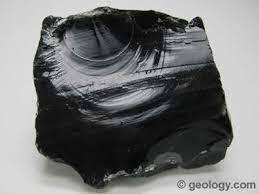
- 47—Vesicular Basalt
Color: Intermediate
Texture: Vesicular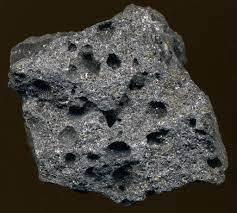
- 48—Rhyolite Porphyry
Color: Felsic
Texture: Aphanitic with phenocrysts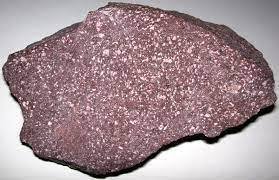
- 49—Gabbro
Color: Mafic
Texture: Phaneritic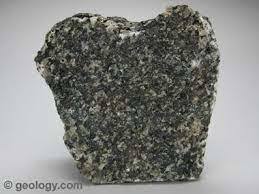
- 50—Scoria
Color: Intermediate
Texture: Aphanitic and porous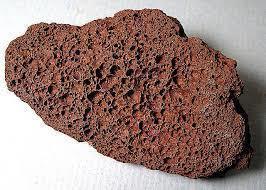
- 51—Andesite
Color: Intermediate/ lighter side
Texture: Aphanitic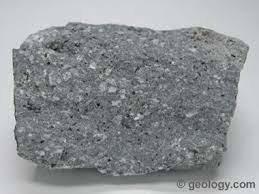
- 52—Basalt Porphyry
Color: Intermediate
Texture: Phaneritic/ clearly see the larger crystals embedded in the rock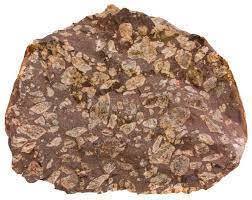
- 53—Granite
Color: Felsic
Texture: Phaneritic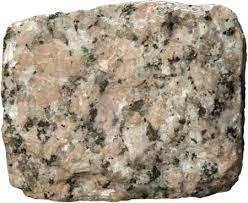
- 54—Peridotite
Color: Ultramafic/ hints of green coloring
Texture: Aphanitic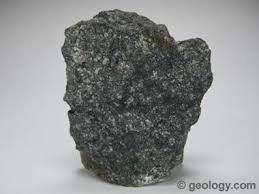
- 55—Diorite
Color: Intermediate
Texture: Phaneritic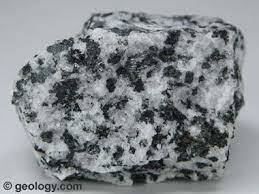
Information
- Description
- IDing the types of rocks and minerals
- Created by
- Danny Oxendine · Sep 2021
- Updated
- Sep 28, 2021
- Views
- 3
- Rating