
Mind map
2.3 Gunpowder Plot 1605
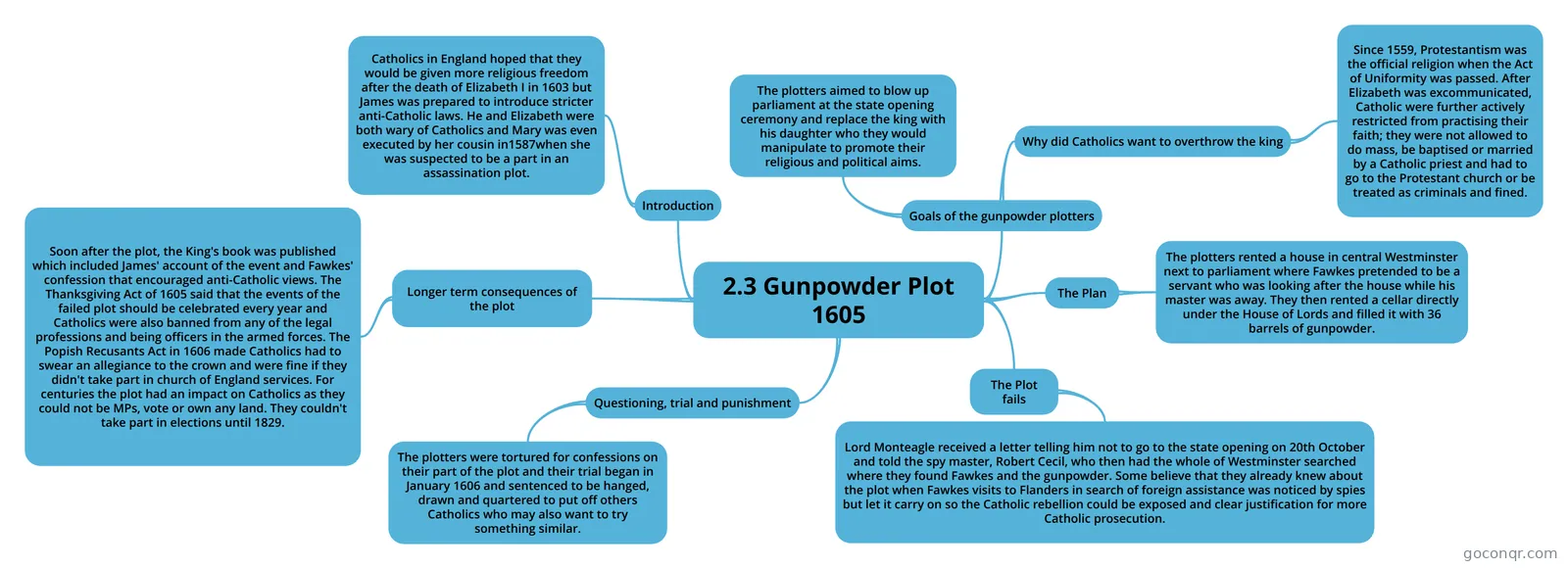
Mind map: Gunpowder Plot 1605
Map content
2.3 Gunpowder Plot 1605
Introduction
- Catholics in England hoped that they would be given more religious freedom after the death of Elizabeth I in 1603 but James was prepared to introduce stricter anti-Catholic laws. He and Elizabeth were both wary of Catholics and Mary was even executed by her cousin in1587when she was suspected to be a part in an assassination plot.
Goals of the gunpowder plotters
- Why did Catholics want to overthrow the king
- Since 1559, Protestantism was the official religion when the Act of Uniformity was passed. After Elizabeth was excommunicated, Catholic were further actively restricted from practising their faith; they were not allowed to do mass, be baptised or married by a Catholic priest and had to go to the Protestant church or be treated as criminals and fined.
- The plotters aimed to blow up parliament at the state opening ceremony and replace the king with his daughter who they would manipulate to promote their religious and political aims.
- Why did Catholics want to overthrow the king
The Plan
- The plotters rented a house in central Westminster next to parliament where Fawkes pretended to be a servant who was looking after the house while his master was away. They then rented a cellar directly under the House of Lords and filled it with 36 barrels of gunpowder.
The Plot fails
- Lord Monteagle received a letter telling him not to go to the state opening on 20th October and told the spy master, Robert Cecil, who then had the whole of Westminster searched where they found Fawkes and the gunpowder. Some believe that they already knew about the plot when Fawkes visits to Flanders in search of foreign assistance was noticed by spies but let it carry on so the Catholic rebellion could be exposed and clear justification for more Catholic prosecution.
Questioning, trial and punishment
- The plotters were tortured for confessions on their part of the plot and their trial began in January 1606 and sentenced to be hanged, drawn and quartered to put off others Catholics who may also want to try something similar.
Longer term consequences of the plot
- Soon after the plot, the King's book was published which included James' account of the event and Fawkes' confession that encouraged anti-Catholic views. The Thanksgiving Act of 1605 said that the events of the failed plot should be celebrated every year and Catholics were also banned from any of the legal professions and being officers in the armed forces. The Popish Recusants Act in 1606 made Catholics had to swear an allegiance to the crown and were fine if they didn't take part in church of England services. For centuries the plot had an impact on Catholics as they could not be MPs, vote or own any land. They couldn't take part in elections until 1829.
Information
- Description
- GCSE English Mind Map on 2.3 Gunpowder Plot 1605, created by Sabbar Yasin on 17/11/2017.
- Created by
- Sabbar Yasin
- Views
- 6
- Rating