
Tudor England
328 resources created by 213 users
This Tudor England page on GoConqr gathers community-made mind maps, flashcards, quizzes, notes and slides, from Henry VII's consolidation of power to the Elizabethan Religious Settlement and the Spanish Armada. It's built for school students revising GCSE History or A-level History topics, and for teachers after ready-made material. There are over 2,000 resources here, including more than 70 quizzes, 1,300 mind maps and 400 flashcard decks, shared by over 1,000 contributors. Pick a reign, try a quiz to find your gaps, then see what sticks.
Top Tudor England resources
-
188 cardsHenry VIII's Government What can be classed as Henry's early and middle years?
-
 Mind map The Reigns of Edward and Mary Tudors AQA A Level
-
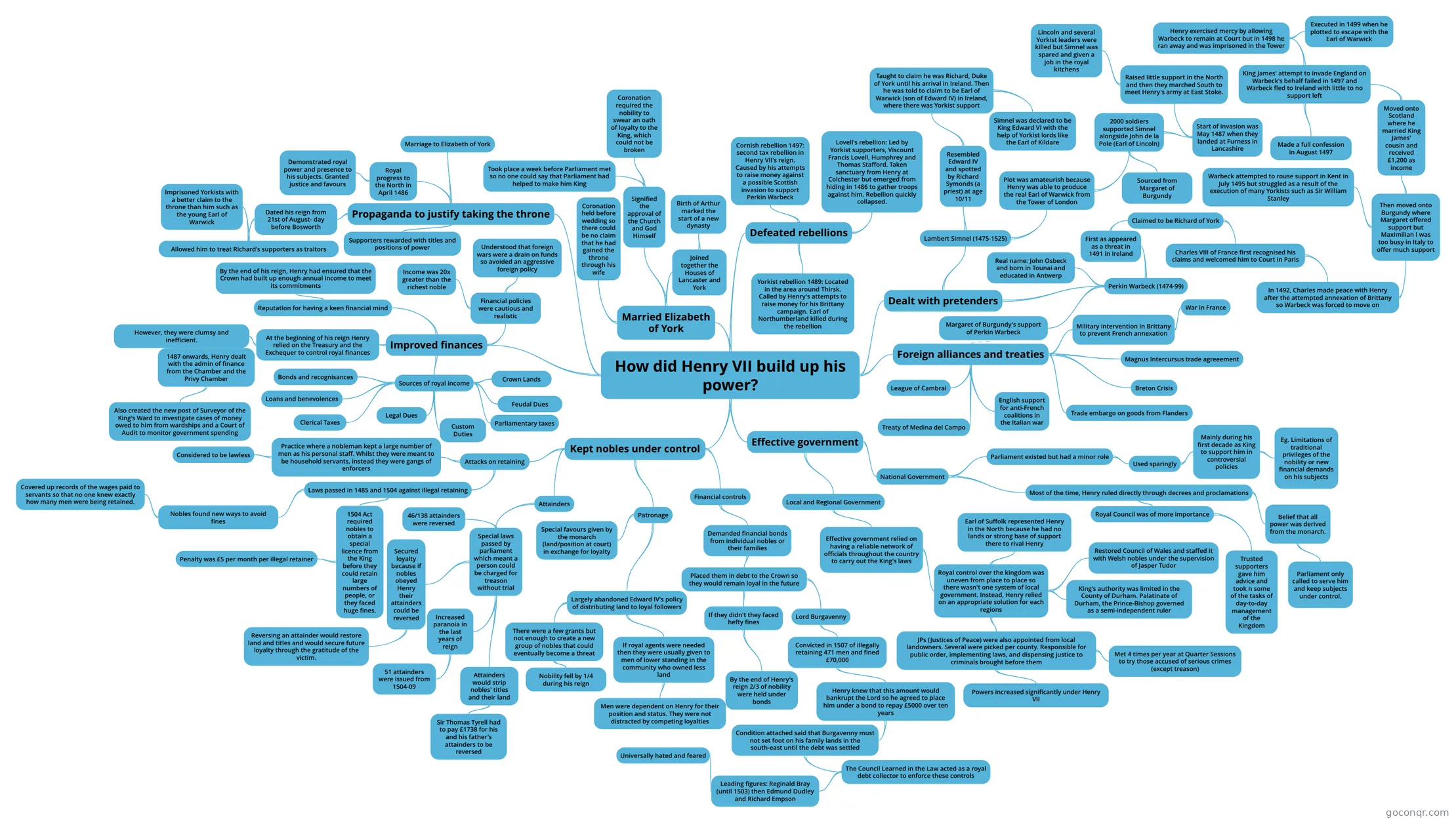 Mind map How did Henry VII build up his power? History A Level
-
Mind map The Elizabethan Religious Settlement
-
 Mind map Henry VII: Consolidation of Power (1485-1509)
-
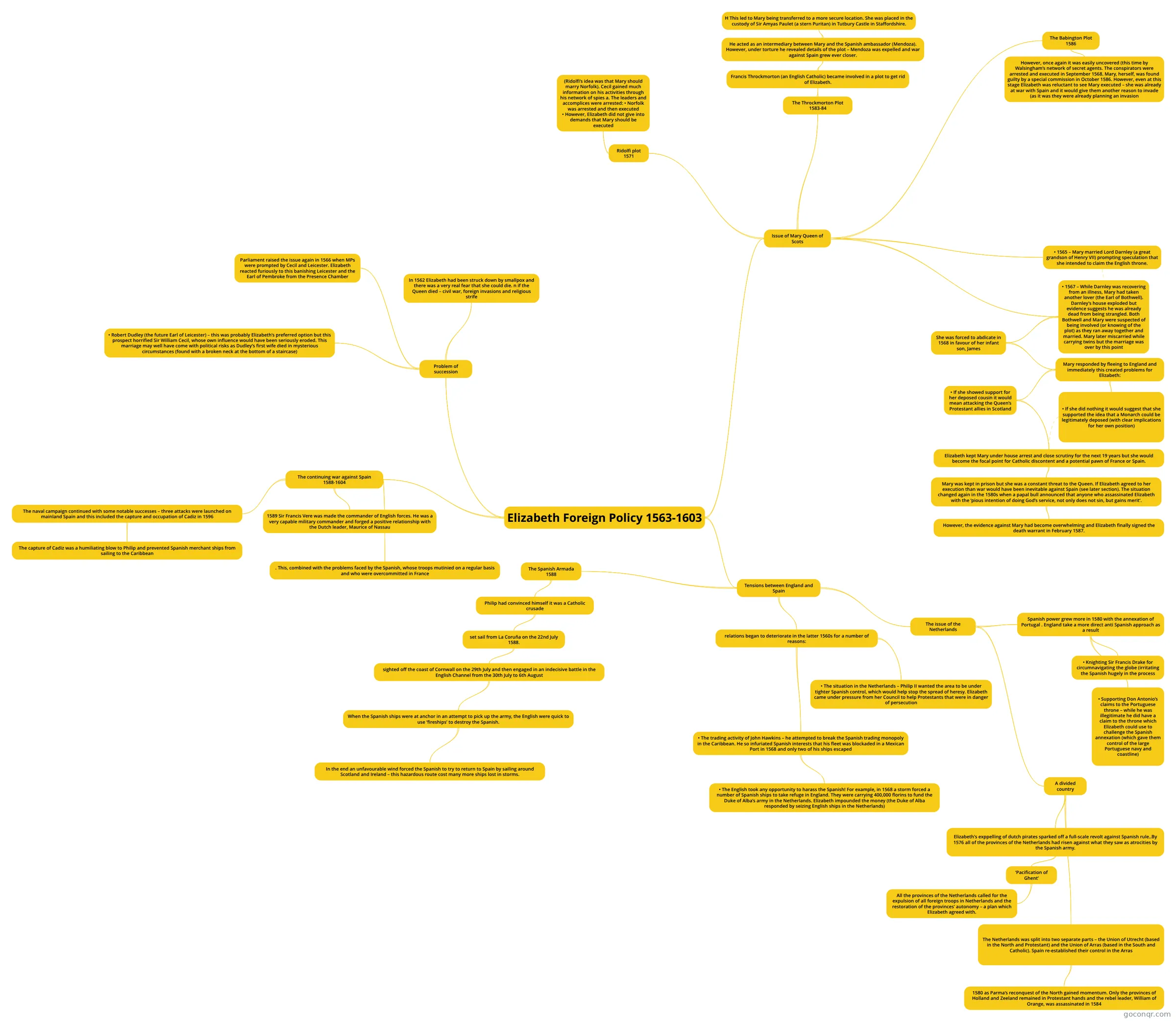 Mind map Elizabeth Foreign Policy 1563-1603
-
13 cardsTudor History - Henry VII's foreign policy What were the aims of Henry VII's foreign policy?
-
Mind map Henry VIII- character, aims and parliament
Quizzes
See all 30 quizzes-
22 questionsTUDOR REBELLIONS How many rebels were involved in the Pilgrimage of Grace?
-
18 questionsEdward VI Edward VI was son of Ann Boleyn
-
7 questionsThe Great Plague of London - QUIZ It killed 20% of England
-
10 questionsHistory: Test A. Religion in Tudor Henry changed England's religion to Protestantism fully on his beliefs
-
9 questionsThe Battle of Bosworth Y8 The Battle of Bosworth
-
9 questionsThe Tudors (Edward VI, Mary I and Elizabeth I). King Edward VI is Protestant.
-
9 questionsWhat Objects Found on the Mary Rose Tell Us they found Rowballs on the Mary Rose, this shows that...
-
8 questionsThe Tudors - Wolsey What year did Wolsey become Lord Chancellor?
Mind maps
See all 174 mind maps-
The Reigns of Edward and Mary Tudors AQA A Level
-
How did Henry VII build up his power? History A Level
-
The Elizabethan Religious Settlement
-
Henry VII: Consolidation of Power (1485-1509)
-
Elizabeth Foreign Policy 1563-1603
-
Henry VIII- character, aims and parliament
-
 Causes of the Northern Rebellion 1569
-
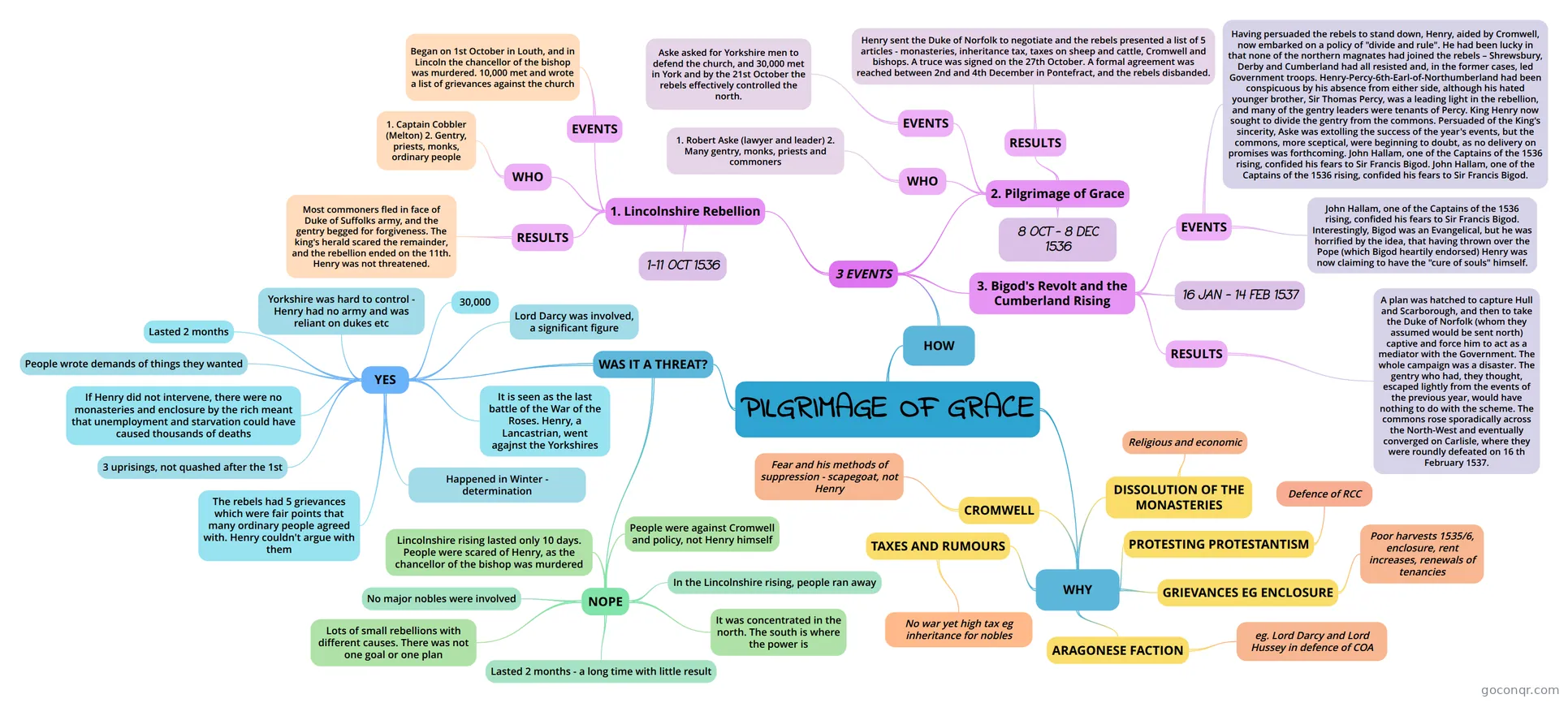 PILGRIMAGE OF GRACE DDFDFDFD
Flashcards
See all 98 flashcards-
188 cardsHenry VIII's Government What can be classed as Henry's early and middle years?
-
13 cardsTudor History - Henry VII's foreign policy What were the aims of Henry VII's foreign policy?
-
5 cardsEdward VI - Northumberland Who was the Duke of Northumberland?
-
74 cardsMid Tudor Crisis What problems did Edward face upon accession? (x4)
-
36 cardsGovernment and Faction (Tudors) Henrys condition in his latter years
-
45 cardsHenry VIII 1529-1547 lack of progress 1529-1533
-
32 cardsThe reign of Henry VII, 1487-1509: political power and control Claimants, Pretenders and Rebellions: Dealing Threats to the Monarchy. Margaret Duchess of Burgundy
-
32 cardsQueen Elizabeth I - Research Essay When she became queen, Elizabeth had many men wanting to marry her. But she never got married. This might b...
Flowcharts
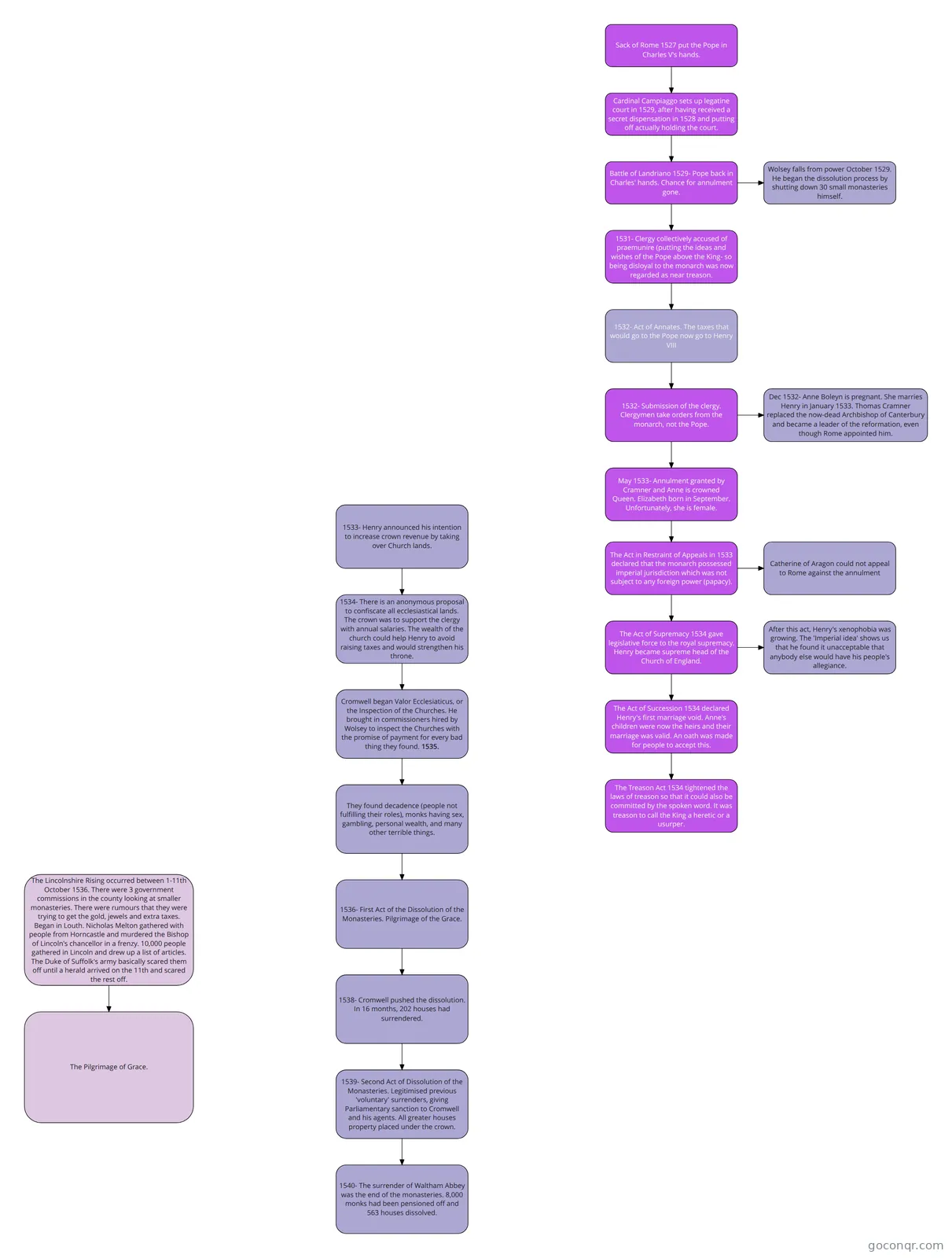
Notes
See all 17 notes-
End of Yorkist Monarchy and the triumph of Henry Tudor, 1483 - 1487 CONTEXT Early Modern British MonarchyWhat was expected of a Monarch To be a feudal overlord: "live off his own" "Warrior aristocracy" - degree of physical and mental strength; appear in battle Manage factions and cult...
-
Government, 1536-53 (Pt. 1 - Henry and Cromwell) Henry VIII reign - CromwellPrivy Council - Privy council consisted of around 100 members before Cromwell reformed it; many members wouldn't attend and it was generally dominated by Wolsey (chief-minister pre-Cromwell)...
-
How important was Parliament for Henry VII’s consolidation of royal authority following his victory at Bosworth and up to the end of 1487? How important was Parliament for Henry VII’s consolidation of royal authority following his victory at Bosworth and up to the end of 1487? Students should be able to make a judgement by addressing the focus of the que...
-
Was he Renaissance man or Machiavellian Prince? Henry VIII (1491-1547; reigned 1509-1547)Was he Renaissance man or Machiavellian Prince?Renaissance manHenry VIII was good example of a Renaissance (meaning 're-birth') man. He was handsome and very accomplished...
-
Henry VII Notes How did Henry Tudor become King of England? Edward IV dies, leaving 12 year old Edward V as heir. Richard, Duke of Gloucester named Lord Protector - seizes throne, named Richard III. Henry Tudor = Lancastrian claimant...
-
Henry VII's Rule 1485 (22nd August) Battle of Bosworth Field This decisive battle between the forces of Henry Tudor and Richard III, saw Richard killed and Henry proclaimed King Henry VII on the battlefield. 1485 (late August) Henry o...
-
Richard III's Rule 1483 (Easter) King Edward became ill. He nominated his brother, Richard Duke of Gloucester to be regent for his young son Edward in the event of his death. 1483 (9th April) King Edward died at the Palace of Westminste...
-
HENRY VIII HENRY VIII: A NEW ERA The Early Years: Early Life: Only became heir in 1502, at age of 11 Well-educated = languages, astronomy, history, arithmetic, musical instruments and singing Athletic = horse-riding, archery, te...
Slides
More History topics
About Tudor England
GoConqr OriginalWhat the unit covers
The resources follow the Tudor monarchs in turn. For Henry VII, the mind map Henry VII: Consolidation of Power (1485-1509) opens with the Wars of the Roses context and Henry Tudor's parentage. Alongside it sit notes, slides and flashcards on finance, foreign policy, religion and the control of the nobility.
Henry VIII is covered through his character, aims, government, foreign policy and the break with Rome. You will also find material on Wolsey's rise and fall, Thomas Cromwell and the Pilgrimage of Grace.
The later reigns are here too: Edward VI under Somerset and Northumberland, Mary I and her religious changes, and Elizabeth I's religious settlement and foreign policy from 1563 to 1603. Rebellions, such as Kett's rebellion and the Northern Rebellion of 1569, have their own maps and decks.
Where to start
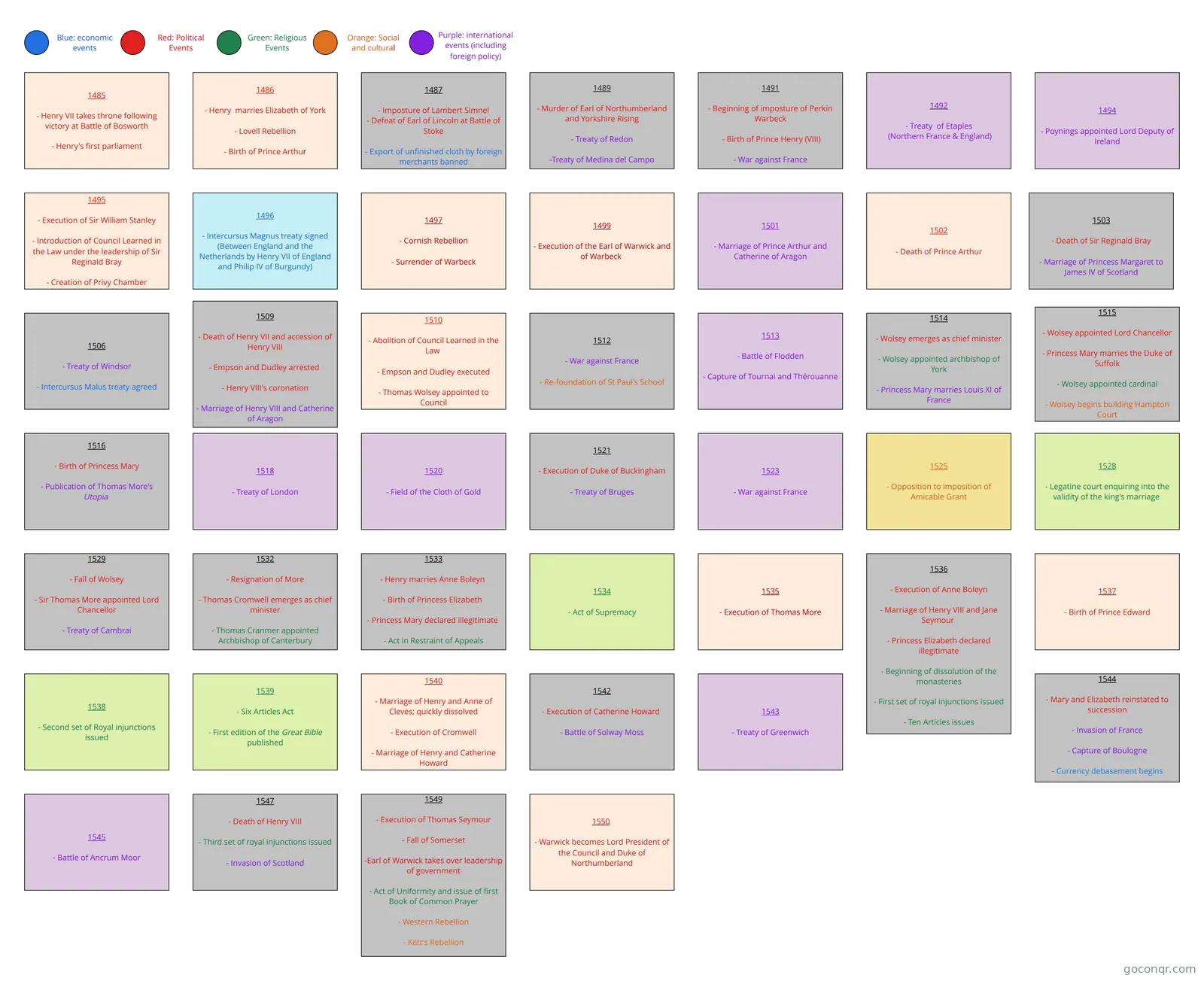
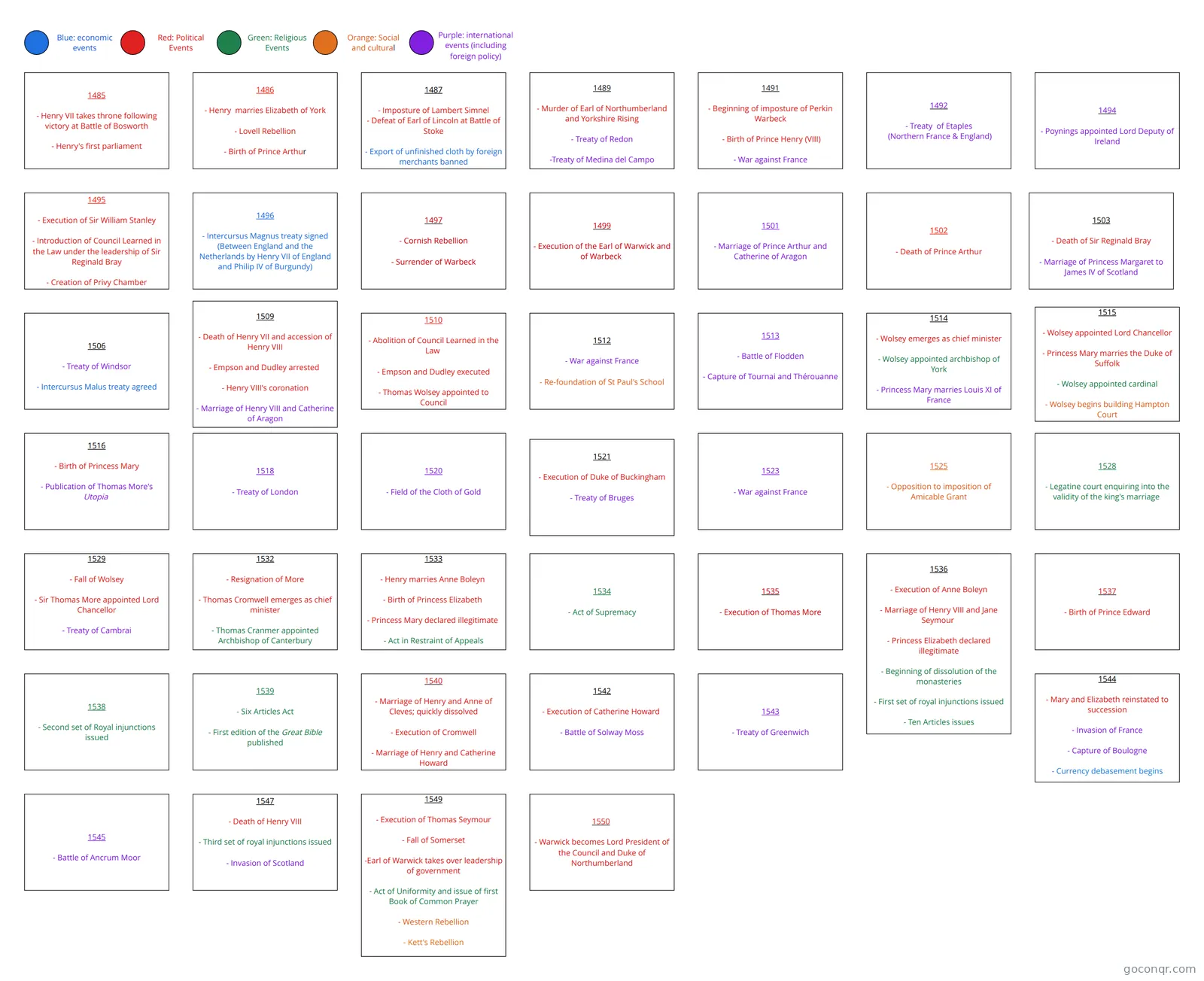
- Begin with the Timeline (1485-1603) flowchart to fix the order of events.
- Read a reign overview, such as the mind map on Edward VI 1547-1553 or the one on Mary Tudor 1553-8.
- Move to a focused topic, such as the flashcards on Henry VIII's Government.
- Finish with an essay-style resource, such as the mind map assessing whether Henry VII's consolidation of power was down to his personal strengths.
Using quizzes and maps together
Read a mind map first, then close it and take a quiz on the same topic. The Tudor Rebellions quiz pairs well with the mind maps on Kett's rebellion and the Pilgrimage of Grace. For religion, try the quiz on Henry VIII and the break with Rome after the map on why he broke with Rome. Any question you miss tells you which node or flashcard to revisit.
Where it fits
Tudor England belongs to the strand The Early Modern World within History. The listed resources mention GCSE History and A-level History, so they suit school students working at those stages, and teachers can use them as ready-made starting points for lessons.
Next step
Choose one reign, open its mind map and then take a quiz on it. If you spot a gap, make your own flashcards from it.
Frequently asked questions
Which resource should I open first?
Start with the Timeline (1485-1603) flowchart to get the order of reigns clear. Then open a reign overview, such as the Henry VII: Consolidation of Power (1485-1509) mind map, and follow it with a quiz on the same topic.
What do the mind maps cover?
They cover each Tudor reign and its main issues. Examples include Henry VII's control of the nobility, why Wolsey fell from power in 1529, the fall of Thomas Cromwell, Mary I's religious changes, and Elizabeth's foreign policy from 1563 to 1603.
Are the resources free to use?
Yes. Every resource on this page is free to open, study and take, with no account needed. They were made by GoConqr users rather than by GoConqr itself. A free account also saves your quiz scores and lets you make your own quizzes, maps, flashcards and notes.
Which exams and levels do these suit?
The listed resources mention GCSE History and A-level History, and nearly all of them are at secondary level. School students can use them for revision, and teachers can use them as ready-made material for lessons on the Tudor period.
Is there anything on rebellions?
Yes. You will find the Tudor Rebellions quiz, mind maps on Kett's rebellion in 1549 and the Northern Rebellion of 1569, a Pilgrimage of Grace map, and flashcard decks on Wyatt's Rebellion. They make a useful set to compare causes side by side.
What if the topic I need is missing?
Try a nearby reign or theme, since many resources overlap, such as government, foreign policy and religion. You can also build your own mind map or flashcards from your class notes and add what the page does not yet cover.