
Mind map
Utilitarianism
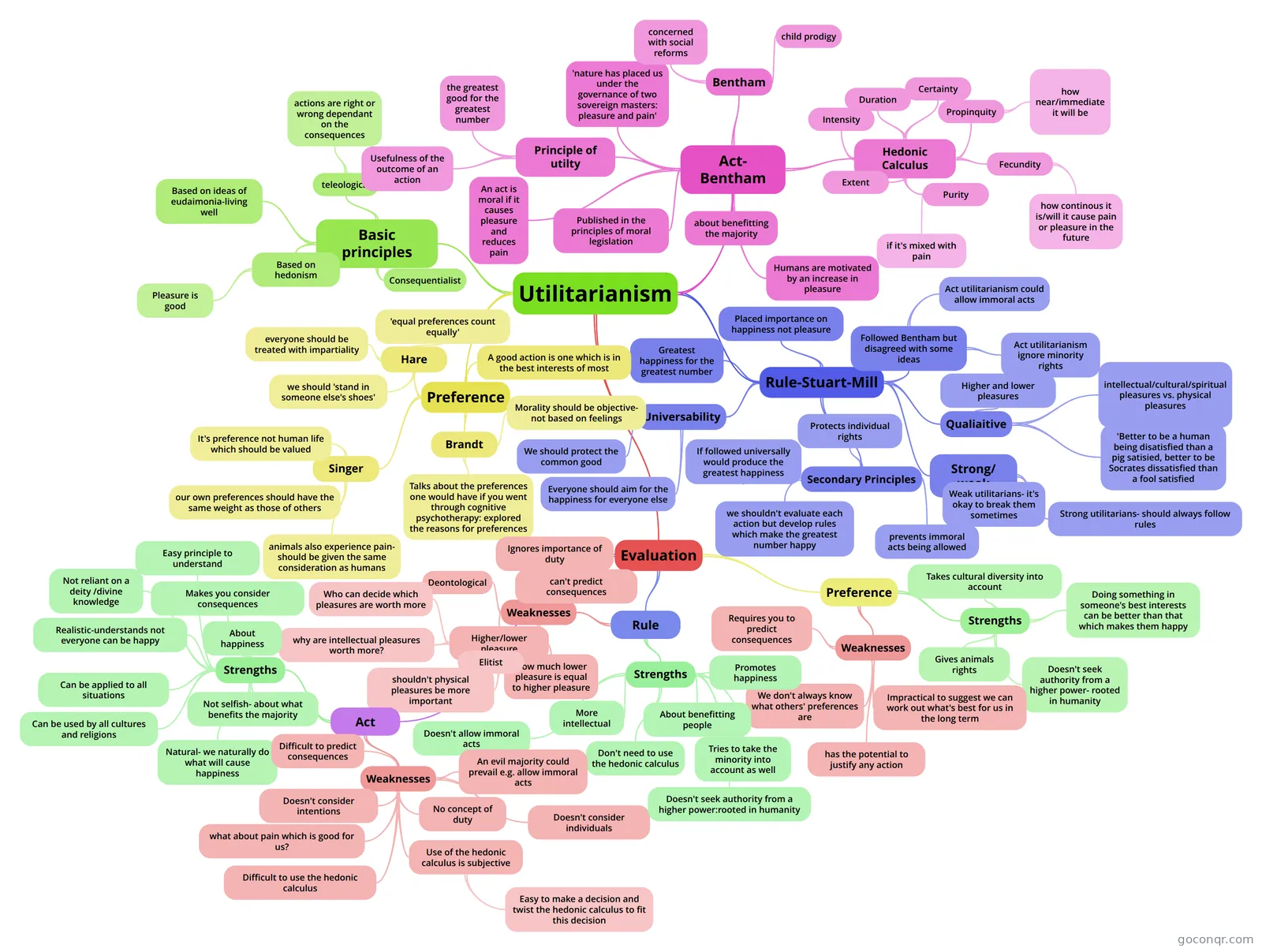
Mind map: Utilitarianism
Map content
Utilitarianism
Act- Bentham
- Principle of utilty
- Usefulness of the outcome of an action
- the greatest good for the greatest number
- An act is moral if it causes pleasure and reduces pain
- 'nature has placed us under the governance of two sovereign masters: pleasure and pain'
- Hedonic Calculus
- Intensity
- Duration
- Certainty
- Propinquity
- how near/immediate it will be
- Fecundity
- how continous it is/will it cause pain or pleasure in the future
- Purity
- if it's mixed with pain
- Extent
- Bentham
- child prodigy
- concerned with social reforms
- about benefitting the majority
- Humans are motivated by an increase in pleasure
- Published in the principles of moral legislation
- Principle of utilty
Rule-Stuart-Mill
- Placed importance on happiness not pleasure
- Followed Bentham but disagreed with some ideas
- Act utilitarianism could allow immoral acts
- Act utilitarianism ignore minority rights
- Qualiaitive
- Higher and lower pleasures
- intellectual/cultural/spiritual pleasures vs. physical pleasures
- 'Better to be a human being disatisfied than a pig satisied, better to be Socrates dissatisfied than a fool satisfied
- Greatest happiness for the greatest number
- Secondary Principles
- we shouldn't evaluate each action but develop rules which make the greatest number happy
- prevents immoral acts being allowed
- Protects individual rights
- If followed universally would produce the greatest happiness
- Universability
- Everyone should aim for the happiness for everyone else
- We should protect the common good
- Strong/ weak
- Strong utilitarians- should always follow rules
- Weak utilitarians- it's okay to break them sometimes
Preference
- A good action is one which is in the best interests of most
- Hare
- 'equal preferences count equally'
- everyone should be treated with impartiality
- we should 'stand in someone else's shoes'
- Singer
- It's preference not human life which should be valued
- our own preferences should have the same weight as those of others
- animals also experience pain- should be given the same consideration as humans
- Brandt
- Morality should be objective- not based on feelings
- Talks about the preferences one would have if you went through cognitive psychotherapy: explored the reasons for preferences
Basic principles
- teleological
- actions are right or wrong dependant on the consequences
- Based on hedonism
- Pleasure is good
- Based on ideas of eudaimonia-living well
- Consequentialist
- teleological
Evaluation
- Preference
- Strengths
- Takes cultural diversity into account
- Doing something in someone's best interests can be better than that which makes them happy
- Doesn't seek authority from a higher power- rooted in humanity
- Gives animals rights
- Weaknesses
- has the potential to justify any action
- Impractical to suggest we can work out what's best for us in the long term
- We don't always know what others' preferences are
- Requires you to predict consequences
- Strengths
- Rule
- Strengths
- Promotes happiness
- Tries to take the minority into account as well
- About benefitting people
- Don't need to use the hedonic calculus
- Doesn't allow immoral acts
- More intellectual
- Doesn't seek authority from a higher power:rooted in humanity
- Weaknesses
- Ignores importance of duty
- can't predict consequences
- Deontological
- Higher/lower pleasure
- Who can decide which pleasures are worth more
- why are intellectual pleasures worth more?
- shouldn't physical pleasures be more important
- Elitist
- How much lower pleasure is equal to higher pleasure
- Strengths
- Act
- Strengths
- About happiness
- Makes you consider consequences
- Easy principle to understand
- Realistic-understands not everyone can be happy
- Can be applied to all situations
- Can be used by all cultures and religions
- Not selfish- about what benefits the majority
- Natural- we naturally do what will cause happiness
- Not reliant on a deity /divine knowledge
- Weaknesses
- An evil majority could prevail e.g. allow immoral acts
- No concept of duty
- Difficult to predict consequences
- Doesn't consider intentions
- Doesn't consider individuals
- what about pain which is good for us?
- Difficult to use the hedonic calculus
- Use of the hedonic calculus is subjective
- Easy to make a decision and twist the hedonic calculus to fit this decision
- Strengths
- Preference
Information
- Description
- (Ethics) Mind Map on Utilitarianism, created by Meg Robinson on 30/04/2013.
- Created by
- Meg Robinson
- Views
- 261
- Tags
- Rating